MIGAKU
Our verdict
MIGAKU sits at 6201 15th Ave NW in Seattle's Ballard neighborhood, a corner of the city where independent restaurants have long operated outside the downtown spotlight. With sparse public data and low online visibility, it occupies the quieter end of Seattle's dining circuit — the kind of address that rewards locals who pay attention to what's happening on residential arterials rather than waterfront promenades.

Pearl is the En Primeur Club membership app — saves, bookings, and concierge access live there. Same editors, same standards.
The menu
What to order
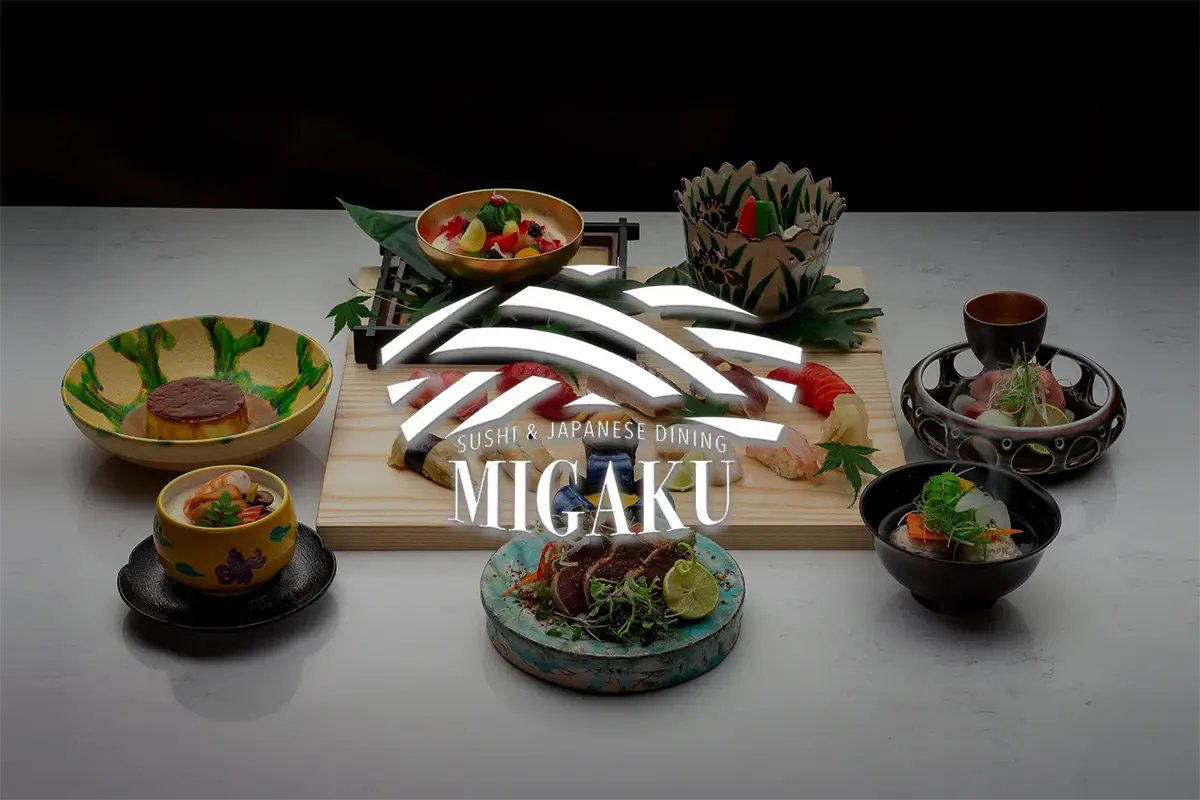
- Kaiseki Course
- Grilled Lobster
- Yuzu Cheesecake Brûlée
Ballard's Residential Grid and the Restaurants That Reward Attention
Seattle's dining reputation tends to cluster around familiar coordinates: the Pike Place Market corridor, Capitol Hill's dense bar-and-restaurant blocks, and the upscale lake-view rooms typified by Canlis (New American). What gets less coverage is the quieter residential arterial running through Ballard's western grid, where 15th Avenue NW functions more as a neighborhood main street than a dining destination. That context matters when approaching MIGAKU at 6201 15th Ave NW, because the address itself is a signal about what kind of restaurant this is likely to be.
Ballard has undergone significant commercial change over the past fifteen years. What was once a working-class Scandinavian fishing neighborhood has accumulated a layer of craft breweries, chef-driven bistros, and weekend brunch lines. But the development has not been uniform. The blocks closer to NW Market Street and Ballard Avenue NW absorbed most of the attention; the stretch further north along 15th Ave NW remained more residential in character, dotted with the kind of places that build their audience one table at a time. MIGAKU occupies that quieter slice of the neighborhood — not by accident, but because that positioning shapes a specific kind of dining experience.
The Northwest Corner of Seattle's Independent Restaurant Scene
Independent restaurants in Seattle's outer neighborhoods operate in a different register than their downtown counterparts. Without the foot traffic of a commercial core, they depend on repeat custom, word-of-mouth, and a dining room that functions as a genuine neighborhood anchor rather than a destination for out-of-towners. The parallel is visible across the city's residential corridors: the same dynamic that defines spots near 1744 NW Market St or the southside address at 2963 4th Ave S applies here. These are restaurants where the room tends to know itself.
Nationally, the contrast is sharpest when you compare this model to large-format destination dining. Operations like Le Bernardin in New York City or Alinea in Chicago are engineered around the destination visit — advance booking, occasion framing, and a dining room populated largely by people who travelled to be there. Neighborhood restaurants on residential arterials invert that logic entirely. The experience is defined by proximity and familiarity rather than pilgrimage. That is not a lesser proposition; it is a different one, and for many diners a more sustainable relationship with the places they eat.
Seattle's food scene has produced strong examples at both ends of this spectrum. Joule (New Asian) built a serious reputation on a neighborhood scale before its recognition expanded outward. The trajectory is common: a tightly run room in an off-center location, consistent execution, and a local following that precedes any broader attention. MIGAKU's 15th Ave NW address places it in that same structural position, regardless of its specific format.
What a Sparse Public Footprint Signals
The absence of a published phone number, website, listed hours, or aggregated review data is itself informative. In 2024, restaurants that maintain a minimal online presence do so either by design or by early-stage operations that have not yet built out their digital infrastructure. Both scenarios point toward a place that is not optimized for transient visitors. The restaurant at 1415 1st Ave operates in a very different visibility tier; MIGAKU sits closer to the opposite end, where the information gap functions as a soft filter on who ends up there.
This is not unusual in the context of Seattle's wider food culture. The city has a long tradition of restaurants that operate with minimal marketing infrastructure and rely on community channels to sustain occupancy. The higher-profile end of the market, places with national press coverage, tasting menus, and extended booking windows, represents a fraction of the actual dining activity in neighborhoods like Ballard. The working majority of Seattle's restaurant ecosystem looks more like what MIGAKU appears to be: a focused operation on a residential block, serving a local clientele with specific expectations.
Seattle in the Broader American Fine-Casual Context
Placing MIGAKU in a national frame requires some care given limited data, but the neighborhood-restaurant model it seems to represent has parallels across American cities. In San Francisco, Lazy Bear built a significant reputation from an unconventional format and location before moving into a more established position. Farm-to-table destination rooms like Single Thread Farm in Healdsburg or Blue Hill at Stone Barns in Tarrytown represent one pole of serious American dining. The other pole, smaller, less legible, rooted in a specific block and a specific community, is equally valid and arguably more representative of how most people engage with restaurants over a lifetime.
In Los Angeles, Providence holds Michelin recognition and operates with full digital infrastructure. In San Diego, Addison anchors the high end of the local market with similar visibility. MIGAKU, at this point, occupies a position without that institutional weight, which does not preclude quality, but does mean the reader's first move should be direct contact with the restaurant rather than relying on aggregated signals.
The French Laundry in Napa, The Inn at Little Washington, and 8 1/2 Otto e Mezzo Bombana in Hong Kong operate in an entirely different tier. MIGAKU is not in competition with any of them; it belongs to the city-grid layer that most professional critics undercover and most loyal regulars depend on. For a broader map of where MIGAKU fits within Seattle's full dining circuit, see our full Seattle restaurants guide.
Know Before You Go
Address: 6201 15th Ave NW, Seattle, WA 98107
Neighborhood: Ballard (northwestern residential grid)
Phone: Not publicly listed, direct walk-in or local inquiry recommended
Website: Not currently available
Hours: Not published, verify before visiting
Reservations: Format and booking; in-person inquiry is the most reliable approach
Nearest context: 15th Ave NW corridor, Ballard; accessible by bus from downtown Seattle via the D Line
Frequently asked questions
Where exactly is MIGAKU?
MIGAKU is located at 6201 15th Ave NW, Seattle, WA 98107, Seattle.
Is MIGAKU in Ballard worth the trip from central Seattle?
MIGAKU sits at 6201 15th Ave NW in Seattle's Ballard neighborhood, roughly outside the dense Capitol Hill and Pike Place corridors that dominate most Seattle dining coverage. Restaurants that operate at this remove — no website, no listed hours, no aggregated review presence — typically earn their following through the food alone rather than marketing or foot traffic. Whether the trip makes sense depends on what a visitor already knows about the place, which is the point: MIGAKU rewards prior knowledge over casual discovery.
What do regulars order at MIGAKU?
That kind of sparse public footprint tends to mean the menu lives in the room — regulars learn it by showing up. The Ballard address, at 6201 15th Ave NW, puts MIGAKU in a neighborhood where Japanese-influenced and Pacific Northwest menus both have strong precedent, but any dish-level claim here would be speculation.
Is MIGAKU reservation-only?
No booking policy is confirmed for MIGAKU. The restaurant lists no phone number and no website, which makes advance reservations through conventional channels unlikely — or simply undisclosed to the general public. Seattle's outer-neighborhood restaurants at this scale often operate on a walk-in basis or manage reservations through direct word of mouth. Visiting 6201 15th Ave NW in person, or checking third-party platforms like Resy or OpenTable, is the most reliable approach.
Fast Comparison
Comparable venues nearby, for context on price, style, and recognition.
| Venue | Cuisine | Price | Notes |
|---|---|---|---|
| MIGAKUThis venue — the venue you are viewing | Japanese Sushi Kaiseki Omakase | $100–150 | Not listed |
| wa'z | Modern Northwest Japanese Kaiseki | $150–200 | Uptown Triangle |
| Tomo | Modern Japanese-American Fusion | $150–200 | Roxbury Heights |
| Momiji | Japanese Sushi and Omakase | $30–50 | Broadway |
| Wataru | Edomae-Style Omakase Sushi | $200–300 | Ravenna |
| Musashi's | Traditional Japanese Sushi | $20–30 | Wallingford |
Continue exploring
More in Seattle
Restaurants in Seattle
All restaurants in Seattle →
Bars in Seattle
All bars in Seattle →
Details
- Intimate
- Elegant
- Sophisticated
- Modern
- Special Occasion
- Date Night
- Chefs Counter
- Sake Program
- Omakase
- Tasting Menu
- Sake
Current opening hours
- Monday
- 5–10 PM
- Tuesday
- Closed
- Wednesday
- 5–10 PM
- Thursday
- 5–10 PM
- Friday
- 5–10 PM
- Saturday
- 5–10 PM
- Sunday
- 5–10 PM
Hours can change for holidays and private events. Last verified .
Intimate setting with meticulous presentation, friendly staff, and a focus on seasonal ingredients creating a welcoming high-end Japanese culinary experience.