Add-A-Ball
Free pinball machines run alongside a draft beer and cocktail program, drawing regulars who treat a Tuesday night here as a ritual rather than an occasion.

Pearl is the En Primeur Club membership app — saves, bookings, and concierge access live there. Same editors, same standards.
- Address
- 315 N 36th St #2b, Seattle, WA 98103
- Hours
- Daily 4 PM–2 AM
- Website
- add-a-ball.com
- Directions
- Get directions
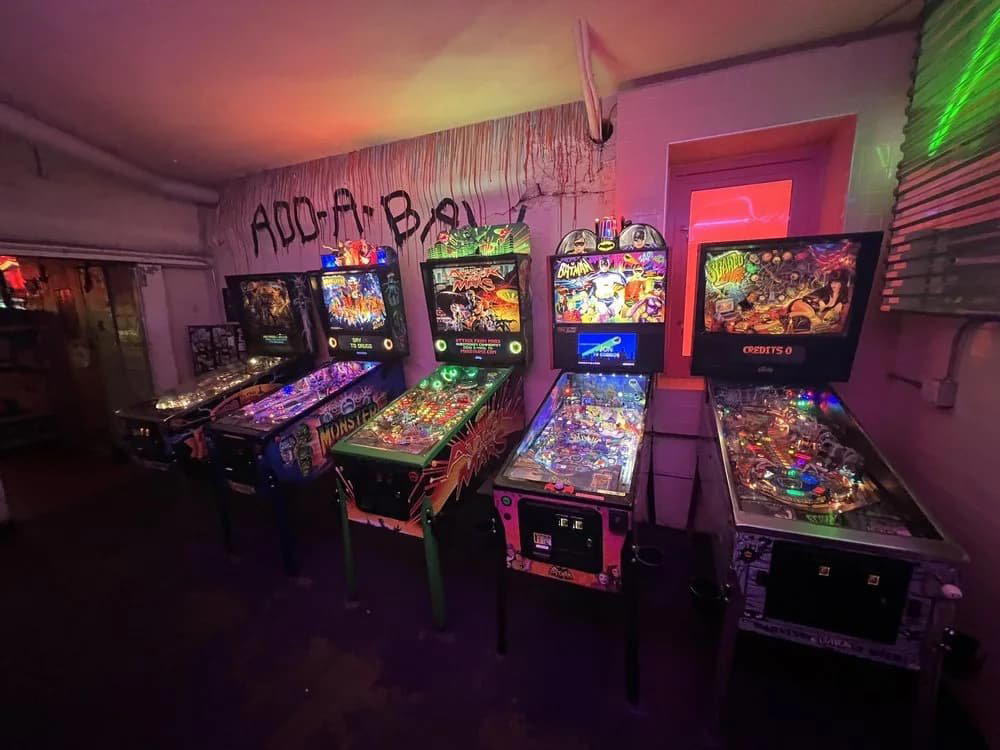
The Ritual of the Room
The dining ritual framework that applies to a tasting counter translates, with some adaptation, to a place like this. There is a customs-and-pacing logic to an evening at Add-A-Ball that regulars understand and newcomers tend to absorb within the first half hour. You arrive, you order a drink, you find a machine. The ordering at the bar is informal and fast, which keeps the rhythm moving, and the drink selection runs toward approachable draft beer and direct mixed drinks rather than the kind of menu that demands close reading. That is not a criticism; it is a design decision that serves the format. A twelve-ingredient cocktail and a pinball machine are in competition with each other. A cold draft pint is not. Places like Canon and Roquette are bars where the drink itself is the primary ritual, where you sit, you study the list, you consider. Bar Leather Apron in Honolulu, Jewel of the South in New Orleans, and Julep in Houston each anchor their city's more considered drinking culture, while bars like Superbueno in New York City, ABV in San Francisco, and The Parlour in Frankfurt each occupy their own distinct tonal position. Add-A-Ball is not competing in those registers. It is doing something adjacent and separable: a consistent, accessible, activity-anchored evening that a neighbourhood returns to weekly rather than saves for an occasion.
Planning Your Visit
Add-A-Ball is located at 315 N 36th St, unit 2B, in Fremont, which puts it within walking distance of the neighbourhood's main commercial strip along 36th Street. Because the bar operates in a format built around volume and regularity rather than reservation-based demand, walk-ins are the standard mode of entry. There is no booking infrastructure to speak of, and the room accommodates that well: capacity and layout are suited to a fluid, come-and-go crowd. Arriving early in the evening gives you more space at the machines before the room fills.enprimeurclub.
Cuisine and Credentials
| Venue | Cuisine | Price | Awards |
|---|---|---|---|
| Add-A-BallThis venue — the venue you are viewing | This venue | $20–30 | Not listed |
| Canon | World's 50 Best | Not listed | Not listed |
| Bar Miriam | Not listed | $30–50 | Food & Wine Top 10 US Bars #5 |
| Rob Roy | Not listed | $30–50 | James Beard Award Semi Finalist |
| Roquette | World's 50 Best | $20–30 | World's 50 Best #89 · James Beard Award Semi Finalist |
| The Doctor's Office | World's 50 Best | $30–50 | World's 50 Best #76 |
Continue exploring
More in Seattle
Bars in Seattle
Browse all →
Restaurants in Seattle
Browse all →
Hotels in Seattle
Browse all →
Details
- Lively
- Retro
- Whimsical
- Group Outing
- Casual Hangout
- Late Night
- Live Music
- Standalone
- Beer Garden
- Standing Room
- Lounge Seating
- Craft Beer
- Classic Cocktails
Current opening hours
- Monday
- 4 PM–2 AM
- Tuesday
- 4 PM–2 AM
- Wednesday
- 4 PM–2 AM
- Thursday
- 4 PM–2 AM
- Friday
- 4 PM–2 AM
- Saturday
- 4 PM–2 AM
- Sunday
- 4 PM–2 AM
Hours can change for holidays and private events. Last verified .
Retro 1980s basement aesthetic with dim lighting, vintage arcade machines, and a casual, nostalgic atmosphere described as 'the basement you wish you could've had when you were 14, if you were 14 in 1983.'