
Seto’s ramen culture rewards concise formats, modest prices, and shops that treat broth and noodles as craft rather than theatre. Menza Katabutsu sits in that lane with ramen and tsukemen, Tabelog 100 Ramen AICHI 2025 recognition, 16 seats, no reservations, and a cash-only setup that keeps the experience closer to a neighbourhood counter than a destination tasting room.
Pearl is the En Primeur Club membership app — saves, bookings, and concierge access live there. Same editors, same standards.
- Address
- Japan, 〒489-0931 Aichi, Seto, Takanecho, 1 Chome−45
- Phone
- +81 561-88-0039
- Website
- instagram.com
- Directions
- Get directions
 Saves & bookings on Pearl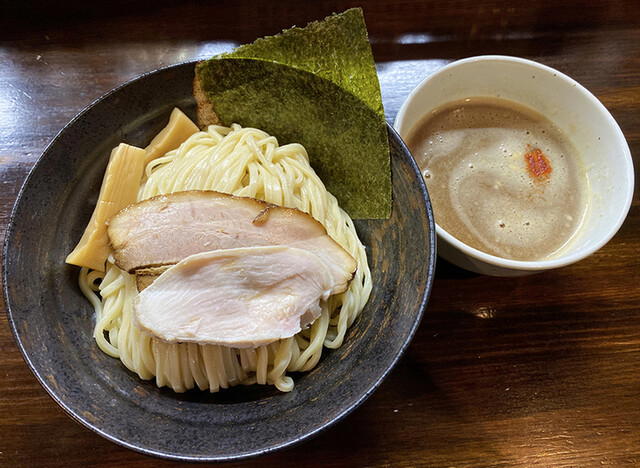
Approaching a ramen shop in Seto is rarely about ceremony. The signal is simpler: a compact room, counter seats close to the kitchen, and a meal built around timing rather than lingering. Menza Katabutsu fits that Aichi rhythm. It works in ramen and tsukemen, the dipping-noodle format that makes the relationship between noodle texture and broth concentration explicit, and its recognition in Tabelog 100 Ramen AICHI 2025 places it inside a regional conversation rather than a tourist checklist.
That matters because ramen in central Japan is not one single school. Aichi sits between several strong noodle traditions, with Nagoya’s urban ramen density on one side and smaller city shops on the other, where sourcing, portion control, and repeat local custom matter as much as online attention. In that setting, a Seto address carries a different implication from a major-station ramen counter: diners are not being processed through a transit hub. The room has 16 seats, split between 10 counter seats and 6 raised tatami seats, which gives the shop both solo-diner utility and family usability.
Ramen and tsukemen put the sourcing question in plain view
The ingredient story at this tier is not about luxury produce named on a tasting menu. It is about how a shop turns staple components into consistency: wheat structure in the noodle, seasoning balance in the tare, fat management, and broth concentration. Tsukemen makes those decisions especially visible because the noodles are served separately from the dipping broth; texture has to hold its own, and the broth needs enough density to coat without becoming blunt. Ramen compresses the same decisions into a faster bowl, where heat, noodle timing, and seasoning need to align quickly.
Menza Katabutsu’s category listing, ramen and tsukemen, signals a shop operating in that practical craft zone. The price band, JPY 1,000 to JPY 1,999 for both lunch and dinner, also says something about the broader Japanese ramen economy: technical work can remain democratic even when recognition rises. This is a different proposition from Seto’s higher-spend Japanese dining, including Japanese cuisine Ootake, where the budget range sits far above the noodle-shop bracket. The comparison is useful because it separates two kinds of seriousness: one expressed through course structure and service pacing, the other through repetition, speed, and a narrow product range.
A Tabelog score of 3.61 and selection for Tabelog 100 Ramen AICHI 2025 give the shop measurable standing within a crowded prefectural category. The same recognition history includes Tabelog Ramen EAST selections in 2017 and 2018, which suggests that the shop’s reputation predates the current Aichi-specific list. Those awards are not the same as a Michelin star, and they should not be read that way. They are more useful as a local-market signal: enough sustained diner attention and category relevance to separate the shop from ordinary neighbourhood ramen counters.
A small Seto room built for turnover, solos, and families
The format is casual by design. Counter seating dominates, but the raised tatami seats change the room’s social range: solo diners can eat quickly without ceremony, while families are not forced into a bar-only setup. Children are welcome, private rooms are not part of the format, and private use is unavailable. That combination is common in serious ramen because the value is concentrated in the bowl, not in staged hospitality.
The no-smoking policy, take-out availability, and communal parking in front of the restaurant add practical ease without turning the place into a polished dining room. Around Seto, where car movement often matters more than station adjacency, about 30 communal parking spaces is a meaningful detail. Rail access is workable but less frictionless: Setoguchi Station on the Aichi Loop Line is the nearest named station, with Mizuno Station also within walking range, and the Harayama bus stop gives another approach from Owari Seto Station. For a city dining plan, pair this kind of ramen stop with broader research in our full Seto restaurants guide, then build the rest of the day through our full Seto hotels guide, our full Seto bars guide, our full Seto wineries guide, and our full Seto experiences guide.
Planning logic is simple: reservations are unavailable, payment is cash-only, and the shop closes on Wednesday, with a listed third-Thursday closure as well. Lunch and dinner windows are both short enough that timing matters. This is not a place to treat as a flexible fallback after a long afternoon; it is better read as a targeted ramen stop, especially if arriving by car or bus rather than building the plan around a station platform.
Where it fits in a wider Japan eating itinerary
For travellers moving through Japan, Menza Katabutsu offers a useful counterpoint to higher-format meals. It shows how a regional ramen shop can carry recognition while staying inside a low price band and a compact service model. That is valuable context when comparing eating styles across the country: beef-focused dining such as -Grilled beef Sukiyaki- KAMAKURA TANUKIAN 鎌倉 たぬき庵 in Kamakura, seafood and charcoal formats like . 鮪と炭火焼き うお炭 秋葉原店 in Tokyo, café-led pauses such as .cafe in Osaka, and hybrid contemporary rooms such as.know in Kumamoto all answer different dining needs.
Ramen also sits beside, rather than below, other everyday formats. A curry specialist like [Curry Senmon Ten] Maruyama Kyoju. in Sapporo, a Kyoto address such as [ki:] in Kyoto, meat-driven dining at #肉といえば松田 奈良本店 in Kashihara, casual burger culture at 1/3 HAMBURGER FACTORY in Kanazawa, and compact city restaurants such as 1000 in Yokohama all show how Japanese dining quality often appears outside formal luxury codes. Even beyond Japan, places such as Jōdo Saké Bar in Los Angeles and Onigiri Time in Pasadena translate Japanese formats through a different dining culture. Seto’s ramen scene is quieter, but that quiet is part of the point: the craft is in the repeatable bowl, the short service window, and the confidence to let noodles and broth carry the argument.
Comparable Spots, Quickly
Comparable venues by cuisine and price in the same metro.
| Venue | Cuisine | Price | Notes |
|---|---|---|---|
| Menza Katabutsu | Ramen | $ | Seto |
| Japanese cuisine Ootake | Kyoto-style seasonal Japanese course (kaiseki) | $$$ | .null |
| 三たてそば 長畑庵 | 三たて蕎麦 | $ | 長畑 |
| Human beings everybody noodles (人類みな麺類) | Traditional Shoyu Ramen | $ | Nishinakajima, Yodogawa-ku |
| Ichiyoken | Nagoya tonkotsu ramen shop | $ | Tenpaku |
| Dote no Shinagawa | Traditional Nagoya kushikatsu & doteyaki stand-up bar | $ | Mizuho Ward |
Recognition history
Dated appearances from independent guides and award organizations, with the underlying list record or original source where available.
Tabelog 100 #77 · No. 77
Tabelog · Tabelog 100 - Ramen - AICHI - 2025
At a Glance
- Cozy
- Casual
- Solo
- Casual Hangout
- Standalone
Current opening hours
- Monday
- 11 AM–2 PM, 6–9 PM
- Tuesday
- 11 AM–2 PM, 6–9 PM
- Wednesday
- Closed
- Thursday
- 11 AM–2 PM, 6–9 PM
- Friday
- 11 AM–2 PM, 6–9 PM
- Saturday
- 11 AM–2 PM, 6–9 PM
- Sunday
- 11 AM–2 PM, 6–9 PM
Hours can change for holidays and private events. Last verified .
Direct casual ramen-shop atmosphere focused on a specialty bowl rather than formal dining.