
Men Tamayura Kariya ten belongs to Aichi’s serious ramen conversation rather than the casual noodle-stop category. Its 2025 Tabelog 100 Ramen AICHI selection, counter-led format, and ramen-tsukemen focus make it a useful read on how Kariya’s dining scene balances everyday pricing with regional recognition.
Pearl is the En Primeur Club membership app — saves, bookings, and concierge access live there. Same editors, same standards.
- Address
- 6 Chome-705 Nakatecho, Kariya, Aichi 448-0049, Japan
- Phone
- +81 566-28-9369
- Website
- instagram.com
- Directions
- Get directions
 Saves & bookings on Pearl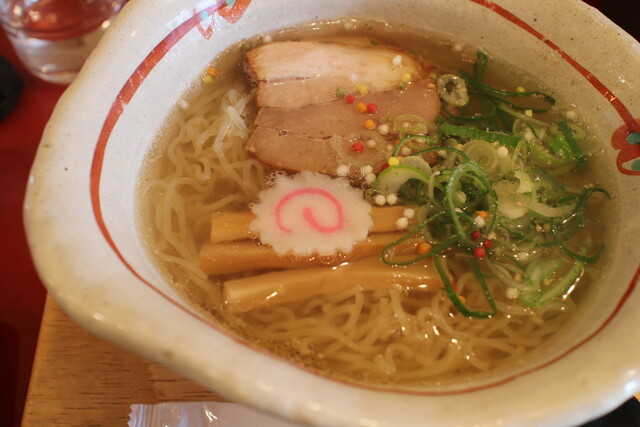
The approach is residential rather than theatrical: a house-restaurant setting in Nakatecho, counter seating, and the compressed rhythm of a ramen room built for solo diners as much as small groups. In Kariya, a city better known to many travellers as part of Aichi’s industrial belt than as a dining destination, that modest frame matters. Ramen here is not positioned as spectacle. It is a working local meal, judged by repeatability, broth clarity, noodle handling, and how precisely the bowl lands inside a narrow service window.
Men Tamayura Kariya ten sits in that useful middle ground: accessible in spend, compact in format, and serious enough to be selected for Tabelog 100 Ramen AICHI 2025. That recognition places it inside a regional ramen cohort rather than a generic station-area category. For visitors mapping Kariya beyond hotels and transit, it gives the city a concrete food anchor, especially when read alongside nearby options such as Jikaseimen Ramen Kariya, Ramen Aigoya, Konasu, and Kondo Meshinosuke.
Aichi ramen judged on sourcing logic, not spectacle
Aichi ramen is often discussed through local taste memory: miso depth, soy-driven broths, dipping noodles, and regional preferences that run differently from Tokyo’s high-polish counter culture or Fukuoka’s tonkotsu shorthand. The useful question at a place like this is not whether it performs luxury. It is whether the kitchen shows enough discipline in the base materials to justify attention from diners who track ramen across prefectures.
The listed categories are ramen and tsukemen, which already says something about the kitchen’s operating logic. Ramen asks for balance at service temperature; tsukemen tests concentration, noodle texture, and the ability of a dipping broth to hold its shape across the meal. Ingredient sourcing becomes visible through those constraints. A thin or careless stock has nowhere to hide; noodles that soften too quickly lose the argument before the bowl is finished. The presence of both formats suggests a shop built around broth-and-noodle calibration rather than a broad comfort menu.
The 2025 Tabelog 100 Ramen AICHI selection is the main trust signal here. It is not a luxury award, and that is precisely why it suits the category. Ramen shops are often judged by local frequency: office workers, nearby residents, station walkers, and solo diners returning because the price-to-satisfaction ratio holds. A Tabelog score of 3.58, within Japan’s famously conservative user-rating culture, reinforces that the conversation is regional and specialist rather than tourist-led.
Counter ramen in Kariya has a different competitive set
Kariya’s dining range is wider than a visitor might expect, but its categories separate sharply by occasion. Konasu, with a listed spend of JPY 6,000 to JPY 7,999, belongs to a different night-out economy. Jikaseimen Ramen Kariya sits in a lower ramen price bracket, while Men Tamayura Kariya ten occupies the everyday-premium ramen band where a bowl can be casual in cost but still carry selection-level scrutiny. That distinction is important: in Japanese regional cities, price alone rarely explains ambition.
The room also shapes the meal. Fourteen seats and a back-to-back counter arrangement point toward turnover, concentration, and the private publicness of ramen dining in Japan. Counter ramen rewards diners who do not need ceremony. The transaction is narrow: order, wait, eat while the noodles are at their intended texture, leave space for the next guest. For travellers used to tasting menus as the default marker of seriousness, this is a useful correction. In ramen, seriousness often looks like speed, repetition, and restraint.
That format also makes the restaurant’s sourcing angle more legible. A small ramen room has fewer distractions: no broad à la carte spread, no beverage-led performance, no chef biography driving the narrative. The bowl carries the argument. If the stock, tare, oil, noodle, and topping structure are coherent, the place earns repeat attention. If not, there is little atmosphere to rescue it. Men Tamayura Kariya ten’s recognition within Aichi’s ramen list indicates that local diners and ramen trackers have found enough precision to keep it in the conversation.
How to place it in a Kariya eating itinerary
For a short Kariya stay, this is the kind of restaurant that works better as a targeted meal than as a lingering evening plan. The better editorial use is to treat it as a ramen benchmark, then compare the city through different price and format tiers. A diner could read the casual end through Jikaseimen Ramen Kariya, the specialist ramen field through Ramen Aigoya, and the higher-spend local dining tier through Konasu. That gives Kariya more shape than a single restaurant choice can provide.
Travellers building a broader route through Japan can also use it as a reminder that serious food culture is not restricted to the usual metropolitan circuit. Compare the category discipline here with the narrower focus of [Curry Senmon Ten] Maruyama Kyoju. in Sapporo, the café register of.cafe in Osaka, or the specialist bar-and-food crossover at Jōdo Saké Bar in Los Angeles. The common thread is focus: a limited category, a clear audience, and enough specificity to justify a planned stop.
For Kariya planning beyond this meal, the city is easier to read by category than by hype. Start with Our full Kariya restaurants guide, then layer in Our full Kariya hotels guide, Our full Kariya bars guide, Our full Kariya wineries guide, and Our full Kariya experiences guide. For wider Japan and Japanese-adjacent reference points, compare formats with -Grilled beef Sukiyaki- KAMAKURA TANUKIAN 鎌倉 たぬき庵 in Kamakura. 鮪と炭火焼き うお炭 秋葉原店 in Tokyo.know in Kumamoto, (Shoku) Vietnam in Kawasaki, [ki:] in Kyoto, and Onigiri Time in Pasadena.
The editorial case for the restaurant is concise: it shows how a compact ramen counter can carry regional credibility without changing the basic grammar of the meal. For diners interested in ingredient-driven ramen, Aichi’s ramen culture, or Kariya’s under-discussed food scene, that is enough reason to give it priority over a generic convenience stop.
Side-by-Side Snapshot
Comparable venues by cuisine and price in the same metro.
| Venue | Cuisine | Price | Notes |
|---|---|---|---|
| Men Tamayura Kariya tenThis venue — the venue you are viewing | Ramen & Tsukemen | $ | Not listed |
| Konasu | Seasonal Japanese Cuisine & Tempura Omakase | $$$ | Kariya Sta. |
| Jikaseimen Ramen Kariya | Ramen shop with house-made noodles | $ | Noda Shimmachi |
| Kondo Meshinosuke | Seafood & Kaisen-don Izakaya | $$ | Kariya |
| Ramen Aigoya | Japanese Ramen | $$ | Igayacho, Kariya |
| Atsuta Miso Ramen Buriyu | Japanese Ramen | $ | Atsuta |
Recognition history
Dated appearances from independent guides and award organizations, with the underlying list record or original source where available.
Tabelog 100 #75 · No. 75
Tabelog · Tabelog 100 - Ramen - AICHI - 2025
Continue exploring
More in Kariya
Restaurants in Kariya
Browse all →

At a Glance
- Cozy
- Classic
- Solo
- Casual Hangout
- Standalone
Current opening hours
- Monday
- 11 AM–2 PM, 5:30–9 PM
- Tuesday
- 11 AM–2 PM, 5:30–9 PM
- Wednesday
- 11 AM–2 PM, 5:30–9 PM
- Thursday
- 11 AM–2 PM, 5:30–9 PM
- Friday
- 11 AM–2 PM, 5:30–9 PM
- Saturday
- 11 AM–2 PM, 5:30–9 PM
- Sunday
- 11 AM–2 PM, 5:30–9 PM
Hours can change for holidays and private events. Last verified .
Low-key, intimate ramen-shop atmosphere in a small house-style setting with minimal seating.