
Ramen Aigoya belongs to Kariya’s small, serious ramen circuit: low-friction, ingredient-led, and built around noodle formats rather than ceremony. Its selection for Tabelog 100 - Ramen - AICHI - 2025 gives it a clear trust signal in a prefecture where ramen shops compete on broth discipline, tare balance, and repeat local custom rather than luxury cues.
Pearl is the En Primeur Club membership app — saves, bookings, and concierge access live there. Same editors, same standards.
- Address
- 愛知県刈谷市井ヶ谷町青木31
- Phone
- +81566953955
- Website
- ameblo.jp
 Saves & bookings on Pearl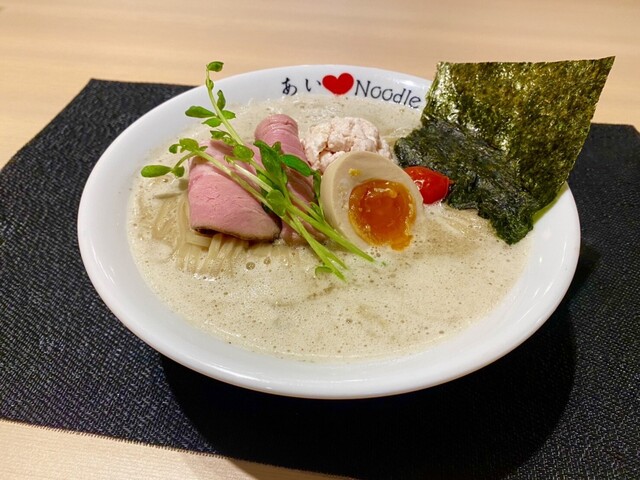
In Kariya’s northern edge, the ramen shop format stays close to its working-city roots: compact rooms, fast decisions, and a menu language built around broth, tare, noodles, and heat rather than performance. Ramen Aigoya sits in that register. The setting is described as a house restaurant with counter seating and tatami space, a combination that says something useful about suburban Aichi ramen culture: the genre has to serve the lone diner moving quickly and the family meal that needs a little more room.
The meaningful signal is not spectacle. It is selection. Ramen Aigoya was named to Tabelog 100 - Ramen - AICHI - 2025, a list that matters because Aichi’s ramen field is broad enough to separate durable local favorites from places carried by novelty. In Kariya, where readers may also be weighing Jikaseimen Ramen Kariya, Men Tamayura Kariya ten, Konasu, or Kondo Meshinosuke, that kind of recognition places the shop in the city’s serious casual tier rather than the destination tasting-menu world.
Salt, soy, mixed noodles, and the Aichi ramen question
Aichi ramen is difficult to reduce to one house style. Nagoya’s food culture has long made room for assertive seasoning, miso depth, and highly personal noodle shops, while the suburban belt around cities such as Kariya and Toyoake often rewards menus that can handle different diner rhythms. Ramen Aigoya’s listed categories cover ramen, abura-soba, maze-soba, and tsukemen. That spread matters. It shows a shop working across soup-led bowls, oil-dressed noodles, mixed noodles, and dipping noodles rather than relying on a single format.
The ingredient angle here sits in the tare and broth structure. Public menu notes point to shio soba built on salt tare and a water-based broth, chuka soba using soy sauce with pork and chicken dashi, and shio mazesoba with thick noodles tossed in salt tare. Those are not decorative distinctions. In ramen, tare is the seasoning base that defines direction, while the broth carries weight, aroma, and length. A salt-led bowl exposes flaws quickly because there is less darkness from soy or miso to cover imbalance. Soy-based chuka soba, by contrast, depends on how the sauce, animal stock, and noodle texture align.
That is why the shop’s range reads as practical rather than scattered. A diner who wants clarity can move toward shio; someone after soy depth can choose chuka soba; those who prefer chew, oil, and concentrated seasoning can look at mazesoba or tsukemen. The kitchen’s reputation, including recognition in the 2025 Aichi ramen selection, rests on that ingredient grammar more than on luxury sourcing claims. It is a reminder that in Japan’s ramen culture, seriousness often appears in the smallest technical choices: salt base, soy quality, noodle thickness, and the temperature at which a bowl reaches the counter.
A small-room format built for repeat local eating
The room’s scale reinforces the point. Sixteen seats across counter and tatami areas make this a compact operation, but not a severe one. Counter seating keeps ramen in its natural tempo: order, watch the bowl assembled, eat while the noodles are still in condition, leave before the rhythm stalls. Tatami seating and private-room availability for small groups widen the use case, which is notable in a category often imagined as solo-only.
There is also an economic argument. Kariya’s casual dining scene is useful to travelers because it is not priced for tourism alone. Comparison within the city shows how broad the value band is: Kondo Meshinosuke, for instance, sits in a higher everyday dining bracket than the lowest ramen spend, while dessert and snack formats such as Taiyaki Murasakiya occupy a cheaper, quicker lane outside the city center. The restaurant belongs to the affordable ramen end of the spectrum, which makes its Tabelog 100 Aichi selection more pointed. The appeal is not ceremony per yen; it is technical cooking inside an everyday format.
For planning around Kariya rather than a single meal, the city works better as a network than as a one-stop dining claim. Our full Kariya restaurants guide gives the broader food map, while Our full Kariya hotels guide, Our full Kariya bars guide, Our full Kariya wineries guide, and Our full Kariya experiences guide help place a ramen stop inside a wider itinerary. Travelers extending the Japan food thread beyond Aichi can compare different casual formats at.cafe in Osaka.know in Kumamoto, (Shoku) Vietnam in Kawasaki, [Curry Senmon Ten] Maruyama Kyoju. in Sapporo, [ki:] in Kyoto. 鮪と炭火焼き うお炭 秋葉原店 in Tokyo, and -Grilled beef Sukiyaki- KAMAKURA TANUKIAN 鎌倉 たぬき庵 in Kamakura. For Japanese food culture abroad, Jōdo Saké Bar in Los Angeles and Onigiri Time in Pasadena show how different the category becomes once it leaves its everyday domestic setting.
What the recognition actually tells you
Tabelog 100 recognition should be read with precision. It is not a Michelin-style luxury marker and it does not turn a ramen counter into a formal restaurant. It signals that, inside Aichi’s ramen category, the shop has enough sustained attention to be separated from the long tail of competent noodle rooms. For a traveler, that is useful: ramen rarely rewards over-planning in the way sushi or kaiseki can, but it does reward choosing a shop where the format, ingredient base, and local following align.
The better decision is to treat the restaurant as a focused Aichi ramen stop rather than a broad Japanese dining statement. The draw is a compact menu universe built around shio, soy, mixed noodles, and dipping noodles, with sourcing logic expressed through tare, dashi, and noodle choice. In a city better known to many visitors as part of the Toyota-area commuter belt, that is exactly the kind of restaurant that gives Kariya its local dining texture: serious enough to earn selection, casual enough to remain part of daily life.
How It Stacks Up
Comparable venues by cuisine and price in the same metro.
| Venue | Cuisine | Price | Notes |
|---|---|---|---|
| Ramen AigoyaThis venue — the venue you are viewing | Japanese Ramen | $$ | Not listed |
| Jikaseimen Ramen Kariya | Ramen shop with house-made noodles | $ | Noda Shimmachi |
| Men Tamayura Kariya ten | Ramen & Tsukemen | $ | Kariya |
| Konasu | Seasonal Japanese Cuisine & Tempura Omakase | $$$ | Kariya Sta. |
| Kondo Meshinosuke | Seafood & Kaisen-don Izakaya | $$ | Kariya |
| Nonokura (手打式超多加水麺 ののくら) | Handmade Ultra-High Hydration Ramen | $$ | Kameari |
Recognition history
Dated appearances from independent guides and award organizations, with the underlying list record or original source where available.
Tabelog 100 #35 · No. 35
Tabelog · Tabelog 100 - Ramen - AICHI - 2025
Continue exploring
More in Kariya
Restaurants in Kariya
Browse all →
At a Glance
- Cozy
- Classic
- Solo
- Casual Hangout
- Family
- Standalone
A small, homey house restaurant with a casual, neighborhood feel and a direct ramen-shop atmosphere.