Our verdict
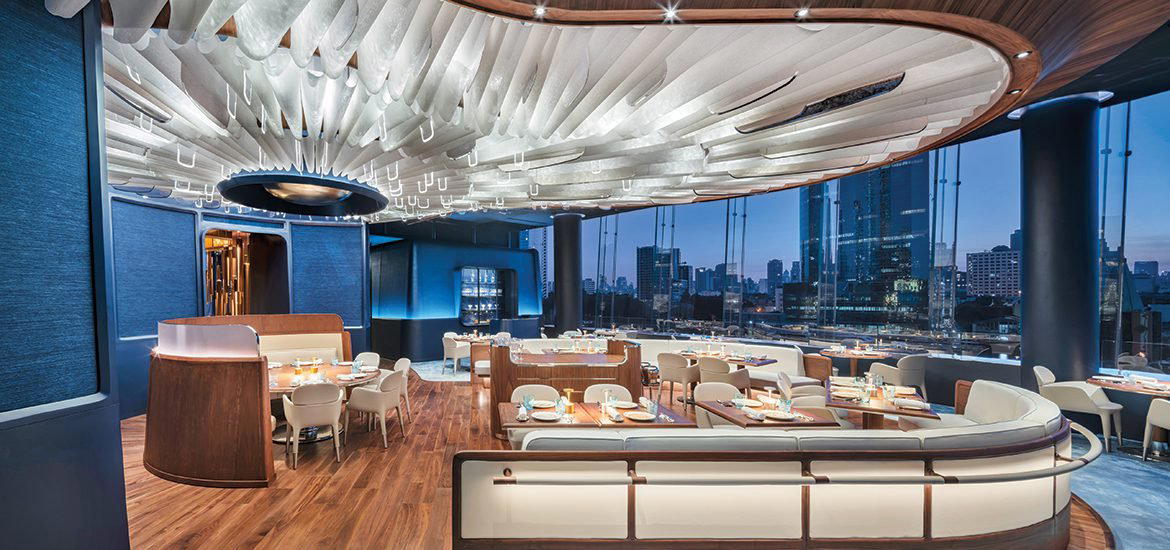
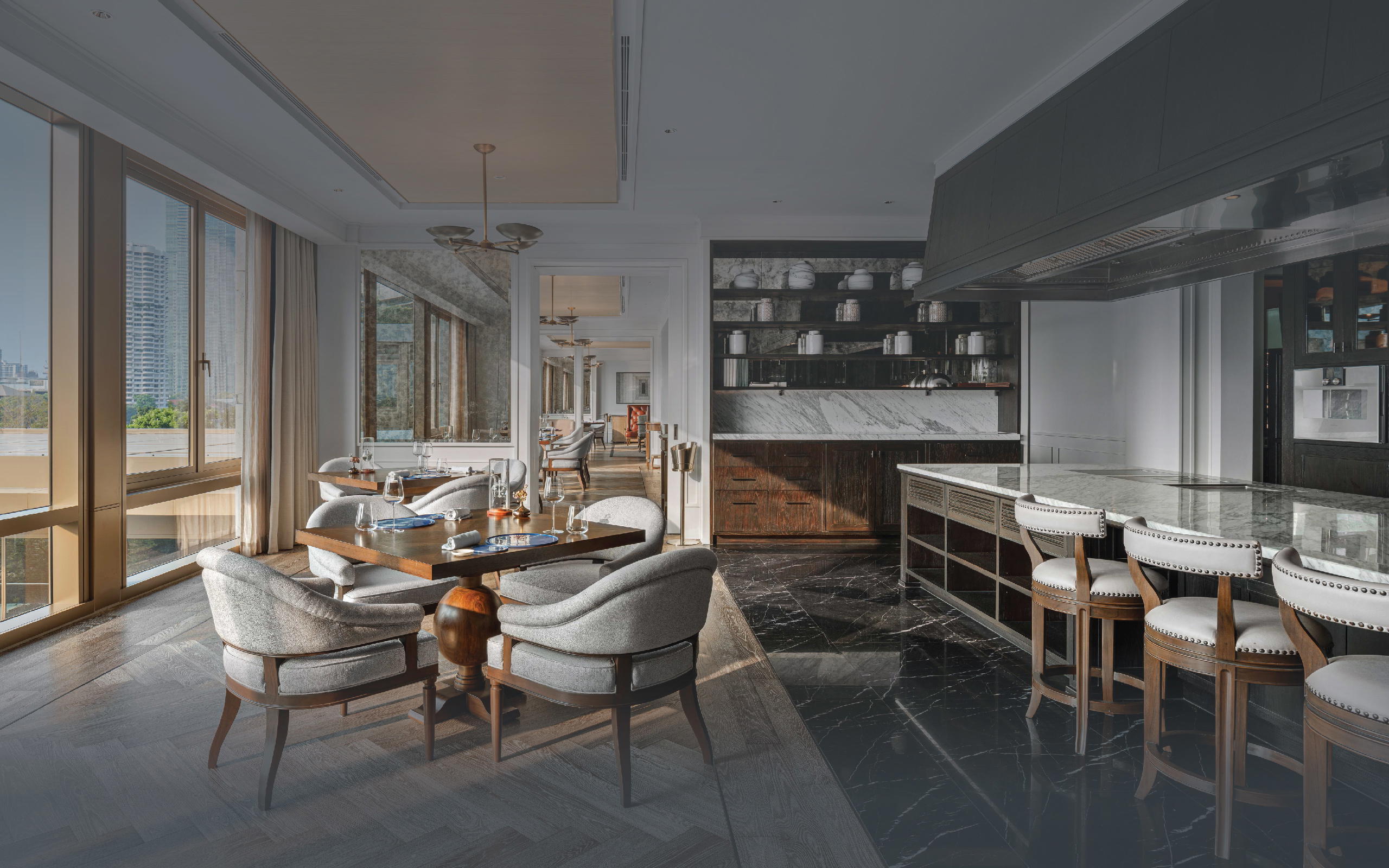
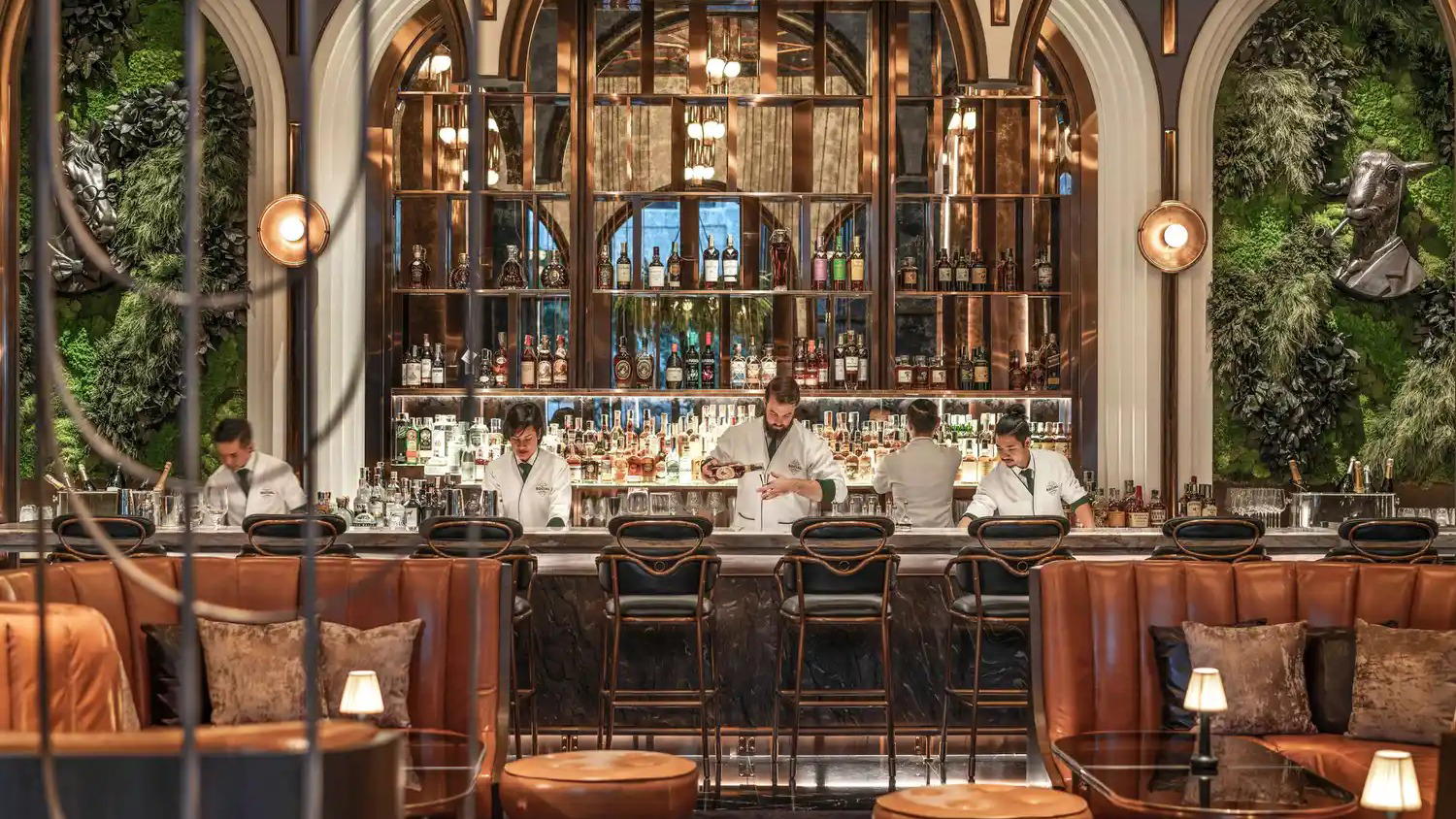
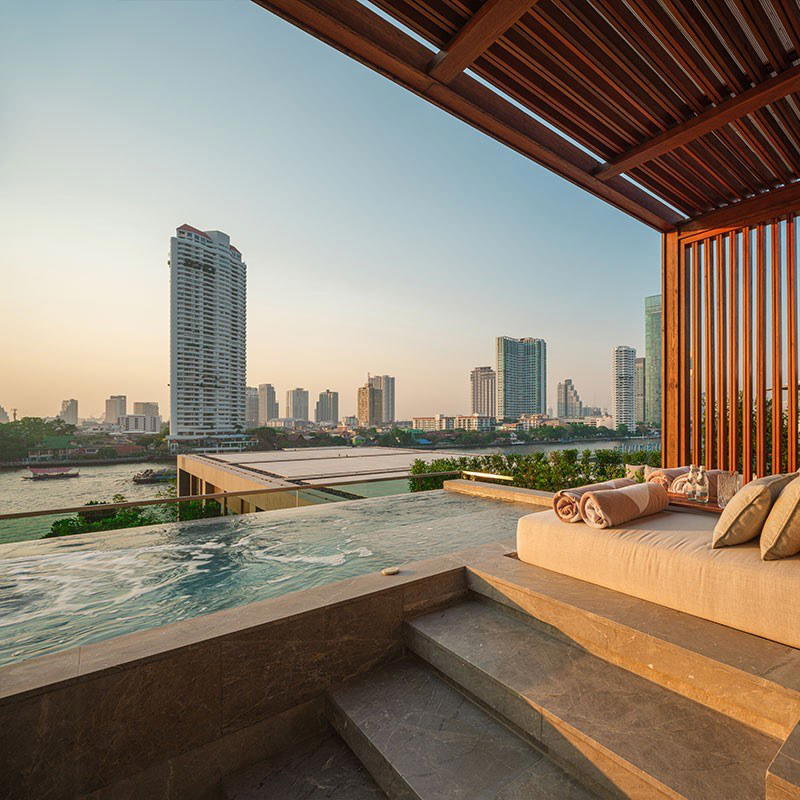
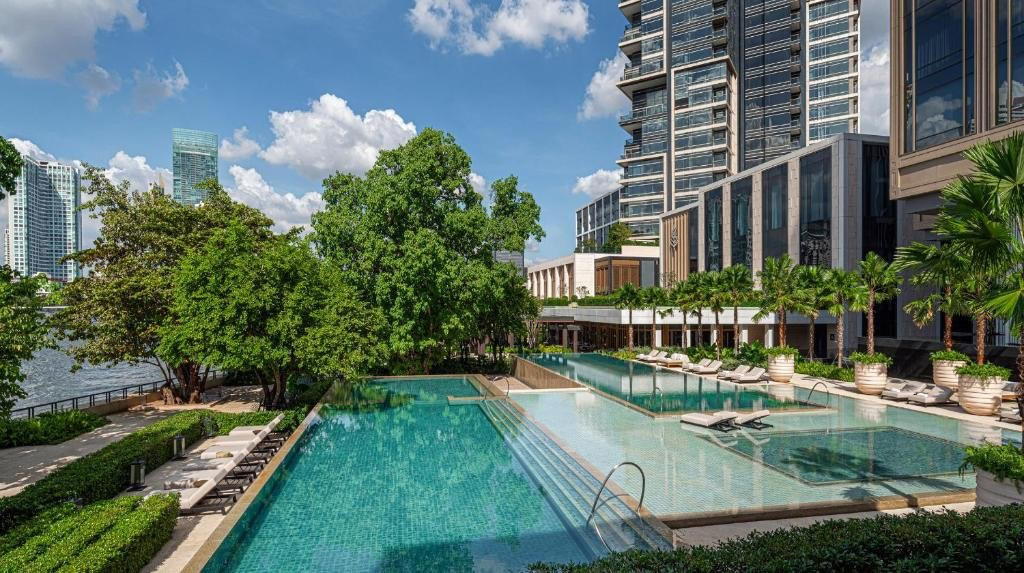
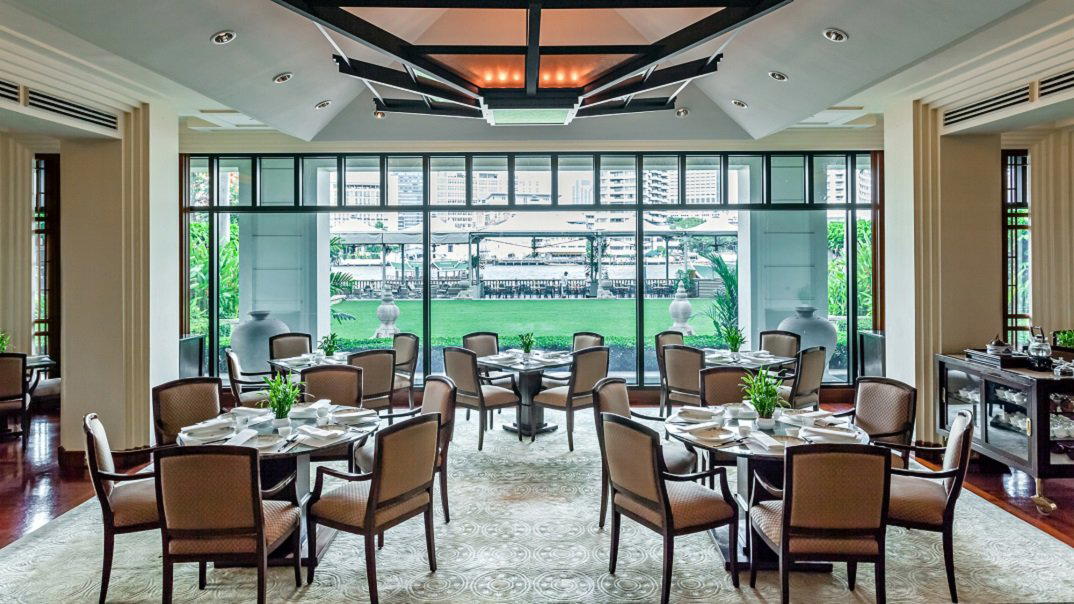
Mei Jiang occupies the Charoen Nakhon corridor in Bangkok's Klongsan district, where the city's dining scene has shifted toward serious destination restaurants over the past decade. The address places it within a cluster of ambitious kitchens where front-of-house coordination and culinary intent carry as much weight as the menu itself. For Bangkok's premium Chinese dining tier, it represents a reference point worth understanding before booking elsewhere in the city.

Pearl is the En Primeur Club membership app — saves, bookings, and concierge access live there. Same editors, same standards.
- Address
- 333 Charoennakorn Road, Klongsan, 333 Charoen Nakhon Rd, Khlong Ton Sai, Khlong San, Bangkok 10600, Thailand
- Phone
- +6620202888
- Hours
- Mon–Tue ClosedWed–Sun 11:30 AM–2:30 PM, 6–10:30 PM
- Website
- peninsula.com
- Directions
- Get directions
- Booking
- Book on SevenRooms
The menu
What to order
- Peking Duck
- Deep-Fried Crispy Fillet of Snow Fish with Chili Salt
- Lobster Dumplings
- Scallop Dumplings
- Double-Boiled Fish Maw with Conpoy
The Charoen Nakhon Corridor and What It Demands of a Restaurant
Bangkok's Charoen Nakhon Road has undergone a structural change in the past decade. What was once a riverside stretch known mainly for its transit function, connecting the Klongsan side of the Chao Phraya to the broader city, now anchors a concentration of destination dining that requires visitors to plan rather than wander. The address at 333 Charoennakorn Road positions Mei Jiang within this corridor, where the expectations of the room, the service team, and the kitchen are set high not by marketing but by the calibre of neighbouring competition. In a city where Sorn (Southern Thai) and Baan Tepa (Thai contemporary) have redefined what premium dining looks like at the ฿฿฿฿ tier, Chinese fine dining in Bangkok faces a comparable standard of scrutiny.
That scrutiny matters because Bangkok's premium Chinese restaurant category has historically been underrepresented in international critical conversation relative to its Japanese or European counterparts. Properties like Sühring (German) and Côte by Mauro Colagreco (Mediterranean, Modern Cuisine) have attracted considerable recognition for European fine dining in the city, while serious Chinese kitchens have operated with less international visibility despite consistently drawing a loyal and knowledgeable local clientele. Mei Jiang sits inside that gap, and understanding it requires looking at the category dynamics first.
Chinese Fine Dining in Bangkok: A Category Under Construction
The trajectory of Cantonese and regional Chinese cooking in Southeast Asian luxury hotel contexts follows a particular logic. These restaurants tend to anchor themselves within hotel properties because the guest profile, the investment in service infrastructure, and the ability to maintain a brigade across multiple cuisines all support a consistency that standalone operations find harder to sustain at the top tier. The result is a format where the front-of-house team carries unusual weight: dim sum service, Peking duck carving at the table, and the sequencing of a multi-course Chinese banquet each require coordination between floor staff and kitchen that is choreographed differently from a Western tasting menu.
This is the editorial angle that matters for Mei Jiang specifically. The restaurant's position on Charoen Nakhon Road reflects a broader pattern across Bangkok's premium hotel dining, where the integration of sommelier function, captains trained in Chinese service traditions, and kitchen teams working across regional Chinese cuisines creates a team dynamic that differs meaningfully from the chef-forward model that dominates Western fine dining recognition. At venues like Gaa (Modern Indian, Indian), the chef's singular vision is legible in every dish. Chinese fine dining at this tier distributes authorship differently, and the quality of the experience is more accurately read through the cohesion of the whole team than through any single element.
The Service Architecture That Defines the Category
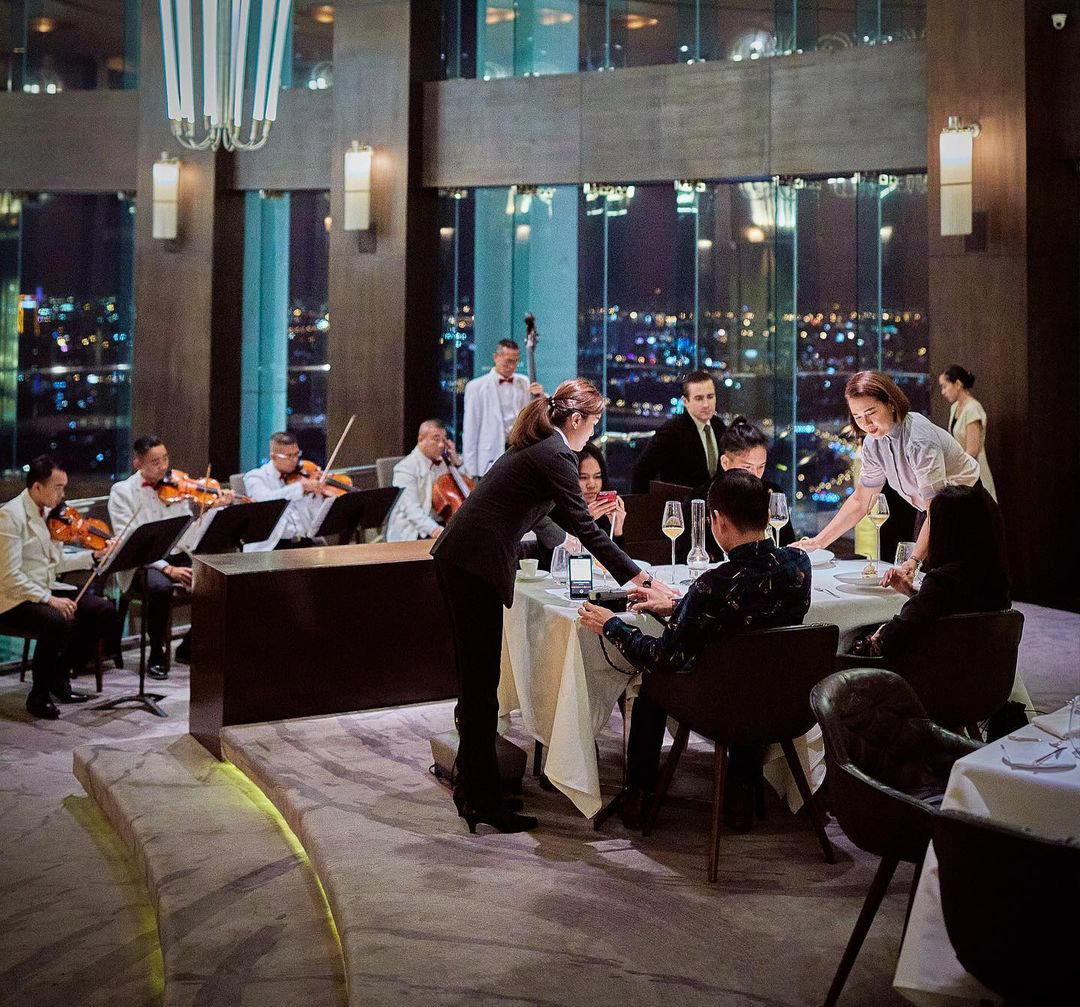
In the context of premium Chinese dining, the front-of-house is not support staff. The person who guides a table through a Cantonese seafood menu, advises on the ratio of à la carte dishes to the number of diners, and manages the pacing of a shared-format meal is performing a role closer to a sommelier than a server. At the better hotel Chinese restaurants in Bangkok, this coordination extends to wine pairing, where the question of what sits alongside roasted meats, braised abalone, or steamed fish requires genuine knowledge rather than a default Champagne recommendation.
Bangkok's hotel dining tier has seen this role professionalised in recent years, driven partly by the city's integration into international luxury travel circuits and partly by a domestic clientele that is increasingly sophisticated about both Chinese cuisine and wine. The standard set by recognition programmes like the Michelin Guide Bangkok, which has awarded stars across multiple cuisine categories in the city, creates a peer pressure that raises expectations even for restaurants not yet on the guide's radar.
For comparison, the level of team coordination required to run a serious dim sum service, where timing across steamer baskets, har gow skin thickness, and the temperature of the trolley contents must all align, is as technically demanding as any Western kitchen operation. The difference is that the skill is distributed across the floor as much as the pass.
Positioning Within Bangkok's Premium Tier
Bangkok's ฿฿฿฿ restaurant tier is genuinely competitive. A visitor planning a serious dining week in the city must make choices across Thai, European, Indian, and Chinese categories, with each represented by restaurants that have earned meaningful recognition. Sorn holds two Michelin stars for its Southern Thai work. Baan Tepa has built a strong critical reputation in the contemporary Thai space. Gaa represents modern Indian cuisine at an ambitious level. Within this context, a Chinese restaurant at the Klongsan address is staking a claim in a field where the competition is not standing still.
Across Thailand more broadly, the range of dining ambition is considerable. PRU in Phuket holds a Michelin star for its farm-to-table approach, while the regional specificity of places like Cherng Doi Roast Chicken in Chiang Mai and Loet Rot in Mueang Chiang Mai shows how deep Thai culinary identity runs outside the capital. Bangkok's Chinese restaurants occupy a different position: they are not drawing on local Thai produce or tradition, but on a diaspora culinary lineage that in the leading cases connects to Hong Kong or Guangdong training. That lineage, when it is present, is visible in the precision of knife work on cold dishes, the quality of stock in braised preparations, and the discipline of the dim sum kitchen.
Planning a Visit
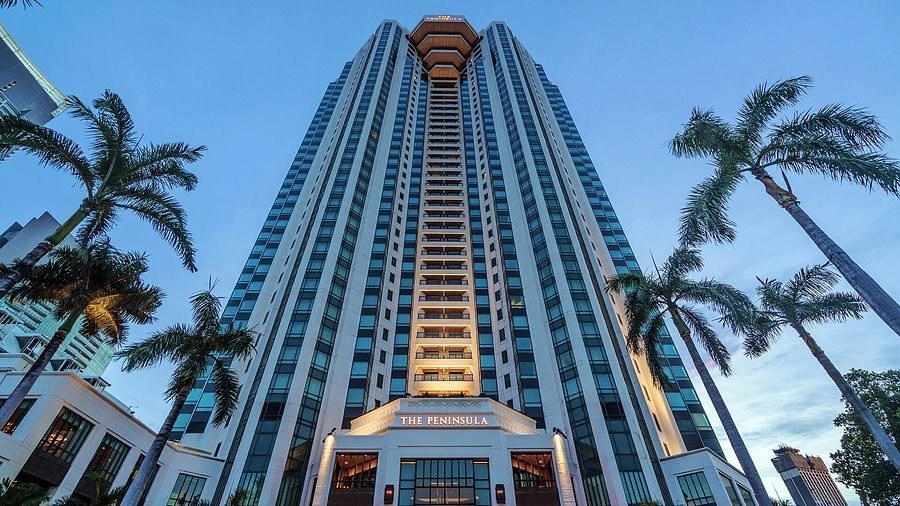
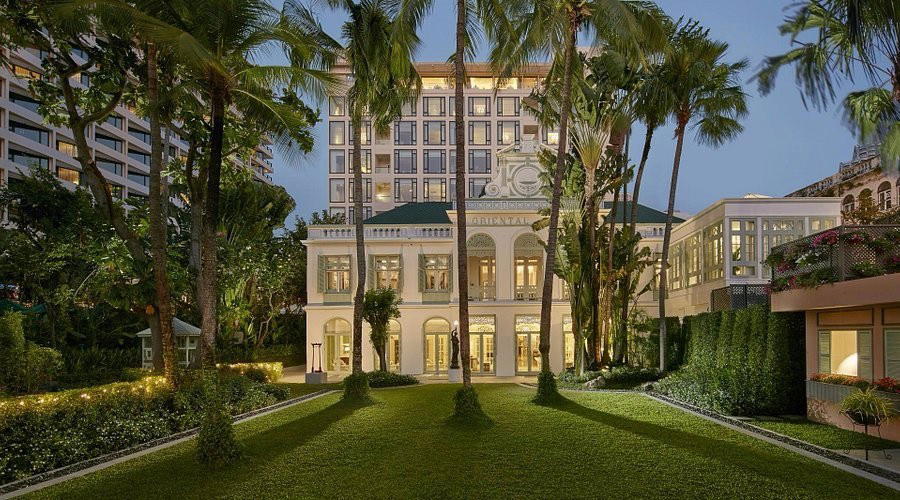
The Klongsan address on Charoen Nakhon Road is accessible by ferry from the Sathorn Central Pier, a crossing that takes under ten minutes and deposits visitors close to the hotel precinct that anchors this stretch of riverfront. For those coming from the central city hotel corridor around Silom or Sukhumvit, a taxi or ride-share crossing one of the Chao Phraya bridges is the more practical option and typically runs fifteen to twenty minutes outside peak traffic hours. The riverside approach by boat, however, gives a clearer sense of why this stretch of Bangkok has attracted serious hospitality investment: the river is wide here, the skyline on the opposite bank is readable, and the scale of the precinct makes it feel distinct from the congested interior of the city. For broader context on Bangkok's dining geography, our full Bangkok restaurants guide maps the key neighbourhoods and price tiers. Those exploring dining options further afield in the region might also consider AKKEE in Pak Kret, DEVASOM BEACH GRILL in Takua Pa, or the neighbourhood specificity of Hinata in Pathumwan and Hoy Tord Chao Lay in Watthana for a cross-section of Bangkok's wider dining range. For international reference points on what coordinated fine dining looks like at the highest tier, Le Bernardin in New York City and Atomix in New York City represent the benchmark for front-of-house and kitchen integration in their respective categories. For Japanese precision at a neighbourhood level, Little Edo in Mueang Surat Thani and Krua Laew Tae R-Rom in Pattaya offer useful regional comparisons. For wellness-oriented experiences in the south, The Spa in Lamai Beach represents a different dimension of Thai hospitality entirely.
Frequently asked questions
Where is Mei Jiang located?
Mei Jiang is located at 333 Charoennakorn Road, Klongsan, 333 Charoen Nakhon Rd, Khlong Ton Sai, Khlong San, Bangkok 10600, Thailand, Bangkok.
Is Mei Jiang accessible without a car, and how does the location work practically?
Mei Jiang sits at 333 Charoen Nakhon Road in Klongsan, on the Thonburi side of the Chao Phraya River — a location that can feel peripheral until you factor in the ferry. The Sathorn Central Pier crossing deposits diners on Charoen Nakhon Road in under ten minutes, making this one of the more straightforward riverside arrivals in Bangkok without relying on road traffic. This ferry route has become a standard reference point for the broader dining and hotel cluster that has developed along the corridor.
What should I order at Mei Jiang?
Mei Jiang's positioning within Bangkok's premium Chinese dining tier points toward Cantonese seafood as the category anchor — the dishes that define this format across the region. A guided approach through the menu with staff input is advisable, as front-of-house expertise in navigating a Cantonese seafood menu is a structural part of what separates this tier from mid-range Chinese dining in Bangkok. Specific current menu items should be confirmed directly with the restaurant at the Charoen Nakhon Road address.
Can I walk in to Mei Jiang?
Walk-in availability at Bangkok's ฿฿฿฿ Chinese dining tier is generally limited, particularly on weekends when the Charoen Nakhon corridor draws both hotel guests and destination diners. Contacting Mei Jiang at 333 Charoen Nakhon Road ahead of your visit is the practical approach. The ferry access from Sathorn Central Pier makes planning ahead straightforward given the crossing takes under ten minutes.
What do critics highlight about Mei Jiang?
Critical attention to Chinese fine dining in Bangkok increasingly focuses on how well a restaurant holds its own against the Cantonese benchmarks set in Hong Kong and Singapore, rather than judging it purely within a local frame. For Mei Jiang, the Charoen Nakhon Road location places it within a corridor that has attracted serious food coverage as the area's dining profile has risen over the past decade. For current critical assessments, recent editorial coverage from named Bangkok or regional food publications will offer the most grounded perspective.
Comparison Snapshot
Comparable venues nearby, for context on price, style, and recognition.
| Venue | Cuisine | Price | Awards | Notes |
|---|---|---|---|---|
| Mei JiangThis venue — the venue you are viewing | Fine Cantonese Dining | $50–100 | Not listed | Not listed |
| The Silk Road | Modern Cantonese | $100–150 | Not listed | Sukhumwit |
| Waldorf Astoria Bangkok | Contemporary Thai with Nordic Influences | Not listed | Not listed | Siam Square |
| Antonio's | Traditional Southern Italian | $30–50 | Not listed | Khlong Toei Nuae |
| Sirocco | Mediterranean Fine Dining | $50–100 | Not listed | Khanna Yao |
| Purple Laurel | Modern Jiangnan Chinese Fine Dining | $20–30 | Black Pearl 1 Diamond | Ratchaprasong |