Max's Opera Cafe
Max's Opera Cafe at 601 Van Ness Ave occupies a distinctive corner of San Francisco's Civic Center dining corridor, where the pre-theatre crowd and the neighbourhood's working professionals have long shared tables under one roof. Known for generous portions and a deli-inflected American menu, it sits in a different register from the city's tasting-menu tier, offering a more casual, high-capacity alternative to the likes of Atelier Crenn or Benu a few miles away.
Pearl is the En Primeur Club membership app — saves, bookings, and concierge access live there. Same editors, same standards.
- Address
- 601 Van Ness Ave, San Francisco, CA 94102
- Phone
- +14157717300
- Website
- maxsoperasf.com
- Directions
- Get directions
 Saves & bookings on Pearl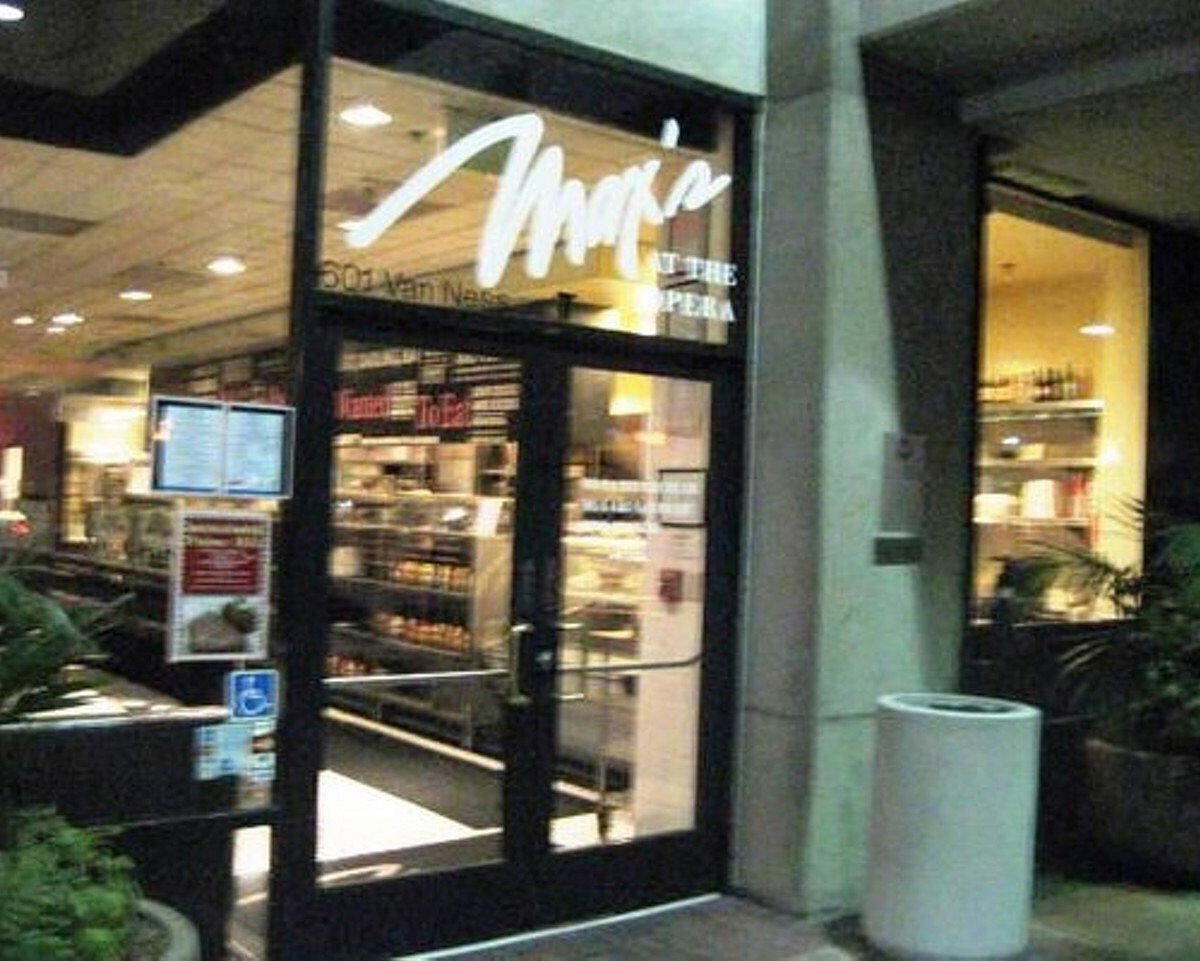
The Room Before the Show
Max's Opera Cafe is a casual Classic American Diner at 601 Van Ness Ave in San Francisco. Davies Symphony Hall, the San Francisco Opera, and City Hall anchor this stretch, and the restaurants along it have historically organised themselves around that cultural calendar.
Max's Opera Cafe at 601 Van Ness Ave sits squarely inside that tradition. The address alone tells you something about the intended audience. This is a room designed to accommodate the performing-arts crowd on a schedule. Wide booths, a generous footprint, and a layout that allows tables to turn without creating a sense of pressure are not accidental choices; they are the core design logic of a venue built around the rhythms of a neighbourhood where 8pm curtain times are a fixed variable.
Space as Argument: What the Interior Communicates
Restaurants like Quince or Benu operate in rooms where every element of the physical environment has been calibrated to channel attention toward the food. Counter seating, intimate proportions, and controlled acoustics are tools in a deliberate programme.
Max's occupies the opposite end of that spectrum. The cafe-scale interior, with its high energy and social density, functions as an argument for a different kind of dining occasion: one where conversation competes comfortably with the plate, where groups of four or six can settle in without feeling the weight of a prix-fixe progression, and where the room itself signals accessibility rather than ceremony. There is genuine utility in a room that absorbs a party of eight without a waiting list.
The large-format American restaurant with a deli-inflected sensibility, anchored to a cultural institution or a civic district, appears in recognisable form at Emeril's in New Orleans and in the broader neighbourhood-restaurant tradition that venues like Bacchanalia in Atlanta represent, even if the culinary registers differ significantly. The throughline is the relationship between the restaurant and its surrounding civic or cultural context.
The Menu in Context
Max's Opera Cafe serves a classic American deli-cafe menu. The cafe format prioritises familiarity, portion size, and menu breadth.
That breadth is a feature rather than a shortcoming in the context of Civic Center dining. A party arriving from the symphony or heading to the opera before curtain needs a menu that resolves quickly, portions that satisfy without requiring a second course, and a kitchen that can produce reliably across a full dining room. These are operational demands that tasting-menu kitchens are not built to meet, and they explain why the deli-cafe format persists in cultural-institution corridors across American cities, from New York's Lincoln Center neighbourhood to Chicago's theatre district, where venues near Alinea occupy a different purpose than the restaurant itself.
Where It Sits in the San Francisco Dining Map
San Francisco's restaurant scene has bifurcated sharply over the past decade. Below that tier, the city's neighbourhood restaurants, cafes, and informal dining rooms serve a different function entirely.
The restaurant occupies the latter category and makes no claim to the former. Its competitive set is the working neighbourhood restaurant with strong local patronage and a functional relationship to its immediate surroundings. That positioning is neither a criticism nor a consolation; it is simply an accurate description of what the room is for and who uses it. Visitors arriving from Addison in San Diego, The Inn at Little Washington, or 8 1/2 Otto e Mezzo Bombana in Hong Kong should calibrate expectations accordingly: this is a neighbourhood anchor, not a destination-dining proposition.
The blocks surrounding Davies Hall and the Opera House draw arts patrons, city government workers, and residents from the adjacent Western Addition and Hayes Valley neighbourhoods. That social diversity shapes the dining room's character in ways that a more isolated fine-dining destination, such as Blue Hill at Stone Barns in Tarrytown, never needs to contend with.
Recognition, Side-by-Side
Comparable venues nearby, for context on price, style, and recognition.
| Venue | Cuisine | Price | Notes |
|---|---|---|---|
| Max's Opera CafeThis venue — the venue you are viewing | Classic American Diner | $$ | Not listed |
| Town's End Brunch | American Brunch | $$ | Financial District/South Beach |
| Serpentine | Seasonal American Gastropub | $$ | Potrero Hill |
| Black Bark BBQ | Texas-Style BBQ | $$ | Fillmore |
| Ballast Point Brewing | American Brew Pub | $$ | Mission Bay |
| Bluestem Brasserie | Seasonal American Brasserie | $$ | Financial District/South Beach |
Continue exploring
More in San Francisco
Restaurants in San Francisco
Browse all →
Bars in San Francisco
Browse all →
Hotels in San Francisco
Browse all →
At a Glance
- Lively
- Classic
- Casual Hangout
- Group Dining
- After Work
- Live Music
- Craft Cocktails
Current opening hours
- Monday
- 11 AM–9 PM
- Tuesday
- 11 AM–9 PM
- Wednesday
- 11 AM–9 PM
- Thursday
- 11 AM–9 PM
- Friday
- 11 AM–9 PM
- Saturday
- 11 AM–9 PM
- Sunday
- 11 AM–9 PM
Hours can change for holidays and private events. Last verified .
Lively and lively atmosphere enhanced by live piano music, with a community feel ideal for pre-theater dining.