Maurer Würstelstand occupies a spot on Maurer Hauptplatz in Vienna's 23rd district, operating within the city's long tradition of street-level sausage stands that function as neighbourhood anchors rather than tourist attractions. The Würstelstand format sits at the democratic end of Vienna's food culture, where the sourcing of the sausage itself, not table service or tasting menus, is the entire editorial argument.
Pearl is the En Primeur Club membership app — saves, bookings, and concierge access live there. Same editors, same standards.
- Address
- Maurer Hauptpl. vor/4, 1230 Wien, Austria
- Phone
- +436706558370
- Website
- maurer-wuerstelstand.at
- Directions
- Get directions
 Saves & bookings on Pearl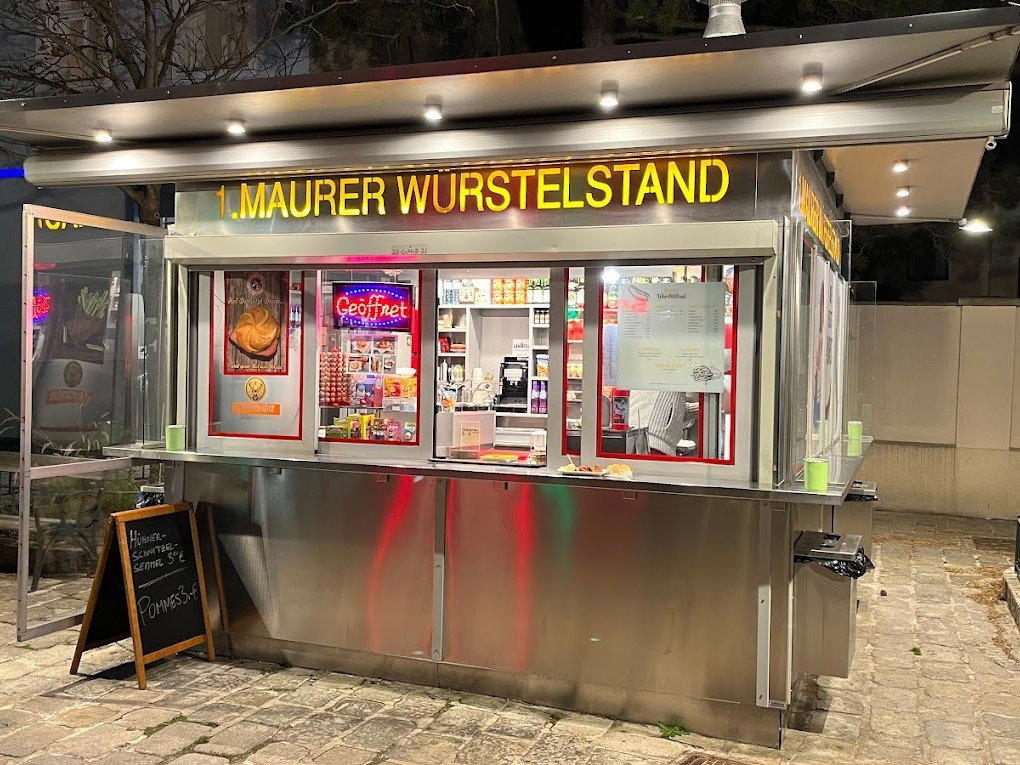
Vienna's 23rd District and the Würstelstand as Institution
Maurer Würstelstand is a traditional Viennese sausage stand in Vienna's 23rd district, priced around $10 per person. Approach Maurer Hauptplatz on a cold evening and the scene is immediately legible: a lit stand, steam rising, a handful of regulars conducting the kind of brief, purposeful transaction that Viennese street food has always been built around. The Würstelstand is not a casual dining concept or a street food trend import. It is a fixture of Austrian urban life that predates most of the fine-dining conversation now surrounding Vienna's restaurant scene, and it operates on entirely different logic from the tasting-menu rooms that have made the city's culinary reputation internationally.
Vienna's Würstelstand culture is dense enough that the city's relationship with its sausage stands has been discussed in social and cultural terms, these are places where students, taxi drivers, and office workers share the same queue at 2am, where the transaction is frictionless, and where the product is the point. Maurer Würstelstand, positioned on the square in the 23rd district of Liesing, sits inside that tradition rather than commenting on it.
Where the Food Comes From: The Sourcing Argument Behind Austrian Sausage
The editorial angle that matters most at any Würstelstand is ingredient provenance, because the format strips away almost every other variable. There is no room concept to assess, no wine pairing to debate, no plating to evaluate. The sausage itself, its casing, its fat content, its seasoning, its supplier, is the entire product. Austria's sausage-making tradition draws on a regional network of producers whose output ranges considerably in quality, and the better stands in Vienna distinguish themselves through sourcing decisions rather than culinary technique.
Austrian charcuterie production is regionally specific in ways that matter at this price point. Käsekrainer, the cheese-filled pork sausage that has become something of a Viennese calling card, is produced differently across the country, with the leading versions using domestic pork and local dairy rather than industrial substitutes. The Bratwurst and Debreziner that anchor most stand menus similarly reflect supply chain decisions: stands that source from smaller regional producers typically show in the texture and seasoning of the finished product. Whether Maurer Würstelstand operates within that higher-provenance tier is a question that local regulars in the 23rd district are better placed to answer than any published review, given the absence of documented sourcing data.
What is structurally true about the format is this: the Würstelstand sits at the opposite end of the sourcing transparency spectrum from the fine-dining rooms that increasingly publish supplier relationships and farm names. At a stand like this, provenance knowledge is informal and community-held. The regulars know the product through repetition; the tourist does not have that reference point. That asymmetry is, in many ways, the defining characteristic of neighbourhood food culture in any city.
The 23rd District as Context
Liesing is not the Vienna that appears in travel features. It is a residential district in the south of the city, reached by U-Bahn line U6 or by tram, and its character is suburban rather than monumental. Maurer Hauptplatz itself retains a village-square quality that reflects the fact that Mauer was an independent municipality before its incorporation into Vienna. A Würstelstand on that square is functioning as a neighbourhood service, not a destination. That distinction matters when thinking about what kind of visit this represents.
For travellers who spend their entire Vienna stay in the first and fourth districts, this stand represents a different register of the city entirely. Vienna's food culture extends well beyond the Ringstrasse corridor, and the 23rd district's food infrastructure reflects the priorities of a working residential population rather than an international visitor base. The Würstelstand is one compressed expression of that infrastructure: low overhead, high frequency, community-embedded.
Würstelstand vs. Vienna's Fine-Dining Tier: A Structural Comparison
Vienna operates with an unusually wide spread between its street food floor and its fine-dining ceiling. At one end, stands like Maurer Würstelstand serve sausages for a few euros in outdoor or minimal covered settings with no booking required. At the other, rooms like Steirereck im Stadtpark and Konstantin Filippou operate at €€€€ price points with advance reservations and Michelin recognition. Between those poles sit creative Austrian rooms like Mraz & Sohn and Amador, and destination-adjacent formats like Doubek.
The Würstelstand occupies none of those tiers. It is a parallel system, not a lower rung on the same ladder. The logic of evaluation is completely different: there are no reservations, no dress codes, no tasting menus, and no critical apparatus beyond local word of mouth. Austria's broader dining culture, represented regionally by operations like Döllerer in Golling an der Salzach, Landhaus Bacher in Mautern an der Donau, and Obauer in Werfen, reflects deep investment in Austrian ingredient tradition. The Würstelstand draws on the same agricultural and charcuterie heritage but in a format where speed and accessibility are the design constraints, not culinary expression.
| Format | Venue Example | Price Tier | Booking | Setting |
|---|---|---|---|---|
| Würstelstand | The restaurant | € | None | Street/square |
| Creative Austrian | Mraz & Sohn | €€€€ | Advance required | Restaurant room |
| Modern European | Konstantin Filippou | €€€€ | Advance required | Restaurant room |
| Alpine fine dining | Griggeler Stuba | €€€€ | Advance required | Hotel restaurant |
Planning a Visit to Maurer Hauptplatz
The 23rd district is accessible from central Vienna via U6 to Siebenhirten and onward by surface transport. Visiting in winter, when the stand's heat and steam carry genuine functional value, reflects the season in which this format has always been most in its element. Summer visits work too, but the atmosphere is different: the stand loses some of its urgency when the temperature is not working against you.
Peers You’d Cross-Shop
Comparable venues nearby, for context on price, style, and recognition.
| Venue | Cuisine | Price | Notes |
|---|---|---|---|
| Maurer WürstelstandThis venue — the venue you are viewing | Traditional Viennese Sausage Stand | $ | Not listed |
| Würstelbox | Viennese Sausage Stand | $ | Favoriten |
| Almrausch Imbiss | Austrian Street Food Imbiss | $ | Riesenrad |
| Würstel Boutique | Austrian Sausage Stand | $ | Favoriten |
| eh scho wuascht | Traditional Austrian Würstelstand | $ | Kaiserebersdorf |
| Zur Bosnarei | Austrian Sausage Stand | $ | Alsergrund |
Continue exploring
More in Vienna
Restaurants in Vienna
Browse all →
![[aend] restaurant in Vienna](https://cdn.enprimeurclub.com/storage/v1/object/public/images/locations/recsVyRkMfzCxPmp0/hero2.jpg?width=3840&quality=75)
Bars in Vienna
Browse all →

Hotels in Vienna
Browse all →
At a Glance
- Well Known
- Lively
- Rustic
- Casual Hangout
- Late Night
- Beer Program
- Local Sourcing
Current opening hours
- Monday
- 10 AM–6 PM
- Tuesday
- 10 AM–6 PM
- Wednesday
- 10 AM–6 PM
- Thursday
- 10 AM–6 PM
- Friday
- 10 AM–6 PM
- Saturday
- 10 AM–6 PM
- Sunday
- Closed
Hours can change for holidays and private events. Last verified .
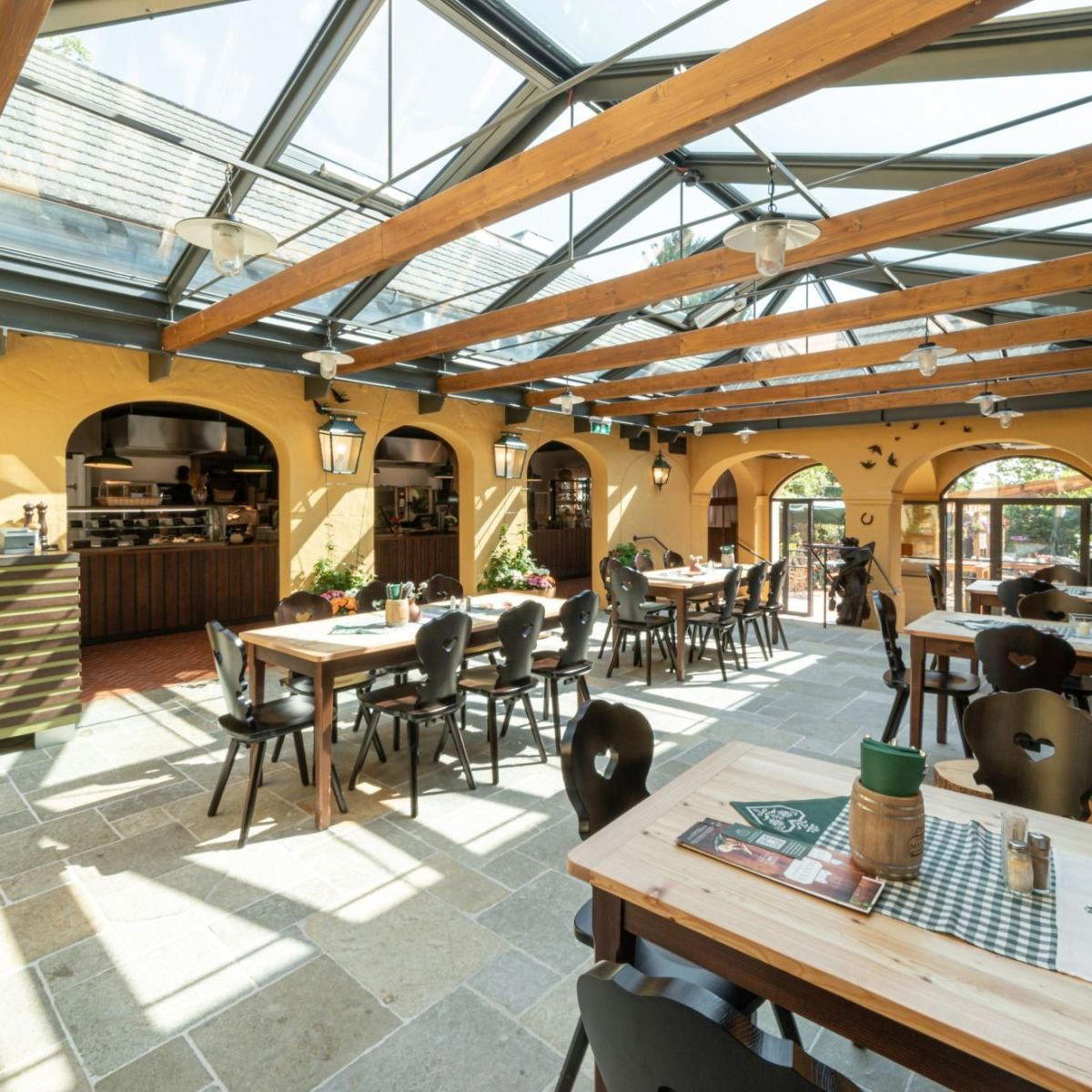
Casual street food atmosphere with quick service and lively energy typical of a würstelstand.