
On Calle de Ayala in Madrid's Salamanca district, Matteo Cucina Italiana occupies a residential address that places it inside one of the city's most established dining neighbourhoods. The kitchen works within the Italian tradition, offering a counterpoint to the creative Spanish cooking that dominates Madrid's upper tier. For visitors exploring the city's broader restaurant scene, it represents the Italian category within a district where expectations run high.
Pearl is the En Primeur Club membership app — saves, bookings, and concierge access live there. Same editors, same standards.
- Address
- Cl. de Ayala, 28, Salamanca, 28001 Madrid, Spain
- Phone
- +34912306816
- Website
- matteocucinaitaliana.com
- Directions
- Get directions
 Saves & bookings on Pearl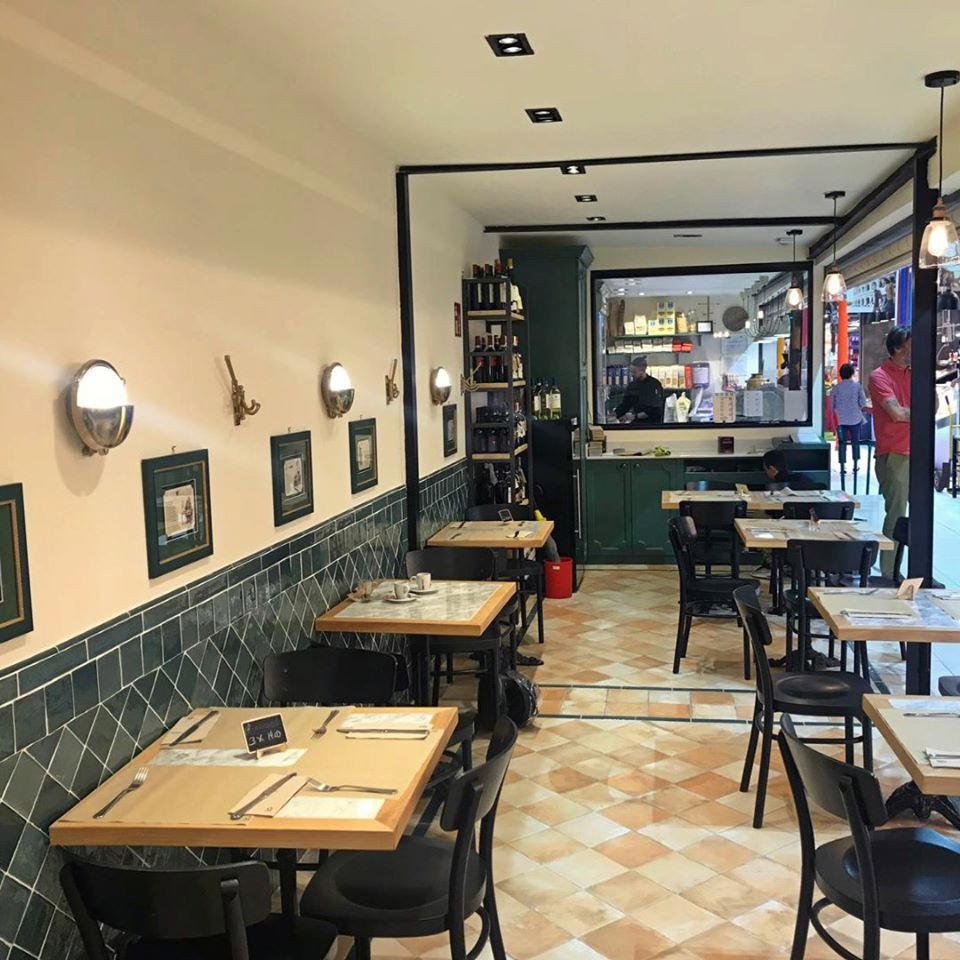
Italian Cooking in a Neighbourhood That Expects Precision
Salamanca is Madrid's most consistently premium dining district. The grid of streets between Serrano and Velázquez has produced a restaurant culture defined by formal service, imported ingredients, and clientele who treat the neighbourhood's tables as a regular extension of domestic life rather than an occasion. Against that backdrop, the Italian restaurant category in Madrid operates differently from its counterparts in London or New York: it competes directly against a Spanish fine-dining scene that has accumulated more Michelin stars per capita than almost any comparable European city. Getting Italian cooking right in Salamanca means meeting a neighbourhood where the reference points are already set high.
Matteo Cucina Italiana sits on Calle de Ayala 28, a residential-commercial street that runs through the heart of that district. The address puts it within walking distance of several of Madrid's most discussed dinner tables, and the surrounding density of quality restaurants creates both pressure and context.
What the Menu Architecture Reveals
Italian restaurants in Spain face a structural question that French or Japanese kitchens don't: how much do you adapt to local palate, and how much do you hold to regional Italian tradition? The most respected Italian tables in Madrid's upper tier tend to resolve this by committing to a specific regional identity rather than presenting a pan-Italian menu that dilutes the kitchen's authority. A menu built around, say, Piedmontese raw preparations and hand-rolled pasta signals a different set of kitchen priorities than one anchored in Neapolitan technique or Roman simplicity.
The structure of a serious Italian menu in this context usually reveals its ambitions in two places: the antipasti selection and the pasta course. These are the sections where ingredient sourcing, technique discipline, and regional fluency are most exposed. A kitchen that imports its own cured meats, ages its own cheeses, or works with a specific Italian producer for flour is communicating something about its competitive positioning that the main courses alone cannot. In Madrid's Salamanca district, where the surrounding competition from Spanish creative kitchens like DiverXO, Coque, and Deessa operates at the highest tier, an Italian kitchen that trades in generic pasta dishes loses the argument before the first course arrives.
Matteo Cucina Italiana's name itself points toward a kitchen identity built around a named culinary tradition rather than a concept. That framing places emphasis on the cooking rather than on theatrical presentation or fusion logic, which in Madrid's current restaurant moment is a considered choice. The city's most discussed creative kitchens, including DSTAgE and Paco Roncero, operate in an entirely different register. An Italian trattoria-to-fine-dining format occupies a quieter niche, one that draws a repeat local clientele rather than destination diners chasing tasting menus.
Italian Cooking Within Spain's Broader Restaurant Moment
Spain's restaurant tier sits among the most competitive in Europe. A shortlist of Spanish tables currently operating at the highest level includes El Celler de Can Roca in Girona, Arzak in San Sebastián, Azurmendi in Larrabetzu, Martin Berasategui in Lasarte-Oria, Mugaritz in Errenteria, and Quique Dacosta in Dénia. Further across the country, Aponiente in El Puerto de Santa María, Cocina Hermanos Torres in Barcelona, Ricard Camarena in València, and Atrio in Cáceres demonstrate the geographic spread of Spanish cooking's current ambition. That density of serious Spanish cooking shapes what non-Spanish kitchens operating in the country are measured against, even when the comparison isn't direct.
For visitors arriving with experience of Italian restaurants in other major cities, including ambitious formats like Le Bernardin in New York City or the technically precise Korean-influenced work at Atomix, the Madrid Italian category offers a different proposition. It is less about culinary innovation and more about the consistency and sourcing discipline that define a neighbourhood restaurant's long-term reputation in a city with very high baseline standards.
Salamanca as a Dining District
The Salamanca district functions differently from Madrid's historic centre as a dining environment. Tables here serve a permanent residential population rather than tourist flows, which shifts the dynamics of what a kitchen needs to sustain. Repeat customers in Salamanca are regulars in the genuine sense: they return weekly, they know the room, and they are less forgiving of inconsistency than one-time visitors might be. This creates a different kind of pressure on the kitchen than critical recognition alone would generate. A restaurant on Calle de Ayala earns its neighbourhood reputation through accumulation rather than event, which is a longer and arguably more honest test of quality.
For visitors to Madrid planning a broader itinerary, our full Madrid restaurants guide maps the city's dining districts with the same level of specificity, covering everything from the Michelin-heavy upper tier to the neighbourhood restaurants that define the city's daily eating culture.
Planning Your Visit
Matteo Cucina Italiana is located at Calle de Ayala 28, in the Salamanca district of Madrid (28001). The address is accessible by metro via the Serrano or Velázquez stations on Line 4. Dress: Salamanca restaurants at this address level typically observe smart-casual standards consistent with the neighbourhood's dining culture. Timing: Madrid's dinner service generally runs later than northern European norms, with most neighbourhood restaurants filling between 9pm and 11pm; arriving earlier may offer more flexibility.
How Matteo Cucina Italiana Madrid compares with similar nearby venues.
| Venue | Cuisine | Price |
|---|---|---|
| Sushi Bar Tottori | Japanese | €€€ |
Recognition history
Dated appearances from independent guides and award organizations, with the underlying list record or original source where available.
Macarfi 7 Food Rating
Macarfi
Continue exploring
More in Madrid
Restaurants in Madrid
Browse all →
Bars in Madrid
Browse all →
Hotels in Madrid
Browse all →

At a Glance
- Lively
- Cozy
- Casual Hangout
- Open Kitchen
Current opening hours
- Monday
- 9 AM–4 PM, 5–8 PM
- Tuesday
- 9 AM–4 PM, 5–8 PM
- Wednesday
- 9 AM–4 PM, 5–8 PM
- Thursday
- 9 AM–4 PM, 5–8 PM
- Friday
- 9 AM–4 PM, 5–8 PM
- Saturday
- 9 AM–2:30 PM
- Sunday
- Closed
Hours can change for holidays and private events. Last verified .
Lively and welcoming atmosphere in a small market setting with open kitchen view.
Know Before You Go
- Getting there
- Cl. de Ayala, 28, Salamanca, 28001 Madrid, Spain