
Matsuya Choshun places Inazawa’s wagashi tradition in a precise, low-price bracket: take-out Japanese traditional sweets with Tabelog 100 recognition for the EAST region in 2023. The appeal is not ceremony or tasting-menu theater, but ingredient-led craft, cash-minded planning, and a suburban Aichi setting where sweets are bought with purpose rather than staged for spectacle.
Pearl is the En Primeur Club membership app — saves, bookings, and concierge access live there. Same editors, same standards.
- Address
- 3 Chome-13-21 Kozawa, Inazawa, Aichi 492-8212, Japan
- Phone
- +81 587-32-0253
- Website
- matsuya-choushun.jp
- Directions
- Get directions
 Saves & bookings on Pearl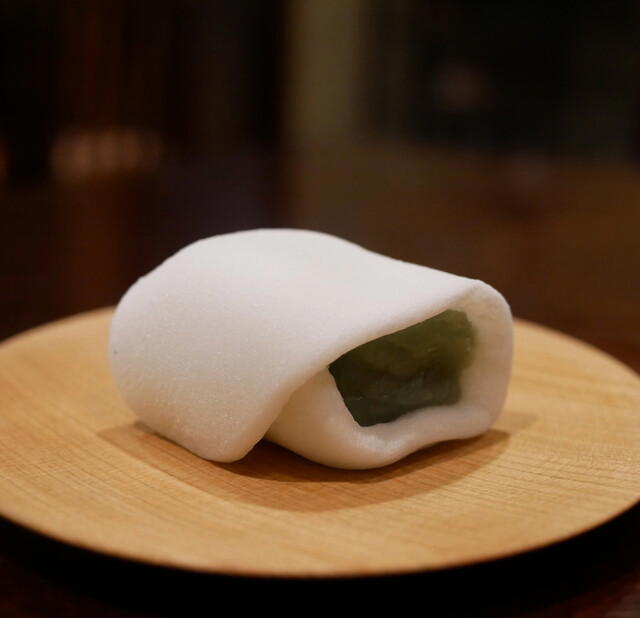
Approaching a serious wagashi shop in suburban Aichi differs from entering a dessert salon in Tokyo or Kyoto. The mood is quieter, the transaction more deliberate, and the craft judged less by decoration than by balance: rice, bean, sugar, seasonality, and texture doing disciplined work in small format. Inazawa’s food culture rewards that precision. Matsuya Choshun belongs to this world, a take-out Japanese traditional sweets address in Kozawa with a price band below JPY 999 and recognition from Tabelog’s 2023 Japanese traditional sweets and Japanese sweets cafe 100 list for the EAST region.
That award matters because wagashi attention often concentrates in old capitals and department-store counters. Selection outside those circuits shows how deep the craft runs in regional Japan. In Aichi, sweets are not only an afterthought to tea culture; they sit alongside everyday gifting, seasonal observance, and the habit of buying something exact rather than excessive. For travelers using Our full Inazawa restaurants guide, this is the counterpoint to noodle shops, cafés, and casual dining: a small-format stop that explains the city through confectionery rather than a meal.
Wagashi here is judged by restraint, not spectacle
Japanese traditional sweets depend on ingredients that seem simple until the maker gets them wrong. Bean paste feels heavy when sugar dominates; rice-based textures turn dull when timing slips; seasonal forms become decorative shorthand when flavor is secondary. Strong wagashi shops work within limits, using a narrow grammar and asking the buyer to notice differences in chew, grain, sweetness, and finish.
Matsuya Choshun sits in that discipline-led lane. The take-out format removes dining-room performance and plated sequencing. The sweet must survive the trip home, gift box, or tea table, which puts pressure on structure and freshness while keeping price logic grounded. In the same Inazawa bracket, pâtisserie an Du temps pour la maison gives the city a Western pastry reference at a similar low spend, while Ramen Kazamidori Honten shows how far Inazawa’s casual dining can go without premium pricing. All three sit at the low-cost end of the city’s food map, but wagashi asks for different attention.
Sourcing is central because wagashi exposes its base materials. Rice flour, beans, sugar, and seasonal plant references leave little room for masking. A restaurant can hide ordinary produce under sauce, heat, or smoke; a traditional sweet shop has fewer distractions. Serious practitioners are therefore judged by clarity rather than abundance: not how much is offered, but whether each piece lands with control.
Inazawa's small-city food map favors purpose-built stops
Inazawa does not need one dining district to make sense. Its stronger addresses are dispersed, so the area reads better by function: a ramen stop, a pastry stop, a sweets stop, somewhere to buy rather than linger. Matsuya Choshun fits that pattern. Its location near Konomiya places it in a practical local circuit rather than a tourist promenade, which suits wagashi buying in Japan: a morning errand, family visit, seasonal gift, or something brought back after temple or shrine plans.
For travelers planning across the city rather than around one meal, the surrounding guides set the scale: Our full Inazawa hotels guide, Our full Inazawa bars guide, Our full Inazawa wineries guide, and Our full Inazawa experiences guide frame the city as a base for modest, specific pleasures rather than grand dining rooms. Wagashi rarely rewards the rushed visitor treating it as a snack between larger plans; it is better understood as a compact expression of place.
The competitive set clarifies value. Out-of-metro casual venues such as Chuka Soba Hanamaru and Tokugawa Cho Josui Nishiharu ten occupy a higher JPY 1,000 to JPY 1,999 band, while Yukkuri Wine Shokudo Gocchaponto moves into restaurant-level evening spending. Against those references, this wagashi stop remains an inexpensive but award-recognized purchase, a combination not common in categories where craft quickly migrates into premium packaging.
How to use it in a wider Japan itinerary
The smartest use of a place like this is not forcing it into a conventional restaurant schedule. It works better as a morning or afternoon acquisition, then part of a tea break, train ride, or gift exchange. Published hours run during the daytime and the shop closes at the start of the week, so planning around open days matters more than chasing dinner. Payment is also part of the practical read: this is a cash-forward visit rather than a frictionless card-and-phone transaction.
That specificity is common across Japan’s smaller food addresses. A traveler moving between regions sees the same lesson in different forms: -Grilled beef Sukiyaki- KAMAKURA TANUKIAN 鎌倉 たぬき庵 in Kamakura speaks to formal beef tradition, . 鮪と炭火焼き うお炭 秋葉原店 in Tokyo reads through fish and charcoal.cafe in Osaka through urban café culture, and.know in Kumamoto through a different regional lens. Casual formats can be as revealing as expensive ones when the product has clear grammar.
The same applies beyond Japan. (Shoku) Vietnam in Kawasaki, [Curry Senmon Ten] Maruyama Kyoju. in Sapporo, [ki:] in Kyoto, #肉といえば松田 奈良本店 in Kashihara, and 1/3 HAMBURGER FACTORY in Kanazawa show how format and ingredient focus can define a meal before price does. In Los Angeles County, Jōdo Saké Bar in Los Angeles and Onigiri Time in Pasadena make the same point differently: Japanese food culture travels through small, specific formats as much as through ambitious dining rooms.
The restaurant is worth reading in that context. Its value lies in a narrow promise: Japanese traditional sweets, take-out service, sub-JPY 999 spending, and external recognition from a category-specific Tabelog 100 list. For Inazawa, that makes the stop editorially significant, showing how a small city can hold serious craft without luxury-dining signals.
Quick Comparison
Comparable venues by cuisine and price in the same metro.
| Venue | Cuisine | Price | Notes |
|---|---|---|---|
| Matsuya Choshun | Traditional Japanese Wagashi (Confectionery) | $ | Inazawa |
| Ramen Kazamidori Honten | Rich Chicken Paitan Ramen & Tsukemen | $ | Inazawa |
| pâtisserie an Du temps pour la maison | French-style pâtisserie and cake shop | $ | Inazawa |
| Tanikawa Beikokuten (谷川米穀店) | Sanuki Udon | $ | まんのう町 |
| 三たてそば 長畑庵 | 三たて蕎麦 | $ | 長畑 |
| うどん満月 中間店 | Traditional Kyushu Udon | $ | 中間市 |
Recognition history
Dated appearances from independent guides and award organizations, with the underlying list record or original source where available.
Tabelog 100 #41 · No. 41
Tabelog · Tabelog 100 - Japanese traditional sweets / Japanese sweets cafe - EAST - 2023

At a Glance
- Classic
- Well Known
- Quiet
- Family
- Casual Hangout
- After Work
- Solo
- Historic Building
- Standalone
- Local Sourcing
Current opening hours
- Monday
- Closed
- Tuesday
- Closed
- Wednesday
- 8 AM–6 PM
- Thursday
- 8 AM–6 PM
- Friday
- 8 AM–6 PM
- Saturday
- 8 AM–6 PM
- Sunday
- 8 AM–6 PM
Hours can change for holidays and private events. Last verified .
A classic, low-key Japanese confectionery storefront focused on take-out, with a calm atmosphere reflecting its long history and close relationship with the local shrine.