Michelin Plate
Our verdict
A Michelin Plate-recognised restaurant in Taichung's Xinshe District, Master of Mushroom draws visitors to the foothills with Taiwanese cooking centred on locally grown fungi.

Pearl is the En Primeur Club membership app, where members save venues, book tables and use the concierge.
The menu
What to order
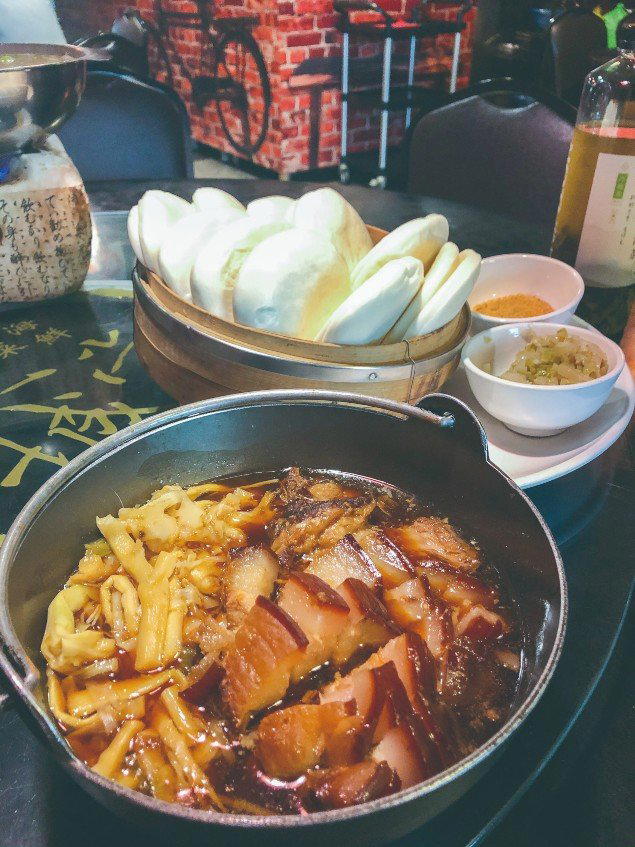
- Mushroom hotpot
- Three-cup monkey-head mushrooms
Fungi, Foothills, and the Xinshe Table
Taiwan's restaurant scene has a well-documented pull toward the urban and the polished. Taipei draws the tasting-menu crowd, venues like logy in Taipei and Golden Formosa represent one end of the spectrum, where ingredient sourcing and technique converge in formal settings. But a quieter, more rooted strand of Taiwanese dining has always existed in the island's agricultural districts, where the produce itself provides the logic of the menu. Xinshe District, in Taichung's eastern hills, belongs to that tradition. It is one of Taiwan's primary mushroom-cultivation areas, and restaurants here are less about chef-driven narrative than about proximity to raw material.
Master of Mushroom sits on Xiezhong Street in Xinshe and has built a reputation that extends well beyond the district.
The Ingredient Logic of the Xinshe Table
Understanding Master of Mushroom requires understanding what mushroom cultivation means in this part of central Taiwan. Xinshe's cool altitude and consistent humidity create conditions that suit a wide range of fungal varieties, and the district has developed an agricultural identity around it. The relationship between a restaurant and its immediate growing region is rarely tighter than this: the supply chain is measured in kilometres rather than provinces, and seasonal variation in the mushroom harvest translates directly to what ends up on the plate.
This kind of ingredient-first cooking sits at a different point on the Taiwanese dining spectrum from the urban Taiwanese contemporary style practised at, say, YUENJI in Taichung's city centre, where the price point reflects technique and service architecture as much as produce. Master of Mushroom occupies the $$ tier, which in Taiwanese terms means accessible pricing without the tasting-menu infrastructure. The comparison is useful: both are Taiwanese in orientation, but they operate on different registers of formality, cost, and culinary intent.
Heat, Umami, and the Flavour Architecture
The editorial angle on this kitchen involves the layered approach to flavour that characterises the broader ma-la tradition, adapted here through the prism of fungi rather than Sichuan peppercorn-forward protein dishes. Mushrooms carry an innate umami density that interacts differently with heat than, say, pork or tofu. Where a classic Sichuan preparation might let numbing heat dominate, a mushroom-led kitchen has to calibrate spice against the earthy, savoury baseline of the fungi themselves. The result, in the leading examples of this approach, is a more textured heat profile: warmth that builds over multiple dishes rather than announcing itself in the first bite.
Taiwan's own chilli culture draws from multiple traditions. The island absorbed southern Chinese cooking influences across centuries of migration, and the ma-la spectrum is present in Taiwanese cooking, though often softened or reworked through local ingredient preferences. In a mushroom-focused kitchen, that reworking tends to emphasise depth over intensity. The fungi anchor the dish, and the heat acts as accent. This is a philosophically different approach from the full-intensity Sichuan register, and it suits the kind of multi-dish lunch or dinner that Taiwanese agricultural-district restaurants typically serve.
For context on the range of Taiwanese cooking approaches across the island, the Michelin-recognised kitchens at Akame in Wutai Township and A Cun Beef Soup on Baoan Road in Tainan each demonstrate how regional ingredients can anchor a distinct cooking identity. Master of Mushroom belongs in that conversation: a restaurant whose identity is inseparable from its geography.
Where It Sits in Taichung's Dining Picture
Taichung has developed a more diverse restaurant scene than it is sometimes credited with outside Taiwan. The city's Michelin listings span street-food-level operations through to higher-end creative kitchens, and the geography of the municipality is wide enough to encompass urban centre dining alongside the more rural experiences of districts like Xinshe. Visitors who map Taichung dining only through the city core miss a significant part of the picture.
At the accessible end of the price spectrum, Taichung offers substantial variety. Chef Ah-Hsi's Old Time Restaurant, Chien Wei Seafood, Chin Chih Yuan (Central), and Feng Chi Goose each represent a different strand of the city's mid-range food culture. Master of Mushroom's Michelin Plate recognition sets it apart from most of this peer group, not in terms of price but in terms of verified culinary standing at the national level. In 2024, the Plate designation, awarded to restaurants whose cooking meets Michelin's quality threshold without reaching star level, functioned as a marker of consistent, serious cooking.
For those comparing Taiwanese approaches across different price tiers, Fujin Tree Taiwanese Cuisine and Champagne in Taipei and Mipon demonstrate how the $$$-plus bracket handles similar ingredient traditions with a more formal service overlay. GEN in Kaohsiung and Volando Urai Spring Spa and Resort in Wulai District extend the picture further across the island. Master of Mushroom's position in this landscape is clear: it competes on ingredient quality and culinary identity rather than service or format elaboration.
Planning a Visit to Xinshe
Xinshe District sits in Taichung's eastern hills, a meaningful distance from the city's downtown core. Visitors without a private vehicle will need to plan transport carefully, as public transit options to this part of the municipality are limited. The drive from central Taichung takes under an hour and passes through progressively rural terrain, with mushroom farms visible from the road as you approach the district. Weekend visits are particularly popular with Taiwanese families and day-trippers, so arriving early or booking in advance where the restaurant's system allows is advisable. The $$ price point means that a full meal here represents a fraction of what comparable Michelin Plate venues in the city centre or in Taipei would cost. For those building a broader Taichung itinerary, our full Taichung restaurants guide maps the city's dining options across neighbourhoods and price tiers. Further planning resources include our Taichung hotels guide, our Taichung bars guide, our Taichung wineries guide, and our Taichung experiences guide.
Frequently asked questions
Does Master of Mushroom (Xinshe) have a Michelin star or similar recognition?
Master of Mushroom (Xinshe) has received recognition including: Michelin Plate (2024).
How would you describe the cuisine at Master of Mushroom (Xinshe)?
What's the best thing to order at Master of Mushroom (Xinshe)?
The kitchen's identity is built around cultivated mushrooms sourced from Xinshe's cool highland growing conditions, so any dish centred on the house fungi is the logical starting point. Given the Taiwanese cuisine framing and the Michelin Plate recognition earned in 2024, the approach leans toward ingredient-led cooking rather than a fixed set menu, meaning the mushroom-forward preparations are the throughline across the menu.
What does dinner at Master of Mushroom (Xinshe) typically cost?
Pricing at Master of Mushroom (Xinshe) is listed as $$.
Where is Master of Mushroom (Xinshe) located?
Master of Mushroom (Xinshe) is located at No. 287號, Xiezhong St, Xinshe District, Taichung City, Taiwan 426, Taichung.
How far ahead should I plan for Master of Mushroom (Xinshe)?
Xinshe District is a deliberate destination: it sits in Taichung's eastern hills and requires private transport or a planned hire from the city centre. Factor in travel time when booking, and confirm opening hours directly, as the restaurant's schedule is not publicly centralised. The Michelin Plate designation in 2024 has increased interest from Taichung and Taipei visitors, so weekends in particular warrant advance planning.
What makes Master of Mushroom (Xinshe) worth seeking out?
The Michelin Plate awarded in 2024 places it among the credentialled stops in the broader Taichung dining picture, but the more specific case is geographic: Xinshe is Taiwan's primary highland mushroom cultivation zone, and this kitchen builds its menu around that proximity to ingredient source. At a $$ price point, it occupies a position that is accessible by the standards of Michelin-recognised Taiwanese dining, which tends to skew toward higher spend in the city's tasting-menu venues.
Just the Basics
Comparable venues nearby, for context on price, style, and recognition.
| Venue | Cuisine | Price | Awards | Notes |
|---|---|---|---|---|
| Master of Mushroom (Xinshe)This venue (the venue you are viewing) | Taiwanese Mushroom Cuisine | $10–20 | Michelin Plate | Not listed |
| Chef Ah-Hsi's Old Time Restaurant | Taiwanese Roast Goose | $20–30 | Michelin Plate | Ren'ai, Taiwanese Roast Goose |
| ä¸æµ·æªå麵é»é ¸æ¢ 湯 | Traditional Taiwanese/Shanghainese Noodles | $10–20 | Michelin Bib Gourmand | Gongyuan, Modern Taiwanese Noodle Bar |
| Moment in Beijing | Creative Taiwanese | $30–50 | Michelin Plate | Shengping, Northern Chinese Classics |
| Moon Mucang | High-End Hot Pot | Not listed | Not listed | Chaoyang, High-End Hot Pot |
| Küisine (West) | Taiwanese-Southeast Asian-Japanese Fusion | $10–20 | Michelin Bib Gourmand | Shuanglong, Taiwanese-Southeast Asian-Japanese Fusion |
Recognition history
Dated appearances from independent guides and award organizations, with the underlying list record or original source where available.
Michelin Plate
Michelin
Full recognition history (2 entries)
Michelin Plate
Michelin