Masseria East
Masseria East sits at 1404 Third Avenue on the Upper East Side, where the southern Italian masseria tradition, slow, communal, anchored in the rhythms of the farmstead table, meets a Manhattan dining room. The format rewards those who arrive without urgency: the meal unfolds as a sequence of choices shaped by region, season, and the logic of a cuisine built on patience rather than spectacle.
Pearl is the En Primeur Club membership app — saves, bookings, and concierge access live there. Same editors, same standards.
- Address
- 1404 3rd Ave, New York, NY 10075
- Phone
- +12125353520
- Website
- masseriaeast.com
- Directions
- Get directions
 Saves & bookings on Pearl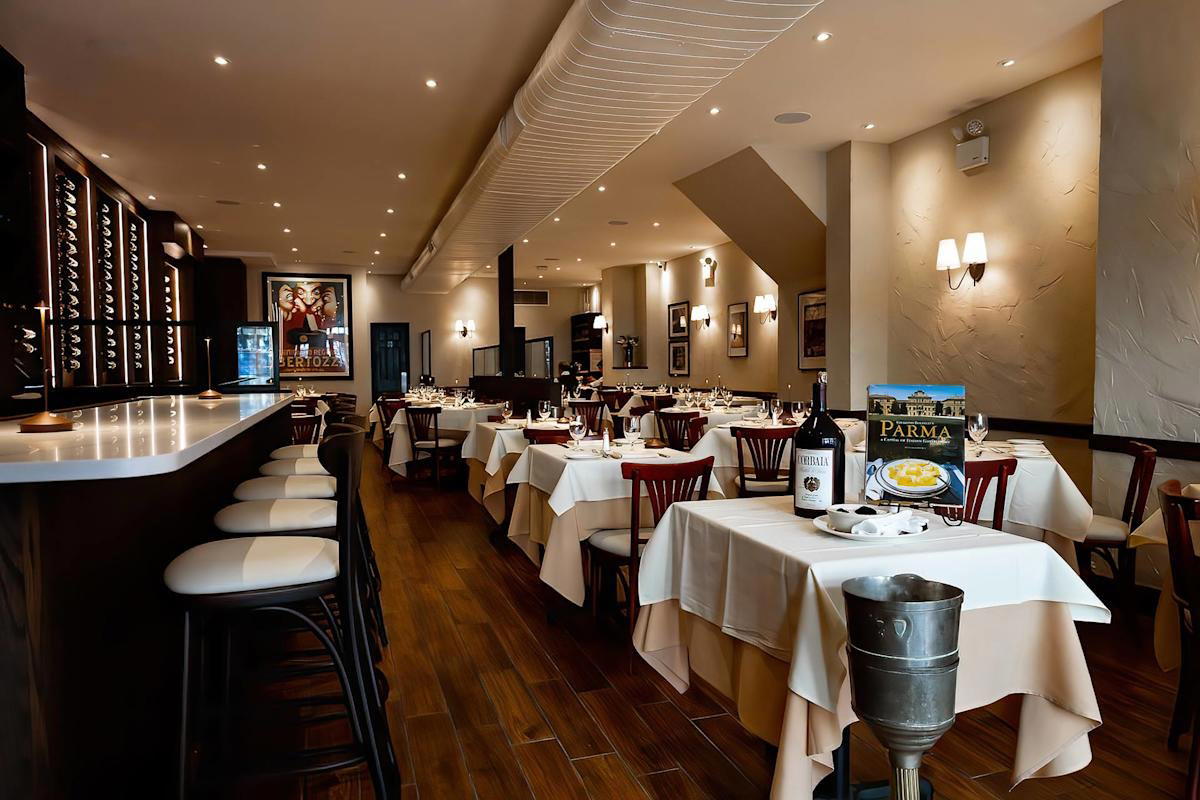
The Farmstead Table Comes to the Upper East Side
Southern Italian dining has a structural logic that sets it apart from most of what New York serves under the banner of Italian food. The masseria, the fortified farmhouse estate of Puglia, Basilicata, and Calabria, was never a restaurant concept. It was a way of eating organized around land, labor, and the long table: antipasti giving way to primi, then secondi, then cheese and preserves, with no particular rush between any of them. When that format arrives in a Manhattan dining room, the question is always how much of the original architecture survives the transplant. Masseria East, at 1404 Third Avenue in the Upper East Side, is the answer worth examining on that count.
The Upper East Side is not where New York's most experimental dining happens. That function belongs to the lower precincts, the tasting-menu counters of Midtown and the progressive kitchens clustered downtown, where Atomix and Jungsik New York have built their reputations on formalist precision. The Upper East Side tends to reward a different kind of ambition: the neighborhood has a long appetite for restaurants that operate with confidence rather than novelty, places where the dining ritual is the point rather than the backdrop.
How the Meal Is Meant to Move
The masseria tradition is, above all, a pacing tradition. Southern Italian farmhouse cooking does not rush. The antipasti course alone, olives, preserved vegetables, cured meats, bread with olive oil, can occupy a table for twenty minutes before the kitchen sends anything more substantial. This is not inefficiency; it is the architecture of a meal designed to mark time rather than compress it. In that context, arriving at Masseria East with a two-hour window and a calendar appointment afterward misreads what the format asks of the diner.
This pacing philosophy is increasingly rare in a city where tasting-menu counters like Masa or Per Se compress the same cultural reverence for sequence into a controlled, chef-directed progression. The southern Italian model is less controlled in that sense, it invites more conversation between kitchen and table, more negotiation over what comes next and how much of it. The ritual is participatory rather than passive.
For a sense of how this format compares across American fine dining, it is useful to look at restaurants that have built their identities around meal architecture rather than individual dishes: Lazy Bear in San Francisco treats the communal dinner as theater; Alinea in Chicago choreographs sequence to the minute. The southern Italian masseria format operates differently from either, it trusts the table to set its own tempo within a loose framework, which is a harder thing to sustain in a professional restaurant context than it sounds.
The Upper East Side Address in Context
Third Avenue between 79th and 81st Streets has enough residential density to support a neighborhood restaurant with serious culinary ambitions. The Upper East Side diner tends to be a repeat visitor rather than a destination-seeker, which means a restaurant like Masseria East is building a relationship with its immediate community rather than drawing from the borough-wide audience that fills reservation queues at Le Bernardin weeks in advance.
That dynamic shapes what a restaurant can do with its menu and its service cadence. Regulars tolerate and eventually demand the slower, more expansive format that a one-time visitor might find. It is the same structural reality that has sustained farm-to-table destination restaurants elsewhere in the country: Blue Hill at Stone Barns in Tarrytown and Single Thread Farm in Healdsburg both depend on a guest base willing to surrender an evening, not just fill a dinner slot.
Across American regional fine dining more broadly, from Emeril's in New Orleans to Providence in Los Angeles, from Addison in San Diego to Bacchanalia in Atlanta, durable neighborhood-anchored fine dining rooms have tended to operate outside the critical spotlight while maintaining consistent quality over years. The restaurant fits that pattern by address and by concept.
Southern Italian Cooking in the New York Frame
New York's Italian food culture has historically skewed northern and central: the city's canonical red-sauce tradition draws from Neapolitan and Sicilian immigration, while the fine-dining tier has often looked to Tuscany, Emilia-Romagna, and Piedmont for its reference points. The deep south, Puglia, Basilicata, Molise, has taken longer to arrive in recognizable form, partly because its cooking depends on ingredients (specific durum wheat varieties, particular olive oils, dried fava beans, fresh ricotta from specific milk sources) that are harder to source faithfully at scale.
The masseria format as a restaurant concept has a precedent in Washington, DC, where the original Masseria earned critical recognition for transposing southern Italian farmhouse cooking into a fine-dining register. The European parallel is instructive too: the cooking of Italy's deep south has found its most serious international expression at places like 8½ Otto e Mezzo Bombana in Hong Kong and, at the far end of the Italian fine-dining spectrum, Alain Ducasse at Louis XV in Monte Carlo, where Mediterranean agricultural ingredients underpin particularly technically precise cooking in the world. The lesson from those references is that southern European produce-led cooking scales upward in quality when the sourcing discipline is maintained.
For a comprehensive view of where the restaurant sits within New York City's broader restaurant ecology, the Upper East Side section gives useful context for how the restaurant positions itself relative to its immediate peers. The Upper East Side section covers the range of options from neighborhood bistros to destination-level rooms, giving useful context for how the restaurant positions itself relative to its immediate peers.
Planning the Visit
The restaurant is located at 1404 Third Avenue. The format, which draws on the unhurried southern Italian meal structure, rewards evening bookings over lunch. Reservations are recommended.
Reputation Context
Comparable venues nearby, for context on price, style, and recognition.
| Venue | Cuisine | Price | Notes |
|---|---|---|---|
| Masseria EastThis venue — the venue you are viewing | Traditional Italian | $$$ | Not listed |
| Lusardi's | Classic Northern Italian | $$$ | Upper East Side-Yorkville |
| 83 1/2 | Authentic Sicilian-Inspired Italian | $$$ | Upper East Side-Yorkville |
| Nica Trattoria | Authentic Sicilian Trattoria | $$$ | Upper East Side-Yorkville |
| Serafina Osteria | Authentic Italian Trattoria | $$$ | Upper East Side-Carnegie Hill |
| Bond 45 | Italian Kitchen & Bar | $$$ | Midtown-Times Square |
Continue exploring
More in New York City
Restaurants in New York City
Browse all →
Bars in New York City
Browse all →
Hotels in New York City
Browse all →





At a Glance
- Cozy
- Elegant
- Classic
- Date Night
- Business Dinner
- Standalone
Current opening hours
- Monday
- 12–3 PM, 5–9:30 PM
- Tuesday
- 12–3 PM, 5–9:30 PM
- Wednesday
- 12–3 PM, 5–9:30 PM
- Thursday
- 12–3 PM, 5–9:30 PM
- Friday
- 12–3 PM, 5–9:30 PM
- Saturday
- 12–3 PM, 5–9:30 PM
- Sunday
- 12–9:30 PM
Hours can change for holidays and private events. Last verified .
Cozy and elegant atmosphere with white tablecloths, rugs, wine bottle shelving, and a warm, old New York feel that is quiet and relaxing.