
Tabelog 100 #73
Our verdict
Marche puts Kobe’s yoshoku tradition into a modest, lunch-focused frame: counter seating, curry and cafeteria-style Western-Japanese cooking, and recognition on Tabelog’s 2025 Yoshoku WEST 100 list. It is a useful address for understanding how Kobe’s everyday Western-influenced food culture sits apart from the city’s higher-priced beef rooms and tasting-menu dining.

Pearl is the En Primeur Club membership app, where members save venues, book tables and use the concierge.
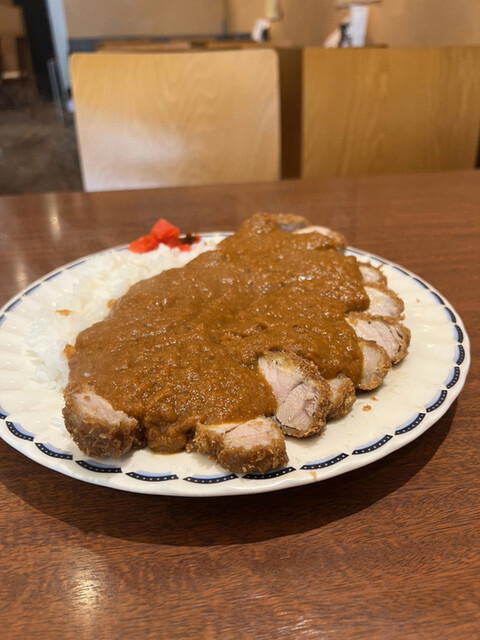
Kobe is not only its postcard version of dining. Away from the most polished hotel and harbor-facing narratives, the city also has a more lived-in rhythm: small rooms, everyday lunch stops, and the practical cadence of people eating before returning to the day. In that setting, yoshoku makes sense. It is Western-influenced food translated through Japanese kitchens, less about imported formality than about comfort, curry, and the ease of a room built for repeat use rather than ceremony.
Marche belongs to that tradition, and its appeal lies in how clearly it sits within Kobe’s everyday register. This is not the city’s luxury-dining theater, where travelers compare technique, setting, and special-occasion polish. It is also not simply the reservation-led dinner economy represented by higher-spend Kobe addresses such as Akari, Mangetsu, or Ouraku En. The useful comparison is closer to Yoshoku Masuda, where the same broad category of local demand can feel less like spectacle and more like routine confidence.
Kobe yoshoku, stripped back to the lunch room
Yoshoku in Kobe carries particular weight because the city has long absorbed outside influence through its port-city identity. That history does not always produce grand dining rooms. More often, it appears in compact restaurants where Western categories have become local habits: curry alongside cafeteria cooking, and a service style that prizes speed and consistency over explanation. Marche’s listed categories, yoshoku, curry, and cafeteria, place it squarely in that grammar.
The compact room matters here as an idea, even when the main point is not theatrical cooking. In Japan, small-scale dining can mean haute performance, but in yoshoku it often means something more democratic: a shorter meal arc, a practical pace, and less distance between preparation and diner. The soundscape is closer to everyday service than ceremony. Plates move, orders turn, and the meal reads as part of the workday. That gives the restaurant a different kind of credibility from a formal room, particularly in a city where premium dining can easily become tied to branding and expense-account rituals.
Recognition helps separate the address from a generic neighborhood lunch stop. Marche has 2025 Tabelog Hyakumeiten recognition and carries a Tabelog score of 3.62. Those signals are not the same as Michelin ceremony, but in Japan they matter for category-specific cooking. A yoshoku selection says the restaurant is being judged inside a defined local genre, not against French tasting menus or steakhouse spectacle.
Why this price tier says something about Kobe
Kobe dining often gets flattened into a single luxury narrative. The city’s international fame rests heavily on premium dining associations, yet its daily eating culture is broader and less expensive. Marche’s JPY 1,000 to JPY 1,999 range places it in a band where reputation has to come from repeat casual demand, not from wine pairings, chef counter choreography, or imported prestige. That makes it useful for travelers who want to read Kobe beyond the obvious script.
The comparison set clarifies the point. Le Shmiki, Ouraku En, Akari, and Mangetsu all help map different ways of spending and eating in Kobe, while Marche holds its place as a modest yoshoku address with category recognition. In between destination dining and anonymous convenience, the yoshoku lunch room becomes a strong indicator of local priorities: direct enough for an ordinary day, specific enough to earn recognition, and modest enough that the decision is not distorted by occasion. For visitors, that is often where a city reveals itself with less performance.
Marche works best as part of a wider Kobe walk rather than as a single-purpose pilgrimage. Pairing lunch here with other unnamed Kobe dining rooms gives a better reading of the city’s older urban texture than moving only between hotel restaurants and high-profile dining rooms. For a broader food route, compare it with Akari for a higher-spend Kobe meal, or keep the contrast generic by looking at other casual Kobe addresses that show the city’s more international everyday register.
How to place it in a Kobe itinerary
The smart use of Marche is not as a trophy booking. It is a calibrating meal, the kind that helps distinguish local category cooking from travel clichés. Its public profile is concise rather than theatrical: yoshoku, curry, and cafeteria cooking, with a listed lunch budget of JPY 1,000 to JPY 1,999. That makes the decision less about advance prestige and more about whether this kind of everyday Kobe meal fits the pace of the day.
Travelers building a Kobe stay should treat this as one layer of the city, not the whole argument. Use our full Kobe restaurants guide to separate lunch rooms from higher-spend dining, tasting menus, casual stops, and neighborhood drinking food. Our full Kobe hotels guide, our full Kobe bars guide, our full Kobe wineries guide, and our full Kobe experiences guide help position the meal inside a wider trip rather than treating it as a standalone checklist item.
For wider Japan context, yoshoku and curry make more sense when seen alongside other regional casual formats across the country. The point is not that every city has the same version, but that everyday Japanese dining often travels through modest categories as much as through fine-dining narratives. Abroad, Japanese casual food can read very differently once it leaves its home context, which makes a Kobe address like Marche valuable precisely because it remains grounded in its own local category.
Frequently asked questions
When is Marche open?
Current opening hours are not provided here; check Marche’s official channels before visiting.
Where is Marche in Kobe?
Kobe.
Is Marche more mid-range or high-end?
Pricing at Marche is listed as JPY 1,000 - JPY 1,999.
What's the defining dish or idea at Marche?
Marche is defined by yoshoku, with curry and cafeteria-style cooking listed alongside it. The 2025 Tabelog Hyakumeiten recognition is the clearest signal here, and the listed price band keeps the focus on a straightforward everyday meal in Kobe.
Is Marche good for vegetarians?
Marche is listed in the yoshoku, curry, and cafeteria categories, with pricing at JPY 1,000-1,999. Vegetarian diners should check the current menu directly rather than assume a dedicated plant-based offering.
Is Marche child-friendly?
Family or child-specific details are not provided here. Check the venue's official channels for the latest practical information before visiting.
Snapshot
Comparable venues at a glance for context.
| Venue | Cuisine | Price | Awards | Notes |
|---|---|---|---|---|
| MarcheThis venue (the venue you are viewing) | Bakery Café | $1–10 | Tabelog 100 #73 | Not listed |
| Le Shmiki | Cafe & cake shop | Not listed | Tabelog 100 #3 | Chūō |
| Satonaka | Spice curry counter | $1–10 | Tabelog 100 #88 | Chūō |
| La Pierre Blanche Motomachi ten | Artisanal Chocolate & Bonbons | $10–20 | Tabelog 100 #88 | Chūō |
| arima gelateria Stagione | Handmade Gelato & Café | $1–10 | Tabelog 100 #10 | Kita |
| un peu de | Artisanal bakery and sandwich shop | $1–10 | Tabelog 100 #56 | Higashinada |
Recognition history
Dated appearances from independent guides and award organizations, with the underlying list record or original source where available.
Tabelog 100 #73 · No. 73
Tabelog · Tabelog 100 - Yoshoku - WEST - 2025
Continue exploring
More in Kobe
Restaurants in Kobe
All restaurants in Kobe →
Bars in Kobe
Browse all →




Details
- Cozy
- Classic
- Casual Hangout
- Solo
- Family
- Standalone
- Beer Program
- A La Carte
- Coffee
- Tea
- Vegetarian Friendly
Current opening hours
- Monday
- 11:30 AM–3 PM
- Tuesday
- 11:30 AM–3 PM
- Wednesday
- 11:30 AM–3 PM
- Thursday
- 11:30 AM–3 PM
- Friday
- 11:30 AM–3 PM
- Saturday
- 11:30 AM–3 PM
- Sunday
- Closed
Hours can change for holidays and private events. Hours as of .
A small, cozy, neighborhood bakery-cafe atmosphere with a terrace and a casual, local feel.