
Tabelog 100 #76
Our verdict
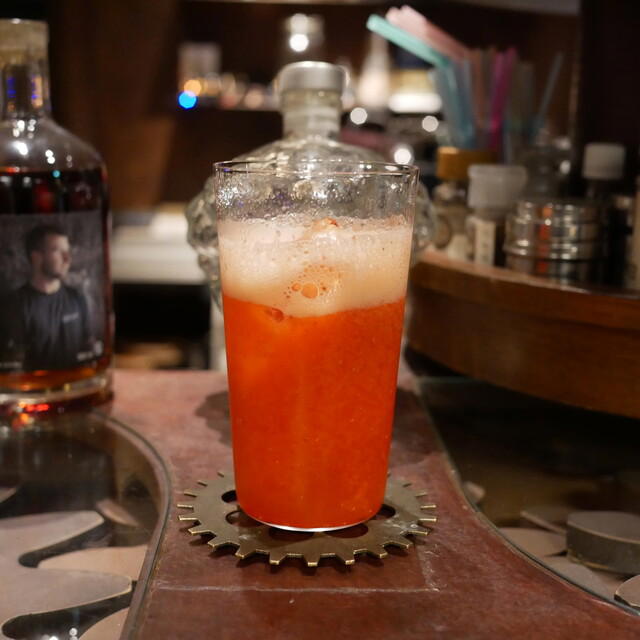
MAR brings Osaka’s tachinomi culture into a compact eight-seat setting in Tenma, a neighbourhood where standing bars, izakaya counters, and after-work drinking rooms sit close together. Its selection for Tabelog 100 Tachinomi 2025 places it inside Japan’s current conversation around serious casual drinking rather than luxury dining.

Pearl is the En Primeur Club membership app, where members save venues, book tables and use the concierge.
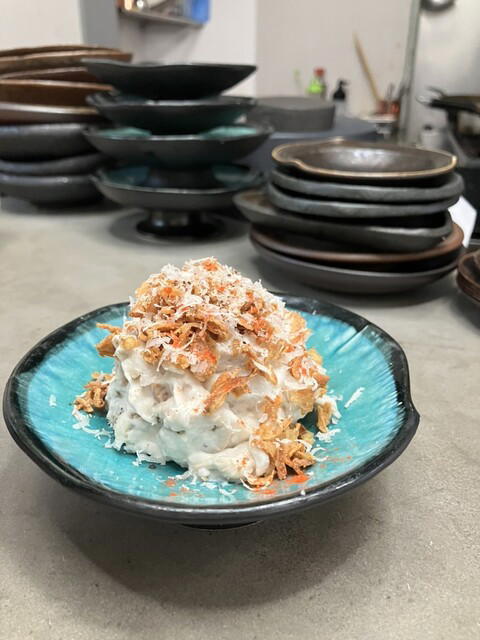
Osaka is built for short thresholds: a noren, a compact room, standing spaces, and the quick shift from street noise to glassware and conversation. Osaka’s drinking culture has long favoured that compression. The city does not require ceremony before appetite; it rewards places that can turn a narrow room into a social instrument. In that context, MAR belongs to the tachinomi tradition, where brevity, proximity, and price discipline matter as much as what lands in front of the guest.
Tachinomi is often translated too simply as “standing bar,” but the better reading is cultural rather than architectural. It is a format for workers, regulars, solo drinkers, and small groups who want precision without the slowed-down choreography of formal dining. The category can be rough, polished, drink-led, snack-driven, or closer to a micro-izakaya. What links the stronger rooms is tempo: orders move quickly, strangers occupy shared air, and the evening can last one drink or become the first stop in a longer crawl.
Osaka's tachinomi culture rewards compression, not spectacle
Osaka has several food identities competing for attention: station snacks, department-store dining floors, late-night izakaya, counter formats, curry shops, bakeries, and casual Western-leaning rooms. The city’s strength is density. Drinking formats sit close enough that the choice is less about a single destination and more about pacing the night. A compact tachinomi room can make more sense here than a full-service restaurant, especially when the plan is to eat lightly, drink with focus, and keep the evening mobile.
That is why Tabelog’s 2025 Tachinomi 100 selection matters as a signal. It identifies MAR within a category that Japanese diners understand with more nuance than many visiting drinkers do. Tachinomi is not a consolation prize below restaurant dining; it is a parallel discipline with its own measures of quality. A place can gain attention through speed, hospitality, drink selection, snack judgement, and the ability to feel charged without becoming chaotic.
The comparison set in Osaka shows how narrow the choices become once format and mood are aligned. Motsuyaki Doppo Tenma ten, Yakitori Shokudo, RAMU-NO-LOVESONG, and Jizakeya Iwatsuki all help sketch nearby lanes of casual eating and drinking, while Spice Curry Harmonia points to another kind of Osaka appetite. MAR’s relevance is not that it replaces those options; it clarifies the smaller-format end of the city’s drinking map.
The standing format suits Osaka's informal precision
Osaka is often caricatured as loose, comic, and appetite-led, but its casual food culture can be exacting. The city’s better low- and mid-price rooms tend to be efficient rather than casual in the careless sense. A narrow standing format exposes everything: ordering cadence, glass handling, the way staff read when a guest wants another round, and whether food arrives in a sequence that supports drinking rather than interrupting it. In a compact room, those details become the experience.
For travellers used to tasting-menu Japan, tachinomi changes the frame. There is no need to treat the evening as a single grand booking. The more intelligent approach is to think in chapters: a drink, a few small plates, a move elsewhere if the night asks for it. That rhythm also explains why Osaka works so well for visitors who want the city beyond the most familiar tourist script. It offers dining at street scale, where serious choices can sit beside everyday ones without a change of costume.
Osaka’s wider scene supports that range. A day can move through other Osaka dining rooms, coffee stops, bakeries, or sharper sit-down meals. Across the city, casual venues show how Osaka absorbs different formats without losing its appetite for informality. MAR fits that same civic habit: serious enough to be selected, small enough to remain part of the city’s nightly circulation.
How to place MAR in an Osaka evening
The sharper choice is to use MAR as an Osaka anchor rather than as a full-night promise. Tachinomi rewards guests who understand pace: arrive prepared to order compactly, accept the room’s scale, and avoid treating the space like a private dining room. This is a format built around adjacency, so comfort depends on reading the atmosphere and letting the night move at the venue’s speed.
The selection for Tabelog 100 Tachinomi 2025 gives the room a credential, and the listed dinner budget of JPY 2,000 - JPY 2,999 keeps the practical frame clear. This is a small-format Osaka drinking address in a city known for exactly that kind of energy. Visitors chasing only luxury markers will miss the point; visitors interested in how the city actually drinks will understand why a concise standing bar can carry more local meaning than a longer meal elsewhere.
For broader planning, compare the city’s drinking and dining patterns through Our full Osaka restaurants guide, Our full Osaka bars guide, Our full Osaka hotels guide, Our full Osaka wineries guide, and Our full Osaka experiences guide. Travellers extending the same casual-Japan thread beyond Osaka can compare regional registers through other dining rooms, bars, and casual counters in Japan and beyond.
Frequently asked questions
Would MAR be comfortable with kids?
MAR is a stand-up bar in Osaka. The setting generally suits adults more than families, especially given the standing-room style.
What kind of setting is MAR?
MAR is a stand-up bar in Osaka. It was selected for Tabelog 100 Tachinomi 2025, which places it in a clearly documented Osaka tachinomi tier.
What's the pricing like at MAR?
Pricing at MAR is listed as JPY 2,000 - JPY 2,999.
What is MAR known for?
MAR is primarily known as a stand-up bar in Osaka and for its selection in Tabelog 100 Tachinomi 2025.
Budget Reality Check
Comparable venues to anchor price and recognition.
| Venue | Cuisine | Price | Awards | Notes |
|---|---|---|---|---|
| MARThis venue (the venue you are viewing) | Creative cuisine | Not listed | Tabelog 100 #76 | Not listed |
| Cante Grande Bakery | Kita, Neighborhood bakery & bread shop | $1–10 | Tabelog 100 #6 | Not listed |
| Victory | Sandwich shop / café | Not listed | Tabelog 100 | Nishi, Sandwich shop / café |
| Boulangerie goût | Chūō, French-style bakery & cafe | $10–20 | Tabelog 100 #34 | Not listed |
| Danke Shinsaibashi | Japanese kissaten coffee shop | $1–10 | Tabelog 100 | Chūō, Japanese kissaten coffee shop |
| Manpuku Bakery | Not listed | $1–10 | Tabelog 100 #82 | Chūō, Japanese Neighborhood Bakery & Sandwich Shop |
Recognition history
Dated appearances from independent guides and award organizations, with the underlying list record or original source where available.
Tabelog 100 #76 · No. 76
Tabelog · Tabelog 100 - Tachinomi - 2025

Continue exploring
More in Osaka
Restaurants in Osaka
All restaurants in Osaka →


Bars in Osaka
All bars in Osaka →


Hotels in Osaka
All hotels in Osaka →




Wineries in Osaka
Browse all →
Details
Current opening hours
- Monday
- 4 PM–12 AM
- Tuesday
- 4 PM–12 AM
- Wednesday
- 4 PM–12 AM
- Thursday
- 4 PM–12 AM
- Friday
- 4 PM–12 AM
- Saturday
- 4 PM–12 AM
- Sunday
- 4 PM–12 AM
Hours can change for holidays and private events. Hours as of .