
Tabelog 100
Our verdict
Danke Shinsaibashi belongs to Osaka’s kissaten tradition rather than the city’s louder dining grammar. Its Tabelog 100 - Kissaten - 2022 selection places it among Japan’s recognized coffee-shop addresses, with a compact Shinsaibashi format that suits solo coffee, sweets, and a slower pause between shopping streets and evening reservations.

Pearl is the En Primeur Club membership app — saves, bookings, and concierge access live there. Same editors, same standards.
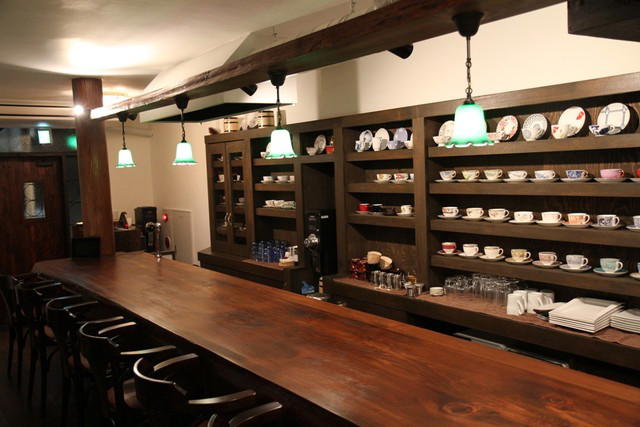
Osaka can make even a short walk feel transactional: covered arcades, retail counters, queue food, train-station momentum. A kissaten interrupts that rhythm. The point is not spectacle but controlled pause, a room where coffee, sweets, and cafe service create a different tempo from the department-store cafe or the takeout chain. Danke Shinsaibashi fits that older Osaka grammar: compact in feeling, and useful within the city’s everyday dining rhythm without becoming another shopfront snack stop.
Osaka’s cafe culture is often discussed through convenience, but the kissaten tradition is more disciplined than that suggests. It values repeatable preparation, a seated interval, and a menu that does not need to chase every trend cycle. In sustainability terms, that matters. A sit-down coffee shop built around in-room service and measured portions has a quieter environmental logic than disposable-cup throughput. The more interesting story here is not an advertised green platform; it is the resilience of a format that predates contemporary sustainability language and already encourages slower consumption.
Osaka's quieter coffee culture, measured against the city's louder tables
Osaka is better known to visitors for immediacy: takoyaki, grilled meat, ramen, department-store sweets, and late-night drinking routes. Kissaten sit in a different category. They are less about meal replacement than about calibration, especially in a city where dining plans can swing from casual street-side grazing to formal counters within the same day. Danke Shinsaibashi’s inclusion in Tabelog 100 - Kissaten - 2022 gives the room a clear trust signal within that category, not as a luxury restaurant, but as a coffee-shop address judged inside Japan’s own cafe taxonomy.
That distinction matters for travelers building an Osaka day. Barbacoa Shinsaibashi ten, ALBALONGA, and lumiere belong to dining brackets where the meal is the anchor of the evening. Le Premier Cafe Shinsaibashi honten sits closer in purpose, while ALI'S KITCHEN shows how Osaka can also support inexpensive, international everyday eating. A kissaten such as Danke Shinsaibashi plays another role: it is a hinge between plans, not the whole plan. That makes it particularly useful in Osaka, where the surrounding city rewards short, precise stops rather than long detours.
The category also resists the current tendency to treat coffee as either laboratory or lifestyle branding. Japanese kissaten culture has long made room for solo customers, families, and friends without forcing the room into a single social script. The listed categories — kissa, cafe, and Western-style sweets — signal flexibility rather than ceremony. For visitors moving through Osaka’s restaurant scene, that is the appeal: a recognized coffee-shop format that does not require the commitment of a tasting menu or the speed of a stand-and-eat counter.
A low-waste argument hidden in an old format
Sustainability in restaurants is often narrated through farms, certifications, and chef manifestos. In a kissaten, the more credible argument is operational. Seated coffee service slows turnover expectations, reduces reliance on disposable packaging for those staying in, and keeps the menu centered on categories with a long shelf life in Japanese cafe culture: coffee, cafe dishes, and Western-style sweets. None of this needs to be overstated. The environmental value lies in restraint, not in a grand claim.
That restraint also explains why kissaten can age better than trend-led cafes. A room built for regular use does not need seasonal theatrics to justify itself. Its recognition by Tabelog’s kissaten list suggests durability in a category where consistency matters more than novelty. In Osaka, where culinary identity is often attached to abundance, sauce, smoke, and speed, the coffee-shop format offers a cleaner form of hospitality: sit down, order within a familiar frame, and let the city continue outside.
There is a practical editorial point here for EP Club readers. This is not where to schedule a destination dinner, and it should not be judged by the same measures used for high-spend omakase, Italian tasting menus, or hotel dining rooms. Its value is narrower and more useful: a recognized kissaten in Osaka, suited to a reset between larger eating commitments. That kind of stop can improve an Osaka itinerary more than another ambitious reservation, especially when the day already includes heavier food.
How to place it inside an Osaka itinerary
Use Danke Shinsaibashi as a pause in Osaka, then let the rest of the day carry the city’s heavier flavors. For broader planning, Our full Osaka restaurants guide gives the wider dining map, while Our full Osaka bars guide, Our full Osaka hotels guide, Our full Osaka experiences guide, and Our full Osaka wineries guide help separate coffee stops from evening drinking, lodging, and cultural scheduling.
Citywide comparisons sharpen the decision. Other Osaka bakeries, cafes, and casual counters speak to the city’s lighter daytime habits, while portable comfort food represents its easygoing, on-the-move instinct. For a more meal-led plan, Osaka dining rooms can move the itinerary toward sit-down dining rather than coffee-shop pacing.
Japan’s broader casual-dining range gives further context. Across the country, everyday restaurants, cafes, bakeries, and bars show how tightly local formats define the meal. Outside Japan, Japanese-inspired casual venues underline the same point from abroad: Japanese food culture travels well, but its everyday formats make clearest sense when read in place.
The editorial verdict is compact. In Osaka, this is a coffee-shop stop with recognized category credentials and a format that rewards restraint. Seek it out when the day needs a seated interval, not when the itinerary needs another headline meal.
Frequently asked questions
What price level is Danke Shinsaibashi?
Pricing at Danke Shinsaibashi is listed as JPY 1,000 - JPY 1,999.
What time does Danke Shinsaibashi open and close?
Specific opening hours for Danke Shinsaibashi are not provided here; confirm current hours before visiting.
Where is Danke Shinsaibashi in Osaka?
Osaka.
What makes Danke Shinsaibashi worth seeking out?
Its case is concrete: Danke Shinsaibashi holds a Tabelog 100 Kissaten selection for 2022 and is listed in the kissa, cafe, and Western-style sweets categories. The price range of JPY 1,000–JPY 1,999 keeps it accessible while the format makes it useful as a stop between busier Osaka plans.
Local
Comparable venues to place this listing in its category.
| Venue | Cuisine | Price | Awards | Notes |
|---|---|---|---|---|
| Danke ShinsaibashiThis venue (the venue you are viewing) | Japanese kissaten coffee shop | $1–10 | Tabelog 100 | Not listed |
| Barbacoa Shinsaibashi ten | Brazilian churrasco & salad bar | $50–100 | Tabelog 100 #2 | JPY 8,000 - JPY 9,999 JPY 5,000 - JPY 5,999 |
| Le Premier Cafe Shinsaibashi honten | Not listed | $10–20 | Tabelog 100 | JPY 1,000 - JPY 1,999 JPY 1,000 - JPY 1,999 View spending breakdown |
| ALBALONGA | Seasonal Italian Fine Dining | $50–100 | Tabelog 100 #4 | JPY 8,000 - JPY 9,999 JPY 3,000 - JPY 3,999 |
| lumiere | Modern French Fine Dining | $50–100 | Tabelog 100 #1 | JPY 15,000 - JPY 19,999 JPY 10,000 - JPY 14,999 |
| ALI'S KITCHEN | Halal Pakistani & Arabic restaurant | $20–30 | Tabelog 100 #13 | JPY 1,000 - JPY 1,999 - JPY 999 |
Recognition history
Dated appearances from independent guides and award organizations, with the underlying list record or original source where available.
Tabelog 100
Tabelog · Tabelog 100 - Kissaten - 2026
Full recognition history (2 entries)
Tabelog 100 #8 · No. 8
Tabelog · Tabelog 100 - Kissaten - 2022
Continue exploring
More in Osaka
Restaurants in Osaka
All restaurants in Osaka →


Bars in Osaka
All bars in Osaka →
Hotels in Osaka
All hotels in Osaka →


Wineries in Osaka
Browse all →
Details
- Cozy
- Quiet
- Classic
- Solo
- Casual Hangout
- After Work
- Late Night
- Standalone
- Design Destination
- A La Carte
- Counter Dining
- Coffee
Current opening hours
- Monday
- 11:30 AM–11:30 PM
- Tuesday
- 11:30 AM–11:30 PM
- Wednesday
- 11:30 AM–11:30 PM
- Thursday
- 11:30 AM–11:30 PM
- Friday
- 11:30 AM–11:30 PM
- Saturday
- 11:30 AM–11:30 PM
- Sunday
- 11:30 AM–11:30 PM
Hours can change for holidays and private events. Last verified .
Traditional kissaten feel with a small counter and tables, softly lit and quiet, where guests linger over carefully brewed coffee to jazz music until late at night.