Mangal 1
Mangal 1 on Arcola Street in Hackney has been a reference point for Turkish ocakbaşı grilling in London for decades. Where much of the capital's Turkish dining scene operates around volume and familiarity, Mangal 1 holds a different position: a wood-fired counter culture rooted in Anatolian tradition, taken seriously enough to draw critics and chefs alongside the neighbourhood regulars who have always been its base.
Pearl is the En Primeur Club membership app — saves, bookings, and concierge access live there. Same editors, same standards.
- Address
- 10 Arcola St, London E8 2DN, United Kingdom
- Phone
- +442072758981
- Website
- mangal1.website
- Directions
- Get directions
 Saves & bookings on Pearl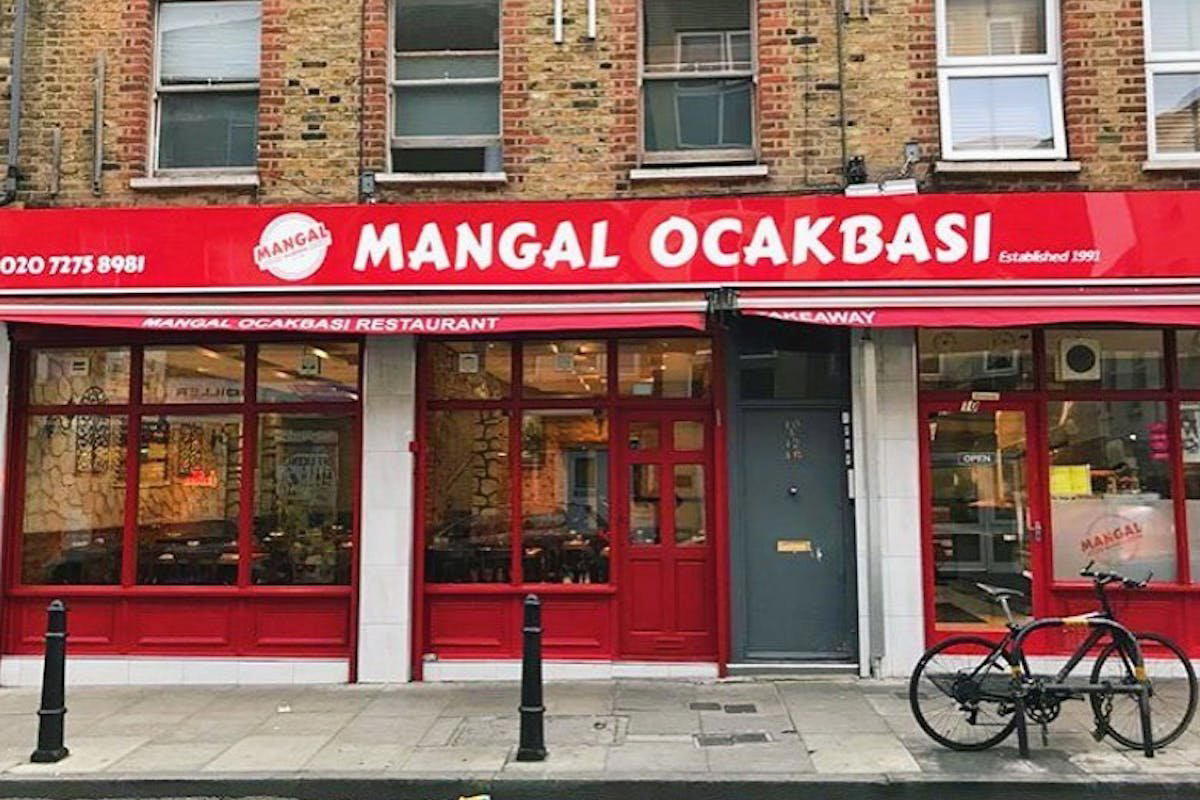
Wood, Smoke, and the Anatolian Counter: East London's Turkish Grill Tradition
The ocakbaşı format, in which diners sit around or near an open charcoal or wood-fired grill, is one of the oldest communal eating structures in Anatolian culture. It preceded the restaurant as a social institution and carries a logic that has nothing to do with tasting menus or chef theatre: the fire is the point, the proximity to it is the point, and the quality of what passes over it is the only measure that matters. Hackney's Arcola Street has been home to one of London's most consistent expressions of this tradition for long enough that it has outlasted trends, critical fashions, and the wholesale gentrification of the neighbourhood around it.
Mangal 1 is a restaurant in Dalston, London, serving Authentic Turkish Charcoal Grill at 10 Arcola St, E8 2DN. It does not sit in the same competitive set as CORE by Clare Smyth, Restaurant Gordon Ramsay, or Sketch, The Lecture Room and Library. But the critical attention it has received over the years places it in a different kind of conversation: one about what London's non-European restaurant traditions have contributed to the city's actual dining culture, as opposed to its award infrastructure.
The Ocakbaşı Tradition and What It Demands
Ocakbaşı cooking is unforgiving in a way that multi-component fine dining rarely is. There is no sauce to correct a dry piece of lamb, no garnish to distract from poor sourcing, and no technique to rescue meat that was not handled correctly before it met the heat. The tradition rewards exactness in fire management, in the selection and butchering of the animal, and in the timing that keeps fat rendering without burning. Turkish grill culture in London has historically been concentrated in two clusters: Green Lanes in North London, which runs heavy on quantity and community eating, and Dalston, where a smaller number of establishments have operated with more focused attention to the grill itself.
Mangal 1 belongs to the Dalston cohort and attracts Hackney locals, chefs from across London, and food writers interested in wood-fired cooking. That reputation rests on the grill, on the sourcing of the meat, and on a simplicity of presentation that treats the protein as the subject rather than the platform for elaboration.
Where Mangal 1 Sits in the London Dining Conversation
London's premium dining tier, represented by restaurants like The Ledbury and Dinner by Heston Blumenthal, operates within a European culinary framework that has its own logic of progression, credential, and recognition. The restaurant's position is lateral to that framework rather than beneath it. The restaurant has drawn serious critical interest not because it aspires to that tier but because it operates with a coherence and consistency inside its own tradition that observers recognise as its own form of discipline.
This is a distinction worth holding. The Turkish grill tradition does not need to be validated against French technique or European award systems to carry authority. What the restaurant represents is a long-established culinary culture that has deep roots in Anatolia, that travelled to London with its diaspora communities, and that has, in this particular address, been maintained with enough seriousness to generate cross-cultural critical recognition. The same applies to the UK's broader range of serious cooking outside the fine-dining circuit, from L'Enclume in Cartmel to Opheem in Birmingham, each of which operates according to its own culinary logic rather than a single master framework.
Dalston's Position in the East London Food Story
Hackney and Dalston have changed substantially over the past two decades, and the area around Arcola Street now sits in a neighbourhood where independent restaurants, bars, and studios occupy buildings that were, a generation ago, primarily residential or industrial. Turkish and Kurdish communities have been part of this neighbourhood for decades longer than its current culinary reputation, and the cluster of Turkish restaurants and grocers that runs through Dalston into Stoke Newington represents one of London's most sustained and genuine immigrant food cultures.
The restaurant's longevity in this context is a data point in itself. In a neighbourhood with high turnover and rising rents, restaurants that hold their position across decades do so because of accumulated local trust, not discoverability algorithms or press cycles. The contrast with the transient nature of much of London's newer dining scene is worth noting for any visitor trying to understand what they are eating and where.
Comparing the Grill Tradition Globally
Wood-fire and charcoal-grill formats have become a dominant motif in contemporary fine dining globally, with restaurants in New York, Copenhagen, and São Paulo building entire identity systems around open-fire cooking. The restaurant's version of this predates the trend by decades and operates without the design apparatus or tasting menu structure that newer fire-cooking restaurants use to signal seriousness. The comparison matters because it illuminates what the format looks like when it is rooted in cultural practice rather than adopted as aesthetic. For readers who follow fire-focused cooking internationally, whether at Le Bernardin in New York City or Atomix, the restaurant offers a reference point of a different kind: tradition without self-consciousness.
In the broader UK context, the commitment to a single cooking method executed with consistency over time is a pattern shared by a handful of serious establishments, from Waterside Inn in Bray to Moor Hall in Aughton, even if the traditions they draw from are entirely different. The principle, that doing one thing well over a long period is its own form of authority, connects them across otherwise different culinary frameworks.
Planning Your Visit
The venue is located at 10 Arcola St, London E8 2DN, in Dalston, accessible from Dalston Junction or Dalston Kingsland, both within a short walk.
| Venue | Format | Price Tier | Booking Approach |
|---|---|---|---|
| The restaurant | Ocakbaşı grill, walk-in and table | Accessible (£-££) | Walk-in or direct contact |
| CORE by Clare Smyth | Modern British tasting menu | ££££ | Advance booking, weeks ahead |
| The Ledbury | Modern European tasting menu | ££££ | Advance booking, weeks ahead |
| Dinner by Heston Blumenthal | Modern British à la carte/set | ££££ | Advance booking recommended |
A Pricing-First Comparison
Comparable venues nearby, for context on price, style, and recognition.
| Venue | Cuisine | Price | Notes |
|---|---|---|---|
| Mangal 1This venue — the venue you are viewing | Not listed | $$ | Not listed |
| Antepliler Restaurant | Not listed | $$ | Harringay Green Lanes, Authentic Antep Turkish |
| Mangal Ocakbasi | Borough, Turkish Ocakbasi Grill | $$ | Not listed |
| Liman Restaurant | Not listed | $$ | Islington, Authentic Turkish & Mediterranean |
| Iznik | Highbury, Authentic Ottoman Turkish | $$ | Not listed |
| Dem Restaurant | Not listed | $$ | Gipsy Hill, Traditional Turkish Mezze & Grill |
Continue exploring
More in London
Restaurants in London
Browse all →
Bars in London
Browse all →
Hotels in London
Browse all →



At a Glance
- Lively
- Cozy
- Group Dining
- Casual Hangout
- Family
- Open Kitchen
Current opening hours
- Monday
- 12 PM–12 AM
- Tuesday
- 12 PM–12 AM
- Wednesday
- 12 PM–12 AM
- Thursday
- 12 PM–12 AM
- Friday
- 12 PM–1 AM
- Saturday
- 12 PM–1 AM
- Sunday
- 12 PM–12 AM
Hours can change for holidays and private events. Last verified .
Boisterous and lively dining room with an always-packed, energetic atmosphere.