Fira's Domestic Table: Where the Cycladic Larder Meets the Dining Room Arrive in Fira on foot from the caldera-side path and you pass through two registers of Santorini simultaneously: the postcard version, all whitewash and volcanic-edge drama...
 Discover on Pearl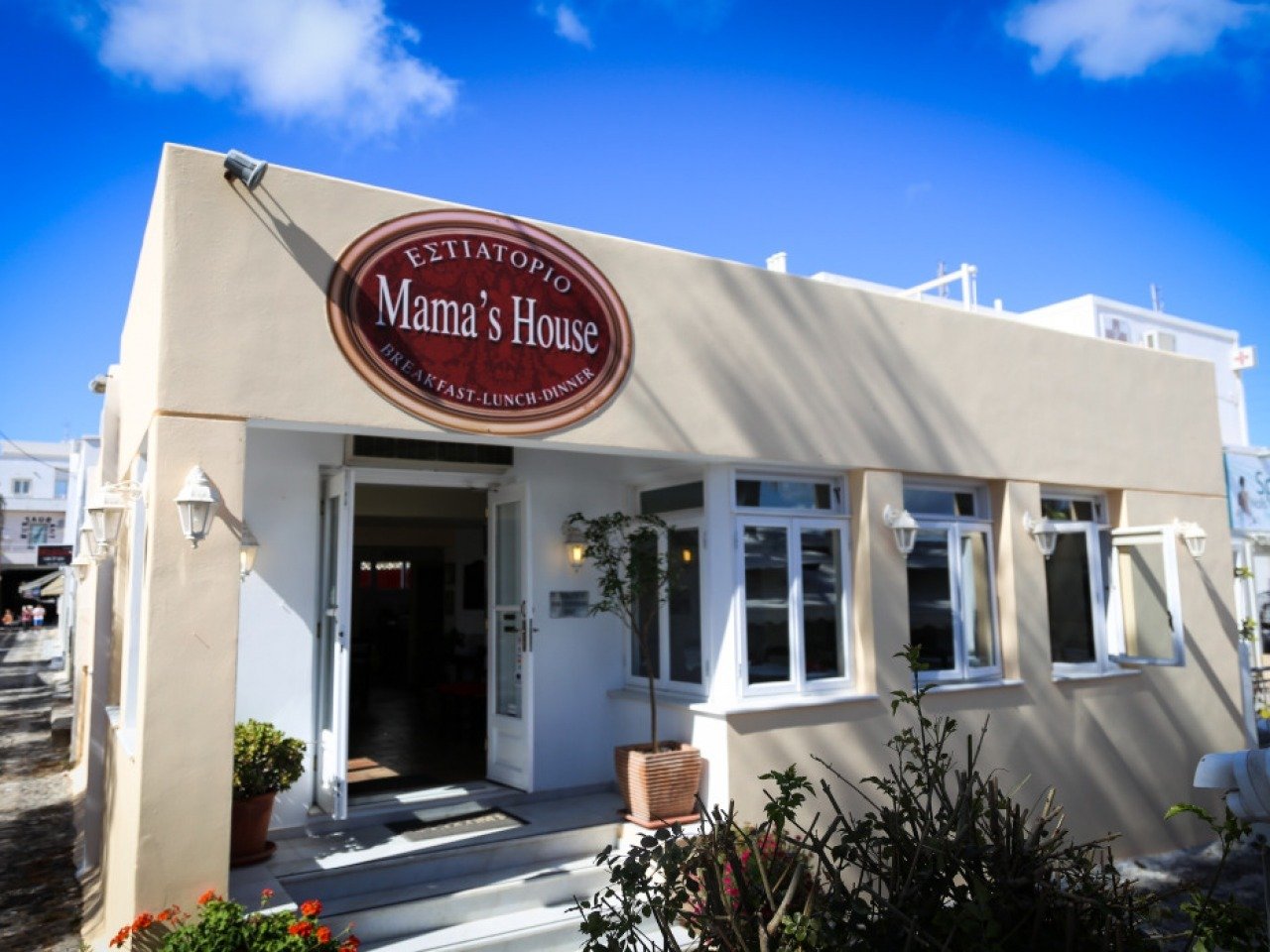
Fira's Domestic Table: Where the Cycladic Larder Meets the Dining Room
Arrive in Fira on foot from the caldera-side path and you pass through two registers of Santorini simultaneously: the postcard version, all whitewash and volcanic-edge drama, and the working-island version, where delivery trucks idle outside kitchens that have no interest in performing for camera lenses. Mama's House sits in that second register. The name signals something specific in Greek hospitality shorthand: not a formal dining room constructed around a concept, but a table where the logic of the meal begins with what the island actually produces.
That distinction matters more in Santorini than on most Greek islands, because Santorini's agricultural identity is genuinely singular. The volcanic soil of the Cyclades yields ingredients that behave differently from their mainland counterparts. Assyrtiko grapes grown in basket-trained vines absorb mineral salinity from the pumice. Fava from Santorini carries Protected Designation of Origin status, its yellow split peas producing a creamier, less starchy puree than varieties grown elsewhere in Greece. Cherry tomatoes cultivated on the island's water-stressed terrain concentrate into an intensity that changes how sauces behave. These are not marketing claims; they are the conditions that define what local sourcing actually means in this context, and they set the terms for any kitchen serious about the island's produce.
The shortlist, unlocked.
Hard-to-book tables, cellar releases, and concierge-planned trips.
Get Exclusive Access →The Ingredient Logic of the Cycladic Kitchen
The broader shift in Greek dining over the past decade has moved toward making this kind of sourcing legible to the diner. Restaurants across Athens, from newer addresses like Delta in Athens to more established fish-focused operations, have built reputations on producer relationships and regional specificity. On the islands, that conversation takes a different form. The supply chain is shorter by geography but more constrained by season and ferry schedules. A kitchen drawing on Santorini fava, local tomatoes, and Aegean catch is working within a defined radius that most continental-European farm-to-table restaurants would not encounter.
For a place like Mama's House, operating in Fira rather than in Oia's sunset-premium corridor, the sourcing question doubles as a positioning question. Fira's dining scene is broader and less curated than Oia's, covering everything from quick mezze stops to sit-down tavernas. The venues that develop lasting local recognition in that environment tend to do so through consistency of product rather than through spectacle. Nearby addresses on the island's dining circuit, including Aktaion in Firostefani and Bony Fish Santorini in Imerovigli, occupy their own distinct niches in the island's seafood and taverna categories, which gives a sense of how diversified the mid-tier dining offer has become across the caldera villages.
Reading Santorini's Dining Tier Structure
Understanding where Mama's House sits requires understanding what Santorini's restaurant market has become. The island now runs three fairly distinct tiers. At the leading, sunset-facing fine dining rooms and hotel restaurants price against international luxury travelers, with tasting menus and wine lists built around Assyrtiko prestige bottles. At the bottom, tourist-volume tavernas operate on throughput. In the middle tier, which is where most locals and returning visitors eat, the standard is simpler: good sourcing, honest execution, pricing that reflects the island's cost base without the caldera-view premium attached.
Within Fira specifically, that middle tier includes addresses like Feredini, Blue Note, Salt & Pepper (Αλάτι & Πιπέρι), and Thalami (Θαλάμι), each covering different points on the spectrum from taverna to more composed plates. Mama's House reads within that peer set rather than against the luxury tier. The competitive pressure in this bracket comes not from Michelin ambition but from the guest who has eaten well across Greece and knows what fava should taste like, what grilled fish should cost relative to the catch that morning, and when a kitchen is sourcing carefully versus substituting. That guest is a tougher judge than most.
For reference on how the ingredient-sourcing conversation has evolved at a higher tier of Greek dining, Delta in Athens represents the more formally ambitious end of that tradition. Closer to home on the island, Lure Restaurant in Oia shows how a seafood-forward approach plays in the island's premium village setting. And beyond Greece entirely, the discipline of ingredient-led cooking without conceptual overlay has a long parallel at places like Le Bernardin in New York City, where the sourcing logic is the concept.
Planning a Visit: Practical Notes
Fira is the island's administrative and transport hub, which means it is accessible year-round in a way that Oia and Imerovigli are not when services thin out in winter. The main summer season runs from late April through October, and Fira's restaurants operate under high demand from June through August, when cruise ship arrivals swell midday crowds and table availability at popular spots compresses. Visiting outside peak weeks, in May, September, or early October, gives both easier access and a truer picture of the island's hospitality rhythm. The full Σαντορίνη restaurants guide maps the broader dining picture across caldera villages and inland settlements.
Booking information for Mama's House is not centrally listed through major reservation platforms, which is common for smaller taverna-style operations in Fira that manage bookings directly or operate on a walk-in basis during shoulder months. Arriving early in the evening is the standard local approach during high season. For the surrounding island context, addresses like Cacio e Pepe in Thira Municipality and Lake Vouliagmeni in Vouliagmeni illustrate how varied the wider Greek dining scene extends beyond the Cyclades.
Frequently Asked Questions
- What dish is Mama's House famous for?
- The kitchen's reputation rests on honest Cycladic cooking rather than a single signature, but the category of dishes that draws repeat visitors across this tier of Fira dining consistently involves locally sourced produce: Santorini fava, island tomatoes, and fresh Aegean catch prepared without elaborate intervention. Without confirmed menu data on file, specific dish claims would be speculative, but the sourcing logic of a kitchen in this position points toward those PDO-certified island staples as the natural anchors. For comparable approaches to Greek seafood and produce, Jimy's Fish in Piraeus and Knossos Greek Taverna Gouves in Gouves offer useful reference points across different regions.
- Is Mama's House reservation-only?
- Confirmed booking policy is not on record for Mama's House. In Fira's mid-tier dining bracket, smaller taverna-format restaurants commonly accommodate both reservations and walk-ins, with direct contact through the venue being the most reliable approach during peak season. Santorini's high-demand months of June through August compress availability across all price tiers, so arriving with a booking or arriving early in the service period is advisable. Addresses like Alykes in Palaio Faliro and Atomix in New York City operate at the more structured end of the reservation-required spectrum and illustrate how differently booking cultures can operate across dining tiers.
- Does Mama's House serve Santorini wine alongside its food, and how does that pairing tradition work on the island?
- Santorini sits at the center of one of Greece's most recognized wine appellations, built almost entirely around Assyrtiko, a high-acid white variety that grows in basket-trained vines on volcanic soil and pairs closely with seafood and the island's PDO-certified produce. Taverna-format restaurants in Fira typically offer local Assyrtiko and Vinsanto by the bottle or carafe alongside food menus, making the wine-to-table pairing a practical given rather than a separate deliberate choice. The combination of mineral-driven white wine and ingredient-focused cooking is one of the more coherent food-and-wine pairings in the Greek archipelago, and a kitchen sourcing seriously from the island's larder naturally aligns with that local wine identity. For the broader island dining and drinking picture, the full Σαντορίνη restaurants guide covers venues across price tiers and village settings.
A Quick Peer Check
A quick look at comparable venues, using the data we have on file.
| Venue | Cuisine | Price | Awards | Notes |
|---|---|---|---|---|
| Mama's House | This venue | |||
| Feredini | ||||
| Blue Note | ||||
| Salt & Pepper (Αλάτι & Πιπέρι) | ||||
| Thalami (Θαλάμι) |
Need a table?
Our members enjoy priority alerts and concierge-led booking support for the world's most difficult tables.
Get Exclusive AccessThe shortlist, unlocked.
Hard-to-book tables, cellar releases, and concierge-planned trips.
Get Exclusive Access →