Malerwinkel
Malerwinkel occupies a historic address on Pfarrgasse in Rattenberg, Austria's smallest town, where the Inn Valley's dining culture meets a setting shaped by centuries of craft and commerce. The restaurant sits within a townscape of Gothic and Baroque architecture that frames the experience before you reach the table. For Austrian regional dining in Tyrol, it belongs to a circuit worth understanding on its own terms.
Pearl is the En Primeur Club membership app — saves, bookings, and concierge access live there. Same editors, same standards.
- Address
- Pfarrgasse 92-93, 6240 Rattenberg, Austria
- Phone
- +43533720991
- Website
- malerwinkel-rattenberg.at
- Directions
- Get directions
 Saves & bookings on Pearl
Rattenberg and the Architecture of a Meal
Austria's smallest town by population, Rattenberg is rarely the first address that appears in discussions of serious Tyrolean dining. That oversight is partly geographic: the town sits along the Inn Valley between Innsbruck and Kufstein, a corridor better known for transit than destination visits. Yet this compressed medieval townscape, with its Gothic facades and amber-coloured stonework rising toward the ruins of Rattenberg Castle, has long supported a particular kind of hospitality. The buildings themselves set expectations. Dining here is not a neutral act performed in a purpose-built restaurant block; it is conducted inside spaces that carry the memory of everything that preceded them.
Malerwinkel, addressed at Pfarrgasse 92-93, sits within this fabric. The name translates roughly as "painter's corner," a reference to Rattenberg's documented association with glasswork and craft traditions that stretches back through the town's silver-mining era. That cultural weight is not decorative; it explains why a place like this exists where it does, shaped by the logic of a town that has always traded on artisanal production rather than industrial scale.
Austrian Regional Dining in Context
To understand what Malerwinkel represents, it helps to map the broader pattern of Austrian regional dining. The country's most discussed restaurants cluster in Vienna, Salzburg, and the alpine resort corridors: Steirereck im Stadtpark in Vienna anchors the capital's creative tier, while Döllerer in Golling an der Salzach and Ikarus in Salzburg represent the Salzburg region's ambitions for contemporary Austrian cuisine. Tyrol has its own recognized circuit, with Gourmetrestaurant Tannenhof in Sankt Anton am Arlberg, Griggeler Stuba in Lech, and Stüva in Ischgl drawing visitors for whom the skiing and the table are equally deliberate choices.
Rattenberg sits outside that resort logic. It draws visitors through heritage tourism and the glassblowing workshops that remain active along its pedestrianized lanes, not through ski lifts or five-star hotel infrastructure. Restaurants in this environment answer to a different set of pressures: a local clientele shaped by craft and agriculture, visiting guests who have chosen a slower form of travel, and the seasonal rhythms of a river valley rather than a mountain resort. That context produces a style of hospitality that is less performative than the high-altitude destination restaurants and more grounded in place.
Elsewhere in the Tyrolean and alpine Austrian circuit, comparable expressions of grounded regional dining appear at Schwarzer Adler in Hall in Tirol and Restaurant 141 by Joachim Jaud in Mieming, each working from a regional base without the resort price premium. The Salzburg region offers further parallels at Obauer in Werfen and Kräuterreich by Vitus Winkler in Sankt Veit im Pongau, both of which demonstrate that Austria's most interesting regional cooking frequently happens at some distance from its most photographed addresses.
The Cultural Register of Tyrolean Cuisine
Tyrolean cooking has a defined pantry: rye and spelt from the valley floors, dairy from the alpine pastures above, freshwater fish from the Inn and its tributaries, game from the surrounding forests, and cured meats built on traditions that predate refrigeration by centuries. The Gröstl, the Käsespätzle, the Tiroler Knödel in its various forms are not rustic approximations of something more sophisticated; they are the end product of a food culture that solved specific problems of altitude, climate, and preservation with considerable precision.
That culinary inheritance creates a challenge for contemporary restaurants. The question is not whether to use the regional pantry but how to work with it honestly, without either freezing it into theme-park traditionalism or abandoning it entirely in favour of international technique. The leading Austrian regional tables, from Landhaus Bacher in Mautern an der Donau to Taubenkobel in Schützen am Gebirge, have found different answers to that same question. Their authority comes from a clear position: they know what they are for and who they are cooking for. Malerwinkel operates in the same tradition, working from a setting and a town culture that makes the regional commitment legible rather than theatrical.
Rattenberg as a Dining Decision
Arriving in Rattenberg is itself part of the experience. The town is compact enough to cross on foot in minutes, and its pedestrian lane along Pfarrgasse concentrates most of its commerce and hospitality within a few hundred metres. The castle ruins above provide orientation; the Inn below provides the boundary. Within that frame, the choice of where to eat carries more weight than it does in a city where a dozen alternatives are within walking distance.
Malerwinkel on Pfarrgasse sits within this pedestrian corridor, accessible without a car once you are in town. The nearest larger centres, Wörgl to the west and Kufstein to the east, are both reachable by regional train on the main Innsbruck-Salzburg line, making Rattenberg a viable stop on a longer Inn Valley itinerary rather than a round trip from a single base. For those staying locally, Winklers represents the other key address in town, and the two form the nucleus of what passes for a dining scene in a place this small. Our full Rattenberg restaurants guide covers both in context.
Internationally, the comparison that comes to mind when thinking about place-specific dining in compact, heritage-heavy towns is how destination restaurants in similar settings, from the Basque country to rural Japan, derive authority precisely from their remove. Le Bernardin in New York City or Atomix in New York City represent one model: urban, densely competitive, operating against a backdrop of constant critical scrutiny. Malerwinkel represents the opposite pressure, where the setting itself does significant editorial work and the kitchen operates with a degree of autonomy that urban competition rarely allows. Ois in Neufelden and Artis in Graz offer further points of reference for Austrian dining outside the headline cities.
Planning a Visit
Rattenberg's tourism season follows the Inn Valley pattern: summer brings the highest foot traffic, with visitors drawn by the glass studios and the medieval festival circuit; winter is quieter and more local in character. For dining, the shoulder months of May, June, and September offer the town with fewer crowds and the valley at its most photogenic. Given the limited number of tables in a town this size, and the absence of large-hotel dining infrastructure, arriving without a reservation in peak season is a reasonable way to find yourself eating elsewhere.
How Malerwinkel Rattenberg compares with similar nearby venues.
| Venue | Cuisine | Price |
|---|---|---|
| Sigwart's Tiroler Weinstuben | Classic Cuisine | €€€ |
Continue exploring
More in Rattenberg
Restaurants in Rattenberg
Browse all →
Bars in Rattenberg
Browse all →
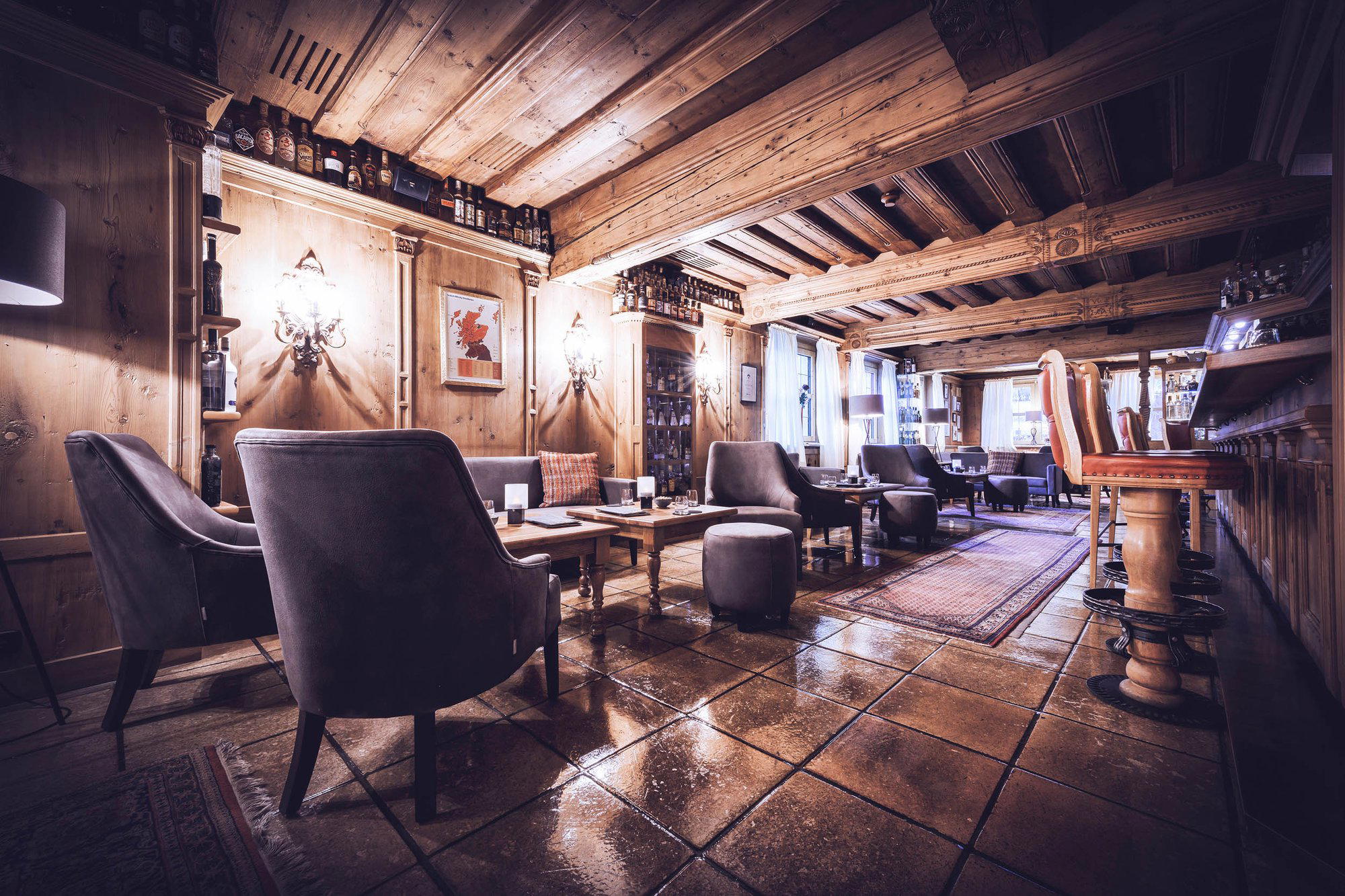
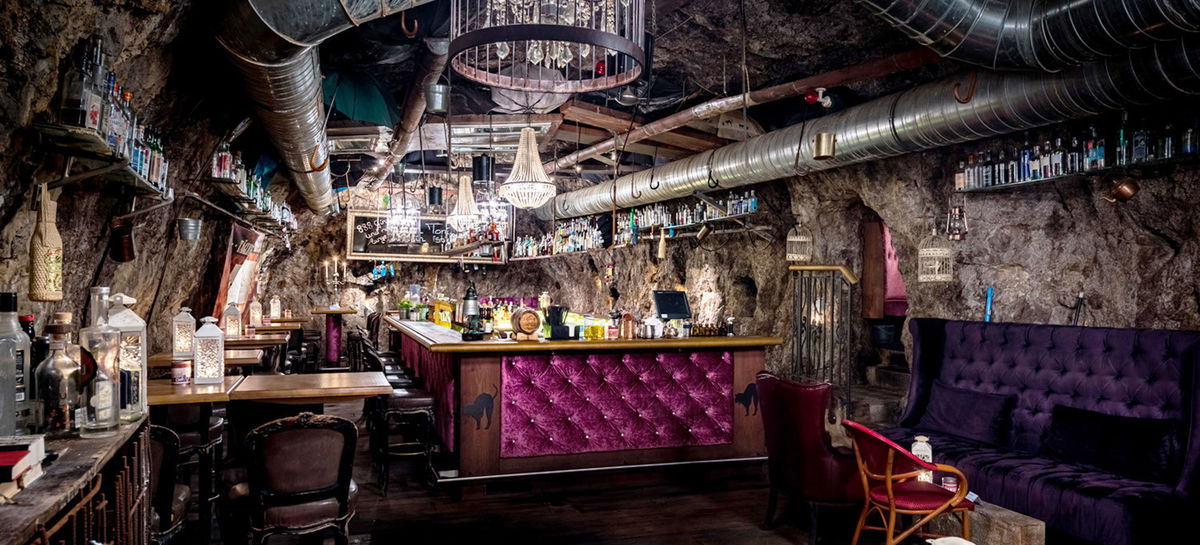
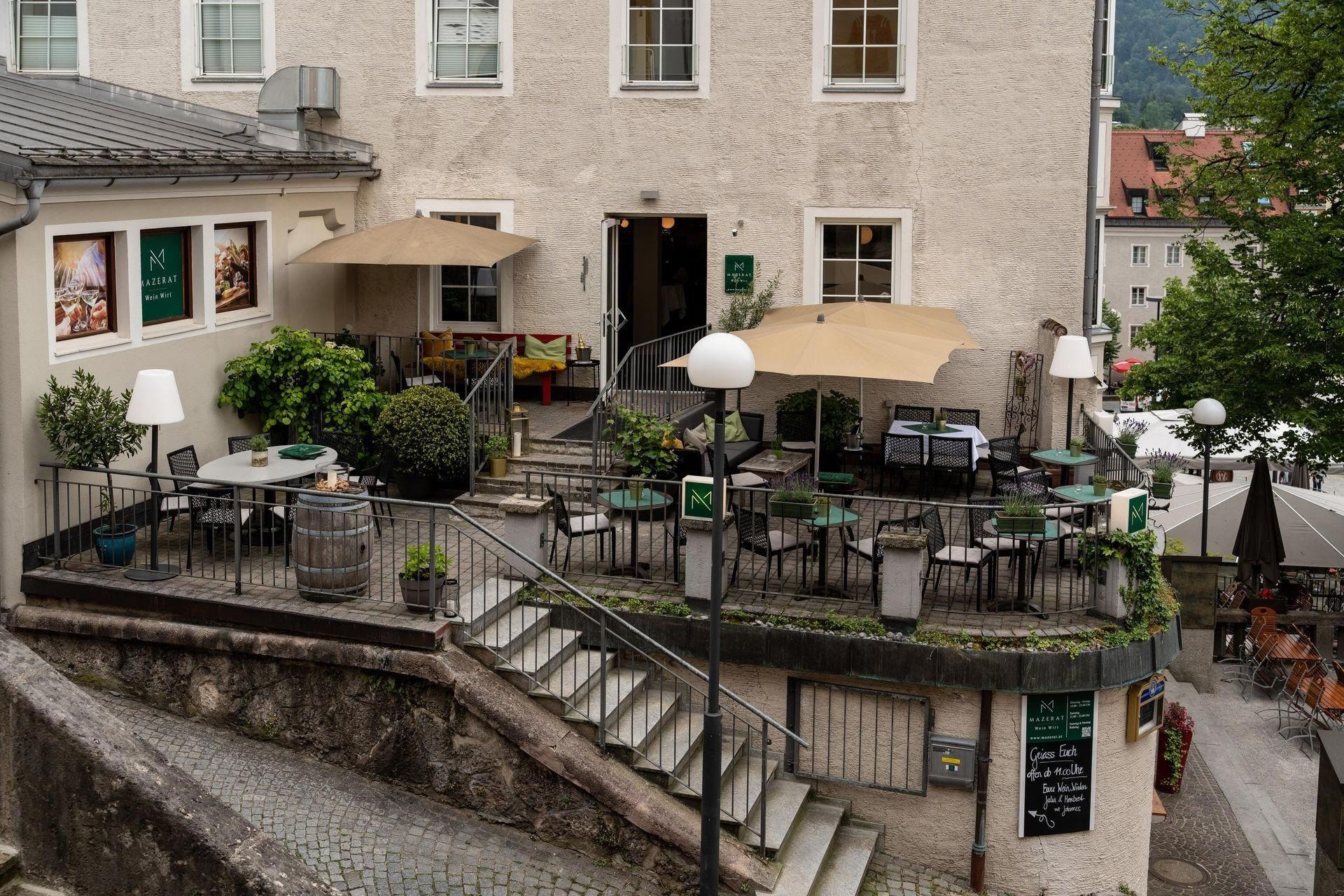
Hotels in Rattenberg
Browse all →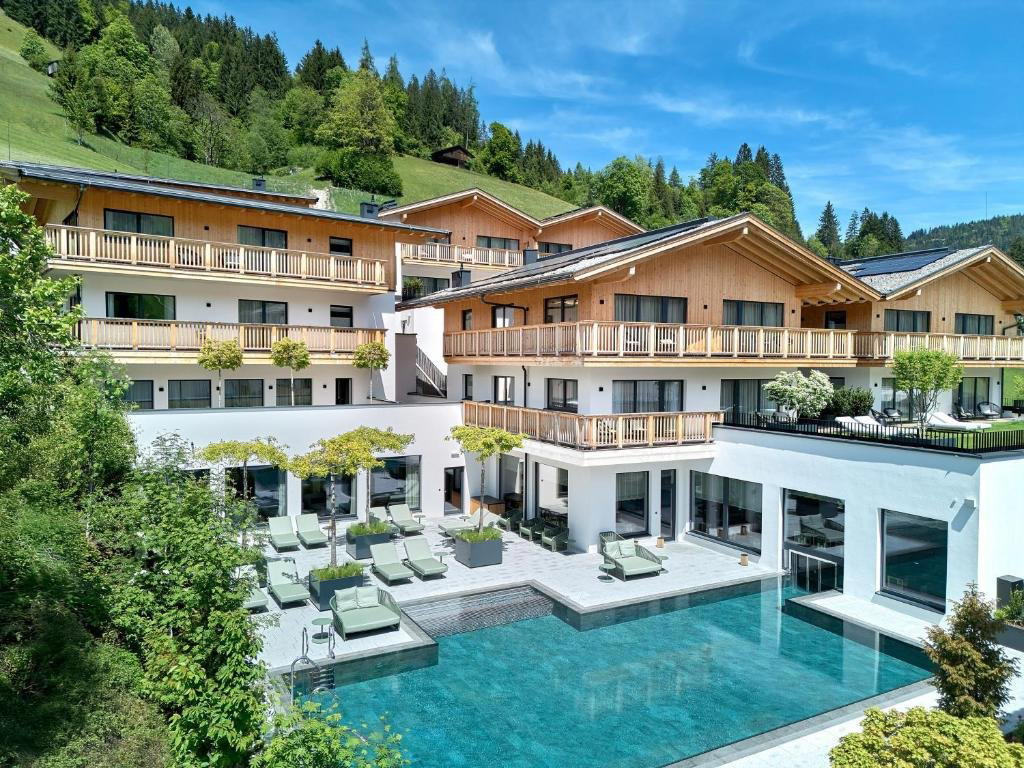

At a Glance
- Historic
- Cozy
- Rustic
- Elegant
- Special Occasion
- Group Dining
- Celebration
- Historic Building
- Terrace
- Panoramic View
- Local Sourcing
- Street Scene
Current opening hours
- Monday
- Closed
- Tuesday
- Closed
- Wednesday
- 5 PM–12 AM
- Thursday
- 5 PM–12 AM
- Friday
- 5 PM–12 AM
- Saturday
- 11 AM–12 AM
- Sunday
- 11 AM–10 PM
Hours can change for holidays and private events. Last verified .
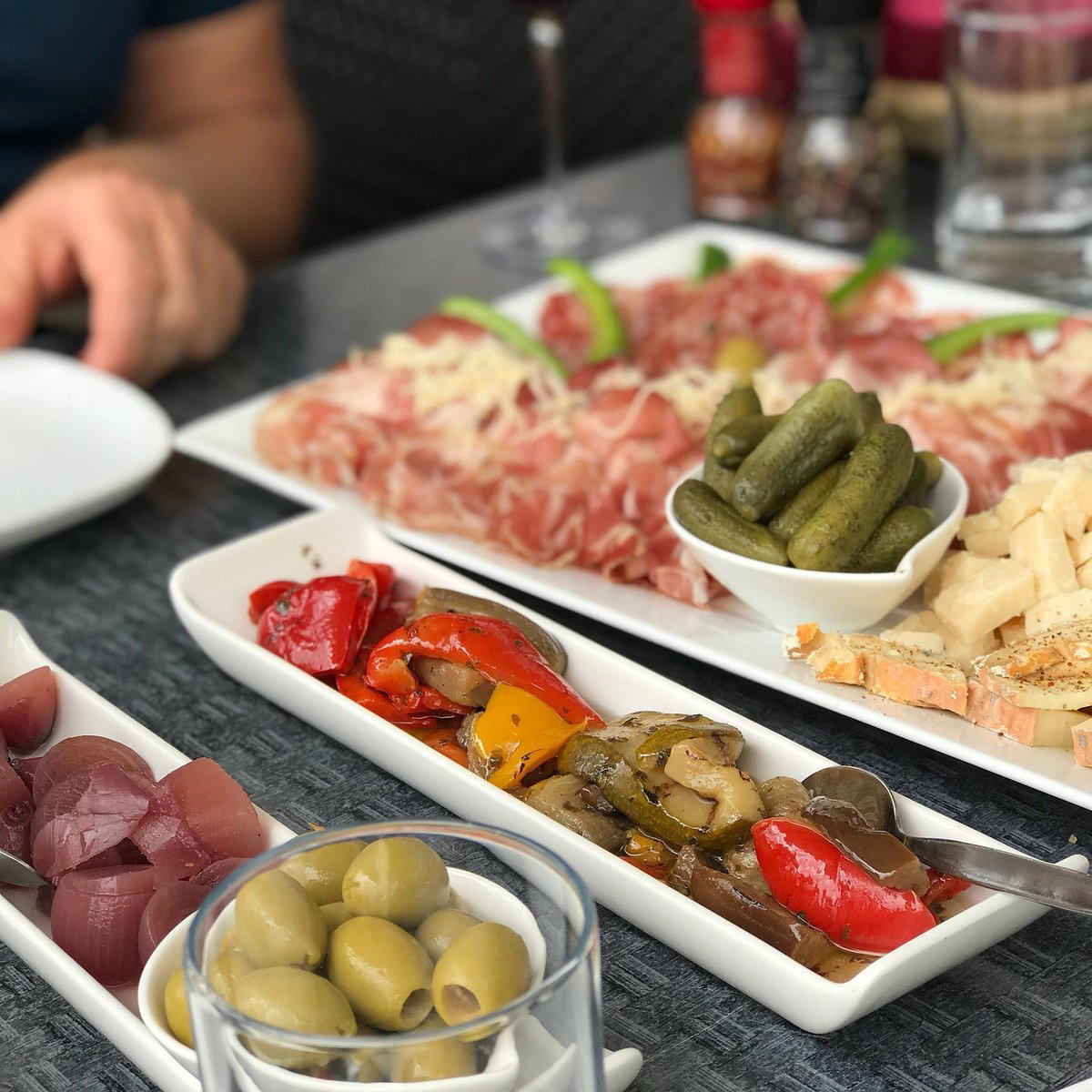
Historic medieval vaults contrasted with modern furnishings, creating a stylish and atmospheric dining experience.
Know Before You Go
- Getting there
- Pfarrgasse 92-93, 6240 Rattenberg, Austria