Maison Nur
Our verdict
On the Bowery at 217, Maison Nur occupies a stretch of Lower Manhattan that has cycled through punk clubs, art galleries, and now a new tier of destination dining. The restaurant brings a distinct editorial proposition to a city already dense with tasting-format ambition, sitting at an address that places it squarely in conversation with New York's broader shift toward experiential, progression-driven meals.

Pearl is the En Primeur Club membership app, where members save venues, book tables and use the concierge.

The menu
What to order
- Duck Confit
- Dover Sole
- Steak Au Poivre
- Mushroom Mille Feuille
- Roasted Duck Breast
- Chocolate Bomb
The Bowery as a Dining Address
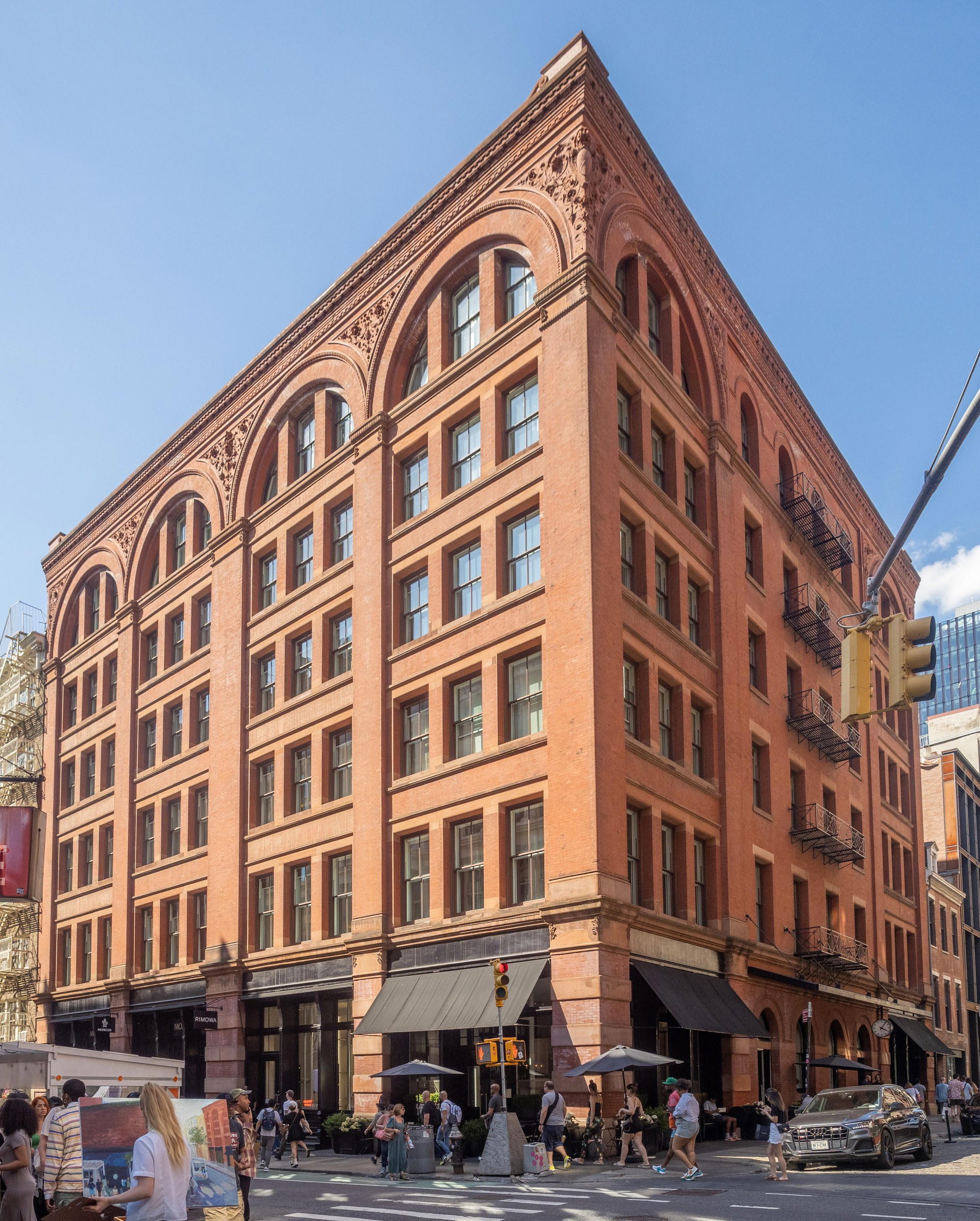
The Bowery has always been a street in transition. For decades it anchored a particular kind of New York grit, then absorbed the gallery overflow from SoHo, and in the past fifteen years has become one of the more consequential dining corridors below 14th Street. At 217 Bowery, Maison Nur enters a block where the physical environment does preliminary work before a single dish arrives: the architecture of the surrounding buildings carries industrial memory, the street noise carries the specific frequency of Lower Manhattan, and the interior shift from that exterior becomes part of the experience itself. That tension between outside and inside, between the city's raw surface and a composed dining room, is precisely what the better Bowery openings have learned to use.
Where Maison Nur Sits in the City's Tasting Progression
New York's premium dining map has reorganized itself around a specific format question: what does a multi-course progression owe the diner in 2024? The answer has diverged sharply. At one end, counters like Masa and Atomix have built their entire identity around the sequenced meal as the primary communication between kitchen and guest, where each course is positioned not as a standalone dish but as a movement in a longer argument. At another end, rooms like Per Se and Le Bernardin anchor their progression in French formalism, where the arc of a meal follows inherited structural logic. Maison Nur occupies a different register, one that draws on culinary traditions less legible to the average Manhattan diner, placing it in a genuinely distinct competitive position.
This matters because the tasting progression, when it works, functions as a form of education. The early courses establish vocabulary. The middle courses test comprehension. The final courses ask the diner to apply what they have absorbed. Restaurants that understand this structure produce meals that feel complete; those that treat multi-course as mere accumulation produce meals that feel long. The Bowery address situates Maison Nur outside the Midtown concentration where Jungsik and its peers operate, giving it a downtown register that tends to attract a different diner demographic.
The Arc of the Meal: How Maison Nur Structures Its Progression
The most instructive way to read Maison Nur is as a sequenced argument rather than a menu list. Progressive kitchens in this price tier, whether Alinea in Chicago, Lazy Bear in San Francisco, or Single Thread Farm in Healdsburg, all make decisions about where to place textural contrast, where to introduce acidity as a reset, and where to allow richness to accumulate before pulling back. These are compositional choices, and the rhythm they produce is what separates a technically accomplished kitchen from a genuinely memorable one.
At Maison Nur, the culinary tradition informing those choices draws from a different source than the French-Japanese axis that dominates New York's top tier. The Bowery location is no accident in this context: downtown Manhattan has historically given more room to cuisines arriving outside the established fine-dining canon, and that latitude creates space for a kitchen to make a case on its own structural terms rather than against a Michelin-adjudicated benchmark. Whether that case lands depends on whether the progression holds its shape across the full meal, a test that the leading American destination restaurants, from The French Laundry in Napa to Blue Hill at Stone Barns in Tarrytown, apply to themselves relentlessly.
Context: The Downtown Dining Shift
The movement of serious tasting-format restaurants into Lower Manhattan accelerated after 2015, when real estate economics pushed ambitious kitchens away from Midtown's established corridors. The Bowery and its adjacent streets absorbed a portion of that energy. What followed was a kind of informal sorting: casual operators took the higher-traffic corners while progression-format rooms, which need lower turnover and guests who commit to two-plus hours, found their way into spaces where the street character supported a longer evening. 217 Bowery, as an address, sits within that logic.
Internationally, the sequenced tasting format has followed a similar geographic dispersal. In cities from Hong Kong, where 8 1/2 Otto e Mezzo Bombana represents one formal pole, to Monte Carlo, where Alain Ducasse at Louis XV remains the reference point for European classical structure, the tasting menu has become the primary format through which fine dining communicates ambition. New York contributes its own version of that conversation, and Maison Nur is now part of it.
How Maison Nur Compares on the American Circuit
For diners building a broader itinerary, Maison Nur sits within a cohort of American restaurants that use the tasting format to explore traditions outside the Franco-Japanese core. Providence in Los Angeles, Addison in San Diego, Bacchanalia in Atlanta, and The Inn at Little Washington each make formal commitments to progression-based dining while drawing on culinary vocabularies that reflect their specific geographic and cultural contexts. Emeril's in New Orleans occupies yet another register, where Louisiana tradition becomes the structural grammar rather than the decorative element. What this circuit demonstrates is that the tasting format is not culturally neutral: its meaning shifts depending on which kitchen traditions inform it.
Maison Nur's downtown New York positioning places it in productive tension with the Midtown formalism of its most decorated peers. That tension, between inherited structure and alternative tradition, is where the most interesting American fine dining has been happening. See our full New York City restaurants guide for the broader map of where this is playing out across the five boroughs.
Know Before You Go
Planning Details
- Address: 217 Bowery, New York, NY 10002
- Neighbourhood: Lower East Side / NoHo border, Bowery corridor
- Format: Tasting progression format; allow a minimum of two hours
- Nearest transit: The Bowery is accessible from multiple subway lines; the F and M at 2nd Avenue and the J/Z at Bowery are the closest options
- Seasonal note: Lower Manhattan dining rooms at this level tend to fill fastest in October and November, when the city's restaurant season peaks before the holiday slowdown
Frequently asked questions
What do people recommend at Maison Nur?
Because Maison Nur operates in the progression-format tier, the meal is leading understood as a sequence rather than a selection of standout dishes. In rooms built around this structure, as at Atomix and comparable addresses, individual course recommendations are less useful than understanding the arc: early courses tend to establish the kitchen's primary ingredient vocabulary, mid-meal courses introduce textural and temperature contrast, and the closing sequence carries the most compositional weight. Ask the service team about any dietary requirements well before arrival, as tasting kitchens at this level adjust the full progression rather than simply substituting a single course.
Do they take walk-ins at Maison Nur?
In the format tier where Maison Nur operates, walk-in availability is structurally limited. Progression-format rooms running a fixed number of covers per service, as is standard at New York addresses in this category, require advance booking to manage kitchen sequencing accurately. If same-day availability is your priority, the lunch service, where offered, tends to carry more flexibility than dinner. Diners who have visited Per Se or comparable New York rooms will recognize the booking logic: the format demands it.
What culinary tradition does Maison Nur draw on, and how does that shape the dining experience in New York?
Maison Nur's position on the Bowery reflects a broader pattern in New York dining, where downtown addresses have become entry points for tasting-format rooms built around non-European culinary traditions. In a city where the dominant fine-dining reference points remain French and Japanese, a kitchen working from a different cultural grammar, whether Middle Eastern, North African, or another tradition less represented in the Michelin-tracked tier, creates a different kind of progression narrative. For diners who have worked through the established New York circuit, that difference is precisely what makes the address worth tracking.
City Peers
Comparable venues nearby, for context on price, style, and recognition.
| Venue | Cuisine | Price | Awards | Notes |
|---|---|---|---|---|
| Maison NurThis venue (the venue you are viewing) | Modern French-American Fine Dining | $150–200 | Not listed | Not listed |
| La Grande Boucherie | Classic French Brasserie | $50–100 | Wine Spectator Award of Excellence | Midtown-Times Square |
| La Goulue New York | Classic French Bistro | $50–100 | Not listed | Upper East Side-Carnegie Hill |
| Cafe Fleuri | Southern French with North African Accents | $30–50 | Not listed | Financial District-Battery Park City |
| L'Accolade | French-Inspired Neo-Bistro and Natural Wine Bar | Not listed | Not listed | West Village |
| L'Avenue at Saks | Haute French with Southeast Asian Fusion | Not listed | Not listed | Midtown-Times Square |
Continue exploring
More in New York City
Restaurants in New York City
All restaurants in New York City →
Bars in New York City
All bars in New York City →





Details
- Romantic
- Elegant
- Sophisticated
- Ornate
- Date Night
- Special Occasion
- Celebration
- Private Event
- Design Destination
- Private Dining
- Open Kitchen
- Craft Cocktails
- Sommelier Led
- Farm To Table
- Organic
- Sustainable Seafood
- A La Carte
- Tasting Menu
- Craft Cocktails
- Wine
- Organic Focus
- Pescatarian Friendly
Current opening hours
- Monday
- Closed
- Tuesday
- 5 PM–2 AM
- Wednesday
- 5 PM–2 AM
- Thursday
- 5 PM–2 AM
- Friday
- 5 PM–2 AM
- Saturday
- 5 PM–2 AM
- Sunday
- Closed
Hours can change for holidays and private events. Hours as of .
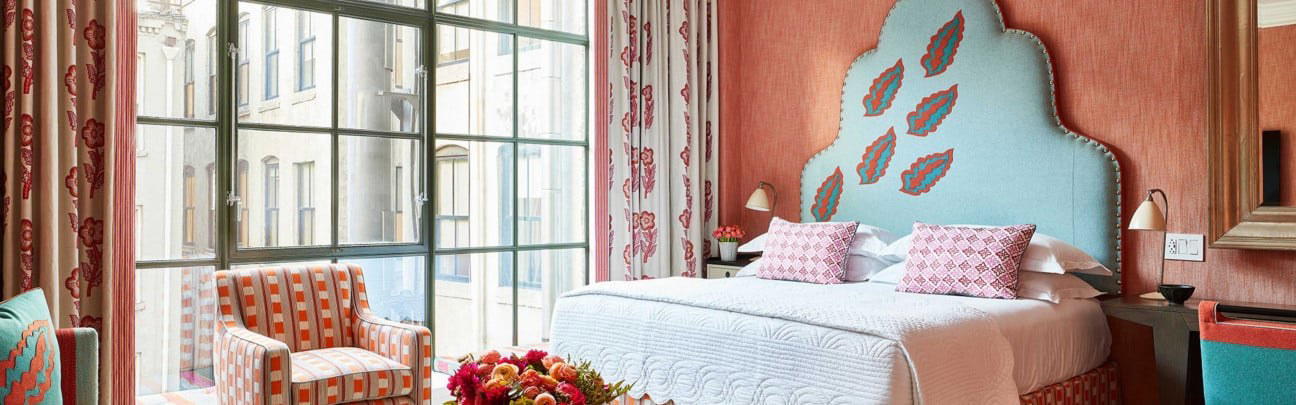
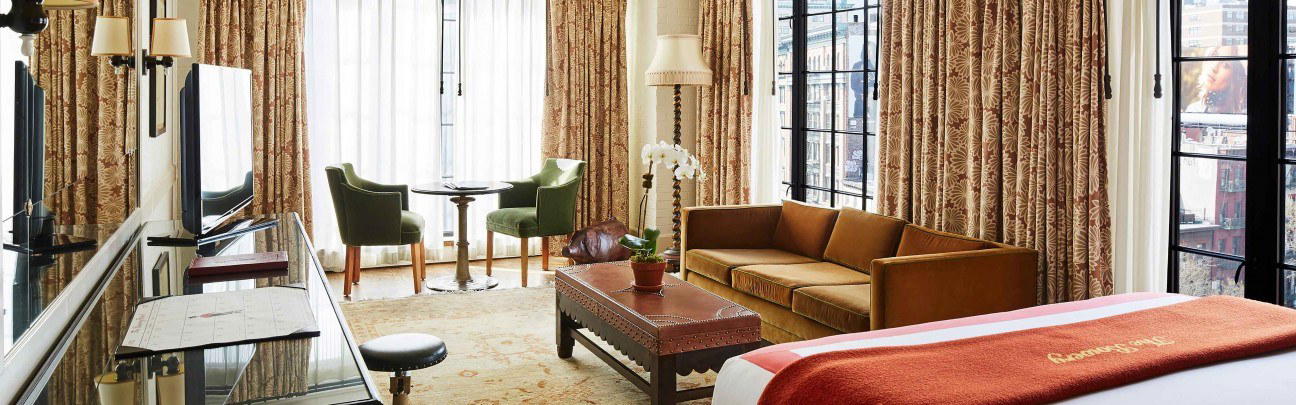
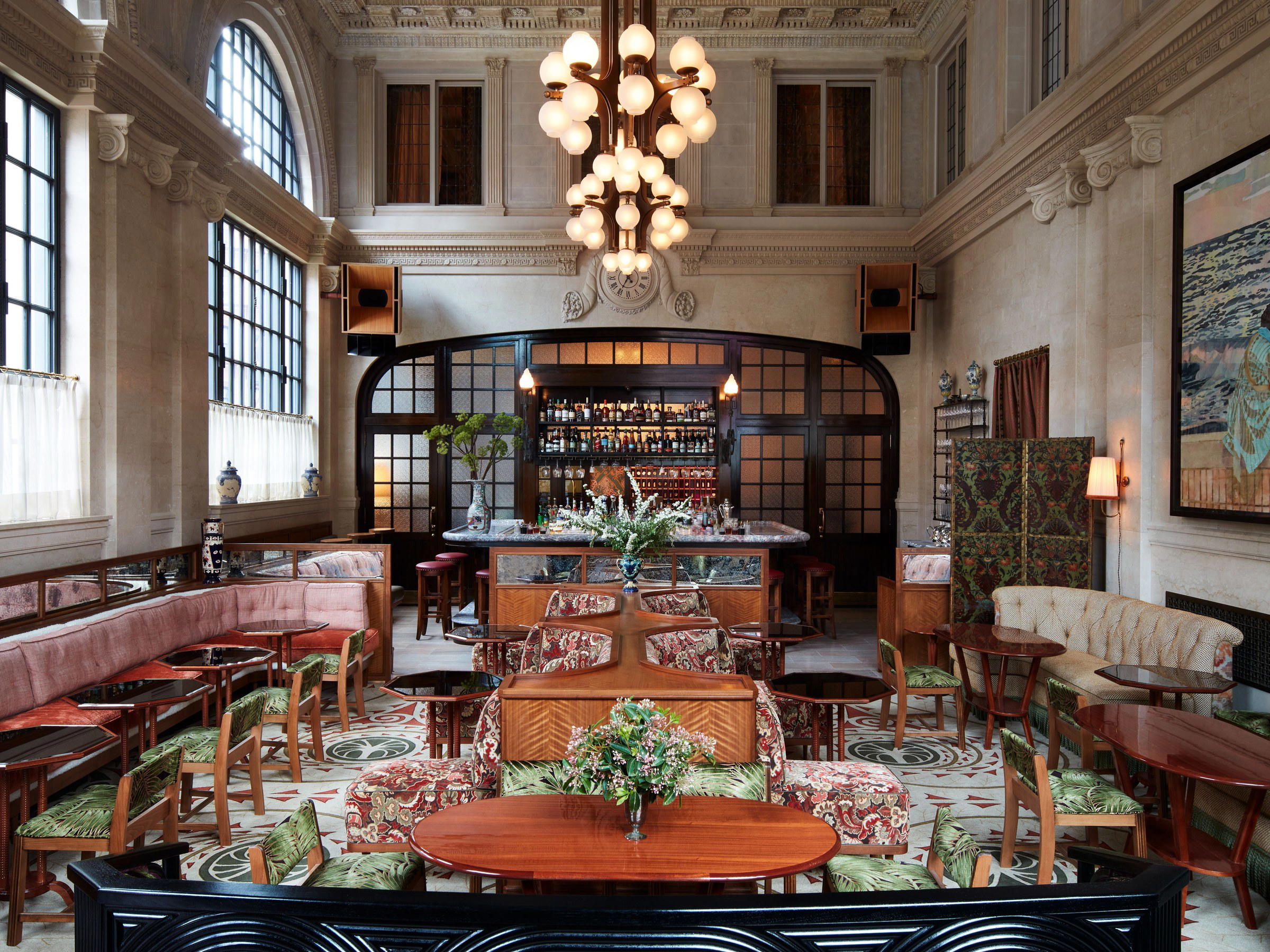
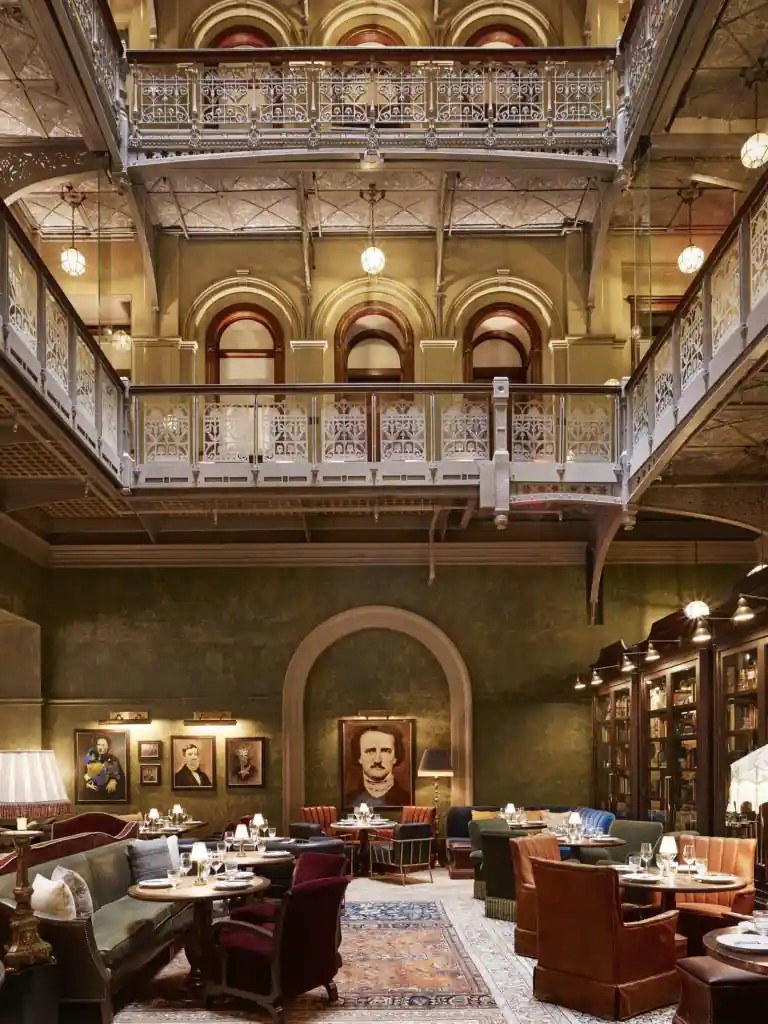
Romantic Old World elegance with gilded ceilings, deeply patinated black walls, jewel-toned velvet banquettes, and lively contemporary artwork creating an atmosphere of mystery and allure under uplighting that grazes gold details.