Cafe Fleuri
Cafe Fleuri brings the culinary grammar of southern France into conversation with North African influence, a pairing that sits at an interesting angle to New York's dominant fine-dining register. The kitchen works within a tradition that prizes slow cooking, aromatic layering, and produce as the structural core of the plate. For diners oriented toward regional European cooking with Mediterranean depth, it occupies a distinct position in the city's broader dining map.
Pearl is the En Primeur Club membership app — saves, bookings, and concierge access live there. Same editors, same standards.
- Address
- 109 Washington St, New York, NY 10006
- Phone
- (212) 406-1202
- Website
- cafefleuri.com
- Directions
- Get directions
 Saves & bookings on Pearl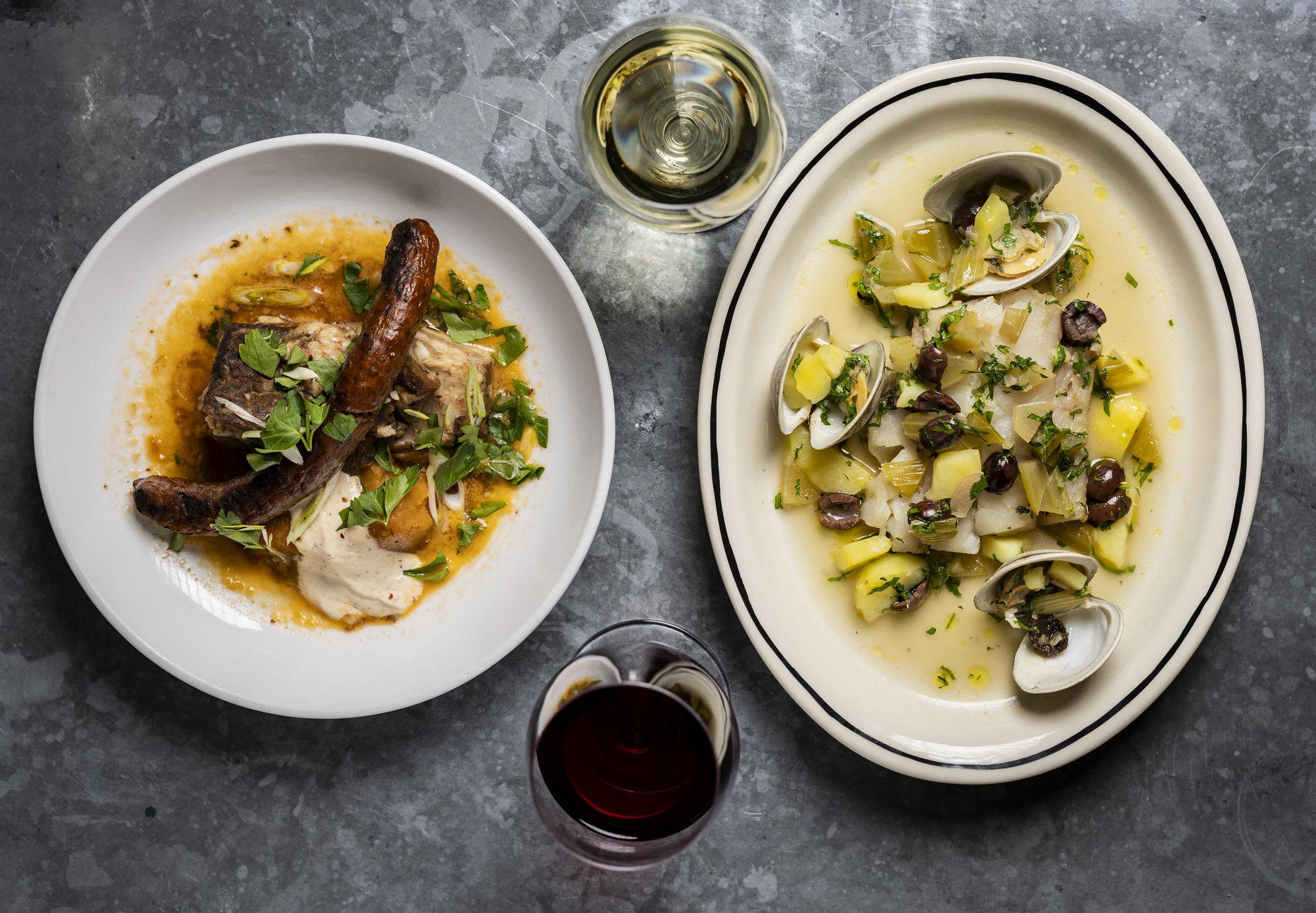
Where the Provençal Table Meets the Maghreb
Cafe Fleuri is a restaurant in New York, New York, serving Southern French with North African Accents at a mid-to-upper price point of about $40 per person. New York's French dining spectrum runs wide. At one end sit the cathedral-scale institutions: Le Bernardin, Per Se, and Eleven Madison Park each anchor a certain idea of French cooking as architectural event. At the other end, a quieter tier has been growing: restaurants that treat southern France not as a monument but as a living agricultural tradition, where the sourcing of a tomato or a lamb shoulder carries as much weight as the technique applied to it. Cafe Fleuri works within that second register. Its cuisine draws from the Provençal and Languedoc traditions of coastal southern France, then extends southward across the Mediterranean into North African spice and grain vocabulary. In New York terms, that positioning is genuinely distinct.
The Southern French Kitchen as Sourcing Philosophy
The farm-to-table movement in the United States has evolved considerably since its California origins in the 1970s and its subsequent institutionalization in the 1990s. Early iterations tended to treat provenance as a marketing credential: a chalkboard listing of farm names, a seasonal rotation of familiar vegetables. The more serious current of that movement, visible at places like Blue Hill at Stone Barns in Tarrytown and Single Thread Farm in Healdsburg, treats sourcing as a culinary constraint that actually shapes what gets cooked and how. Southern French cooking has always operated on a version of this principle by necessity. The Provençal kitchen was historically built around what the garrigue, the coastal farms, and the olive groves produced in any given season, not around a fixed menu that ingredients were recruited to fill.
That structural logic travels well to New York, which has access to serious regional produce from the Hudson Valley and the broader Northeast agricultural corridor. The North African dimension of Cafe Fleuri's kitchen adds another layer to this sourcing conversation. Maghrebi cooking, particularly Tunisian and Moroccan traditions, brings preserved and fermented ingredients into dialogue with fresh produce in ways that complement rather than override Provençal technique. The result, at its leading, is a kitchen where the sourcing decisions are visible in the architecture of the dish: preserved lemon playing against fresh herbs, harissa heat balanced by the cooling weight of a dairy element, semolina or chickpea flour providing a textural counterpoint to a vegetable-forward plate.
This places Cafe Fleuri in a competitive conversation with a small but serious set of American restaurants that treat Mediterranean agricultural traditions as a coherent sourcing and cooking philosophy rather than a stylistic surface. Addison in San Diego and Providence in Los Angeles work within related registers on the West Coast, while Frasca Food and Wine in Boulder has long made the case that regional European cooking translated through serious local sourcing produces something more interesting than either influence does in isolation.
New York's French Dining Spectrum and Where This Fits
Among New York's four-star French houses, the competition is structured around prestige signals: Michelin recognition, tasting menu formats, and wine lists built on Burgundy and Bordeaux depth. Masa and Atomix represent adjacent categories, each anchoring a different fine-dining grammar. The restaurant operates outside that prestige tier, which is precisely what makes its position legible. It draws on a French regional tradition that the major New York French houses have largely bypassed in favor of classical or modernist frameworks. Southern French cooking, with its North African adjacency, has produced a small but durable wave of serious restaurants in cities like London and Paris over the past decade. New York has been slower to absorb this, which gives the restaurant a relatively clear lane.
The comparison to farm-anchored American contemporaries is also instructive. Lazy Bear in San Francisco, Smyth in Chicago, and The French Laundry in Napa each built their identity around a tight relationship between sourcing and menu structure. The difference at the restaurant is that the tradition it draws on is Mediterranean rather than American regional, which changes the flavor logic considerably. Cumin, coriander, saffron, preserved citrus, and fermented chili pastes enter the sourcing conversation alongside whatever the northeastern growing season produces. That friction between northern ingredient sources and southern flavor vocabulary is, where interesting cooking in this vein tends to happen.
Internationally, the southern France-North Africa culinary corridor has produced a generation of serious cooking. Atelier Moessmer Norbert Niederkofler in Brunico and Dal Pescatore in Runate represent the Italian side of the European fine-dining tradition that values regional rootedness over international modernism, a parallel sensibility to what Provençal-inflected cooking does at its most serious.
What the Menu Tradition Suggests
Southern French cooking at the level the restaurant is positioned to work within typically organizes its menu around two or three seasonal anchor ingredients, built into multiple preparations across courses. A spring menu might center on young artichokes, asparagus, and early stone fruit; an autumn version around squash, chestnuts, and cured fish. The North African dimension tends to appear in the spice blends, the braising liquids, and the grain-based side constructions, less as a separate section of the menu and more as a seasoning logic that runs through the whole. This is a more integrated approach than the fusion model suggests, and it aligns with how Maghrebi and Provençal cooking have historically influenced each other through centuries of Mediterranean trade and migration. For diners accustomed to the city's French institutional register, this approach reads differently: less architectural, more agricultural.
The American farm-to-table tradition at its most serious is also well represented at Emeril's in New Orleans and The Inn at Little Washington in Washington, both of which anchor regional American cooking to serious sourcing commitments in ways that parallel what the southern French tradition does in its home register.
Planning Your Visit
The restaurant is positioned within New York City's mid-to-upper dining tier, drawing on a culinary tradition that rewards unhurried eating.
Quick reference: the restaurant, New York City. Southern French with North African Accents. Reservations recommended.
Cuisine and Credentials
Comparable venues nearby, for context on price, style, and recognition.
| Venue | Cuisine | Price | Notes |
|---|---|---|---|
| Cafe FleuriThis venue — the venue you are viewing | Southern French with North African Accents | $$$$ | Not listed |
| Barnea Bistro | Kosher French Fine Dining | $$$$ | East Midtown-Turtle Bay |
| L'Avenue at Saks | Haute French with Southeast Asian Fusion | $$$$ | Midtown-Times Square |
| The Nines | French Supper Club | $$$$ | Greenwich Village |
| La Goulue New York | Classic French Bistro | $$$$ | Upper East Side-Carnegie Hill |
| The Gallery at Centurion New York | Modern French Fine Dining | $$$$ | Midtown-Times Square |
Continue exploring
More in New York City
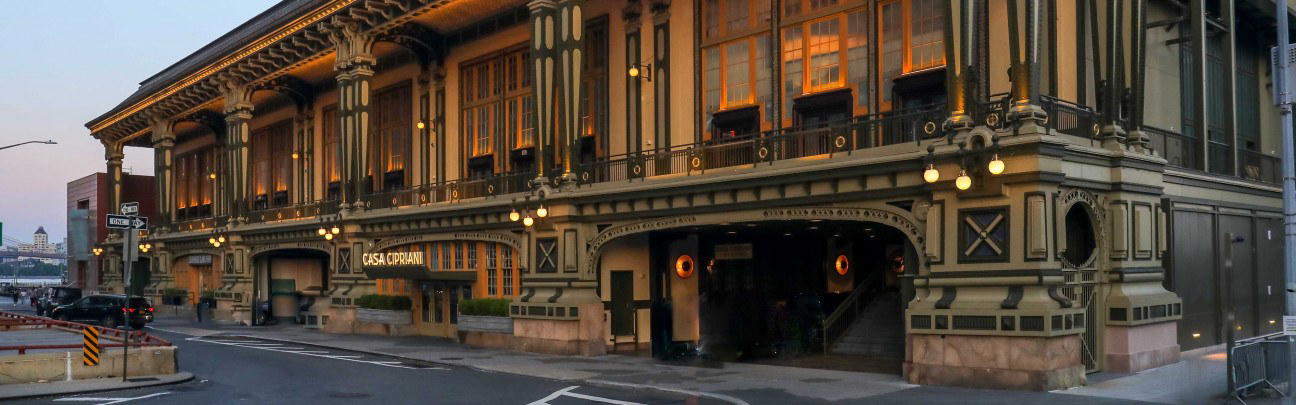
Restaurants in New York City
Browse all →
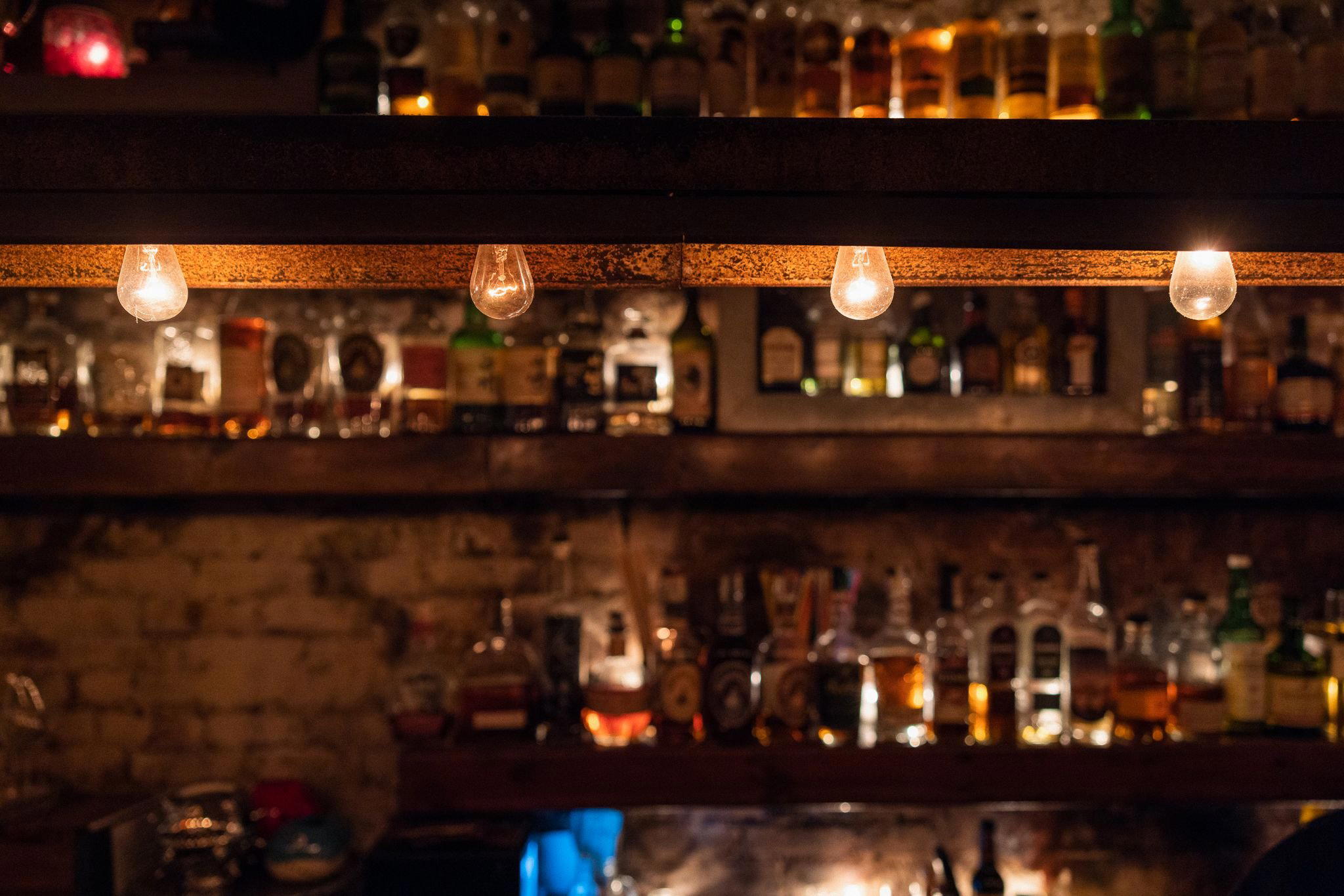
Bars in New York City
Browse all →
Hotels in New York City
Browse all →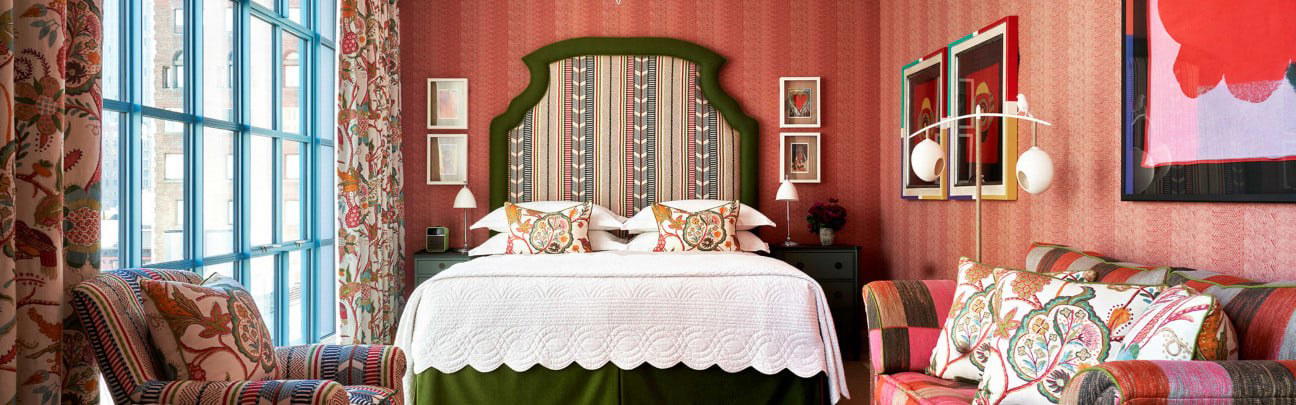





At a Glance
- Elegant
- Sophisticated
- Classic
- Business Dinner
- Date Night
- Special Occasion
- Hotel Restaurant
- Craft Cocktails
Current opening hours
- Monday
- 12–2:30 PM, 5–9 PM
- Tuesday
- 12–2:30 PM, 5–9 PM
- Wednesday
- 12–2:30 PM, 5–9 PM
- Thursday
- 12–2:30 PM, 5–10 PM
- Friday
- 12–2:30 PM, 5–10 PM
- Saturday
- 5–10 PM
- Sunday
- Closed
Hours can change for holidays and private events. Last verified .
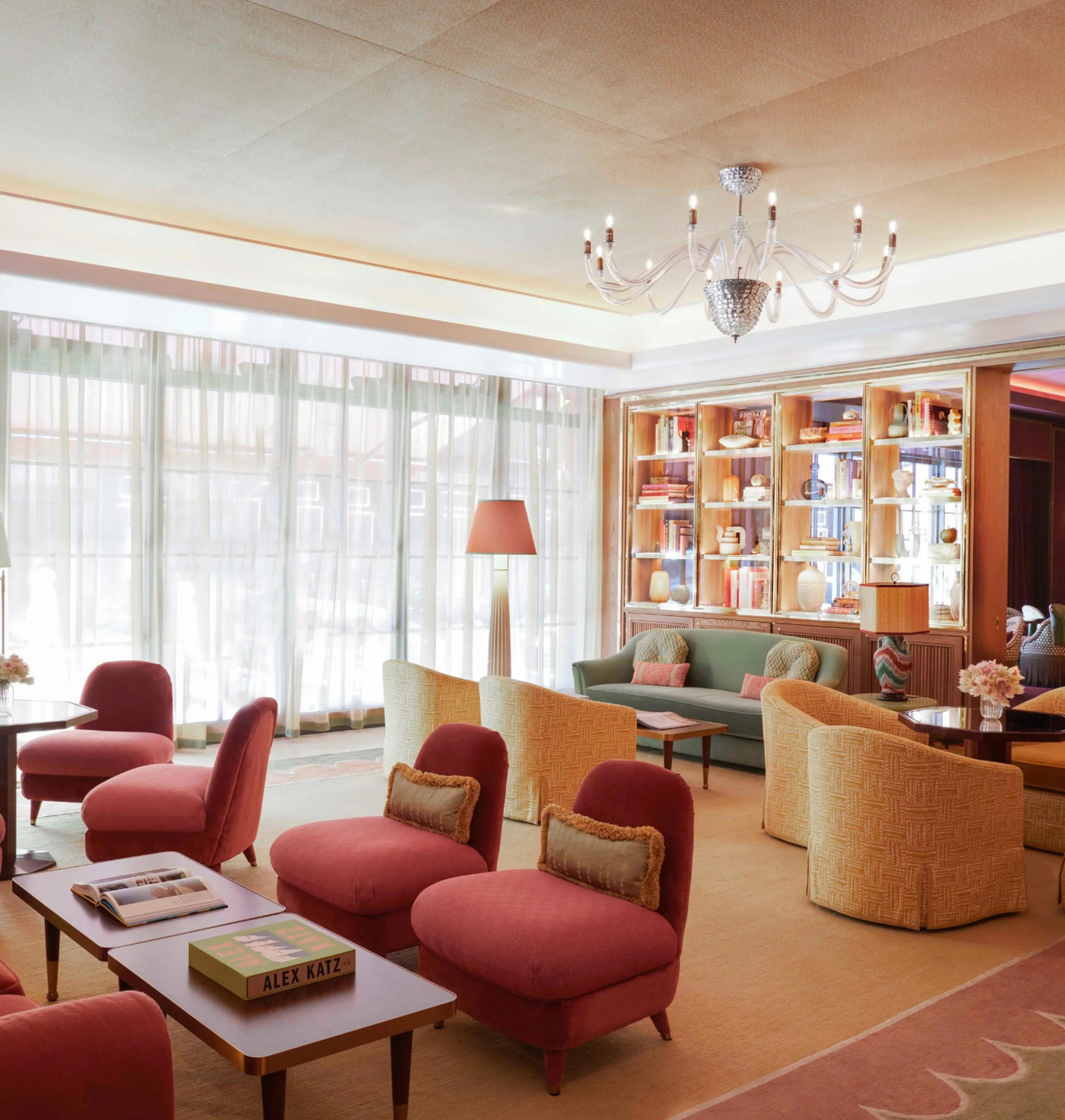
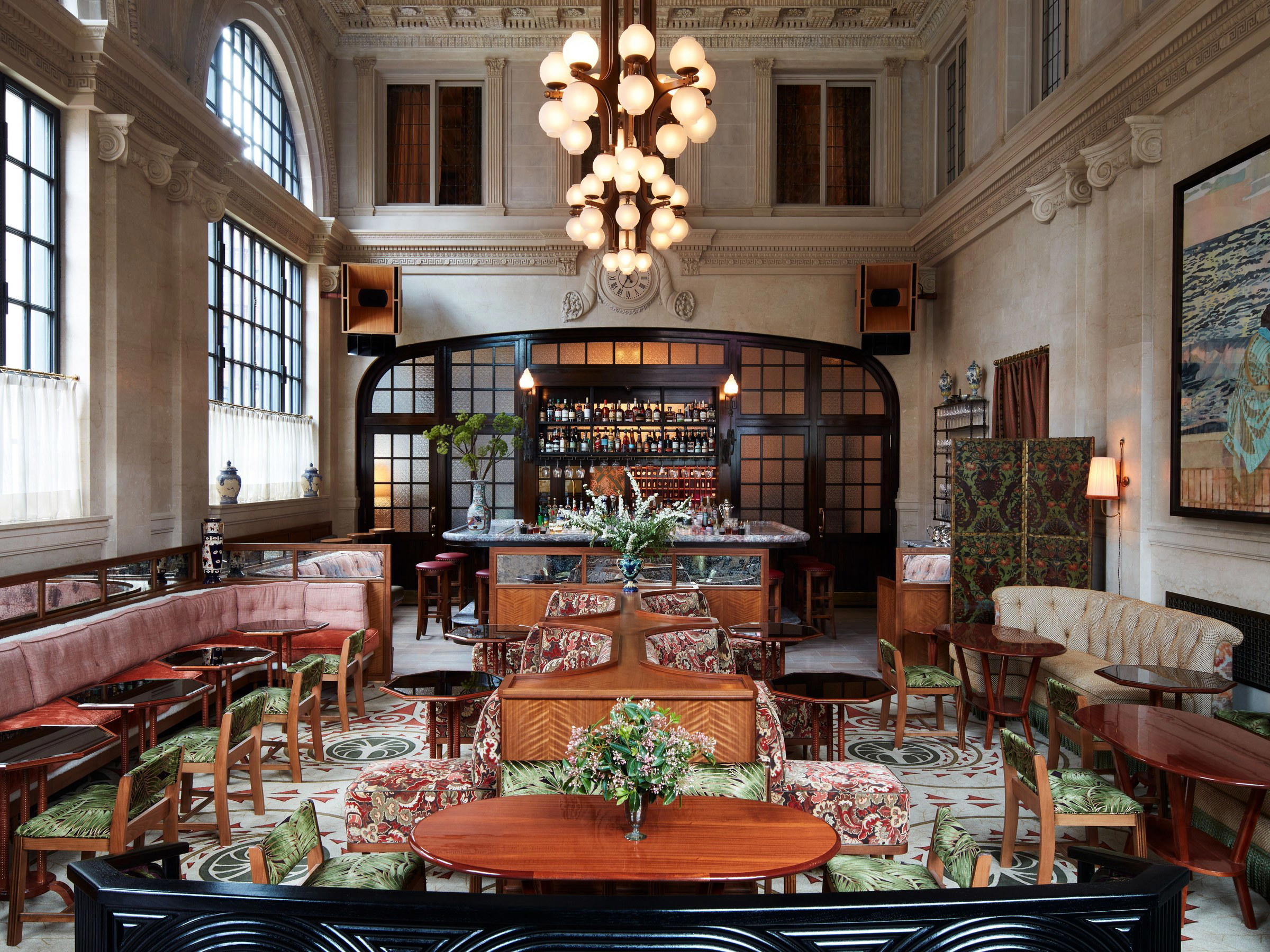
Floral prints, green walls, and marigold tufted benches create an elegant European café atmosphere.