
Tabelog 100 #13
Our verdict
Osaka’s standing-drink culture rewards speed, proximity, and sharp specialization. Maguro Donya belongs to the city’s fish-focused tachinomi tier: a 10-seat stand-up sushi and seafood counter in Abeno, selected for Tabelog 100 Tachinomi 2025, with tuna cuts and sake-led drinking doing the serious work.

Pearl is the En Primeur Club membership app, where members save venues, book tables and use the concierge.
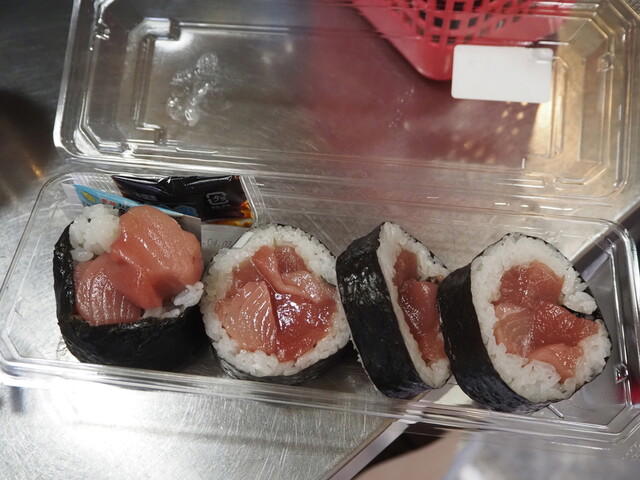
Osaka has the compressed rhythm of a city that knows how to eat quickly and well: shutters, fluorescent light, quick errands, and counters for people who need no ceremony. Maguro Donya fits: not sushi as hushed luxury ritual, but tachinomi culture applied to fish, with standing-bar body language and seafood-shop priorities.
Osaka excels at formats that collapse distance between cook, counter, and customer. Casual counters, noodle shops, snack stands, and standing bars all share the city’s grammar of turnover, appetite, and value. A fish-led standing sushi bar fits while sharpening the focus. The meal is best approached by appetite, moving between sushi and seafood plates, with the counter setting the pace.
Stand-up sushi turns seafood into a paced, informal tasting
Read this as a compact tasting progression rather than a conventional restaurant meal. Its categories are stand-up bar, stand-up sushi, and seafood, each resetting expectations. Stand-up bar means pace and limited comfort. Stand-up sushi means the counter, not the table, sets tempo. Seafood means the best order likely follows what looks strongest that day, not a long ceremonial script.
The seafood emphasis structures the sequence. The counter’s appeal is the way a fish-focused format can stretch across texture, temperature, and drink pairing in a short standing meal. That places Maguro Donya closer to Osaka’s practical fish-drinking culture than polished luxury sushi theatre. The pleasure is not grand staging; it is directness, appetite, and a narrow category handled with confidence.
Selection for Tabelog 100 Tachinomi 2025 puts Maguro Donya in a wider conversation about standing bars, a category easily underestimated outside Japan. Tachinomi is not merely cheap drinking. At its stronger end, it is a disciplined small-format genre where product focus, counter rhythm, and repeatability matter. A 3.47 Tabelog score signals local traction rather than destination-dining theatre.
Against Osaka’s broader casual tier, the distinction is specialization. Gokuraku Udon Ah-Men and Tapioca Shokudo share a similar everyday price band, while Kamigata Rainbow channels another part of the city’s quick-meal appetite. Soba Kiri Kamonohashi and Ninniku Tori Yakiniku San move into different meal structures. This fish-first standing counter occupies a narrower lane: less complete dinner, more targeted drinking meal, for seafood focus without the time or cost of a formal sushi reservation.
Osaka counter culture rewards decisiveness
Osaka’s everyday dining culture has a different temperature from luxury hotel and tasting-menu circuits. The city layers commuter movement, shopping streets, and old-school eating rooms, making it fertile for short-format restaurants. Here, a small counter need not perform exclusivity; it must serve quickly, price sanely, and give regulars reason to return.
The room’s limits are part of the experience. A standing-bar setup makes the meal brief and focused. Private rooms and group dining are beside the point. Better comparisons are compact specialists: bakeries, counters, quick-service institutions, and narrow restaurants handling one category with confidence. Readers mapping a broader Osaka food day should think in terms of focused stops rather than one long meal, because Osaka dining often rewards momentum.
The drinking context reinforces the izakaya-adjacent reading. A fish counter like this is built for a short, flexible pairing mindset rather than formal coursing. Seafood can move through different textures and preparations; the appeal is how quickly the format lets diners adjust the meal around appetite and what the counter is serving.
Flexibility is culturally relevant, not just convenient. Osaka’s better casual food culture often blurs snack stop, drink stop, and compact dinner depending on time and appetite. That flexibility helps standing formats survive in expensive urban space by compressing service, seating, and menu ambition into a small footprint.
How to place it within an Osaka eating itinerary
The smart use case is a seafood-focused stop, not a lingering full-course evening. Build around fish, then let the format decide how far to continue. The identity remains seafood and standing drinks rather than multi-hour dining, and the setup suits nimble diners more than anyone needing a conventional table or broad-menu indecision.
For visitors, expectation control is key. Osaka has restaurants that announce themselves through luxury materials, chef biographies, and choreographed pacing. This is the opposite: small, direct, and category-specific. The award matters because it validates a genre that can look modest outside. Tabelog’s tachinomi list is useful because it treats standing bars as serious food culture, not filler between formal reservations.
In a city itinerary, Maguro Donya works as counterpoint to longer meals and hotel dining. Use a full Osaka restaurants guide for the broader restaurant map, then build around city movement rather than prestige alone. For sleep, drinking, wine, and cultural planning, broader Osaka guides can help frame the stop within a larger trip.
The broader lesson is that Japan’s serious casual dining often lives in narrow formats. Across Osaka and beyond, compact specialists show how one category can carry more meaning than a broad menu. The same editorial truth applies here: specialization often matters more than breadth, especially when the format is short, direct, and built around repeatable pleasure rather than elaborate ceremony.
The verdict is simple: treat this as a sharp Osaka standing-counter stop for fish and drinks, especially if seafood is the point. It is not built for lingering comfort or broad-menu indecision. Its strength is compression: a seafood focus, a recognized tachinomi format, everyday pricing, and enough specificity to make a short meal feel complete.
Frequently asked questions
What's Maguro Donya's location?
Osaka.
What should I budget for a meal at Maguro Donya?
Budget at Maguro Donya is listed as Dinner: JPY 1,000 - JPY 1,999; Lunch: JPY 1,000 - JPY 1,999.
What are the operating hours at Maguro Donya?
Operating hours are not specified in the provided venue information.
What is Maguro Donya known for?
Maguro Donya is known as an Osaka stand-up bar, stand-up sushi, and seafood venue, recognized in Tabelog 100 Tachinomi 2025.
Fast Comparison
Comparable venues by cuisine and price in the same metro.
| Venue | Cuisine | Price | Awards | Notes |
|---|---|---|---|---|
| Maguro DonyaThis venue (the venue you are viewing) | Standing maguro & seafood bar | $10–20 | Tabelog 100 #13 | Not listed |
| Menya Hanabusa | Nagoya Cochin chicken ramen & chuka soba | $10–20 | Tabelog 100 #29 | Chūō |
| Kikujudo Yoshinobu | Traditional Japanese wagashi & tea cafe | Not listed | Tabelog 100 #4 | Chūō |
| Aimai | Spicy Japanese curry house | $1–10 | Tabelog 100 #63 | Kita |
| Karakuchi Meshiya Morigen | Spicy Japanese Curry House | $1–10 | Tabelog 100 #71 | Kita |
| RAMEN Gamou Smile | Seasonal Japanese Ramen | $1–10 | Tabelog 100 #22 | Jōtō |
Recognition history
Dated appearances from independent guides and award organizations, with the underlying list record or original source where available.
Tabelog 100 #13 · No. 13
Tabelog · Tabelog 100 - Tachinomi - 2025
Continue exploring
More in Osaka
Restaurants in Osaka
All restaurants in Osaka →



Bars in Osaka
All bars in Osaka →

Hotels in Osaka
All hotels in Osaka →


Wineries in Osaka
Browse all →
Details
- Lively
- Cozy
- After Work
- Casual Hangout
- Solo
- Standalone
- A La Carte
- Small Plates
- Counter Dining
- Pescatarian Friendly
Current opening hours
- Monday
- 12–9 PM
- Tuesday
- 12–9 PM
- Wednesday
- Closed
- Thursday
- 12–9 PM
- Friday
- 12–9 PM
- Saturday
- 12–9 PM
- Sunday
- 12–9 PM
Hours can change for holidays and private events. Hours as of .
Casual and compact stand bar with about ten counter spots, bright and functional rather than decorative, where guests stand in close quarters over drinks and plates of tuna and other seafood, creating an energetic, buzzy atmosphere typical of neighborhood shotengai venues.