
A basement curry counter in Ginza with Tabelog Curry TOKYO 100 recognition in 2023 and 2024, Newcastle represents a different Tokyo luxury equation: low price, narrow format, and serious local reputation. The draw is not ceremony but focus, with counter seating, no reservations, and a place in the city’s compact curry canon.
Pearl is the En Primeur Club membership app — saves, bookings, and concierge access live there. Same editors, same standards.
- Address
- Japan, 〒104-0061 Tokyo, Chuo City, Ginza, 2 Chome−11−1 B1F
- Phone
- +81 3-6264-0885
- Website
- tabelog.com
 Saves & bookings on Pearl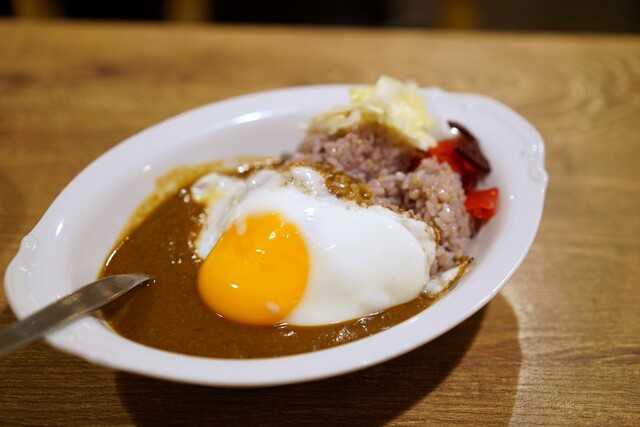
Ginza’s restaurant geography changes quickly once the elevator doors, department-store entrances, and polished street-level dining rooms fall away. A basement address can carry as much intent as a marble lobby here, especially in the lunch hours when office workers, shoppers, and food-obsessive regulars compress the neighbourhood into a few seats and a short menu. Newcastle belongs to that Tokyo category: small-format curry, counter-led, and judged by repeat credibility rather than theatre.
That matters because curry in Tokyo is not a casual afterthought. The city treats it as a specialist field, split between Japanese-style curry rice, spice-forward independents, European-leaning renditions, and compact counters that survive on discipline. In Ginza, where sushi and kaiseki often dominate international attention, curry offers a sharper read on daily local appetite. The useful comparison is not with Ginza’s luxury dining rooms, but with the city’s narrow-format specialists, where a single category can carry a restaurant’s entire reputation.
Ginza curry with reputation instead of ceremony
Tabelog selected Newcastle for its Curry TOKYO 100 list in both 2023 and 2024, with a 2024 score of 3.72. In Tokyo’s crowded curry field, that kind of repeat selection is a meaningful signal: it places the restaurant inside a citywide conversation rather than merely a neighbourhood lunch circuit. The list is not a Michelin-style fine-dining hierarchy; its value is closer to a map of specialists that Japanese diners take seriously.
The price band also changes the reading. Tokyo can ask JPY 30,000 to JPY 39,999 for counters such as Sushi Yuu, and ¥¥¥¥ beef restaurants such as Oniku Karyu occupy another bracket entirely. Curry at this level works by different rules. It is not chasing luxury through rarity, service choreography, or imported ingredients. It wins or fails on proportion, pace, and whether a compact format can produce enough character to justify a detour in a city full of competent curry.
That is why Newcastle’s recognition has weight beyond the address. Ginza has many expensive meals, but its lower-priced specialists often reveal more about Tokyo’s dining culture: the acceptance of queues, the comfort with narrow menus, and the belief that a basement counter can merit the same planning energy as a tasting-menu room. For readers building a Tokyo food itinerary, this is the corrective to a schedule overloaded with omakase and kaiseki.
The counter format suits Tokyo's specialist curry culture
Counter seating is not a decorative detail in this genre. It sets the pace, keeps the meal direct, and removes the long-form social rhythm associated with larger restaurants. A curry counter in Ginza is usually about concentration: order, eat, move on. That brevity can feel severe to visitors expecting a long restaurant experience, but it is central to the appeal. The format rewards people who understand lunch as a serious Tokyo meal, not a compromise between appointments.
Reservations are unavailable, which puts timing back into the diner’s hands. That is common among small specialist venues in Japan and particularly relevant in Ginza, where daytime demand can tighten around office breaks. The practical move is to think like a local: avoid treating the meal as an open-ended afternoon anchor, and build a flexible plan nearby. Ginza-Itchome is the closest station, with Tokyo Metro Ginza Station also within walking distance, so the restaurant fits neatly into a Chuo Ward day rather than requiring a special cross-city expedition.
The address has its own continuity. Newcastle relocated within Ginza in June 2013, moving from 2-3-1 to its current basement location at 2-11-1. That relocation note is useful because Tokyo’s small restaurants often carry their reputations across rooms. The appeal is less tied to architecture than to habit, memory, and whether regulars follow a format when the setting changes.
Payment and service expectations should stay grounded. Credit cards and electronic money are not accepted, while QR code payments including PayPay, d Barai, and au PAY are listed. The room is non-smoking, private rooms and private use are unavailable, and parking is unavailable. None of this reads as inconvenience in context; it reads as the operating logic of a compact urban curry counter.
How to place it in a Tokyo dining itinerary
Newcastle is most persuasive as a lunch counter woven into a broader Ginza or east-side Tokyo day. It should not be treated as a substitute for high-form sushi, beef, or kaiseki. It answers a different question: where does Tokyo’s reputation culture land when the meal is inexpensive, the format is narrow, and the category is curry rather than ceremony? That question is increasingly useful for travellers who want the city beyond international fine-dining shorthand.
For a curry comparison inside Tokyo, 3 Chome no Curry Ya San gives another route into the category. For a broader Japanese restaurant spread, use 124. KAGURAZAKA (Yakitori), . 鮪と炭火焼き うお炭 秋葉原店, 12/10 Shinjuku ten, and 2D Cafe as contrasting snapshots of the city’s casual and specialist registers.
Planning the rest of the trip is easier with the city guides: Our full Tokyo restaurants guide, Our full Tokyo hotels guide, Our full Tokyo bars guide, Our full Tokyo wineries guide, and Our full Tokyo experiences guide. For wider Japan context, compare category-led meals at -Grilled beef Sukiyaki- KAMAKURA TANUKIAN 鎌倉 たぬき庵 in Kamakura.cafe in Osaka.know in Kumamoto, (Shoku) Vietnam in Kawasaki, [Curry Senmon Ten] Maruyama Kyoju. in Sapporo, and [ki:] in Kyoto. For Japanese food culture abroad, Jōdo Saké Bar in Los Angeles and Onigiri Time in Pasadena show how narrower Japanese formats travel outside Japan.
Accolades, Compared
Comparable venues at a similar level for quick context.
| Venue | Cuisine | Price | Notes |
|---|---|---|---|
| NewcastleThis venue — the venue you are viewing | Traditional Japanese curry house | $ | Not listed |
| CAFE DE L’AMBRE | Traditional Japanese kissaten coffeehouse | $ | Chūō |
| Topca Kanda honten | Japanese & Indian-style Curry House | $ | Chiyoda |
| Royal Coffee Ten Honten | Traditional Japanese kissaten (coffee & light meals) | $ | Taitō |
| GELATERIA VITALI | Florentine-style chocolate gelato shop | $ | Meguro |
| L'Atelier du pain | Artisanal Japanese-French bakery & café | $ | Minato |
Recognition history
Dated appearances from independent guides and award organizations, with the underlying list record or original source where available.
Tabelog 100 #82 · No. 82
Tabelog · Tabelog 100 - Curry - TOKYO - 2024




At a Glance
- Classic
- Cozy
- Well Known
- Solo
- Casual Hangout
- After Work
- Family
- Standalone
- Historic Building
Current opening hours
- Monday
- Closed
- Tuesday
- 11:30 AM–3 PM
- Wednesday
- 11:30 AM–3 PM
- Thursday
- 11:30 AM–3 PM
- Friday
- 11:30 AM–3 PM
- Saturday
- 11:30 AM–3 PM
- Sunday
- 11:30 AM–3 PM
Hours can change for holidays and private events. Last verified .
A compact, non‑smoking basement curry counter with a nostalgic, old‑school Tokyo atmosphere focused on quick, solo or casual meals rather than lingering dining.