Lutyens Grill

World's Best Steaks Europe's 50 Best #12
Our verdict
Inside The Ned, one of the City of London's most architecturally significant banking halls, Lutyens Grill operates as a serious charcoal-grill room with a sourcing programme centred on rare breed European cuts and dry-aged beef. The dining room trades in dark wood panelling and tableside carving trolleys, placing it firmly in the tradition of the great London club grill. Chef Lee Kebble leads the kitchen.

Pearl is the En Primeur Club membership app, where members save venues, book tables and use the concierge.
The Financial District's Case for the Classic Grill
London's premium steak tier has divided sharply over the past decade. On one side sit the high-volume steakhouse chains that colonised the City during the post-2008 recovery; on the other, a smaller cohort of grill rooms operating at the intersection of provenance, technique, and setting. Lutyens Grill belongs to the second group. Housed within The Ned at 27 Poultry, the former Midland Bank building designed by Edwin Lutyens and completed in 1939, the restaurant operates inside one of the most architecturally consequential rooms available to any London dining room. That heritage is not decoration; it sets a standard of seriousness that the kitchen has to earn.
The broader shift in premium London grilling has moved sourcing conversation to the front of the menu rather than the back. Where once a steakhouse listed cuts and left provenance implicit, the current generation of serious grill rooms is expected to name breeds, specify ageing methods, and trace the supply chain. Lutyens Grill positions itself within this expectation, with a programme built around rare breed European cuts and predominantly dry-aged beef finished over charcoal. For a restaurant operating inside a hotel, The Ned is part of the Soho House Group's portfolio, maintaining that sourcing rigour matters; hotel grill rooms have historically been where provenance stories soften into generalisation.
Sourcing, Breeds, and the Ethics of the Plate
The sustainability argument for rare breed cattle is structural, not sentimental. Heritage and rare breeds, Hereford among the most documented, tend to be slower-growing, pasture-raised animals that support more biodiverse farming systems than commodity beef supply chains. The choice to centre a menu on these cuts reflects a supply-side decision with traceable environmental consequences: smaller-scale farms, lower stocking densities, and breeds adapted to outdoor grazing rather than feedlot conditions. When Lutyens Grill lists a Hereford chateaubriand for two, the breed designation is not marketing gloss; Hereford cattle have been farmed in Britain for over two centuries and remain associated with grass-fed, lower-intervention rearing.
Spanish ox chop on the menu signals a different sourcing logic: older working cattle from Iberian farming traditions, typically raised over several years before slaughter. This produces heavily marbled, intensely flavoured beef, but it also draws on an agricultural system in which cattle have performed labour value before entering the food chain, a very different calculus from commodity veal or feedlot-finished beef. Dry ageing, the primary method referenced in the venue data, is itself a waste-reduction technique in the broader sense: the process concentrates flavour by reducing moisture content, meaning less raw weight is required per portion to achieve comparable intensity. It also favours whole-animal thinking, since ageing infrastructure rewards restaurants that take larger primal cuts rather than pre-portioned commodity product.
Charcoal grilling, the cooking method at Lutyens Grill, is the point in the kitchen where sourcing and technique converge most visibly. The char from a live-fire or charcoal grill is not reproducible on a gas range, which is why the category of serious grill rooms has retained the method even as kitchen energy efficiency has become a more pressing concern. The trade-off is deliberate: the flavour profile of charcoal-finished beef is the product of a specific and irreplaceable reaction between high radiant heat and rendered fat.
The Room and the Service Tradition It Carries
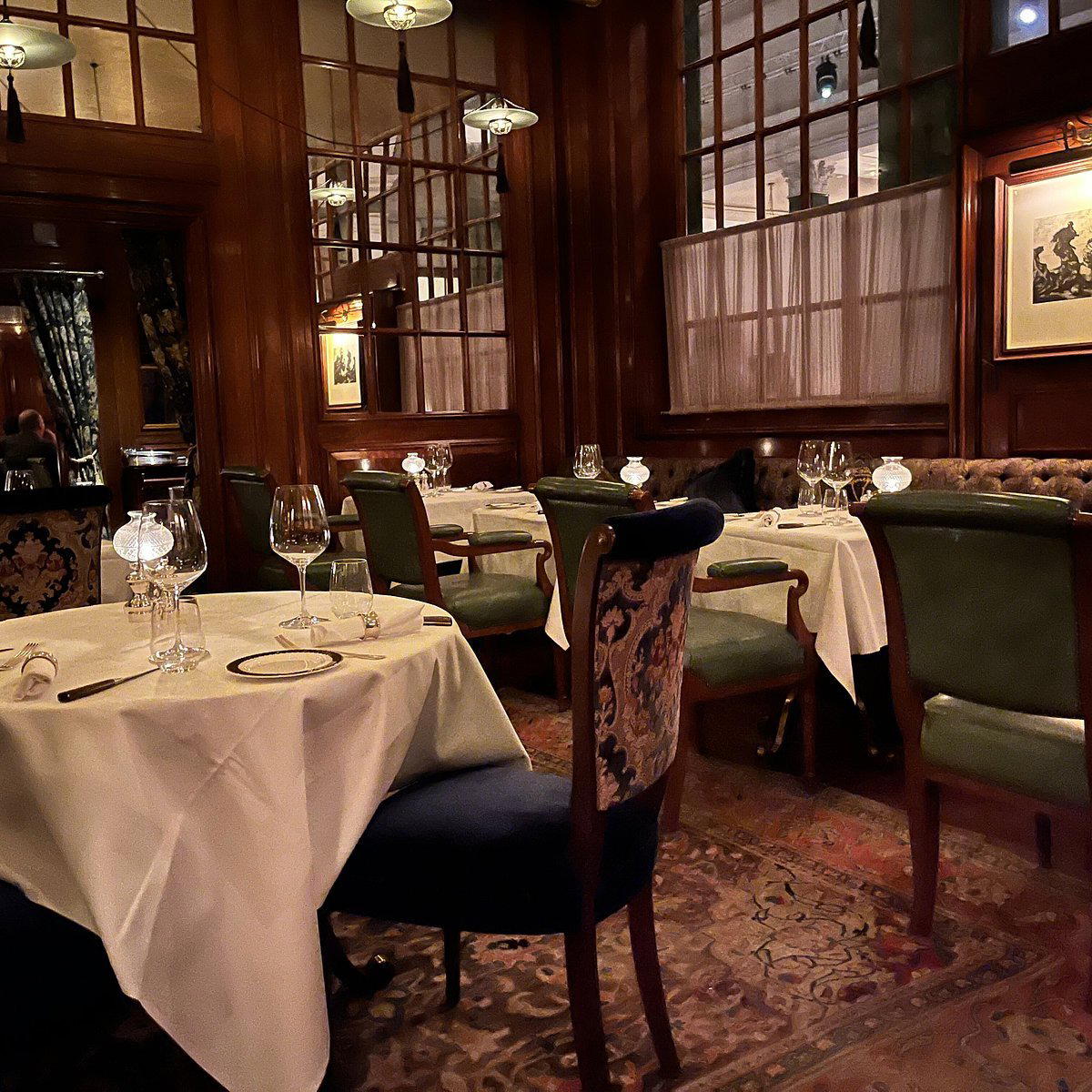
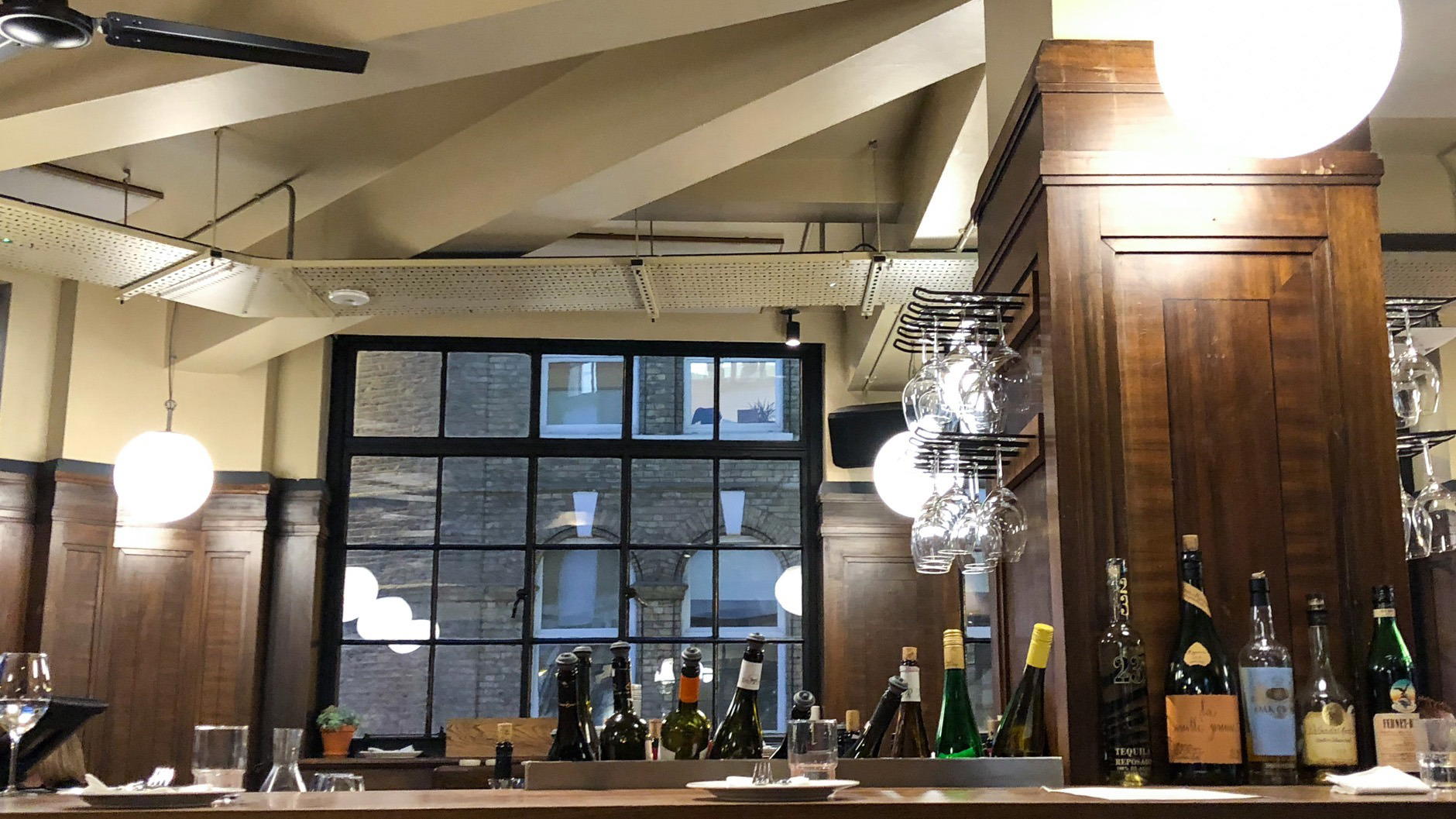
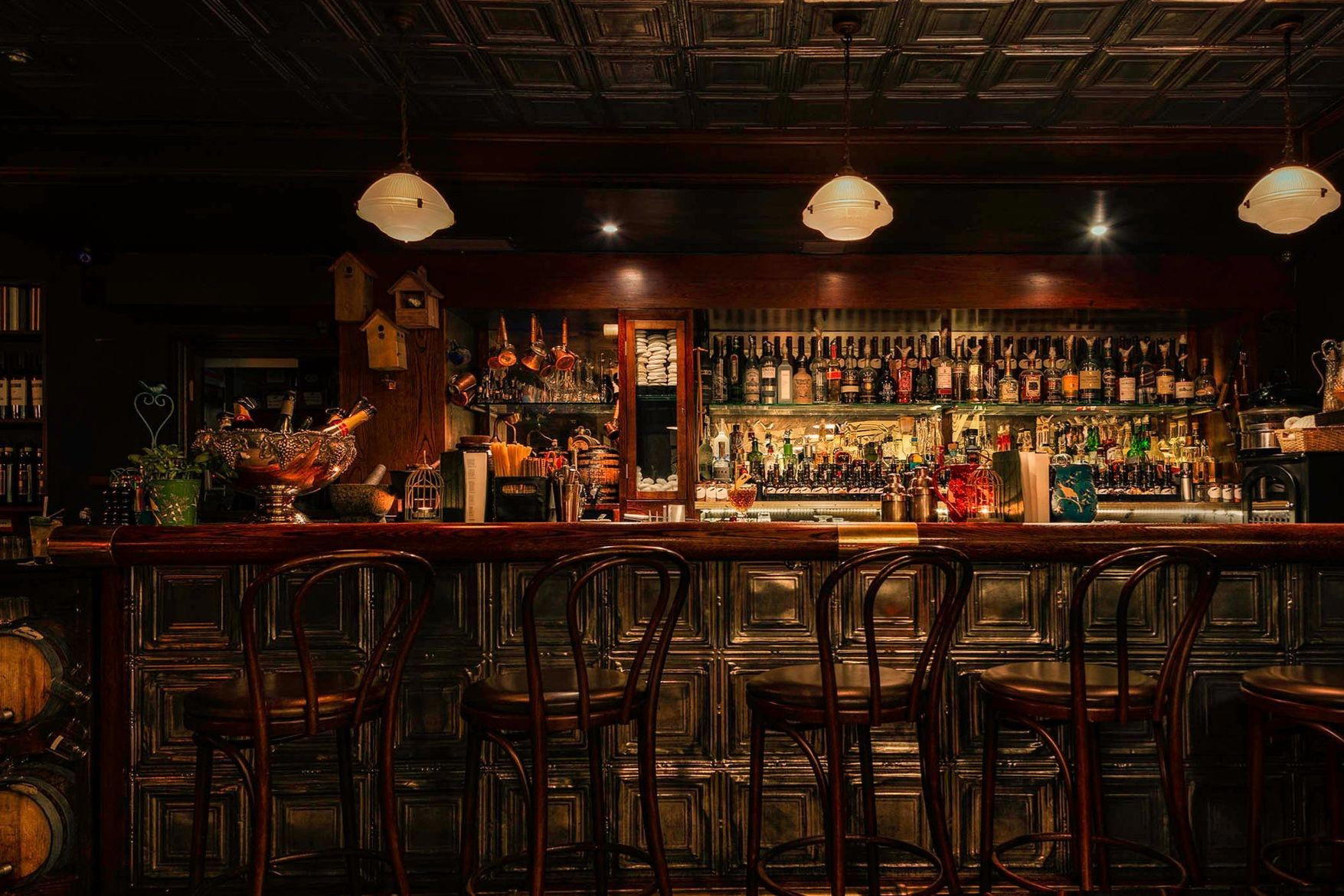
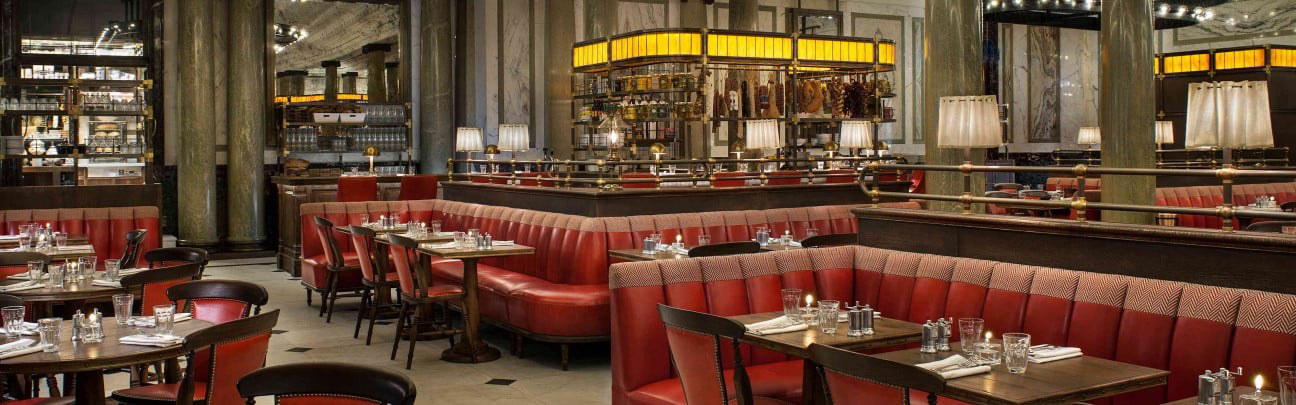
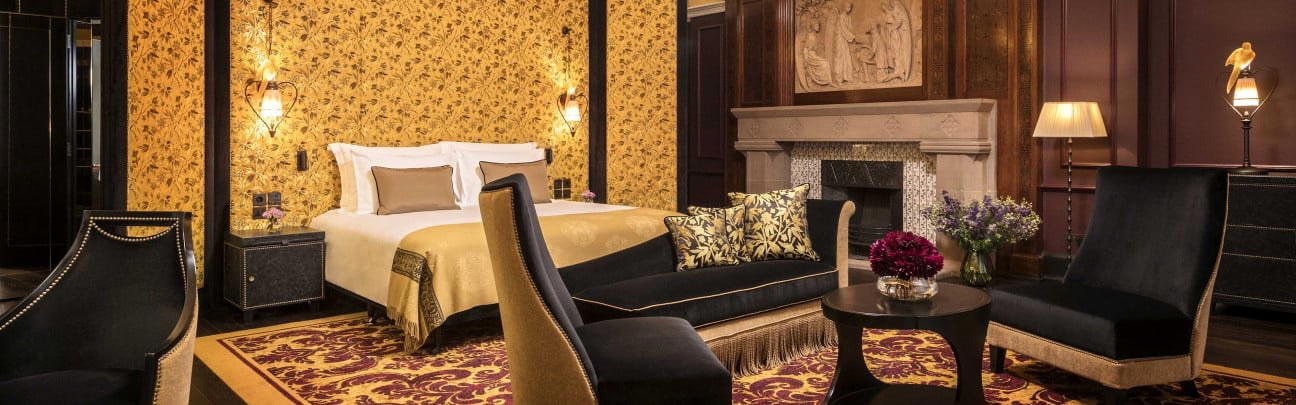
The dining room at Lutyens Grill reads as a study in the private members' club aesthetic that dominated serious London dining for most of the twentieth century: dark wood panelling, leather seating, soft lighting calibrated for conversation rather than Instagram. That aesthetic fell out of fashion during the open-kitchen, industrial-tile wave of the 2010s, but it has since recovered credibility as a signal of a different set of priorities, discretion, longevity, a certain formality of service. The tableside carving trolley, one of the signature formats here, belongs to that tradition. It is also, practically, a transparency gesture: the cut is carved in front of the diner, making the quality of the ageing and the precision of the grill impossible to disguise.
Service under Giancarlo Cuccuru operates in the mode of the experienced European dining room: attentive without being intrusive, confident enough to make wine pairing recommendations without being prescriptive. That register of hospitality is harder to sustain than it looks; it requires front-of-house teams with genuine product knowledge and the professional composure to read a table accurately. In a City of London context, where the lunch and dinner trade skews heavily toward corporate and financial clients who know what they want and why, that composure carries particular weight.
Placing Lutyens Grill in the London Dining Picture
London's top end of dining is well-documented. The city's Michelin-starred restaurants include CORE by Clare Smyth, operating at the forefront of Modern British cooking, Restaurant Gordon Ramsay in Chelsea, Sketch, The Lecture Room and Library in Mayfair, The Ledbury in Notting Hill, and Dinner by Heston Blumenthal at the Mandarin Oriental, each operating in a register that prioritises tasting menus and invention.
Beyond London, the broader conversation about provenance-led cooking in the UK runs through restaurants like L'Enclume in Cartmel, Moor Hall in Aughton, Gidleigh Park in Chagford, Hand and Flowers in Marlow, Le Manoir aux Quat' Saisons in Great Milton, and The Fat Duck in Bray. Each represents a different approach to sourcing and place; the common thread is the expectation that the supply chain be legible and intentional. Internationally, the conversation about ingredient-led dining extends to restaurants like Le Bernardin in New York City and Atomix in New York City, both of which have made sourcing central to their editorial identity.
For broader London planning, EP Club's guides cover the full picture: London restaurants, London hotels, London bars, London wineries, and London experiences.
Planning Your Visit
Lutyens Grill is located at 27 Poultry, London EC2R 8AJ, within The Ned. The restaurant sits in the City of London, within walking distance of Bank station on the Central and Northern lines. The room and format, tableside carving, an extended wine programme, a menu built around sharing cuts, is suited to dinners where time and attention are available rather than a quick weekday lunch. City of London booking patterns tend to concentrate midweek, so Tuesday through Thursday evenings typically see the highest demand. Chef Lee Kebble leads the kitchen.
Quick reference: 27 Poultry, London EC2R 8AJ. Charcoal grill, dry-aged rare breed beef, tableside carving. Bank station (Central/Northern lines).
Frequently asked questions
Who is the chef connected to Lutyens Grill?
The chef associated with Lutyens Grill is Lee Kebble.
Where do I go for Lutyens Grill?
Lutyens Grill is located at 27 Poultry, London EC2R 8AJ, United Kingdom, London.
What do people recommend at Lutyens Grill?
The kitchen centres on dry-aged rare breed cuts cooked over a charcoal grill, with the Hereford chateaubriand for two and the Spanish ox chop among the most-ordered plates. Both are carved tableside from a trolley, which frames the grill's approach as much as the beef itself. The lobster Thermidor and hand-cut steak tartare are the most-cited non-beef options.
What's Lutyens Grill known for in terms of accolades?
Lutyens Grill has received recognition including: Timeless Elegance and Elevated Steaks at The Ned Tucked within the storied walls of The Ned in the heart of London’s financial district, Lutyens Grill continues to affirm its place among the capital’s most refined steak destinations. The di….
Should I book Lutyens Grill in advance?
Lutyens Grill operates inside The Ned at 27 Poultry, EC2R, a hotel with consistent City footfall from business lunches and after-market dinners. Weekday evenings and Friday lunch tend to fill quickly given the location, so booking ahead rather than walking in is advisable. The restaurant does not publish a phone number or booking portal through EP Club's records, so the best route is to contact The Ned directly.
Style and Standing
| Venue | Cuisine | Price | Awards | Notes |
|---|---|---|---|---|
| Lutyens GrillThis venue (the venue you are viewing) | Classic British Steakhouse | $100–150 | World's Best Steaks Europe's 50 Best #12 | Not listed |
| The Ledbury | Modern British Fine Dining | $300–500 | 3 Michelin Stars · World's 50 Best #42 | Modern European, Modern Cuisine |
| Sketch, The Lecture Room and Library | Modern French Fine Dining | $200–300 | 3 Michelin Stars · World's 50 Best #18 | Modern French |
| CORE by Clare Smyth | Modern British Fine Dining | $150–200 | 3 Michelin Stars · World's 50 Best #97 | Modern British |
| Restaurant Gordon Ramsay | French Fine Dining | $200–300 | 3 Michelin Stars · World's 50 Best #13 | Contemporary European, French |
| Dinner by Heston Blumenthal | Historic British Fine Dining | $200–300 | 2 Michelin Stars · World's 50 Best #45 | Modern British, Traditional British |
Recognition history
Dated appearances from independent guides and award organizations, with the underlying list record or original source where available.
World's Best Steaks Europe's 50 Best Steak Restaurants #12 · No. 12
World's Best Steaks · Europe's 50 Best Steak Restaurants 2026
Full recognition history (3 entries)
World's Best Steaks 101 Best Steak Restaurants #35
World's Best Steaks
World's Best Steaks 101 Best Steak Restaurants #39
World's Best Steaks
Continue exploring
More in London
Restaurants in London
All restaurants in London →
Bars in London
All bars in London →

Details
- Elegant
- Classic
- Sophisticated
- Intimate
- Business Dinner
- Date Night
- Special Occasion
- Hotel Restaurant
- Historic Building
- Extensive Wine List
- A La Carte
- Gluten Free Options
Current opening hours
- Monday
- 12 PM–12 AM
- Tuesday
- 12 PM–12 AM
- Wednesday
- 12 PM–12 AM
- Thursday
- 12 PM–12 AM
- Friday
- 12 PM–12 AM
- Saturday
- 6 PM–12 AM
- Sunday
- 12–4 PM
Hours can change for holidays and private events. Last verified .
Dark wood panelling, elegant clubby decor with warm lighting creating a serene, sophisticated hideaway.