Michelin Plate
Our verdict
A Michelin Plate recipient in both 2024 and 2025, Lun Kee Rice Roll operates from the Patane district of Macau, where the rice roll, cheung fun, remains one of the territory's most direct connections to Cantonese street food tradition.

Pearl is the En Primeur Club membership app, where members save venues, book tables and use the concierge.
The menu
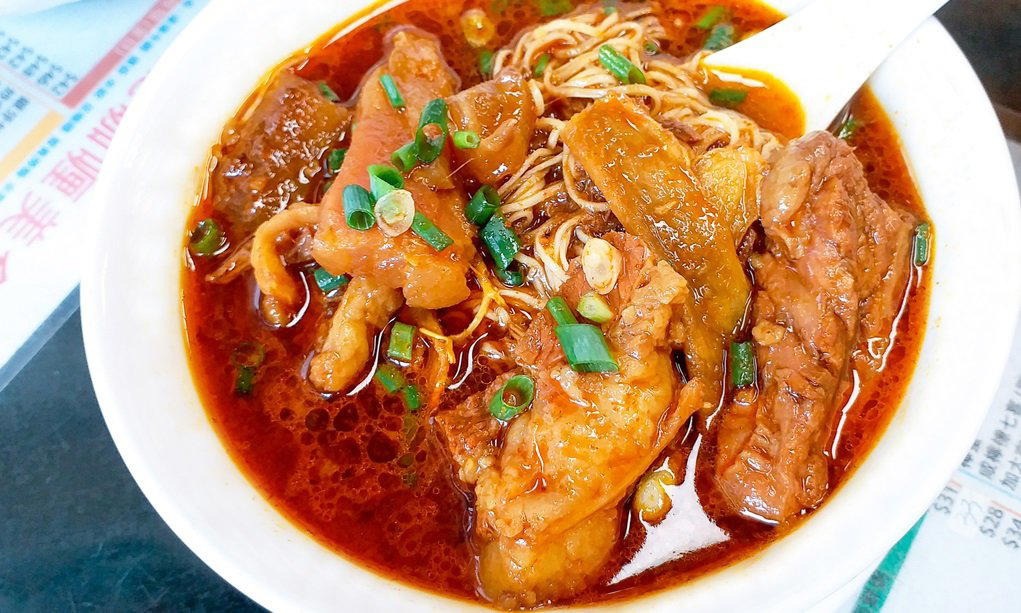
What to order
- Spring onion and egg rice roll
- Shrimp rice roll
- Barbecued pork rice roll
Rice Rolls and the Street Food Geography of Macau
The Patane district, tucked along the Inner Harbour on the peninsula's northwestern edge, has stayed largely outside the casino corridor's orbit. The lanes around Rua da Ribeira do Patane still carry the texture of an older Macau: tightly packed residential blocks, small provision shops, and the kind of food stalls that attract the same customers for decades. It is in this register that Lun Kee Rice Roll sits, in the ground floor of Edificio Chun Choi, serving cheung fun, steamed rice noodle rolls, to a neighbourhood that has been eating them for generations.
The cheung fun is one of Cantonese cooking's most technically demanding simple dishes. The batter, made from rice flour and water, must be thin enough to turn translucent on steaming but coherent enough to wrap fillings without tearing. Temperature control, batter consistency, and timing converge in a preparation that looks effortless but exposes any weakness immediately. Macau's rice roll stalls inherit this tradition directly from Guangdong, and the style found in the Patane district tends toward the softer, more yielding texture associated with street-style cheung fun rather than the firmer, more architecturally assembled versions served in dim sum restaurants. If you have eaten rice rolls at Fong Kei or Mok Yee Kei, you are already tracking the same Cantonese lineage, calibrated slightly differently at each address.
Where the Michelin Plate Sits in This Category
Michelin awarded Lun Kee Rice Roll a Plate in both 2024 and 2025, the guide's signal that a kitchen produces food worth seeking out even when a star is not in play. In the context of Macau's street food tier, that recognition carries weight. The territory's Michelin program has long covered the full price spectrum, and a Plate at the single-dollar price point means the guide is evaluating execution on its own terms, not against fine-dining benchmarks. Comparable Michelin Plate street food addresses elsewhere in the region, Hill Street Tai Hwa Pork Noodle in Singapore, which held a star for years, or 545 Whampoa Prawn Noodles, sit in the same category logic: a single preparation, executed with enough consistency and precision to attract formal recognition.
That kind of rating pattern at a neighbourhood address in Patane points to genuine local endorsement.
Local Ingredients, Cantonese Method
The rice roll format is a case study in how a deeply local product, rice flour, produced and processed throughout southern China, becomes the vehicle for a technique refined over centuries of Cantonese dim sum and street food culture. The steaming process is not incidental; it is the entire point. The batter is spread thin across a flat tray, steamed briefly until just set, then rolled over a filling or left plain and cut. The sauce applied at service, typically a blend of soy, sesame, and sometimes sweet sauce, ties the rice roll to the specific flavour grammar of Cantonese breakfast and snack culture.
This is not the intersection of imported technique and local ingredient in any exotic or surprising sense. It is something older and less theatrical: a preparation in which the ingredient and the method evolved together in the same region, producing a dish that communicates competence through restraint. When it works at Lun Kee, it does so because the basics are right, not because anything has been elaborated or reframed. That discipline is what the Michelin Plate is recognising.
For comparison, the street food conversation in other parts of China trends toward more complex preparations: the layered Sichuan heat at Xin Rong Ji in Chengdu, or the precision seafood at Xin Rong Ji on Xinyuan South Road in Beijing. Cantonese street food, by contrast, tends to win on subtlety, the right temperature, the right sauce proportion, the right batter thickness. Lun Kee operates within that tradition.
The Wider Macau Eating Circuit
Macau's food identity is genuinely plural. The casino-adjacent dining tier runs from Kika through to the French Contemporary register of Robuchon au Dôme. At the other end of the price spectrum, the peninsula's older neighbourhoods hold addresses like Lun Kee alongside Ving Kei and the Portuguese-inflected pastry tradition running through Lord Stow's Bakery on Rua do Tassara. These addresses do not compete with each other, they describe different appetites for different moments in the same city.
For visitors spending time beyond the Cotai Strip, the Patane district offers a different cadence: less spectacle, more granularity. The street food circuit here is worth plotting deliberately. Lun Kee is one reference point in that circuit, not an isolated destination. Those planning a broader sweep of Macanese and Cantonese dining should also cross-reference our full Macau restaurants guide.
For the wider regional picture, the Cantonese fine dining tradition is well represented by Imperial Treasure Fine Chinese Cuisine in Guangzhou and Dai Yuet Heen in Nanjing, while the longer-form tasting experience is explored at addresses like 102 House in Shanghai and Ru Yuan in Hangzhou. All of that context underscores how different a cheung fun stall in Patane is operating, and why it earns the same guide's attention regardless.
Planning Your Visit
Lun Kee Rice Roll is at 26 Rua da Ribeira do Patane, Edificio Chun Choi, in the Patane district of the Macau Peninsula. Pricing sits firmly in the single-dollar range, making it one of the most accessible Michelin-recognised addresses in the territory. No reservation infrastructure exists for a street food address at this tier; the model is walk-in, and early mornings or mid-morning slots typically align with peak cheung fun demand across Macau's breakfast culture. If the stall is closed or past its service window, the neighbourhood itself rewards wandering, the Inner Harbour area retains more pre-casino physical texture than most of the peninsula. For accommodation and bar options around a Macau visit, see our full Macau hotels guide, our full Macau bars guide, our full Macau wineries guide, and our full Macau experiences guide.
Frequently asked questions
Where exactly is Lun Kee Rice Roll?
Lun Kee Rice Roll is located at Edificio Chun Choi, 26號 R. da Ribeira do Patane, Macao, Macau.
What price level is Lun Kee Rice Roll?
Pricing at Lun Kee Rice Roll is listed as $.
Does Lun Kee Rice Roll have a Michelin star or similar recognition?
Lun Kee Rice Roll has received recognition including: Michelin Plate (2025); Michelin Plate (2024).
What do people recommend at Lun Kee Rice Roll?
The kitchen's focus is rice rolls, cheung fun in the Cantonese tradition, built from rice flour and filled or dressed according to the house method. Given the Michelin Plate recognition in both 2024 and 2025, the core rice roll preparations are what the guide flags as worth the trip. At single-dollar price points, ordering broadly across the short menu is the standard approach.
What style of cooking does Lun Kee Rice Roll do?
Do I need a reservation for Lun Kee Rice Roll?
Street food operations in this category don't take reservations. Lun Kee Rice Roll sits in the Patane district at 26 Rua da Ribeira do Patane, away from the casino-area foot traffic, which means queues are generally more manageable than at similarly recognised spots on the main peninsula. Arriving at off-peak hours remains the practical move for any Michelin-recognised street counter.
Cuisine and Awards Snapshot
| Venue | Cuisine | Price | Awards | Notes |
|---|---|---|---|---|
| Lun Kee Rice RollThis venue (the venue you are viewing) | Cantonese Rice Rolls | $1–10 | Michelin Plate | Not listed |
| Aji | Asian Bistronomy (Nikkei Fusion) | $50–100 | 1 Michelin Star · Wine Spectator Best of Award of Excellence | Nikkei, Innovative |
| Ying | Modern Cantonese Fine Dining | Not listed | 1 Michelin Star · La Liste Top Restaurants | Cantonese |
| Five Foot Road | Modern Sichuan Fine Dining | Not listed | 1 Michelin Star · La Liste Top Restaurants | Sichuan |
| Robuchon au Dôme | Contemporary French Fine Dining | $150–200 | 3 Michelin Stars · La Liste Top Restaurants | French Contemporary |
| Feng Wei Ju | Refined Hunan & Sichuan Chinese | Not listed | 2 Michelin Stars · La Liste Top Restaurants | Hunan-Sichuan, Hunanese |
Recognition history
Dated appearances from independent guides and award organizations, with the underlying list record or original source where available.
Michelin Plate
Michelin
Full recognition history (2 entries)
Michelin Plate
Michelin