
Opened in 2008 and positioned steps from the Ruins of St Paul, Macau Soul occupies one of the territory's most historically layered addresses. The space draws on Macau's Portuguese-Chinese colonial inheritance, offering a setting where that cross-cultural history is the atmosphere itself. For visitors arriving via the old streets of São Paulo, the transition from monument to interior feels deliberate.
Pearl is the En Primeur Club membership app — saves, bookings, and concierge access live there. Same editors, same standards.
- Address
- 31A R. de São Paulo, Macao
- Phone
- +853 6686 2205
- Website
- macausoul.com
- Directions
- Get directions
 Saves & bookings on Pearl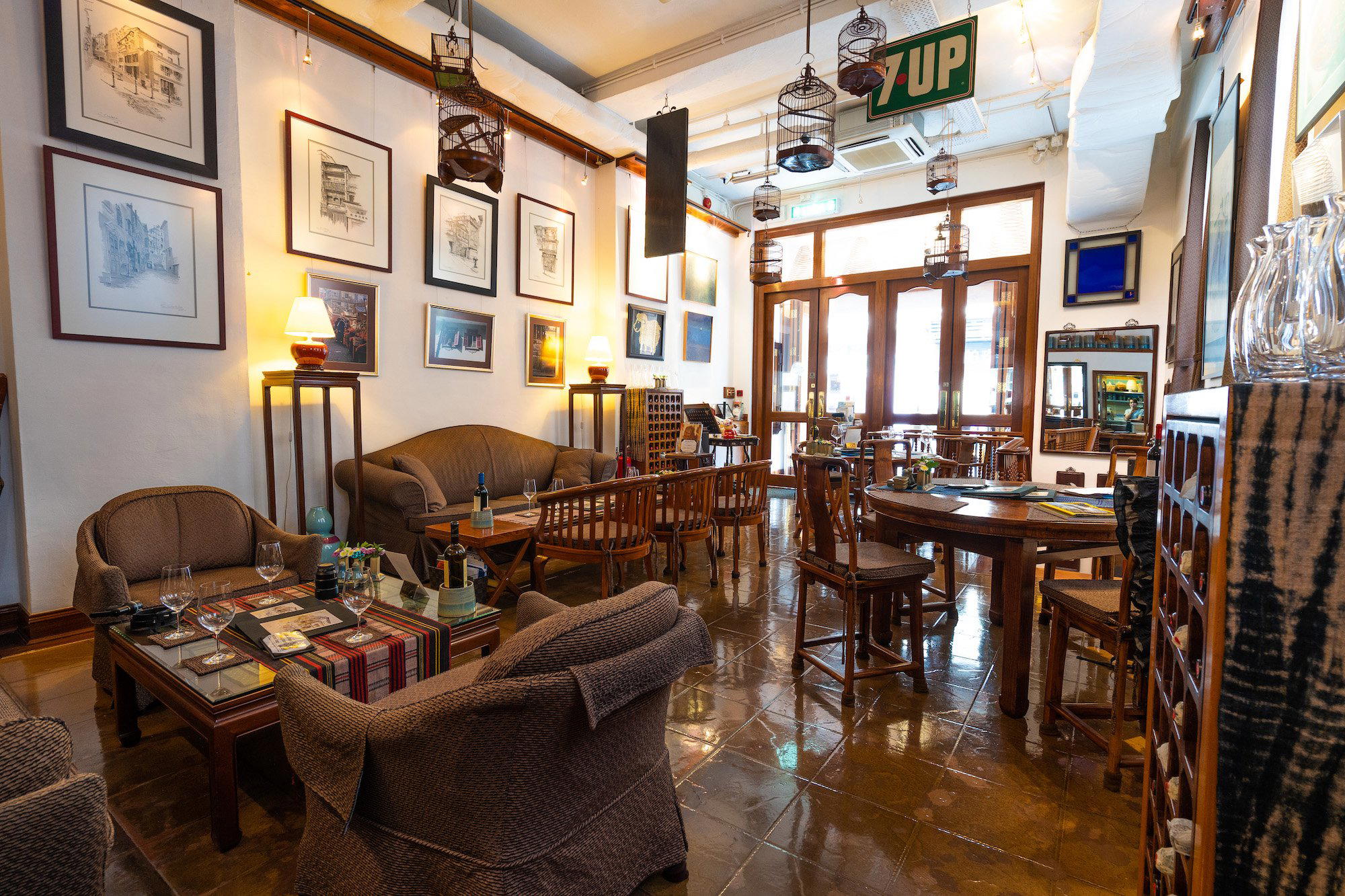
Where Colonial Macau Becomes the Room
The walk to Macau Soul sets expectations before the door opens. Rua de São Paulo is one of the older pedestrian arteries in the territory, and arriving from the direction of the Ruins of St Paul, the skeletal baroque façade that survived a nineteenth-century fire and became Macau's most recognisable landmark, means passing through a district where Portuguese administrative architecture, Chinese shophouses, and Catholic iconography occupy the same streetscape without apparent contradiction. Love Lane runs nearby. The address at 31A feels chosen, not accidental.
That layering is not incidental to what Macau Soul does. In a city where the casino corridor has increasingly concentrated hospitality resources, a venue that plants itself inside the historic São Paulo quarter and draws on the neighbourhood's colonial inheritance is making a positioning argument. The physical environment, the street, the ruins, the lane names, does interpretive work that a purpose-built interior in a gaming resort cannot replicate.
The São Paulo Quarter as Context
Macau's UNESCO World Heritage listing, confirmed in 2005, brought formal recognition to a built environment that had been accumulating significance since the sixteenth century, when Portuguese traders established the territory as a staging point between East Asia and Europe. The São Paulo district holds a dense concentration of that heritage: the ruins themselves, the Monte Fort above, the Senado Square axis below. Restaurants and bars that operate in this zone are, by physical association, part of a different Macau than the Cotai Strip, one where the tourism driver is history and architecture rather than gaming.
Macau Soul opened in 2008, three years after the UNESCO designation formalised what residents already understood about the quarter's significance. The timing placed it inside an early wave of hospitality investment that read the historic core as viable independent of the casino economy. That independent positioning has become more, not less, relevant as the gaming resorts have grown larger and more self-contained, pulling visitors who never need to leave the Cotai corridor at all.
Atmosphere as Editorial Argument
The atmosphere that colonial Macau produces, and that venues in this district either work with or against, is one of material density. Portuguese tile patterns appear beside Cantonese calligraphy. Catholic saints occupy niches on streets named in both Portuguese and Chinese. Fado was performed here; so was Cantonese opera. This is not the synthesised cultural identity that luxury hotel lobbies construct from local motifs; it is an accretion of actual historical contact between two civilisations that shared a small peninsula for four centuries.
A venue that reads this atmosphere correctly does not need to manufacture mood through playlist or lighting design. The neighbourhood supplies the register. What the interior space needs to do is remain legible within that context: materials, scale, and format that acknowledge the building's age and the street's character without tipping into theme-park nostalgia. In many cities, bars and restaurants in heritage districts fail that test by overcorrecting toward surface period detail. The stronger approach is restraint, letting the location carry its own weight.
For visitors arriving from the resort corridor, the contrast is immediate and deliberate. The noise profile, the pace, and the spatial scale of São Paulo are categorically different from a casino floor or a resort lobby bar. Venues like Macau Soul sit in that contrast and use it.
Macanese Cuisine and the Broader Regional Picture
Macau's food identity is one of the more genuinely hybrid cuisines in Asia, shaped by Portuguese ingredient sourcing, bacalhau, olive oil, piri-piri, meeting Cantonese technique and Goan and African colonial influences carried through the Portuguese trade network. The resulting dishes have no direct equivalent elsewhere. African chicken, caldo verde adapted with local ingredients, pork with clams cooked to Cantonese texture preferences: these are not fusion constructions but historical sediment.
That cuisine exists in a competitive context across Macau that is worth mapping. The resort casinos host internationally recognised restaurants across multiple cuisines, and they command the majority of the territory's high-spend dining traffic. The historic quarter's restaurants operate on a different model, smaller, more neighbourhood-scaled, oriented toward visitors who have made the specific choice to come to São Paulo rather than staying within the resort. That choice self-selects for a particular kind of engagement with the city.
For context on how Macau sits within the broader Pearl River Delta drinking and dining circuit, Coa (Shanghai) in Shanghai and Hope & Sesame in Guangzhou represent the kind of destination-bar investment that has reshaped regional hospitality expectations. Janes & Hooch in Beijing, Obsidian Bar in Shenzhen, CMYK in Changsha, and FLAIR in Wuhan show how China's secondary and tertiary cities have developed serious hospitality programs. Further afield, Bar Leather Apron in Honolulu illustrates the Pacific Rim tier of craft-focused bars that Macau's historic district venues are, in some respects, in conversation with, venues defined by character and specificity rather than scale.
Within Macau's Drinking and Dining Field
Inside Macau itself, the contrast between the historic district and the resort bars is stark. The Ritz-Carlton Bar & Lounge, The St. Regis Bar (Macau), 38 Lounge, and Long Bar all operate within the resort infrastructure, with the capital investment, square footage, and international programming that entails. They serve a different purpose, and a different visitor, than a heritage-district venue that has been operating since 2008 in a building steps from a UNESCO-listed ruin. Neither model is superior; they address different decisions a visitor makes about what kind of Macau they want to spend time in.
Planning a Visit
The bar is located at 31A Rua de São Paulo, in the historic São Paulo district. It is a short walk from the Ruins of St Paul, which serves as the practical landmark for orientation in this part of the old city. The surrounding streets, pedestrianised and densely historic, are best approached on foot from the Senado Square direction. The venue has been operating since 2008, which places it among the more established independent addresses in the historic quarter. For visitors structuring a day around the heritage district, the proximity to Love Lane and the ruins makes the address a natural anchor for an afternoon or evening that takes the old city seriously.
Style and Standing
Comparable venues nearby, for context on price, style, and recognition.
| Venue | Cuisine | Price | Awards | Notes |
|---|---|---|---|---|
| Macau SoulThis venue — the venue you are viewing | wine_bar | $$ | Not listed | Not listed |
| 38 Lounge | lounge | $$$ | Not listed | Taipa |
| Long Bar | cocktail_bar | $$$ | Not listed | Taipa |
| The St Regis Bar | hotel_bar | $$$$ | Not listed | Cotai |
| The Ritz-Carlton Bar & Lounge | hotel_bar | $$$$ | World's 50 Best #48 | Cotai |
| The St. Regis Bar (Macau) | cocktail_bar | $$$$ | World's 50 Best #22 | Cotai City |
Recognition history
Dated appearances from independent guides and award organizations, with the underlying list record or original source where available.
Star Wine List
Star Wine List
At a Glance
- Cozy
- Intimate
- Elegant
- Classic
- Date Night
- Casual Hangout
- Historic Building
- Lounge Seating
- Outdoor Terrace
- Conventional Wine
- Street Scene
Current opening hours
- Monday
- Closed
- Tuesday
- Closed
- Wednesday
- 3–10 PM
- Thursday
- 3–10 PM
- Friday
- 3 PM–12 AM
- Saturday
- 3 PM–12 AM
- Sunday
- 3–10 PM
Hours can change for holidays and private events. Last verified .
Warm, homely living-room atmosphere with dim lighting, classic wooden furniture, art-filled walls, and background jazz.