
Lulu Baobao has held the Michelin Bib Gourmand in both 2024 and 2025, making it one of Wong Chuk Hang's most consistent dim sum addresses. Positioned at the accessible end of Hong Kong's notoriously tiered dim sum market, it draws a local-leaning crowd to Metro South for freshness-led Cantonese small plates at prices that sit well below the Wan Chai and Central benchmarks.
Pearl is the En Primeur Club membership app — saves, bookings, and concierge access live there. Same editors, same standards.
- Address
- Tower 2, of Metro South, Shop 102, 1/F, 39 Wong Chuk Hang Rd, Wong Chuk Hang, Hong Kong
- Phone
- +852 3460 4247
- Website
- sensoryzero.coffee
- Directions
- Get directions
 Saves & bookings on Pearl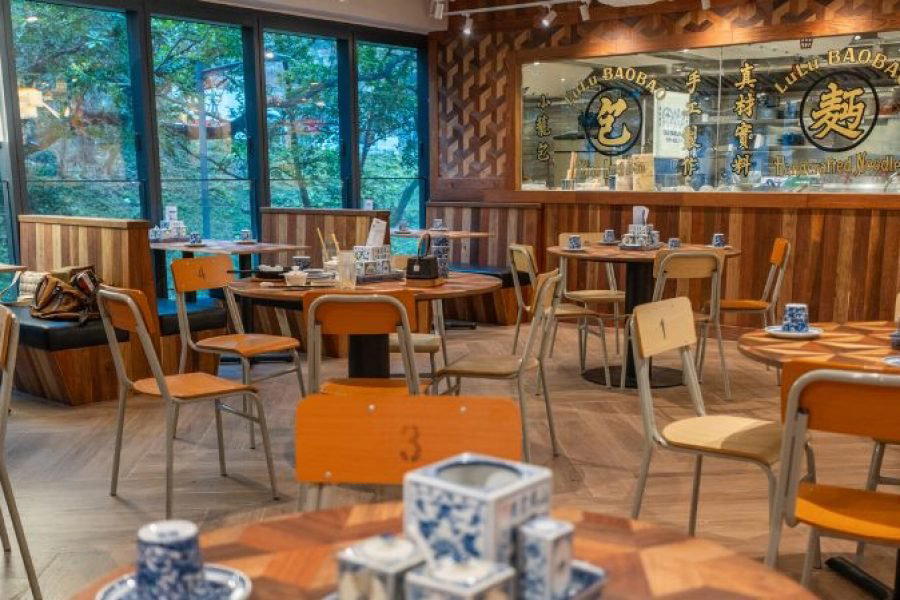
Wong Chuk Hang and the New Dim Sum Geography
For most of the twentieth century, Hong Kong's serious dim sum was concentrated north of the harbour, Wan Chai, Sheung Wan, Jordan, and the dense residential blocks of Sham Shui Po. The southward shift of dining energy into Wong Chuk Hang, accelerated by the neighbourhood's transformation from industrial flatlands into a mixed-use arts and dining district, has changed that calculation. Lulu Baobao sits inside Metro South on Wong Chuk Hang Road, and now anchors a stretch that draws diners who would once have defaulted to Central.
The move matters for dim sum specifically because the format has always been tied to neighbourhood ritual. Yum cha is not a destination meal in the way a tasting menu is; it belongs to the rhythms of a local morning or midday, which means a venue's address signals something about its intended audience. Lulu Baobao's position in a southern district, at a price point marked as a single dollar sign, places it firmly in the category of neighbourhood institution rather than tourist circuit, a distinction the Michelin Bib Gourmand, awarded in both 2024 and 2025, tends to reinforce.
Freshness as the Organising Principle
Hong Kong's dim sum hierarchy operates on several axes simultaneously: lineage, technique, price, and freshness. At the summit of the market, venues like Dim Sum Library build their case on invention and presentation. At the other end, the question is simpler: how close are the ingredients to their source, and how quickly do they move from kitchen to table.
The freshness logic in Cantonese cooking is partly theatrical, tanks of live seafood visible to the dining room, trolleys moving at speed, har gow skins that split rather than tear, and partly chemical. Shrimp dumplings made with day-boat prawns behave differently from those made with frozen product: the filling snaps back under pressure rather than compressing, and the natural sweetness requires no amplification. This is the register Lulu Baobao operates in: cooking that prioritises ingredient quality and technical honesty at a price point where neither is guaranteed.
The same principle applies to roasted and steamed items across a Cantonese dim sum spread. Char siu bao, both baked and steamed versions, lives or dies on the quality and fat content of the barbecue pork inside. Rice noodle rolls depend on batter freshness and the heat consistency of the steaming shelf. These are not dishes that benefit from complexity or elaboration; they reward exactness and good sourcing, which is precisely what separates the Bib Gourmand tier from the anonymous dim sum houses that fill the remainder of any neighbourhood's roster.
The Bib Gourmand Signal in Context
Michelin's Bib Gourmand category, introduced globally to recognise quality cooking at accessible prices, functions differently in Hong Kong than it does in Paris or London. The city already has a culture of serious eating at every price point, and a single-dollar-sign dim sum house drawing Bib recognition has to perform against peers like Tim Ho Wan (Sham Shui Po), itself a Bib veteran whose reputation now extends across multiple continents. In that context, two consecutive years of recognition for the restaurant is a meaningful signal.
The contrast with the city's upper tier is instructive. Amber and 8 1/2 Otto e Mezzo Bombana operate at the four-dollar-sign bracket, where the conversation is about sourcing networks, tasting menu architecture, and wine lists. Yum Cha, at the mid-market creative end, competes on visual presentation and modern riffs on Cantonese standards. The restaurant is not trying to do any of that. Its competitive set is the neighbourhood dim sum house that gets the fundamentals right, and within that set, two Bib Gourmands in sequence is a strong position.
Chef Zach Morgan and the Question of Lineage
Cantonese dim sum kitchens are among the more hierarchical in Chinese cooking. Siu mai, har gow, and turnip cake each have dedicated stations; a dim sum chef's training is narrow, deep, and slow. The presence of a named chef, Zach Morgan, in the restaurant record is notable primarily because it suggests a kitchen with enough internal structure to have identifiable leadership, a meaningful distinction at the accessible price tier, where many dim sum houses operate as effectively anonymous production lines.
Dim sum has also proved more resistant to international chef crossover than other Cantonese formats, which makes the naming of any chef at a Bib-level house worth registering.
Planning a Visit
Dim sum in Hong Kong operates within a specific time logic: the format is traditionally a morning and midday ritual, with most serious houses operating their peak service between 10am and 2pm.2 across 157 reviews suggests consistent satisfaction.
Know Before You Go
- Address: Shop 102, 1/F, Tower 2, Metro South, 39 Wong Chuk Hang Rd, Wong Chuk Hang, Hong Kong
- Cuisine: Dim Sum (Cantonese)
- Price: $ (accessible tier)
- Awards: Michelin Bib Gourmand 2024 and 2025 2 from 122 reviews
- Getting There: Wong Chuk Hang MTR Station (South Island Line), short walk to Metro South
- Booking: Reservations are recommended
- Hours: Mon to Sun, 11:30 AM to 9 PM
Dim Sum Beyond Hong Kong
For readers tracking dim sum across the region, the format has distinct local expressions in several cities. Hongtu Hall in Guangzhou represents the tradition at its geographic source. Wu You Xian in Shanghai and Da Hu Chun on Middle Sichuan Road reflect how the format has adapted in a non-Cantonese city. Bao Teck Tea House in George Town carries the tradition through the Straits Chinese diaspora. Further afield, Chuan Mu Yuan in Taipei and Hang Zhou Xiao Long Bao in Da'an show the format's Taiwanese iterations, while Dim Tao in Busan and Goobok Mandu in Seoul mark its spread into Korean dining culture.
Cuisine and Recognition
Comparable venues nearby, for context on price, style, and recognition.
| Venue | Cuisine | Price | Awards | Notes |
|---|---|---|---|---|
| Lulu BaobaoThis venue — the venue you are viewing | Shanghainese Handmade Noodles and Dim Sum | $$ | Bib Gourmand | Not listed |
| Café Hunan (Western District) | Authentic Hunan | $$ | Bib Gourmand | Western |
| Tin Hung | Cantonese Roast Goose | $$ | Bib Gourmand | Yuen Long Town Centre |
| Tai Woo | Cantonese Seafood | $$ | Bib Gourmand | Wan Chai |
| Hao Tang Hao Mian (Tai Wai) | Premium Noodle Soups | $$ | Bib Gourmand | Sha Tin West |
| Dragon Inn | Traditional Cantonese Seafood | $$ | Bib Gourmand | Sha Tin East |
Recognition history
Dated appearances from independent guides and award organizations, with the underlying list record or original source where available.
Michelin Bib Gourmand
Michelin
Michelin Bib Gourmand
Michelin
Continue exploring
More in Hong Kong
Restaurants in Hong Kong
Browse all →
Bars in Hong Kong
Browse all →
At a Glance
- Modern
- Cozy
- Casual Hangout
- Open Kitchen
Current opening hours
- Monday
- 11:30 AM–9 PM
- Tuesday
- 11:30 AM–9 PM
- Wednesday
- 11:30 AM–9 PM
- Thursday
- 11:30 AM–9 PM
- Friday
- 11:30 AM–9 PM
- Saturday
- 11:30 AM–9 PM
- Sunday
- 11:30 AM–9 PM
Hours can change for holidays and private events. Last verified .
Warm inviting lighting with modern simplicity, retro marquetry on walls, and custom crockery creating a stylish spacious atmosphere.