


A Michelin-starred table in Schärding's historic old town, Lukas Restaurant earns its recognition through a six-course set menu that draws on classic French technique, Japanese precision, and the agricultural traditions of the Inntal valley. Awarded one Michelin Star in 2024 and a Michelin Plate in 2025, It operates Wednesday through Saturday evenings only, plan well ahead.
Pearl is the En Primeur Club membership app — saves, bookings, and concierge access live there. Same editors, same standards.
- Address
- Unterer Stadtpl. 7, 4780 Schärding Innere Stadt, Austria
- Phone
- +43 664 3413285
- Website
- lukas-restaurant.at
- Directions
- Get directions
 Saves & bookings on Pearl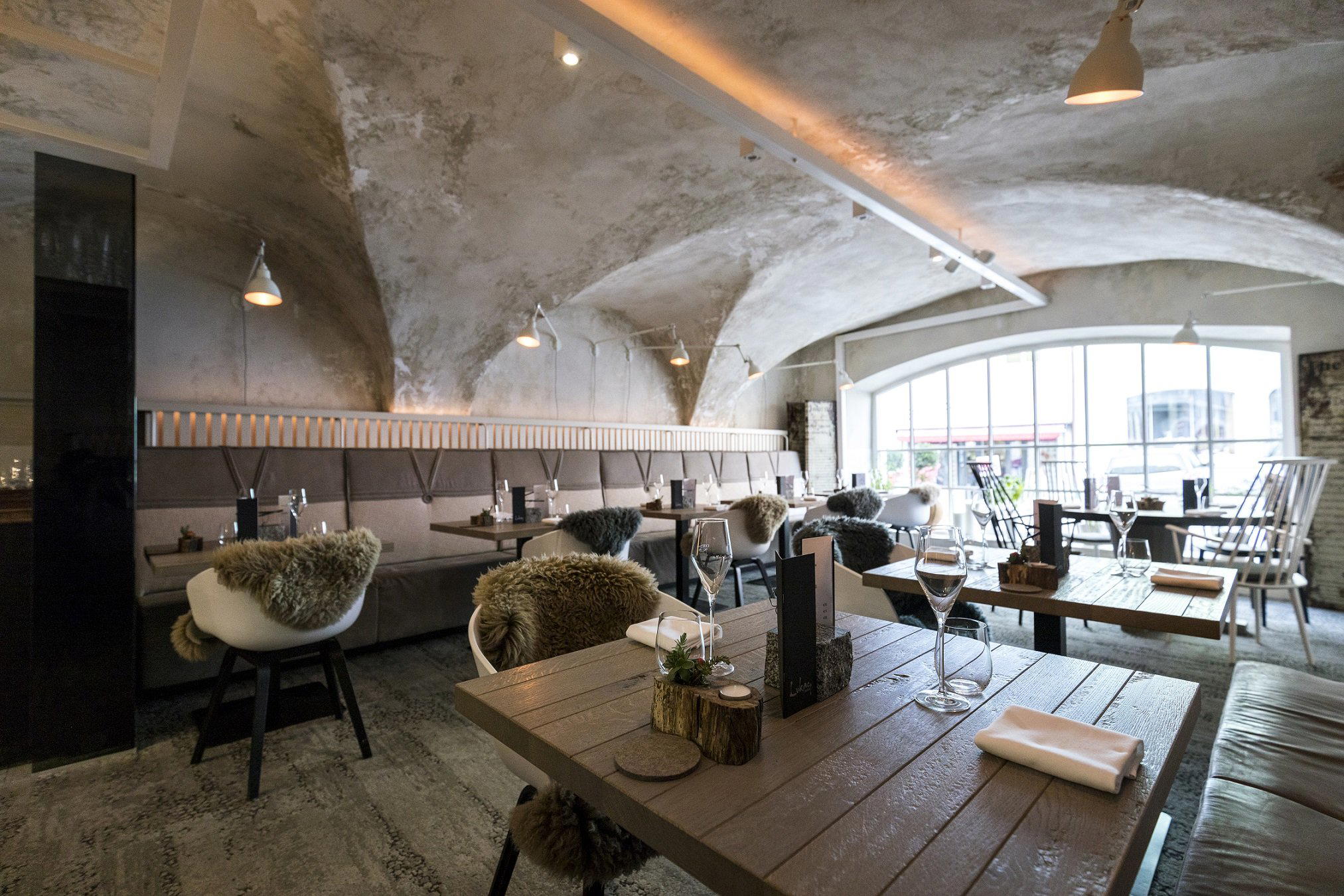
Where the Inntal Meets the Kitchen
Austria's western reaches have quietly assembled a constellation of serious creative restaurants, most of them operating in smaller towns where land prices allow the kitchen ambition to outpace the setting's modesty. Schärding sits on the Inn River at the Bavarian border, a baroque market town better known to cyclists and day-trippers than to fine-dining circuits.
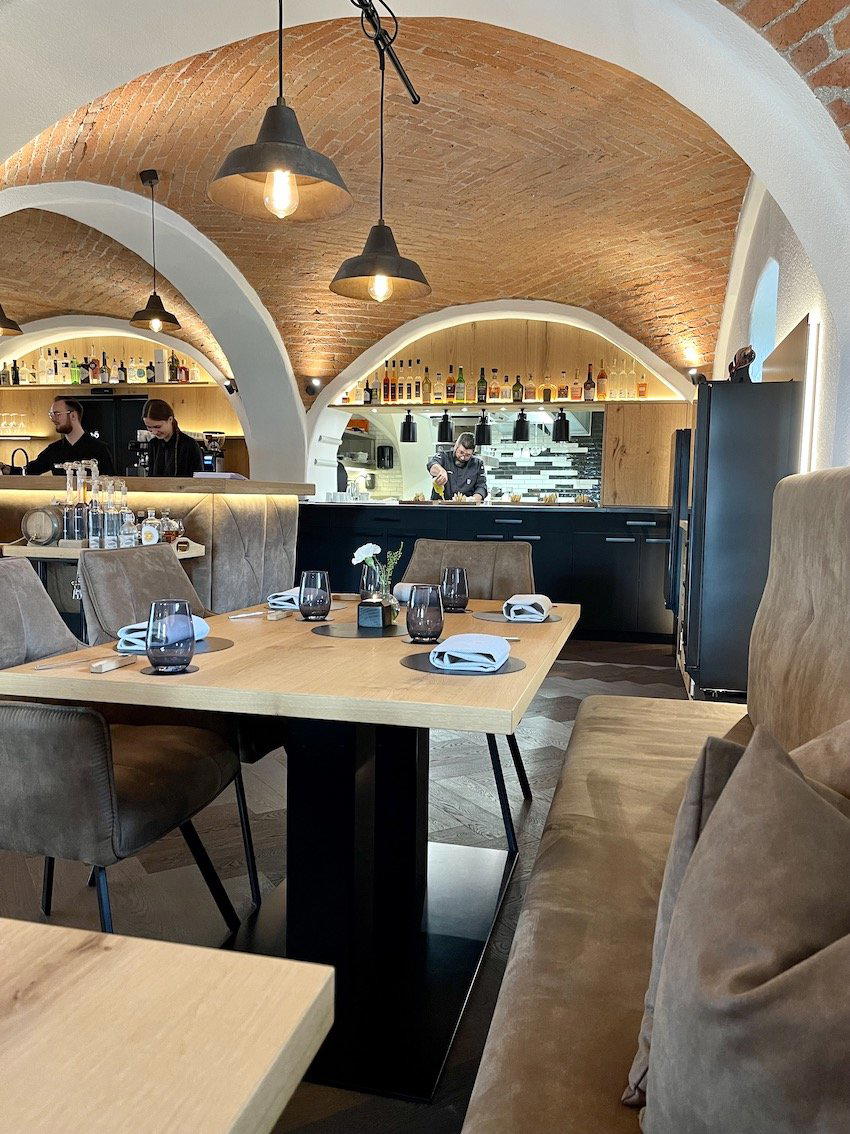
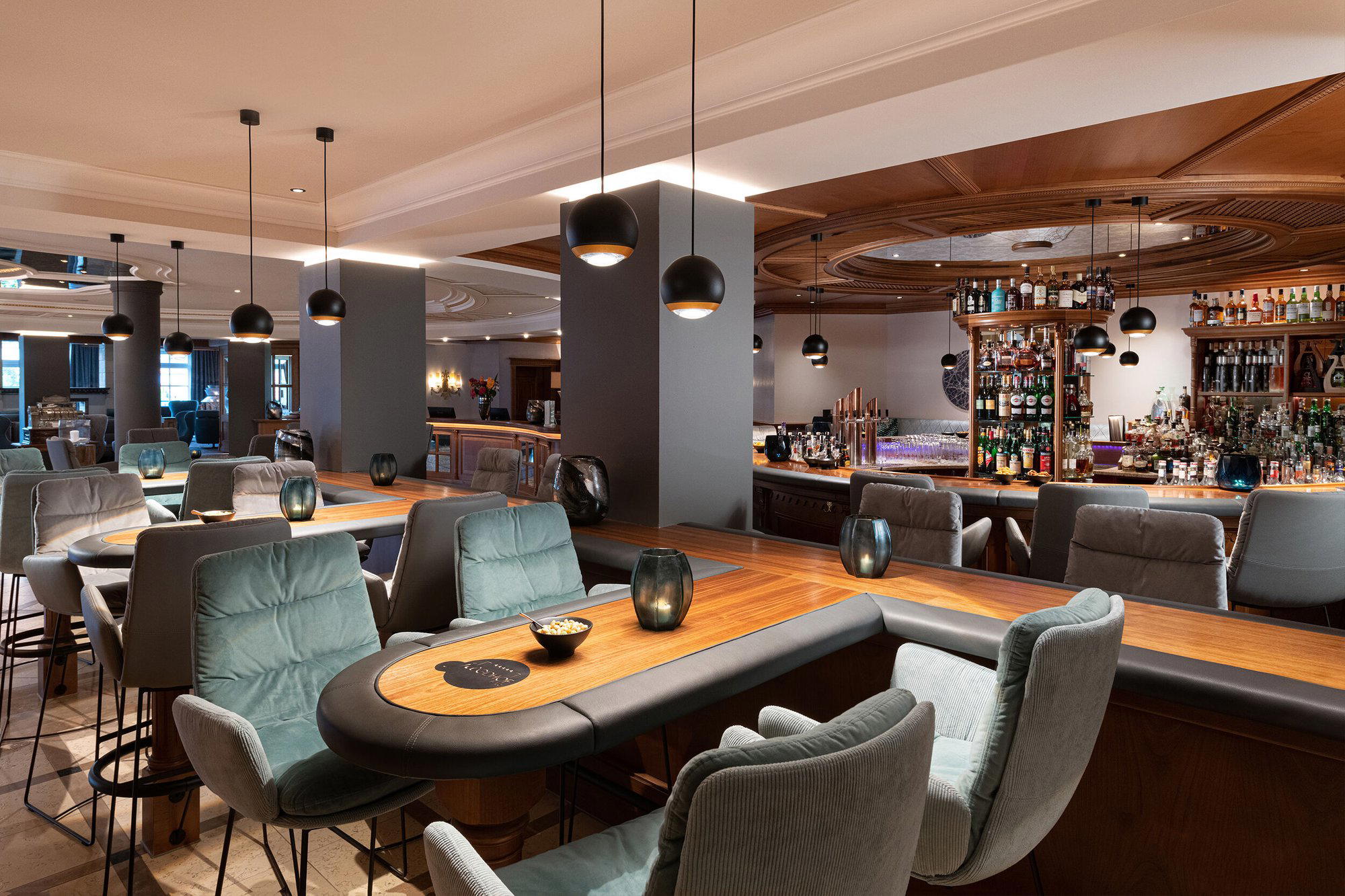
The room itself frames the experience before a single dish arrives. Old vaulted ceilings, the structural logic of centuries-old construction, sit alongside deliberately modern design elements. It is a spatial argument that runs parallel to the cooking: that tradition and contemporary thinking are not opposites to be balanced but materials to be combined with intention. The open kitchen makes the collaboration visible. Lukas Kienbauer and his team work within sightlines of the dining room, which brings the cooking into direct view.
Sourcing as Syntax: How the Inntal Shapes the Menu
The editorial framing that matters most at a restaurant like this is not the awards list, it is the geography. The Inntal, the Inn River valley stretching between Bavaria and Upper Austria, has its own culinary vernacular: freshwater fish from cold mountain tributaries, game from surrounding forests, root vegetables and brassicas from valley farms, and dairy traditions rooted in alpine pasture cycles. Kitchens that ignore this vocabulary in favour of imported luxury ingredients are making a different kind of statement, one that positions itself against place rather than within it.
Lukas Restaurant uses the Inntal as one of three reference points, alongside classic French culinary structure and Japanese precision in seasoning and texture. This triangulation is not unusual at the summit end of Austrian creative cooking, Döllerer in Golling an der Salzach similarly fuses alpine sourcing with non-Austrian technique, but the specific combination here, French and Japanese rather than French and Austrian, produces a distinct register. The pigeon breast roasted to a pink centre with a purple curry jus exemplifies this synthesis: a classical French protein preparation with Japanese-leaning seasoning and regional sourcing.
Foie gras flan with glazed beetroot ragout makes the same structural argument from a different angle. Foie gras is as French as a technique gets; beetroot, particularly glazed in the Central European tradition, is unambiguously regional. The combination is not fusion for its own sake but a way of asking what happens when you apply the textural logic of a French classical preparation to ingredients that answer to a different culinary history. It is the kind of question that defines the serious end of creative Austrian cooking, and it recurs at tables like Kräuterreich by Vitus Winkler in Sankt Veit im Pongau and Gourmetrestaurant Tannenhof in Sankt Anton am Arlberg.
The Six-Course Format and What It Signals
Austria's Michelin-starred creative restaurants have largely converged on the set-menu format as the primary mode of service. This is not incidental. A set menu allows a kitchen operating at this technical level to control sourcing tightly, buying from specific producers in quantities that match the evening's covers rather than maintaining a broad à la carte larder that demands depth across multiple supply chains simultaneously. For ingredient-led cooking in a region like the Inntal, where the interesting producers are small and seasonal, this format is practically necessary rather than merely fashionable.
The six-course structure at Lukas sets a measured pace for the evening. Steirereck im Stadtpark in Vienna, operating with greater resources in a capital city, typically runs longer. Schärding's format is calibrated for an evening that moves at a considered pace without extending into late-night territory, which aligns with the Wednesday-through-Saturday dinner service running from 6 PM to 10 PM.
Wine pairings are offered alongside the menu, delivered on a tablet that doubles as a browsing interface for the full wine list. The wine list has a White Star designation, indicating notable depth and curation. Alcohol-free pairings are available as an alternative, which reflects both a practical hospitality decision and a broader shift in how serious Austrian restaurants now approach the non-drinking portion of the table.
Schärding in the Context of Austrian Fine Dining
Schärding operates at some remove from the clusters of starred restaurants in Salzburg, Vienna, and the ski resort towns of Tyrol and Vorarlberg. Ikarus in Salzburg, Griggeler Stuba in Lech, and Stüva in Ischgl all benefit from high-traffic destination markets that funnel affluent visitors past their doors. Schärding draws a different audience: regional guests who know the town, cross-border visitors from Bavaria, and the specifically motivated traveller who looks for Michelin-starred restaurants in places that have not yet attracted competitive pressure from neighbouring tables.
This positioning has a specific advantage for the kitchen. Without the volume pressure of a high-tourist market, Lukas can operate on a restricted schedule, four evenings per week, and maintain the sourcing relationships that a seven-day operation would strain. Ois in Neufelden, another serious table in the Upper Austrian region, operates under similar logic. The willingness to trade volume for quality consistency is a structural choice that reveals itself on the plate.
For travellers building a route through the region, Schärding connects naturally with a broader Upper Austrian and Bavarian itinerary. Our full Schärding restaurants guide covers the wider dining picture in town, while the Schärding hotels guide addresses where to stay if you are building a night around the meal. The bars guide, wineries guide, and experiences guide round out the picture for a longer visit.
Internationally, the creative register at Lukas sits in the same broad conversation as Alléno Paris au Pavillon Ledoyen and Enrico Bartolini in Milan, though operating at a markedly different scale. Restaurant 141 by Joachim Jaud in Mieming and Schwarzer Adler in Hall in Tirol offer closer regional comparisons within the Austrian Tirolean corridor, and Obauer in Werfen remains a reference point for how a small-town Austrian kitchen can sustain serious recognition across decades.
Planning Your Visit
The restaurant is at Unterer Stadtplatz 7 in Schärding's inner city, on the lower market square of a baroque town centre that is compact enough to walk entirely. Service runs Wednesday through Saturday from 6 PM, with the kitchen closing at 10 PM. Monday, Tuesday, and Sunday are closed. The price range sits at the summit tier of Austrian restaurant pricing, consistent with other Michelin-starred creative tables operating the set-menu format at this level. Given the Wednesday-to-Saturday dinner schedule and the restaurant's recognition, advance booking is essential, particularly for Friday and Saturday evenings.
At-a-Glance Comparison
Comparable venues nearby, for context on price, style, and recognition.
| Venue | Cuisine | Price | Awards | Notes |
|---|---|---|---|---|
| Lukas RestaurantThis venue — the venue you are viewing | Modern French-Japanese Fusion Fine Dining | $$$$ | Michelin 1 Star | Not listed |
| Lukas Izakaya | Japanese Izakaya | $$$ | Not listed | Unterer Stadtplatz |
| Lachinger's Kitchen & Wine | Austrian Fusion Steakhouse | $$ | Not listed | Silberzeile |
| Lukas.steak | Premium Steakhouse | $$$$ | Not listed | Innere Stadt |
| Wassertor | Regional Austrian Fine Dining | $$$ | Not listed | Schärding |
| Esszimmer | Modern French Fine Dining | $$$$ | Michelin 1 Star | Inneres Mülln |
Recognition history
Dated appearances from independent guides and award organizations, with the underlying list record or original source where available.
Falstaff Restaurant - 95 Falstaff Points
Falstaff
Michelin 1 Star
Michelin
Star Wine List
Star Wine List
Michelin 1 Star
Michelin
Michelin 1 Star
Michelin
Continue exploring
More in Scharding
Restaurants in Scharding
Browse all →
Bars in Scharding
Browse all →
At a Glance
- Elegant
- Cozy
- Sophisticated
- Modern
- Date Night
- Special Occasion
- Business Dinner
- Open Kitchen
- Historic Building
- Extensive Wine List
- Sommelier Led
Current opening hours
- Monday
- Closed
- Tuesday
- Closed
- Wednesday
- 6–10 PM
- Thursday
- 6–10 PM
- Friday
- 6–10 PM
- Saturday
- 6–10 PM
- Sunday
- Closed
Hours can change for holidays and private events. Last verified .
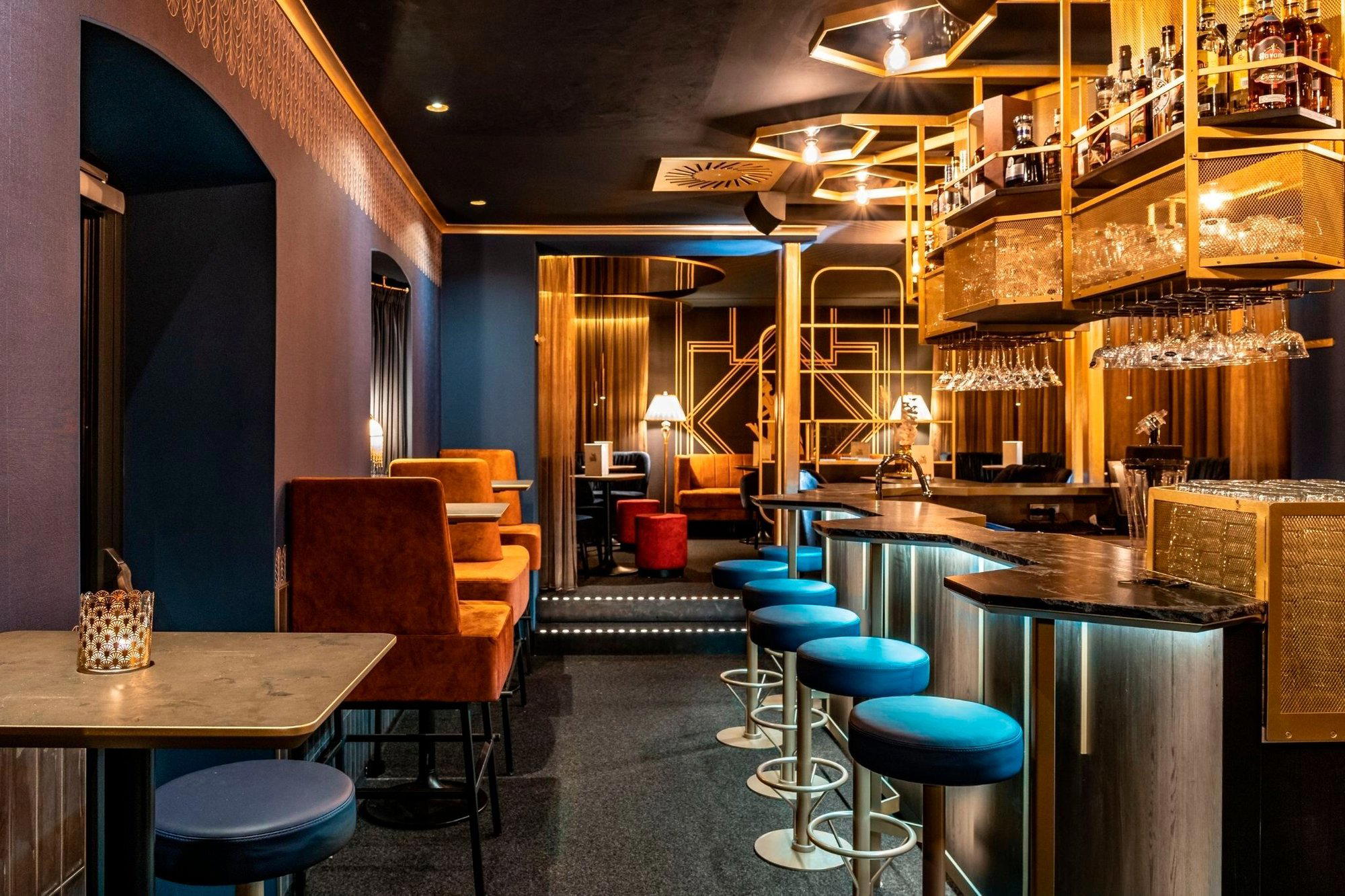
Tastefully decorated with old vaulted ceilings meeting modern chic design, cozy and stylish atmosphere, open kitchen view, and ample table spacing for relaxed dining.