

Michelin Plate
Our verdict
One of Central's oldest surviving tea houses, Luk Yu has anchored Stanley Street since the 1930s and earned a Michelin Plate alongside a top-15 Opinionated About Dining casual ranking in Asia for 2025. The morning dim sum service runs daily until 3 pm at mid-range prices, making it a reliable reference point for traditional Cantonese yum cha in a city where the format is under pressure from both modernisation and rising rents.

Pearl is the En Primeur Club membership app, where members save venues, book tables and use the concierge.
The menu
What to order
- Crispy deep fried chicken
- Fried noodles with sliced beef
- Siu mai
- Pork ribs
A Room That Refuses to Move
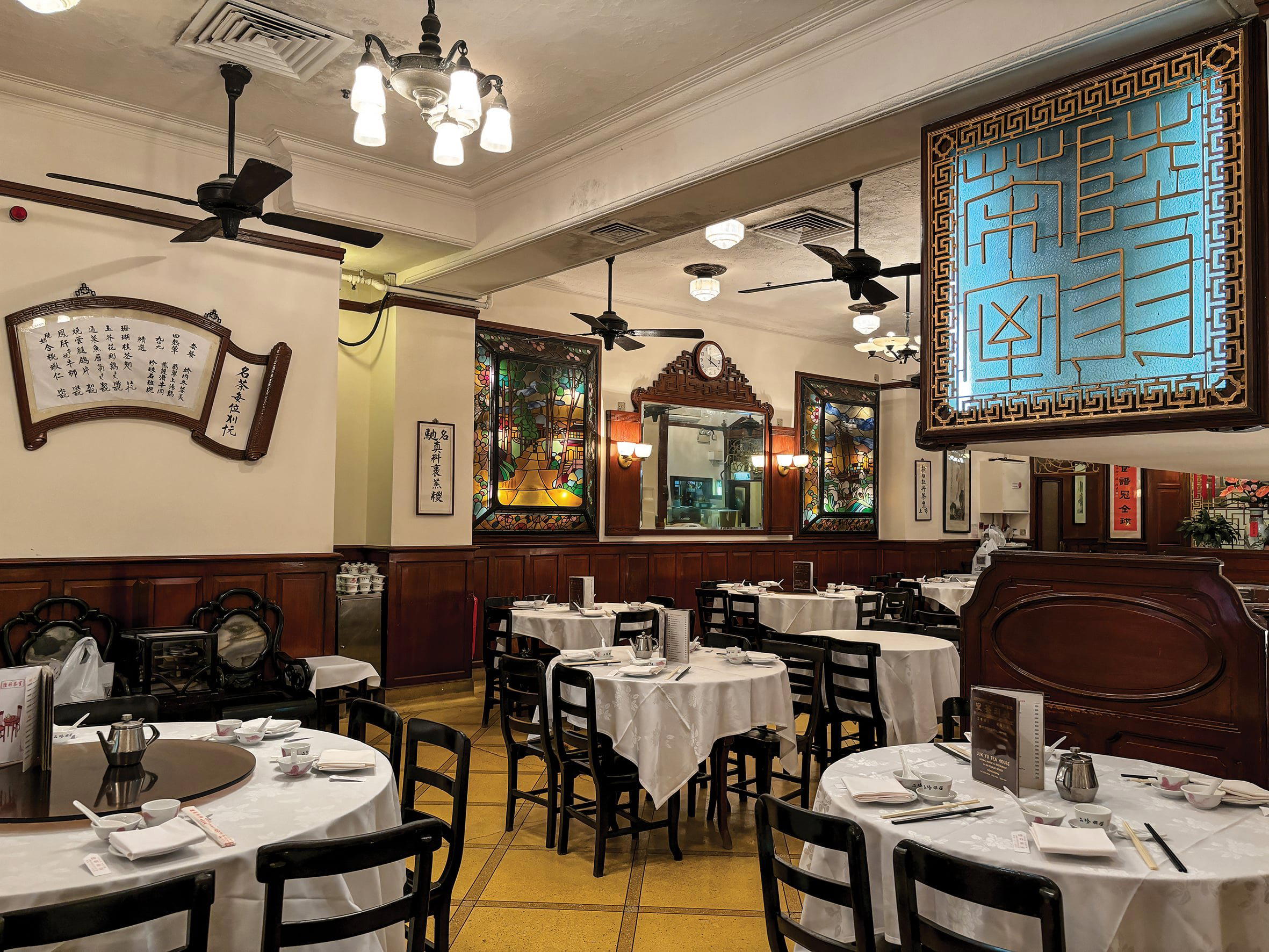
Stanley Street in Central has been reshaped by finance towers, luxury retail, and revolving restaurant tenants for decades. Luk Yu Tea House, at numbers 24 to 26, has not moved. The interior holds its ground with dark wood panelling, stained glass partitions, ceiling fans, and the particular noise of a full yum cha service: clattering bamboo steamers, the percussion of ceramic on marble, orders called across a room that never learned to be quiet about it. The atmosphere is not curated. It is simply what a Hong Kong tea house looks like when it has been left alone long enough to accumulate the real thing.
That physical continuity matters more than it might seem. Hong Kong's Central district has pushed out dozens of long-running Cantonese institutions over the past twenty years as rents climbed and landlords redeveloped. The fact that Luk Yu occupies the same address it has held since the 1930s places it in a category of extreme rarity for this city, and that rarity is legible in the room itself rather than on a plaque by the door.
Where Luk Yu Sits in Hong Kong's Cantonese Scene
Hong Kong's Cantonese dining spectrum runs from the three-Michelin-star formality of Lung King Heen and Lai Ching Heen down through mid-tier roast meat specialists and neighbourhood dim sum halls. Luk Yu occupies a specific position in the middle of that range: a tea house format with a classical menu, mid-range pricing, and a daily service window that closes at 3 pm. It does not chase the tasting-menu model adopted by restaurants like Rùn or the premium Cantonese refinement of T'ang Court. The peer comparison is closer to the city's surviving old-school dim sum houses than to its fine-dining tier.
Recognition from external reviewers has been consistent. Opinionated About Dining, which tracks casual dining across Asia with a data-heavy methodology, ranked Luk Yu at number 98 in its 2023 Asia list, moved it to 85 in 2024, and placed it at number 15 in its 2025 Casual in Asia ranking. That upward trajectory across three consecutive years in a competitive category is a meaningful data point, not just a badge. Michelin has awarded a Plate designation for both 2024 and 2025, a signal of consistent quality without the formality of a starred tier. Together, these credentials place Luk Yu inside the upper band of Hong Kong's traditional tea houses, a category far smaller than it was two generations ago.
For broader context on where Luk Yu sits relative to the full spectrum of restaurants in the city, see our full Hong Kong restaurants guide.
The Art of the Roast in a Traditional Tea House Context
The editorial angle that most defines a tea house of this vintage is the roast program. Cantonese roasting, specifically char siu and siu yuk, represents one of the most technically demanding sub-disciplines in Chinese cookery. Char siu relies on precise marinade balance, controlled caramelisation from a combination of honey and maltose, and the management of fat content through the cut of pork used. The result should carry lacquered colour with pull-apart tenderness and a clean finish that does not tip into cloying sweetness. Siu yuk, the crackling roast pork, requires blistered skin that fractures cleanly, a layer of subcutaneous fat that does not feel greasy, and meat beneath that stays moist rather than drying out during the roasting process.
In Hong Kong, these items function as both standalone orders and as reference standards by which a traditional kitchen is judged. A tea house that has been operating since the 1930s holds this standard across a different timeframe than a modern roast specialist. The kitchen at Luk Yu has been producing these dishes through multiple eras of the city's history, which is itself a form of credential that no award cycle can fully capture.
The yum cha format that surrounds the roast program follows the established rhythm of Hong Kong dim sum service: steamed items, fried items, and congee running alongside the roast offerings through the morning hours. The 7 am opening allows for early diners, which in Hong Kong's traditional tea house culture often means retired residents claiming the same table they have occupied for years. That pattern is sociological as much as culinary, and it is part of what the Opinionated About Dining rankings are recognising when they place Luk Yu in the casual tier rather than the formal one.
Among regional peers, the Cantonese tradition extends across the greater Chinese dining world. Jade Dragon in Macau and Chef Tam's Seasons represent the fine-dining expression of similar culinary roots. In Shanghai, 102 House, Bao Li Xuan, Canton 8 (Huangpu), and Imperial Treasure Fine Chinese Cuisine each interpret Cantonese cooking for a mainland audience. Le Palais in Taipei and Summer Pavilion in Singapore extend the footprint further. Luk Yu belongs to none of these sub-tiers. It is the source material, not the interpretation.
What the Service Window Means
The 3 pm closing time is not an inconvenience; it is a structural feature of the tea house model. Yum cha service has its own internal logic: the morning is when the kitchen fires at full capacity, when steamers are loaded and rotated, when the roast items are fresh. Stretching into dinner service would require a different kitchen operation and, almost certainly, a different menu philosophy. The constraint also means that Luk Yu does not compete in the dinner category at all, which clarifies its position in the market and keeps the focus on what it does within its operating hours.
For visitors planning around this window, the practical note is direct: arrive before noon for the most active service. The 7 am opening makes it viable as an early destination before a Central business morning, which is consistent with the original function of the tea house format in Hong Kong commercial life. See also Forum for a complementary take on traditional Cantonese cooking in the same district.
Know Before You Go
- Address: 24-26 Stanley St, Central, Hong Kong
- Hours: Monday to Sunday, 7 am to 3 pm
- Price range: Mid-range ($$)
- Awards: Michelin Plate 2024 and 2025; Opinionated About Dining Casual in Asia #15 (2025); OAD Leading Restaurants in Asia #85 (2024), #98 (2023)
- Cuisine: Cantonese, tea house format
- Booking: Booking method not confirmed; walk-in is the traditional approach for this format, but arriving early is advisable given consistent demand
- Dress code: Not specified; casual dress is standard for yum cha service at this tier
For broader planning across Hong Kong, see our full Hong Kong hotels guide, our full Hong Kong bars guide, our full Hong Kong wineries guide, and our full Hong Kong experiences guide.
Frequently asked questions
What is the atmosphere like at Luk Yu Tea House?
If you are coming from Central's contemporary restaurant scene, the shift is immediate. Dark wood, ceiling fans, marble-topped tables, and stained glass partitions create an interior that reads as pre-war Hong Kong rather than modern gastronomy. The room is loud in the way that full yum cha service is always loud: ambient, communal, and entirely uninterested in the kind of controlled quiet that characterises the city's fine-dining tier. With a Michelin Plate for 2025 and a top-15 Opinionated About Dining casual ranking in Asia, the credentials confirm that the atmosphere is the point, not a limitation. Mid-range pricing ($$) means the room draws a local clientele that treats it as a routine rather than an occasion, which is precisely what makes the experience feel as it does.
What do regulars order at Luk Yu Tea House?
The kitchen operates within the classical Cantonese tea house repertoire, which means dim sum across steamed and fried categories alongside roast items. Given the venue's decades-long history and its OAD recognition in the casual tier, the expectation is that char siu and the roast program function as reference standards rather than afterthoughts. Cantonese cuisine places significant weight on roasting technique as a marker of kitchen discipline, and a tea house of this age and continued recognition is not carrying its reputation on dim sum alone. Order across categories: steamed items, fried items, and at least one roast dish. The chef roster is listed as varied rather than a single named figure, which is consistent with the kitchen brigade model at traditional tea houses of this scale and format.
Pricing, Compared
| Venue | Cuisine | Price | Awards | Notes |
|---|---|---|---|---|
| Luk Yu Tea HouseThis venue (the venue you are viewing) | Classic Cantonese Dim Sum | $20–30 | Michelin Plate | Not listed |
| 8 1/2 Otto e Mezzo Bombana (Hong Kong) | 3 Michelin-Star Italian Fine Dining | $200–300 | 3 Michelin Stars · World's 50 Best #94 | Italian |
| Ta Vie | Modern French-Japanese Fine Dining | $300–500 | 3 Michelin Stars · World's 50 Best #68 | Japanese - French, Innovative |
| Caprice | Contemporary French Fine Dining | $200–300 | 3 Michelin Stars · World's 50 Best #35 | French, French Contemporary |
| Feuille | Modern Vegetable-Forward French | $200–300 | 1 Michelin Star · World's 50 Best #93 | French Contemporary |
| Neighborhood | Modern French with Asian Influences | $50–100 | 1 Michelin Star · World's 50 Best #24 | International, European Contemporary |
Recognition history
Dated appearances from independent guides and award organizations, with the underlying list record or original source where available.
Michelin Plate
Michelin
Opinionated About Dining Casual in Asia Ranked #21
Opinionated About Dining
Full recognition history (7 entries)
Michelin Plate
Michelin
Opinionated About Dining Casual in Asia Ranked #15
Opinionated About Dining
Michelin Plate
Michelin
Opinionated About Dining Top Restaurants in Asia Ranked #85
Opinionated About Dining
Opinionated About Dining Top Restaurants in Asia Ranked #98
Opinionated About Dining
Continue exploring
More in Hong Kong
More from Chef Various
Browse all →
Restaurants in Hong Kong
All restaurants in Hong Kong →
Bars in Hong Kong
All bars in Hong Kong →
Hotels in Hong Kong
All hotels in Hong Kong →
Wineries in Hong Kong
All wineries in Hong Kong →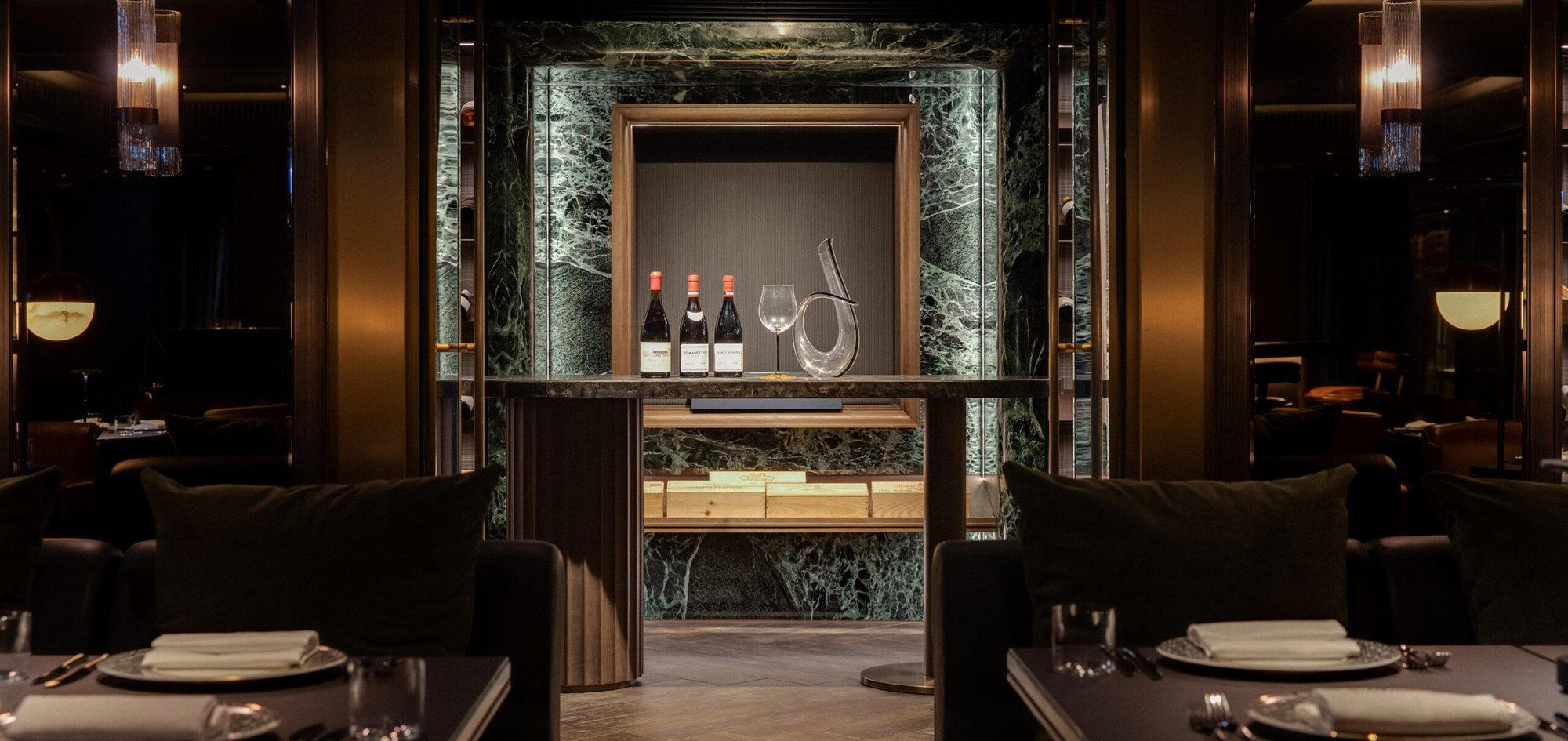
Details
- Classic
- Well Known
- Elegant
- Brunch
- Historic Building
- Sake Program
- A La Carte
Current opening hours
- Monday
- 7 AM–10 PM
- Tuesday
- 7 AM–10 PM
- Wednesday
- 7 AM–10 PM
- Thursday
- 7 AM–10 PM
- Friday
- 7 AM–10 PM
- Saturday
- 7 AM–10 PM
- Sunday
- 7 AM–10 PM
Hours can change for holidays and private events. Hours as of .
Vintage colonial atmosphere with wooden booths, stained-glass windows, ceiling fans, dark wood walls, and subtle Chinese decorations creating a nostalgic old Hong Kong charm.