Tabelog 100 #89
Our verdict
LOOP TOKYO brings Tokyo’s creative-dining current to Nishiasakusa, away from the hotel-heavy tasting-menu circuit and closer to the small-room intimacy of the east side. The restaurant’s 2025 Tabelog 100 selection for Innovative / Creative cuisine, nine-seat scale, course format, and drinks range across sake, shochu, and wine place it in a serious but compact tier.

Pearl is the En Primeur Club membership app, where members save venues, book tables and use the concierge.
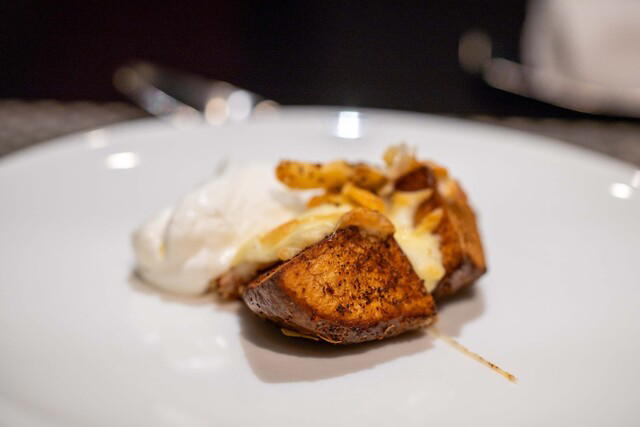
Tokyo changes register after dark: commuter rhythms soften, shutters come down, and side streets begin to feel local rather than theatrical. LOOP TOKYO fits a Tokyo dining pattern strengthened since the early 2020s: creative restaurants using focused service, controlled pacing, and a clear point of view to compete with larger-budget rooms without imitating them.
The city context matters. Tokyo is often read through sushi counters, long-running Japanese restaurants, international fine dining, and old-neighbourhood nostalgia, but it also gives newer restaurants a rhythm distinct from the grander addresses: tighter editing, less ceremony, sharper value. LOOP TOKYO sits in that seam: not an everyday neighbourhood stop or grand dining room, but a creative format where the evening depends on kitchen and service moving together.
Focused service makes the team, not the room, the main instrument
Tokyo’s creative-cuisine category can include multiple techniques, seasonal thinking, careful pacing, and modern plating, so service model often reveals more than a narrow cuisine label. In a restaurant built around a creative identity, there is little value in separating food from hospitality. Timing, glassware, clearing, pacing, and explanation become part of the experience.
That is the useful way to read LOOP TOKYO. The restaurant was selected for Tabelog 100 Innovative / Creative cuisine in 2025 and carries a Tabelog score of 3.70, placing it inside Japan’s user-driven recognition system rather than the imported star-chasing vocabulary common in English-language Tokyo itineraries. The category rewards restaurants hard to reduce to one cuisine. Here, the evidence points to a creative format, suggesting a meal designed around sequence and control rather than broad generality.
That breadth is functional. In Tokyo creative dining, the surrounding service often decides whether a menu feels coherent or restless. Pacing and explanation can pull a dish toward texture, lift, or contrast; they can also place the cooking in a broader international conversation. When a room works in this register, the team is expected to mediate actively: the kitchen sets the arc, front-of-house makes it legible.
The price band clarifies the competitive set. At JPY 10,000 to JPY 14,999 for dinner, LOOP TOKYO sits below many central Tokyo luxury counters while operating with more control than everyday dining. Compared with Asakusa Imahan Kokusai dori honten, it occupies a newer, less category-bound lane. Compared with Hon to Saya, the creative identity asks for a different evening.
Tokyo context gives creative cooking a different pressure
Creative dining in Tokyo can feel detached from neighbourhood when clustered around polished addresses swapped between capitals. LOOP TOKYO resists that easy reading by being best understood through the city itself. Tokyo’s older eating habits, tourist routes, residential pockets, and everyday dining rooms mean a creative restaurant lives beside places built on repetition and inheritance, giving experimentation useful tension.
That separates Tokyo from more generic international dining zones. Reference points are not only tasting menus and awards lists, but also everyday counters, casual rooms, specialist restaurants, and old-line Japanese dining with established local use. In the comparison group, Momotaro, Hon to Saya, Ryuen, Asakusa Imahan Kokusai dori honten, and Sushi Ken show how varied Tokyo dining can feel. LOOP TOKYO does not replace those traditions; it sits beside them and argues for the city as more than a preservation district.
For a Tokyo dining map, the distinction is useful. The city contains high ceremony, late-night energy, historic texture, and polished international dining, while LOOP TOKYO gives creative cooking a less obvious frame. Compare the city through Our full Tokyo restaurants guide, and set it against other Tokyo dining rooms generically rather than as a clone of the central luxury circuit.
The recent era also matters. Post-pandemic Tokyo dining has favoured reservation control, efficient formats, and restaurants that manage labour and ingredient costs without diluting the experience. Focused service and a clearly edited evening fit that era: not scarcity as theatre, but operating logic for precision.
How to read it against Tokyo's broader dining map
Choose LOOP TOKYO not for a grand survey of Japanese cuisine, but for a concentrated look at Tokyo’s creative category: focused pacing, a serious dinner register, and a contemporary point of view. The Tabelog 100 Innovative / Creative cuisine selection is a clear signal, but the placement is more interesting: Tokyo-based, creative in category, and priced below the city’s highest luxury tier.
Planning should be disciplined. Treat the restaurant as a destination dinner and confirm current booking rules, opening times, cancellation terms, party-size limits, and payment options directly before committing. Its Tokyo location makes it easiest to plan as part of a day already focused on the city rather than as an afterthought at the end of a packed cross-town schedule.
Tokyo itineraries benefit from this calibration. A traveller seeking ceremony may still choose sushi counters or established Japanese rooms; one wanting old Tokyo can build around long-running restaurants and familiar local formats. LOOP TOKYO suits the diner tracking the city’s newer creative middle tier, where recognition, category clarity, and team execution matter more than spectacle. For broader trip planning, keep it in conversation with Our full Tokyo hotels guide, Our full Tokyo bars guide, Our full Tokyo wineries guide, and Our full Tokyo experiences guide.
Japan-wide comparisons sharpen the point. The country’s dining range runs from regional comfort food and cafe culture to tightly edited contemporary formats, and Tokyo’s creative restaurants draw confidence from that breadth. For contrast outside the city, think generically of dining rooms that translate Japanese habits through locality, control, and personal scale. The through-line is not sameness, but how dining formats travel between place, discipline, and individual point of view.
Frequently asked questions
How much does it cost to eat at LOOP TOKYO?
Pricing at LOOP TOKYO is listed as JPY 10,000 - JPY 14,999.
What part of town is LOOP TOKYO in?
Tokyo.
What are the operating hours at LOOP TOKYO?
Confirm current operating hours with LOOP TOKYO before visiting.
Credentials Lens
Comparable venues at similar price and category levels.
| Venue | Cuisine | Price | Awards | Notes |
|---|---|---|---|---|
| LOOP TOKYOThis venue (the venue you are viewing) | Innovative Creative Tasting Menu in Asakusa | $100–150 | Tabelog 100 #89 | Not listed |
| SOLEIL | Halal-friendly multicultural café & dining | $20–30 | Tabelog 100 #16 | Chiyoda |
| Tama | Ryukyu Chinese Fusion | $30–50 | Not listed | Shibuya |
| Tiger Peak | Sino-Japanese Tasting Menu | $50–100 | Black Pearl 2 Diamond | Minato |
| Dining & Bar Lavarock (ラヴァロック) | Modern Grilled Bistro | $50–100 | Not listed | Kyobashi |
| have more curry | Vegetable-forward spice curry (gluten-free, vegan-friendly) | $10–20 | Tabelog 100 #95 | Shibuya |
Recognition history
Dated appearances from independent guides and award organizations, with the underlying list record or original source where available.
Tabelog 100 #89 · No. 89
Tabelog · Tabelog 100 - Innovative / Creative cuisine - 2025