Longfield Tandoori
Longfield Tandoori on Station Road sits within the small but consistent tandoori dining tradition that has taken root in Kent's commuter belt, where neighbourhood Indian restaurants often outlast trendier openings by decades. The kitchen draws on the subcontinental clay-oven cooking that remains the backbone of British-Indian dining outside major cities. For residents along the Dartford-to-Rochester corridor, it serves as a reliable local anchor for this style of cooking.
 Discover on Pearl
Pearl is the En Primeur Club membership app — saves, bookings, and concierge access live there. Same editors, same standards.
- Address
- 77 Station Rd, Longfield DA3 7QA, United Kingdom
- Phone
- +441474705735
- Website
- longfieldtandoori.com
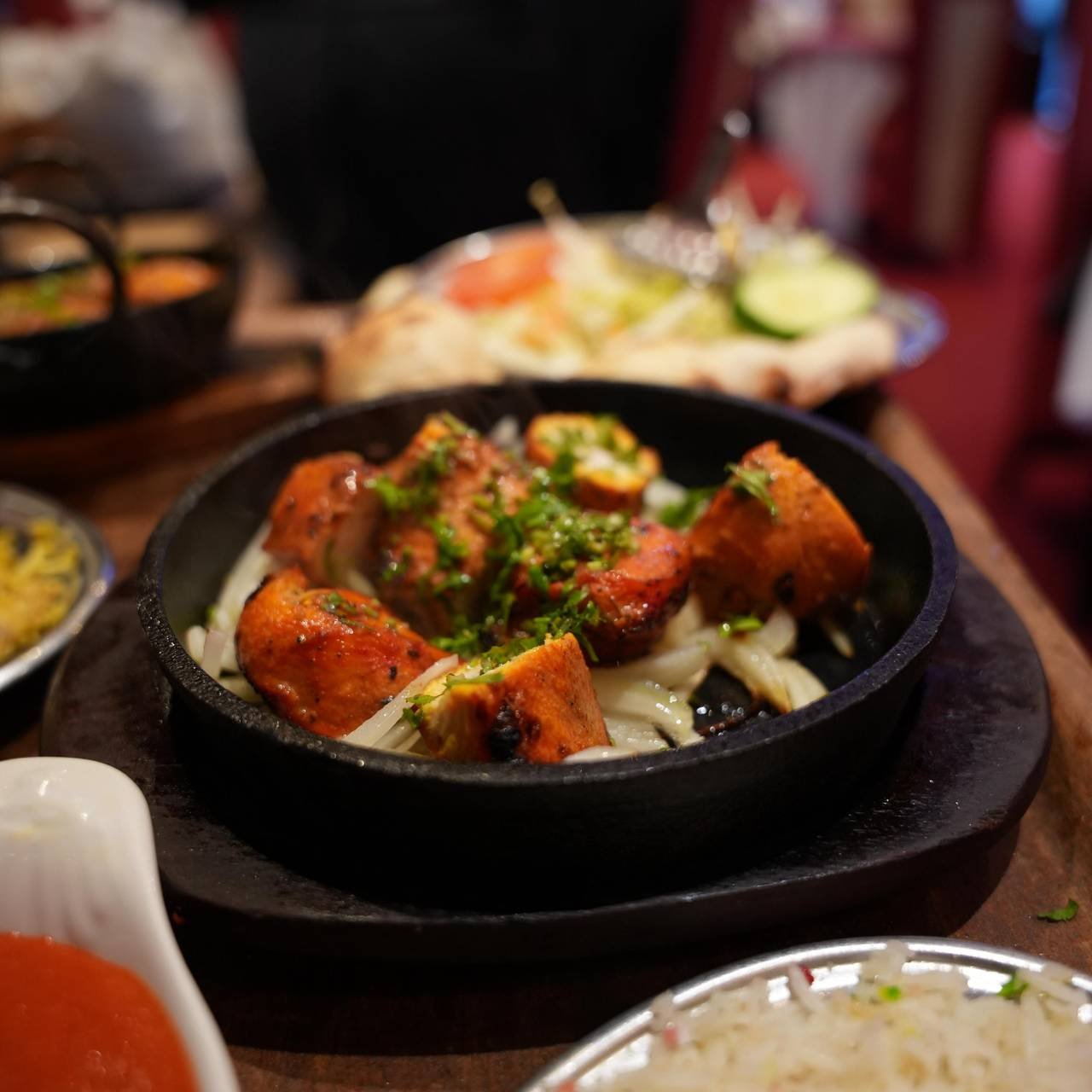
Tandoori Cooking in Kent's Commuter Belt
The tandoor oven is one of the few pieces of cooking equipment that travels well across cultures without losing its integrity. Arriving in Britain with South Asian communities from the 1950s onward, it transformed the British high street more thoroughly than almost any other culinary import, and it is precisely this kind of durable, neighbourhood-rooted institution that Longfield Tandoori on Station Road represents. The address, DA3 7QA, places it in Longfield, Kent, a village in the commuter belt where the dining scene tends to reward consistency over spectacle.
The conversation around ingredient provenance at that level has, over the past decade, filtered outward into the broader restaurant sector. Neighbourhood tandoori kitchens sit in a different register, but the same underlying question applies: where does the food come from, and how much does that matter at this price point and in this postcode?
What Tandoori Cooking Actually Requires
The tandoor is a cylindrical clay oven that operates at temperatures between 250°C and 480°C. At those heats, proteins cook fast, moisture evaporates from the surface almost instantly, and the characteristic char develops without the food sitting in its own fat. The technique demands good raw materials: meat that can withstand rapid high heat without becoming stringy, and marinades, typically yoghurt-based, with spice blends that vary by regional tradition, that penetrate the protein before it goes near the fire. British-Indian tandoori kitchens have historically sourced poultry and lamb domestically, with halal supply chains running through specialist wholesalers concentrated in urban centres like Birmingham, Bradford, and east London.
For a restaurant at a Kent address on a commuter-rail corridor, the practical sourcing geography runs through London's wholesale networks or regional halal suppliers that service southeast England. The broader question of whether locally raised, named-farm ingredients make their way into neighbourhood tandoori kitchens is not one the category has traditionally answered in public. The value proposition here is rooted elsewhere: in the mastery of a specific technique applied consistently over time.
The Neighbourhood Context
Longfield itself is a village settlement of modest scale, sitting between Gravesend and Dartford in the borough of Sevenoaks. Its dining options reflect its size. This is not a town with a competitive cluster of restaurants generating critical mass, as you find in Bray (home to Waterside Inn in Bray) or Marlow (where Hand and Flowers in Marlow draws visitors from across the country). The dynamic in Longfield is different: residents seek reliability, and restaurants that provide it over years tend to build genuine local loyalty rather than a touring audience.
That context matters when assessing what a tandoori restaurant in this location is actually doing. It is not competing with Opheem in Birmingham, a fine-dining kitchen applying Indian flavour frameworks, nor with Restaurant Sat Bains in Nottingham on any technical dimension. Its competitive frame is local: the other Indian restaurants within a ten-minute drive of Longfield station, the takeaway options along the Dartford road, the question of whether a family can get a decent meal without travelling into Gravesend or further into London.
For context on what the Kent dining scene at the more destination-driven end looks like, hide and fox in Saltwood offers a reference point further along the county's coastward stretch. The contrast between that register and a neighbourhood tandoori on Station Road is not a criticism of either, it maps a genuine spectrum of what dining in Kent means across different towns and price points.
British-Indian Dining and Ingredient Trends
The broader British-Indian restaurant sector has been evolving its sourcing conversation more slowly than the farm-to-table rhetoric suggests. A handful of operators, most visibly in London and the larger northern cities, have begun publishing supplier information and building menus around seasonal British produce interpreted through subcontinental spice traditions. That approach has earned attention from critics and, in the case of restaurants like Opheem in Birmingham, formal award recognition. The majority of British-Indian kitchens, however, continue to operate on a different model: standardised spice sourcing from specialist importers, reliable protein supply chains, and menus that reflect the accumulated regional knowledge of the kitchen team rather than a publicised farm relationship.
That is not a deficit. It is a different value system, one that has fed millions of British diners for decades and produced a cuisine that has genuinely become part of the national food culture. The question of ingredient sourcing in this context is less about farm names and more about the integrity of technique: is the spice blend fresh, is the marinade applied correctly, is the clay oven maintained at the right temperature, is the bread pulled at the right moment? These are the sourcing and craft questions that actually determine quality at the neighbourhood tandoori level.
Readers who want to cross-reference against the extreme end of the destination-dining spectrum can explore The Glenturret Lalique in Crieff, Ynyshir Hall in Machynlleth, or Restaurant Andrew Fairlie in Auchterarder through EP Club's coverage. For a mid-register perspective from an American frame of reference, Le Bernardin in New York City and Atomix in New York City represent how fine-dining sourcing narratives operate at the top of another market entirely.
Planning a Visit
Longfield Tandoori is located at 77 Station Road, making it accessible on foot from Longfield railway station, which sits on the Dartford-to-Rochester line with services connecting to central London via Dartford. For anyone travelling from outside the area, the station provides a direct route in. The restaurant's position on Station Road means it functions as a practical pre- or post-train dining option as much as a destination in itself. Current hours and booking arrangements are Mon: 5-11 PM; Tue: 5-11 PM; Wed: 5-11 PM; Thu: 5-11 PM; Fri: 5-11 PM; Sat: 5-11 PM; Sun: 1-10 PM, and reservations are recommended.
Readers interested in the wider Kent and southeast England dining picture will find further reference points at Midsummer House in Cambridge and 33 The Homend in Ledbury, both of which represent what destination-level dining looks like at comparable distances from London.
Comparison Snapshot
Comparable venues nearby, for context on price, style, and recognition.
| Venue | Cuisine | Price | Awards | Notes |
|---|---|---|---|---|
| Longfield TandooriThis venue — the venue you are viewing | Authentic Indian Tandoori | $$ | , | |
| The India - City Road | Authentic Indian | $$ | , | St Luke's |
| Kricket Brixton | Modern Indian Small Plates | $$ | , | Brixton |
| Chatora | Modern Indian | $$ | , | Richmond |
| Cilantro | Modern Authentic Indian | $$ | , | Putney |
| Social Dhaba | Modern Indian (North Indian & Punjabi) | $$ | , | Hatch End |
Continue exploring
More in Longfield
Restaurants in Longfield
Browse all →
Bars in Longfield
Browse all →
Hotels in Longfield
Browse all →
At a Glance
- Cozy
- Classic
- Family
- Group Dining
- Casual Hangout
- Standalone
- Beer Program
Friendly and welcoming atmosphere with a cozy, family-oriented feel.