Lo de Papa
Our verdict
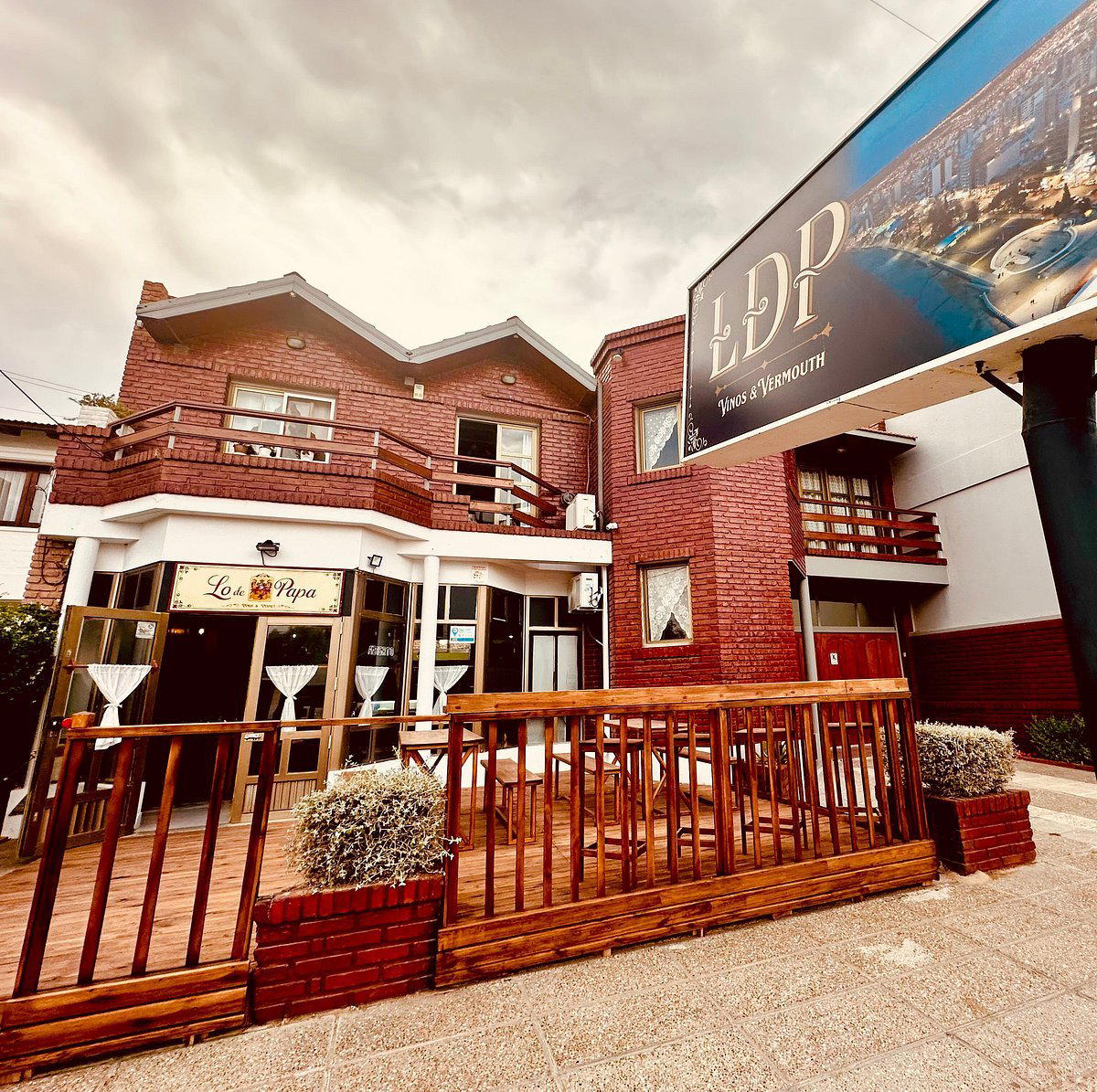
On Avenida Roca in Puerto Madryn, Lo de Papa operates in a city shaped by Atlantic seafood runs and Patagonian land produce. The address places it within easy reach of the waterfront dining corridor that serves both local regulars and visitors arriving for whale-watching season. For a grounded, ingredient-forward meal in one of Argentina's most productive coastal zones, it sits in a practical and well-located tier.

Pearl is the En Primeur Club membership app, where members save venues, book tables and use the concierge.
The menu
What to order
- Slow cooked lamb
- Cazuela de mariscos
- Cordero patagonico arrollado
Eating Along the Atlantic Edge: Puerto Madryn's Ingredient Geography
Puerto Madryn sits at the northern end of the Golfo Nuevo, a sheltered bay on the Patagonian Atlantic coast that shapes everything about how the city eats. The gulf is one of Argentina's most productive marine zones, drawing commercial and artisanal fishing fleets that supply local kitchens with centolla (southern king crab), merluza, and seasonal bivalves before those same species move north to Buenos Aires restaurant suppliers. Dining here is less about importation and more about proximity: the cold-water upwelling of the South Atlantic produces shellfish and finfish of a quality that the city's better kitchens have historically been content to let speak plainly. Lo de Papa, at Av. Julio Argentino Roca 1017, sits within this coastal corridor, on one of the main arteries connecting the central plaza district to the waterfront.
The address matters in a city of this scale. Puerto Madryn is not a large dining metropolis; its restaurant scene concentrates along a relatively compact strip, and the choice of Avenida Roca places Lo de Papa in the zone frequented by both residents and the seasonal visitor traffic that peaks between June and December, when southern right whales gather in the Golfo Nuevo to breed and calve. That seasonal rhythm is not incidental to how Patagonian coastal restaurants function: kitchens in this corridor have learned to read two markets simultaneously, the year-round local diner and the wildlife-tourism visitor who arrives with high expectations and limited time.
The Patagonian Sourcing Argument
Argentina's broader restaurant conversation has increasingly focused on ingredient provenance, a shift visible at every price tier from the high-end parrillas of Buenos Aires, like Don Julio in Buenos Aires, to regionally anchored producers like those working with Azafrán in Mendoza. In Patagonia, this conversation has a specific texture: the distances between production zones and urban centers are genuinely large, which means that proximity to raw material is a structural advantage rather than a marketing position. A kitchen on Avenida Roca in Puerto Madryn is within reach of lamb raised on the dry Patagonian steppe, Atlantic seafood landed at Puerto Madryn's own port, and wild-gathered species from the surrounding coastline. The question for any kitchen in this position is what it does with that access.
Across Argentinian Patagonia, the most consistent answer has been restraint: preparations that prioritize the integrity of the ingredient over elaboration. This stands in contrast to the creative tasting-menu format gaining ground elsewhere in Argentina, seen at venues like Kaia Omakase Nikkei Experience in Villa Rosa, and aligns more closely with the tradition of letting geography determine the plate. Patagonian lamb, slow-roasted on an open frame, or centolla served with minimal intervention, represents a culinary logic built around the specific cold-climate productivity of the south. Kitchens that understand this sourcing context tend to serve more honest food than those importing the aesthetic trappings of Buenos Aires fine dining to a coastal city where the local product is already the premium offering.
The Scene on Avenida Roca
Avenida Roca in Puerto Madryn functions as one of those urban thoroughfares where the local and the transient coexist without much friction. The street runs parallel to the bay, and the dining options along it reflect the city's hybrid character: places oriented toward the fishing and industrial workforce that underpins Puerto Madryn's economy alongside those pitched toward the eco-tourism visitor arriving via Trelew airport, roughly 65 kilometres to the south. Lo de Papa occupies a position in this mix that reflects the address's unpretentious register. Patagonian coastal dining at this level tends toward generous portions, accessible pricing, and a menu built around the region's core proteins rather than around a chef's personal narrative. This is a feature, not a limitation: in a city where the raw material is exceptional, a kitchen that stays close to its sourcing is often doing the more considered work.
For context on the broader Argentinian regional dining scene, other geographically-grounded venues worth tracking include Casa de Campo in General Ortega and Alto el Fuego in Bariloche, the latter operating in a southern Patagonian context with its own distinct sourcing traditions. In Puerto Madryn itself, Camarón Bombay represents a different angle on the city's seafood offer. Our full Puerto Madryn restaurants guide maps the wider field.
Planning Your Visit
Lo de Papa is located at Av. Julio Argentino Roca 1017 in central Puerto Madryn, within walking distance of the main waterfront and the city's hotel cluster. Visitors arriving for the whale-watching season (June through December) will find the city's restaurants busier, with demand concentrated on weekends and around peak whale-sighting conditions. For a broader picture of Argentinian regional dining worth cross-referencing before a trip through Patagonia, Belgrano and Perú in Las Heras, Casa Vigil in Villa Seca, and Angélica Cocina Maestra in Agrelo each demonstrate how Argentina's regional ingredient story plays out across different geographies and price points. For those extending travel toward Bahía Blanca, Cerveza Patagonia Refugio in Bahía Blanca offers another register of Patagonian food and drink culture.
Frequently asked questions
Would Lo de Papa be comfortable with kids?
Puerto Madryn's mid-range dining scene on Avenida Roca skews family-friendly, and Lo de Papa at number 1017 sits within that register. The street draws a mix of local families and travellers passing through on whale-watching itineraries, so a relaxed, all-ages dynamic is the norm rather than the exception in this part of the city.
How would you describe the vibe at Lo de Papa?
Avenida Roca in Puerto Madryn is a thoroughfare where locals and visitors coexist without much ceremony, and Lo de Papa fits that pattern. The address places it in the city's accessible, unfussy dining corridor rather than any kind of destination-dining category, the kind of room where the focus is on the plate and the table, not the décor.
Is Lo de Papa a good base for eating before or after a whale-watching trip from Puerto Madryn?
Puerto Madryn is the primary departure point for Península Valdés excursions, a UNESCO World Heritage Site, and Av. Roca 1017 is within walking distance of the main waterfront where most tour operators stage. That proximity makes Lo de Papa a practical option for a meal before or after a full-day outing without needing a taxi or significant planning.
Where do I go for Lo de Papa?
Lo de Papa is located at Av. Julio Argentino Roca 1017, U9120 Puerto Madryn, Chubut, Argentina, Puerto Madryn.
Fast Comparison
Comparable venues nearby, for context on price, style, and recognition.
| Venue | Cuisine | Awards | Notes |
|---|---|---|---|
| Lo de PapaThis venue (the venue you are viewing) | Patagonian Argentine | Not listed | Not listed |
| Camarón Bombay | Mediterranean Seafood | Not listed | Puerto Madryn |
| Alcahuete | Porteña Pizza | Not listed | Palermo |
| Chuchú | International | Michelin Bib Gourmand | Retiro |
| Chila | Modern New Argentine Fine Dining | Not listed | Puerto Madero |
| María Antonieta | Modern Mediterranean-Argentine Bistro | Not listed | Ciudad |
Continue exploring
More in Puerto Madryn
Restaurants in Puerto Madryn
All restaurants in Puerto Madryn →
Details
- Cozy
- Rustic
- Casual Hangout
- Extensive Wine List
- Local Sourcing
- A La Carte
Current opening hours
- Monday
- 7 PM–12 AM
- Tuesday
- 7 PM–12 AM
- Wednesday
- 7 PM–12 AM
- Thursday
- 7 PM–12 AM
- Friday
- 7 PM–12 AM
- Saturday
- 7 PM–12 AM
- Sunday
- Closed
Hours can change for holidays and private events. Hours as of .