L’Industrie
L'Industrie in Little Italy sits inside New York's by-the-slice tradition at the point where ingredient discipline and neighborhood accessibility converge. The format is counter service, the product is pizza, and the address places it in one of Manhattan's most storied immigrant foodways. For a city that takes its slice culture seriously, this is a useful reference point.
 Discover on Pearl
Pearl is the En Primeur Club membership app — saves, bookings, and concierge access live there. Same editors, same standards.
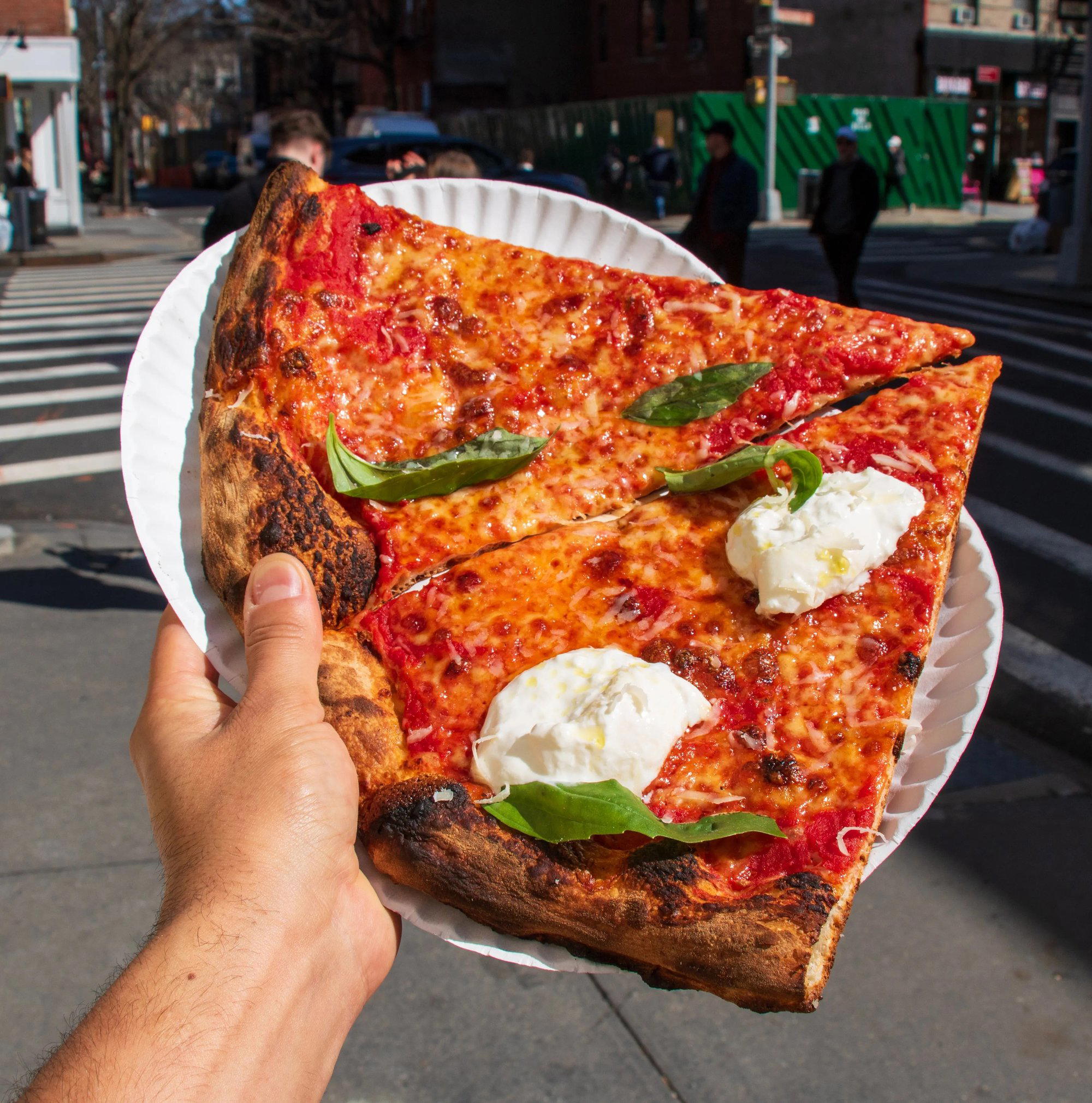
The Slice at Street Level: Little Italy's Pizza Counter in Context
Walk along the blocks that mark Little Italy's surviving edge and the sensory cues arrive before any signage does: flour dust, char, the specific heat signature of a deck oven working at temperature. New York's by-the-slice format is one of the city's most argued-over food categories, and the neighborhood in which L'Industrie sits carries particular weight in that argument. This is the geography where the American pizza tradition was shaped, not in fine-dining rooms like Le Bernardin or tasting counter formats like Masa, but at street-level counters built for speed, repetition, and value.
That context matters because L'Industrie is not operating in a vacuum. It sits inside a category that New Yorkers treat as a civic institution, where the bar for credibility is set by decades of accumulated taste memory rather than by Michelin stars or prix-fixe menus. The comparison set here is every other serious slice shop in the five boroughs, a peer group that takes sourcing and dough hydration seriously.
Where the Ingredients Come From and Why That Shapes the Slice
New York pizza's long reputation rests on a specific set of sourcing claims, some documented and some apocryphal: the mineral profile of the city's tap water, the particular acidity of San Marzano tomatoes grown in volcanic Campanian soil, the fat content and salt level of fior di latte pulled the same day. In the current generation of serious slice shops, these sourcing questions have become explicit editorial positions rather than background assumptions.
The broader shift in American pizza culture over the past decade has moved sourcing from incidental detail to central argument. Operators in cities like San Francisco, Chicago, and New York now make deliberate choices about flour origin, fermentation length, and tomato variety in ways that directly alter the final product. This is the same ingredient-discipline logic that defines tasting-menu kitchens at places like Alinea in Chicago or Lazy Bear in San Francisco, applied to a format that costs a fraction of the price and requires no reservation.
L'Industrie operates in that current, a slice-counter format where the assumptions about what goes into the dough and on top of it are not left to chance. The Little Italy address reinforces a particular lineage: this neighborhood's food history runs directly through the Italian immigrant communities that codified American pizza in the early twentieth century, and a serious pizza counter here is in implicit conversation with that inheritance whether it chooses to be or not.
The Counter Format and What It Demands of the Product
By-the-slice pizza is an unforgiving format. Unlike a whole-pie service where the product moves from oven to table in minutes, slice counters hold finished pizza under heat lamps or on deck surfaces and reheat to order. The structural integrity of the dough, its ability to hold a fold without collapse, to reheat without turning to cardboard, is a direct function of fermentation time and flour quality. A dough that hasn't developed sufficient gluten structure will fail the test of sitting and reheating. A tomato sauce that lacks acidity will flatten under the heat of a second bake.
This is why sourcing in the slice format is not aesthetic positioning, it is functional necessity. The same logic applies at farm-to-table fine-dining operations: at Single Thread Farm in Healdsburg or The French Laundry in Napa, ingredient sourcing determines what is possible on the plate. At a pizza counter, it determines whether the third slice sold from the same tray is as good as the first.
L'Industrie's Little Italy location places it in a neighborhood where this standard is understood instinctively by the people walking through the door. The customer base in this part of Manhattan carries inherited opinions about what a slice should weigh, how far it should bend, and what the underside char should look like. That audience is both the shop's greatest asset and its most demanding quality check.
Little Italy's Food Geography Today
The neighborhood marketed as Little Italy has contracted significantly over the past four decades as Chinatown has expanded and the original Italian-American community has dispersed. What remains is a concentrated strip of restaurants and food operations on and around Mulberry Street, some of which lean heavily on tourist-facing nostalgia and others of which are doing work that connects to the neighborhood's actual food history.
Serious pizza falls into the latter category. Across American cities, pizza culture has split between high-concept whole-pie destinations and accessible slice counters that serve neighborhoods rather than destination diners. César and comparable contemporary spots occupy a different tier entirely. New York's slice tradition, at its finest, has always been neighborhood infrastructure first and destination dining second, a distinction that shapes how L'Industrie should be read against the broader New York dining map.
For visitors building a picture of New York's food scene, a serious slice counter in Little Italy sits alongside rather than below the city's fine-dining tier. It is a different register, not a lesser one. New York's slice tradition has influenced pizza-makers far beyond the five boroughs and remains central to the city's food identity.
Planning a Visit: Practical Notes
No reservation is required or expected at a counter-service pizza operation. The format suits walk-in visits at any point during trading hours. Little Italy is accessible by subway from most Manhattan neighborhoods and sits within walking distance of SoHo, Chinatown, and Nolita, making it a natural stop on a broader downtown itinerary. Prices at by-the-slice counters are set per slice rather than per person, and a typical visit requires no more than a few minutes at the counter. The format is cash-friendly in the New York tradition, though card payment is standard at most current operators.
Standing Among Peers
Comparable venues nearby, for context on price, style, and recognition.
| Venue | Cuisine | Price | Awards | Notes |
|---|---|---|---|---|
| L’IndustrieThis venue — the venue you are viewing | New York-Style Thin-Crust Pizza | $$ | , | |
| Wild | Gluten-Free Italian Pizza & Pasta | $$ | , | West Village |
| Celeste | Authentic Italian Trattoria & Neapolitan Pizza | $$ | , | Upper West Side (Central) |
| Naples 45 Ristorante e Pizzeria | Neapolitan Pizza and Italian Ristorante | $$ | , | East Midtown-Turtle Bay |
| Osteria 106 | Authentic Italian Osteria | $$ | , | Upper West Side-Manhattan Valley |
| Pappardella | Classic Tuscan Italian | $$ | , | Upper West Side (Central) |
Continue exploring
More in New York City
Restaurants in New York City
Browse all →
Bars in New York City
Browse all →
Hotels in New York City
Browse all →



Wineries in New York City
Browse all →
At a Glance
- Lively
- Casual
- Trendy
- Iconic
- Casual Hangout
- Solo
- Group Dining
- Open Kitchen
- Standalone
Bright, energetic counter-service environment with minimal seating; customers stand at high tables or outside while eating. Casual, bustling atmosphere with constant foot traffic and a neighborhood meeting-point vibe.