Positioned inside Departure Plaza at Sydney Airport's Mascot precinct, Lilong by Tastes of Shanghai brings the cooking traditions of eastern China into a transit environment that rarely supports this level of culinary specificity. The venue draws on Shanghai's lilong neighbourhood culture, where lane-house communal eating shaped a cuisine defined by precise saucing, braising depth, and ingredient provenance rather than spectacle.
Pearl is the En Primeur Club membership app — saves, bookings, and concierge access live there. Same editors, same standards.
- Address
- Departure Plaza, Sydney NSW 2020, Australia
- Phone
- +61 2 9799 8833
- Directions
- Get directions
 Saves & bookings on Pearl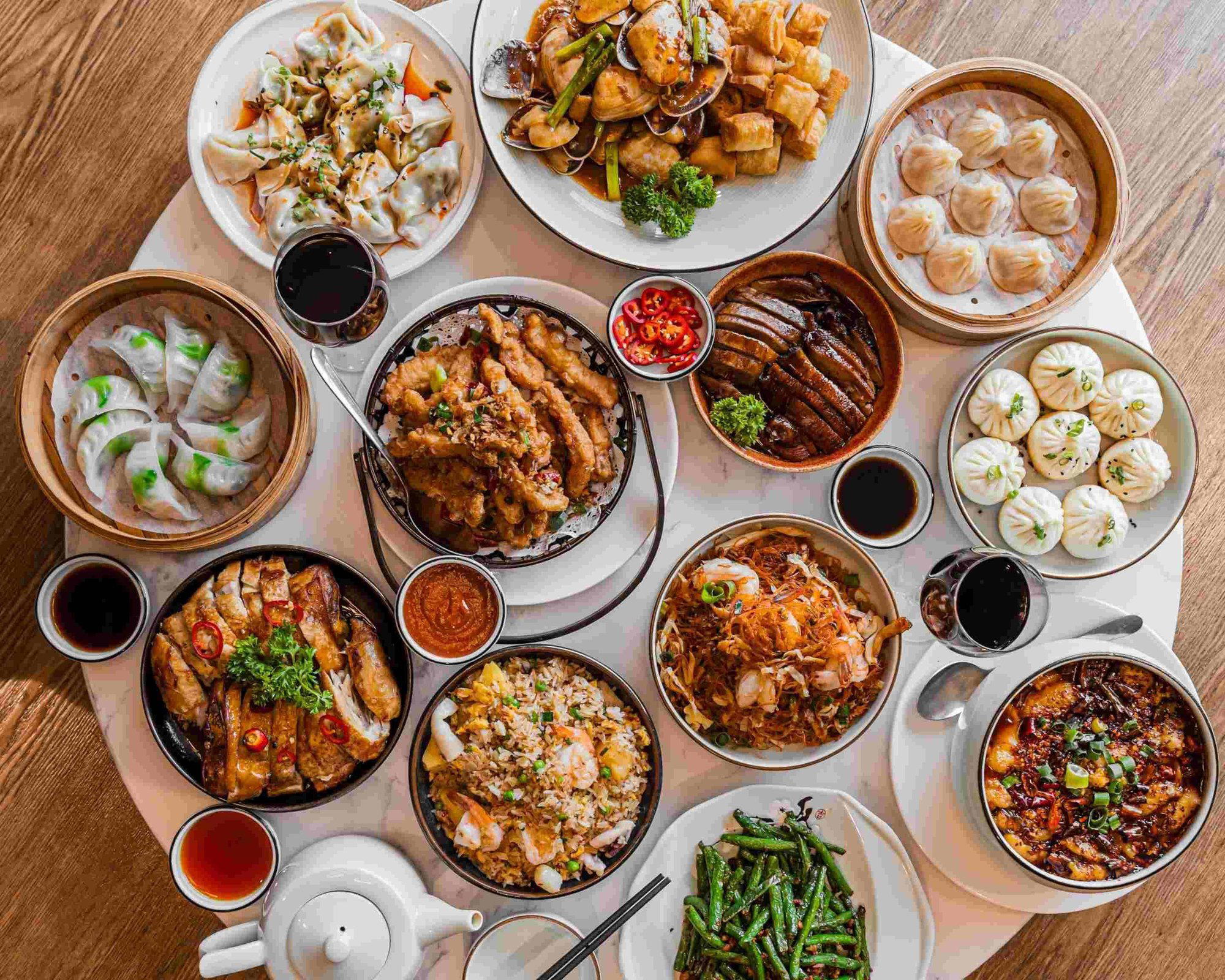
Transit Cooking, Taken Seriously
Airport dining in Australia has followed a familiar arc: chains, grab-and-go counters, and the occasional outpost of a broader hospitality group hedging its bets on captive foot traffic. Departure Plaza at Sydney Airport's Mascot precinct breaks from that pattern in a few places, and Lilong by Tastes of Shanghai is among the more considered of those departures. The space sits within a zone designed around the final hour before a gate call, where the physical environment is defined by hard surfaces, overhead signage, and the low-grade tension of travel logistics. What Lilong offers against that backdrop is a cooking tradition that rewards the opposite of haste.
The name references Shanghai's lilong neighbourhoods: the dense, lane-house residential quarters that shaped the city's street-level food culture through the late Qing dynasty and Republican era. Lilong cooking is not the elaborate banquet register of Shanghainese haute cuisine, nor is it the shorthand of dumpling-bar fast food. It sits in between, defined by communal formats, slow-braised proteins, careful seasoning with soy, Shaoxing wine, and rock sugar, and a relationship to ingredients that prioritises what arrives in season over what photographs well.
The Sourcing Logic Behind Shanghainese Cooking
Eastern Chinese cuisine, particularly the Hu and Jiangnan traditions that underpin Shanghainese cooking, is among the more ingredient-contingent of China's eight culinary schools. The flavour architecture here depends less on spice complexity than on the quality of core inputs: the salinity and fat content of the soy, the age of the Shaoxing rice wine used in braises, the freshness of hairy crab or river fish when those seasonal markers arrive. In the lilong context, this translated historically to small traders supplying lane-house kitchens directly, a proximity between source and plate that shaped both the cooking method and the expectation of what good tasted like.
Replicating that sourcing logic in an airport transit zone is a genuine operational challenge. Ingredient quality in airport food service is typically the first variable to fall under cost pressure, which is why most terminal food reads as cuisine in outline only: the shape of a dish without the substance that makes it matter. Venues that hold the line on sourcing inside high-throughput environments, as Lilong positions itself to do, occupy a distinct tier from the surrounding offer. That positioning is worth noting for travellers who treat the pre-departure window as dead time rather than an opportunity to eat something worth remembering. For context on what substantive cooking looks like at the premium end of the Australian dining spectrum, the approach at Brae in Birregurra and Attica in Melbourne sets the benchmark for ingredient-led commitment, though those operate in entirely different formats and settings.
Shanghai in the Australian Chinese Dining Context
Australian Chinese dining has historically skewed Cantonese, a reflection of the immigration patterns that established the country's Chinese restaurant infrastructure from the nineteenth century forward. Cantonese cooking still dominates the premium end of the category in Sydney and Melbourne, with venues like Flower Drum in Melbourne holding the senior position in that tier. Shanghainese cooking occupies a smaller, more specialist niche in the Australian market, which makes its presence in a high-volume transit setting somewhat counterintuitive. The lilong format, with its communal and relatively unfussy presentation, travels better to a transit environment than a formal Shanghainese banquet register would, but it still demands that the kitchen maintains discipline under conditions that challenge any serious cooking operation.
For travellers moving through Sydney who have eaten across the city's Chinese dining options, from the Cantonese-led rooms of the CBD to the regional diversity of Ashfield and Hurstville, a Shanghainese reference point at the airport represents genuine geographic and culinary specificity. The broader Sydney restaurant context, including venues like Rockpool and bills in Bondi Beach, gives a sense of how varied the city's eating culture is beyond its transit zones. Bayly's Bistro in Kirribilli and El Loco at Excelsior in Surry Hills illustrate the range further, from neighbourhood bistro to casual Mexican, against which Lilong's eastern Chinese focus reads as a deliberate curatorial choice rather than a compromise of availability.
Planning Your Visit
Lilong by Tastes of Shanghai is located in Departure Plaza, Sydney Airport, Mascot NSW 2020. As with most airport dining, access is tied to your departure terminal and the timing of your security clearance. The Departure Plaza precinct is accessible post-security, which means visit planning should account for processing time, particularly during peak morning and evening departure windows when Sydney Airport's domestic and international flows converge.
Comparisons further afield, including the technical precision of Le Bernardin in New York City or the Korean-led fine dining at Atomix, are not direct peer references for Lilong, but they illustrate a broader global pattern: serious culinary traditions, when handled with discipline in non-traditional settings, can hold their own on merit. Whether Lilong succeeds in the Sydney Airport context depends on execution. Other Australian venues worth tracking alongside this for their regional or ingredient-specific focus include Johnny Bird in Crows Nest, Kulcha Restaurant Wollongong, and Jaani Street Food in Ballarat, each of which navigates a specific culinary identity in a regional or non-metropolitan setting.
Comparable Spots, Quickly
Comparable venues nearby, for context on price, style, and recognition.
| Venue | Cuisine | Price | Notes |
|---|---|---|---|
| Lilong by Tastes of ShanghaiThis venue — the venue you are viewing | Shanghainese Street Food | $$ | Not listed |
| Xing Yan | Cantonese Yum Cha | $$ | Bankstown |
| Wonton House | Traditional Chinese Noodle House | $$ | Box Hill |
| Lucky88 | Modern Chinese | $$ | Ryde |
| Terrigal Pavilion | Mediterranean Coastal | $$ | Terrigal |
| Phở Nom | Authentic Vietnamese Pho | $$ | Melbourne CBD |
Continue exploring
More in Mascot
Restaurants in Mascot
Browse all →
Bars in Mascot
Browse all →
Hotels in Mascot
Browse all →


At a Glance
- Casual Hangout
- Group Dining
- Standalone
Current opening hours
- Monday
- 9 AM–10 PM
- Tuesday
- 9 AM–10 PM
- Wednesday
- 9 AM–10 PM
- Thursday
- 9 AM–10 PM
- Friday
- 9 AM–10 PM
- Saturday
- 9 AM–10 PM
- Sunday
- 9 AM–10 PM
Hours can change for holidays and private events. Last verified .
Casual and welcoming with a street food spirit, focused on authentic Shanghainese flavors in a shopping center setting.