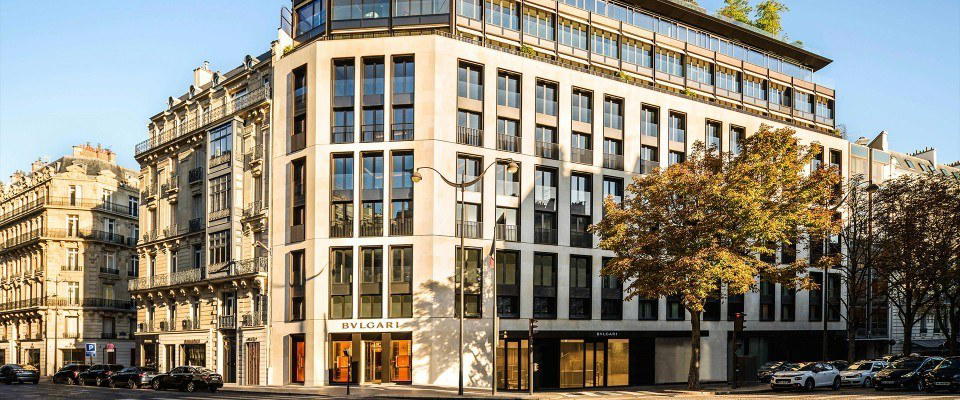
Le V occupies a quietly significant address in Paris's 8th arrondissement, a neighbourhood where the competition between grand hotel dining rooms and independent fine-dining addresses shapes the upper tier of the city's restaurant scene. Positioned on Rue Vernet a short distance from the Champs-Élysées, it operates in the same gravitational field as particularly scrutinised tables in France.
Pearl is the En Primeur Club membership app — saves, bookings, and concierge access live there. Same editors, same standards.
- Address
- 25 Rue Vernet, 75008 Paris, France
- Phone
- +33144319800
- Website
- hotelvernet-paris.fr
- Directions
- Get directions
 Saves & bookings on Pearl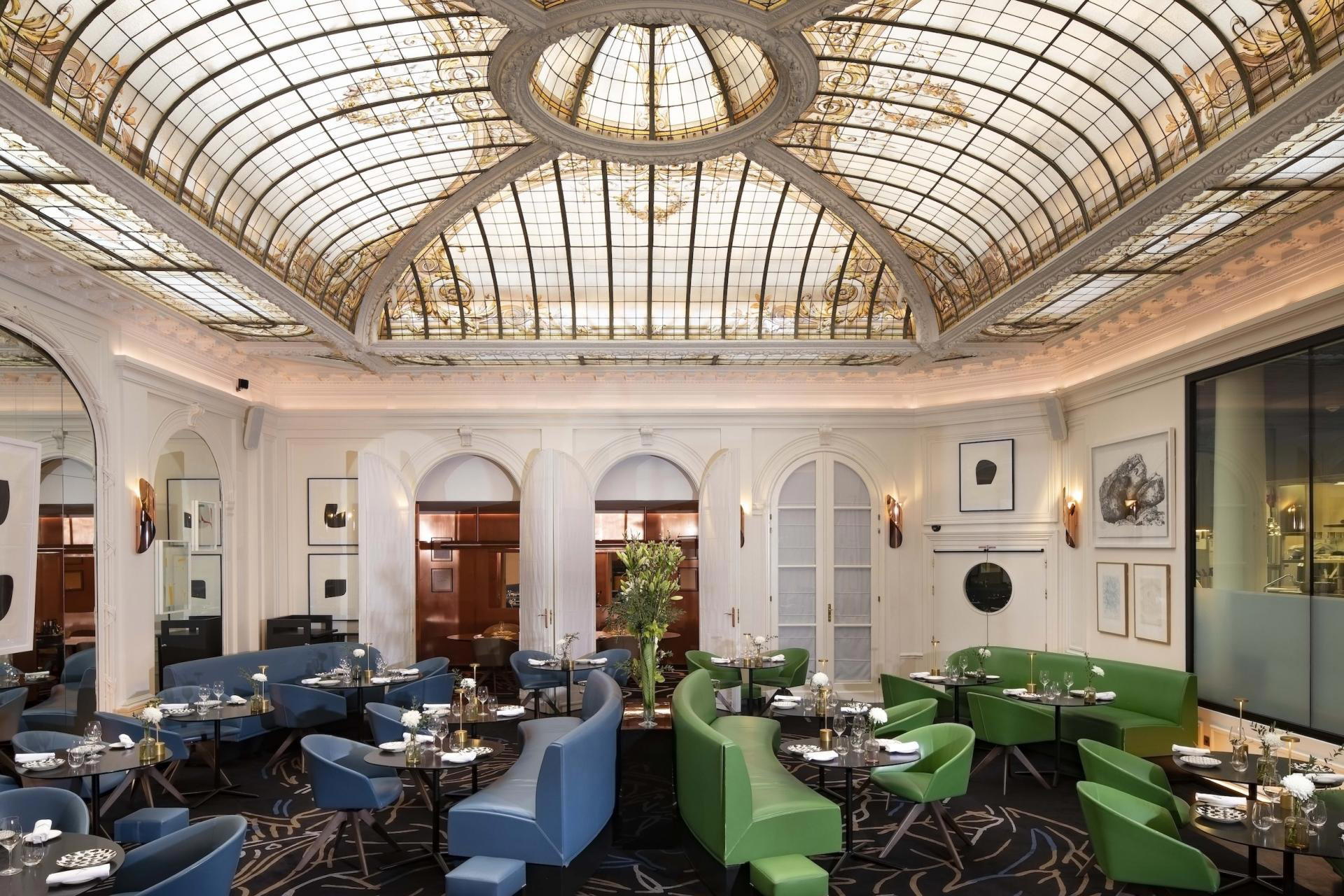
The 8th Arrondissement's Fine-Dining Axis
Paris's 8th arrondissement functions as a proving ground for the city's most formally ambitious restaurants. The triangle formed by the Champs-Élysées, Avenue Montaigne, and the streets fanning out toward the Arc de Triomphe contains a higher concentration of multi-Michelin-starred addresses than almost any comparably sized district in Europe. Within that zone, Rue Vernet, where Le V sits at number 25, belongs to a quieter residential-commercial corridor that has historically attracted restaurants aiming for seriousness over spectacle. The street does not announce itself; the clientele who find their way there tend to arrive with purpose.
That geographic positioning matters more than it might initially seem. Restaurants in this part of the 8th do not benefit from the tourist foot traffic that sustains brasseries closer to the Champs-Élysées, nor do they carry the institutional weight of a grande maison with decades of accumulated mythology. What they rely on instead is a combination of critical recognition, word-of-mouth among a well-travelled dining public, and the kind of considered reinvention that keeps a room relevant across shifts in culinary fashion. Le V's address places it in that category by default.
Where Le V Fits in Paris's Upper Tier
The upper bracket of Parisian fine dining has reorganised considerably over the past fifteen years. A wave of chefs trained in the classical French tradition began absorbing influences from Japanese technique, New Nordic philosophy, and hyper-seasonal sourcing frameworks, producing a generation of rooms that sit awkwardly between the old grand-siècle model and something more contemporary. The result is a tiered market: at one end, the institutionalised grands restaurants such as L'Ambroisie in the Marais, where the classical syntax remains largely intact; at the other, aggressively inventive operations like Alléno Paris au Pavillon Ledoyen, whose cuisine represents a sustained argument for extraction-led modernism; and between those poles, a broader middle ground of addresses that interpret French technique through a contemporary lens without fully declaring allegiance to either extreme.
Le Cinq at the Four Seasons Hôtel George V, just a few streets away on Avenue George V, illustrates the hotel-dining version of this tension: a room with the grandeur and staffing ratios of a palace hotel but a kitchen that has consistently pursued critical recognition on its own terms. Le V, operating from a more independent position on Rue Vernet, faces the same challenge without the structural support of a luxury hotel brand behind it. That independence shapes everything from the dining room atmosphere to the degree of creative risk the kitchen can absorb.
Reinvention as a Condition of Survival
In a city with this density of high-calibre competition, fine-dining restaurants that have been open for more than a decade are almost invariably restaurants that have reinvented themselves at least once. The pattern is consistent across the French regional scene as well: Troisgros in Ouches relocated and reformatted without losing its three-star standing; Flocons de Sel in Megève built a reputation around Alpine sourcing that was ahead of the hyper-local wave before that wave had a name. In Paris itself, Kei occupies a specific niche by layering Japanese precision onto classical French foundations, a pivot that gave it a distinct identity within a market otherwise dominated by purely French reference points.
For Le V, the evolution question is inseparable from the question of what Rue Vernet fine dining means in 2024. The neighbourhood has seen restaurants open and close around it, and the addresses that persist tend to be ones that have found a way to stay culturally current without abandoning the technical foundations that brought them critical attention in the first place. That balancing act, between continuity and relevance, defines the operating logic of the room.
Comparisons to what is happening in France beyond Paris are instructive. Mirazur in Menton built its reputation on a garden-to-table philosophy that now reads as predictive rather than reactive. Bras in Laguiole defined what it meant to cook from a specific landscape before terroir became a universal talking point. Parisian restaurants operating at the same level face a different version of the same pressure: without a dramatic natural setting or a single defining regional ingredient story, the case for relevance must be made through kitchen evolution and room intelligence. Arpège made that case by pivoting almost entirely to vegetable-forward cooking at a moment when the move seemed eccentric; it now reads as prescient.
The Rue Vernet Address: Practical Considerations
Le V is located at 25 Rue Vernet in the 8th arrondissement, within walking distance of the Charles de Gaulle-Étoile métro station. The 8th sits in central Paris, well-served by both métro lines and taxi or VTC services from the major hotels along the Champs-Élysées corridor. For visitors staying in the Right Bank's premium hotel tier, the Triangle d'Or around Avenue Montaigne, or the George V neighbourhood, Rue Vernet is a ten-minute walk at most. The surrounding streets are calm in the evenings, which suits the pace of a serious dinner rather than a pre-theatre sprint.
The closest international peer comparison in format and neighbourhood type would be the upper bracket of Midtown Manhattan, where addresses like Le Bernardin maintain rigorous booking calendars despite, or because of, their critical standing. Closer to home, the demand logic applies equally to Assiette Champenoise in Reims and Auberge du Vieux Puits in Fontjoncouse, which draw destination diners rather than walk-in traffic.
Beyond France, the discipline of sustained fine-dining reinvention runs through kitchens like Atomix in New York, which repositioned itself from tasting-menu format to counter dining without losing critical momentum, and regionally through AM par Alexandre Mazzia in Marseille and Au Crocodile in Strasbourg. The shared thread is not style but strategic self-awareness: understanding what the room does well, what the market expects, and where those two things diverge.
Paul Bocuse – L'Auberge du Pont de Collonges and Auberge de l'Ill in Illhaeusern for context on France's longer-standing fine-dining institutions.
Credentials Lens
Comparable venues nearby, for context on price, style, and recognition.
| Venue | Cuisine | Price | Notes |
|---|---|---|---|
| Le VThis venue — the venue you are viewing | Mediterranean Fusion French | $$$ | Not listed |
| Jaïs | Modern French Bistro | $$$ | Gros-Caillou |
| Le Huitième Arrt | French Brasserie with Corsican Accents | $$$ | Quartier de l'Europe |
| L'Ascension | Modern French Bistro | $$$ | Saint-Georges |
| Rue du Bac | Classic French Bistro & Haute-Bistronomie | $$$ | Saint-Germain-des-Prés, 7th Arrondissement |
| Lipp | Traditional Alsatian Brasserie | $$$ | Saint-Germain-des-Prés |
Continue exploring
More in Paris
Restaurants in Paris
Browse all →

Bars in Paris
Browse all →
Hotels in Paris
Browse all →



At a Glance
- Romantic
- Elegant
- Cozy
- Sophisticated
- Date Night
- Special Occasion
- Historic Building
- Hotel Restaurant
Current opening hours
- Monday
- 12:30–2 PM, 7:30–9 PM
- Tuesday
- 12:30–2 PM, 7:30–9 PM
- Wednesday
- 12:30–2 PM, 7:30–9 PM
- Thursday
- 12:30–2 PM, 7:30–9 PM
- Friday
- 12:30–2 PM, 7:30–9 PM
- Saturday
- Closed
- Sunday
- Closed
Hours can change for holidays and private events. Last verified .
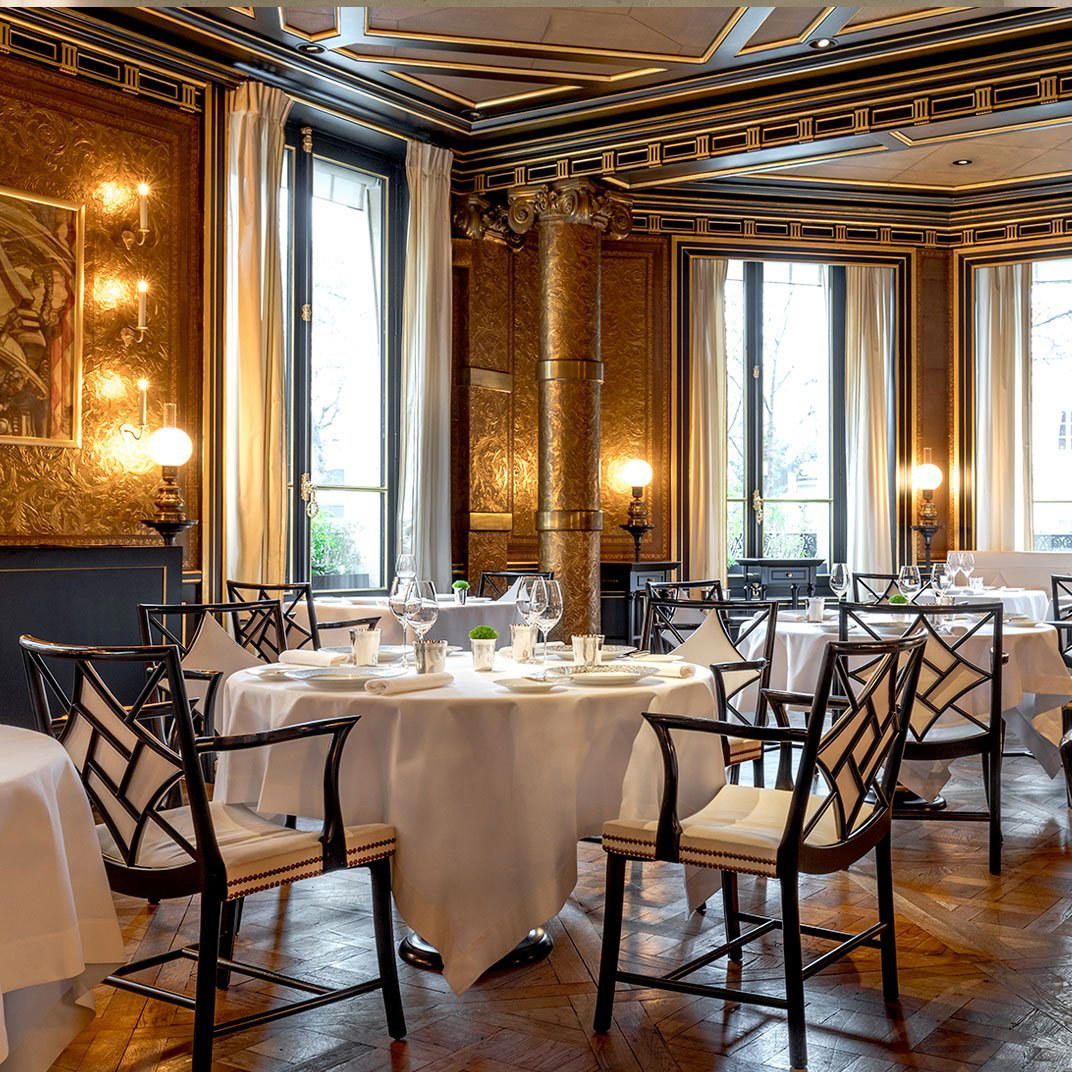
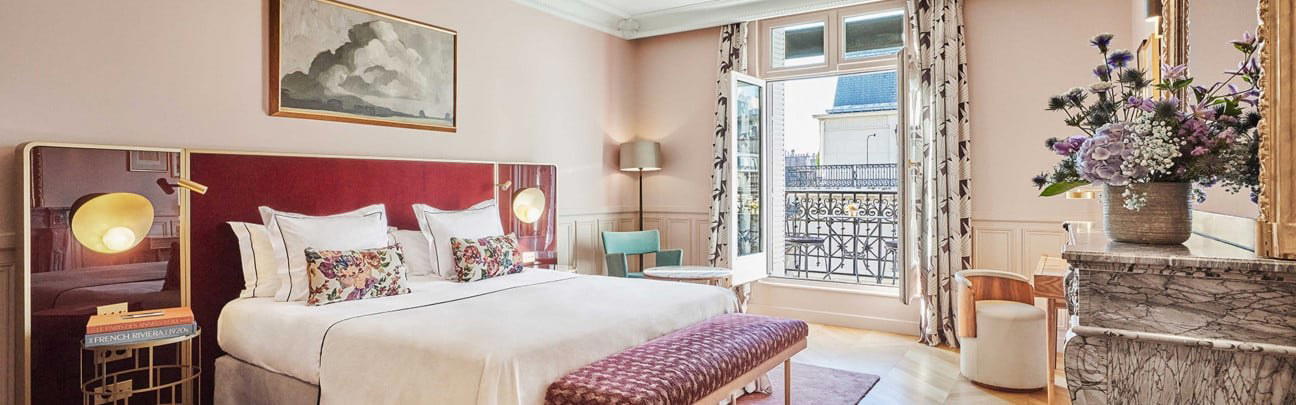
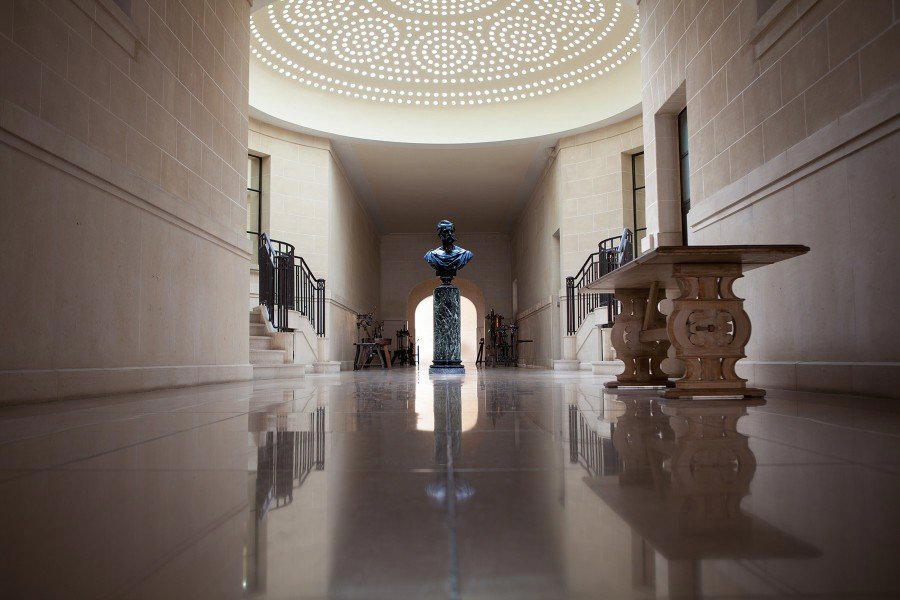
Cosy and warm atmosphere bathed in light under the well-known glass roof, evoking emotion through artistic dishes.