Brasserie Lipp has anchored the Boulevard Saint-Germain since 1880, drawing politicians, writers, and Left Bank regulars who return not for novelty but for constancy. The Alsatian menu, the mirrored dining room, and the particular social calculus of who gets seated where have remained largely unchanged across generations, which is precisely the point.
Pearl is the En Primeur Club membership app — saves, bookings, and concierge access live there. Same editors, same standards.
- Address
- 151 Bd Saint-Germain, 75006 Paris, France
- Phone
- +33145485391
- Website
- brasserielipp.fr
- Directions
- Get directions
 Saves & bookings on Pearl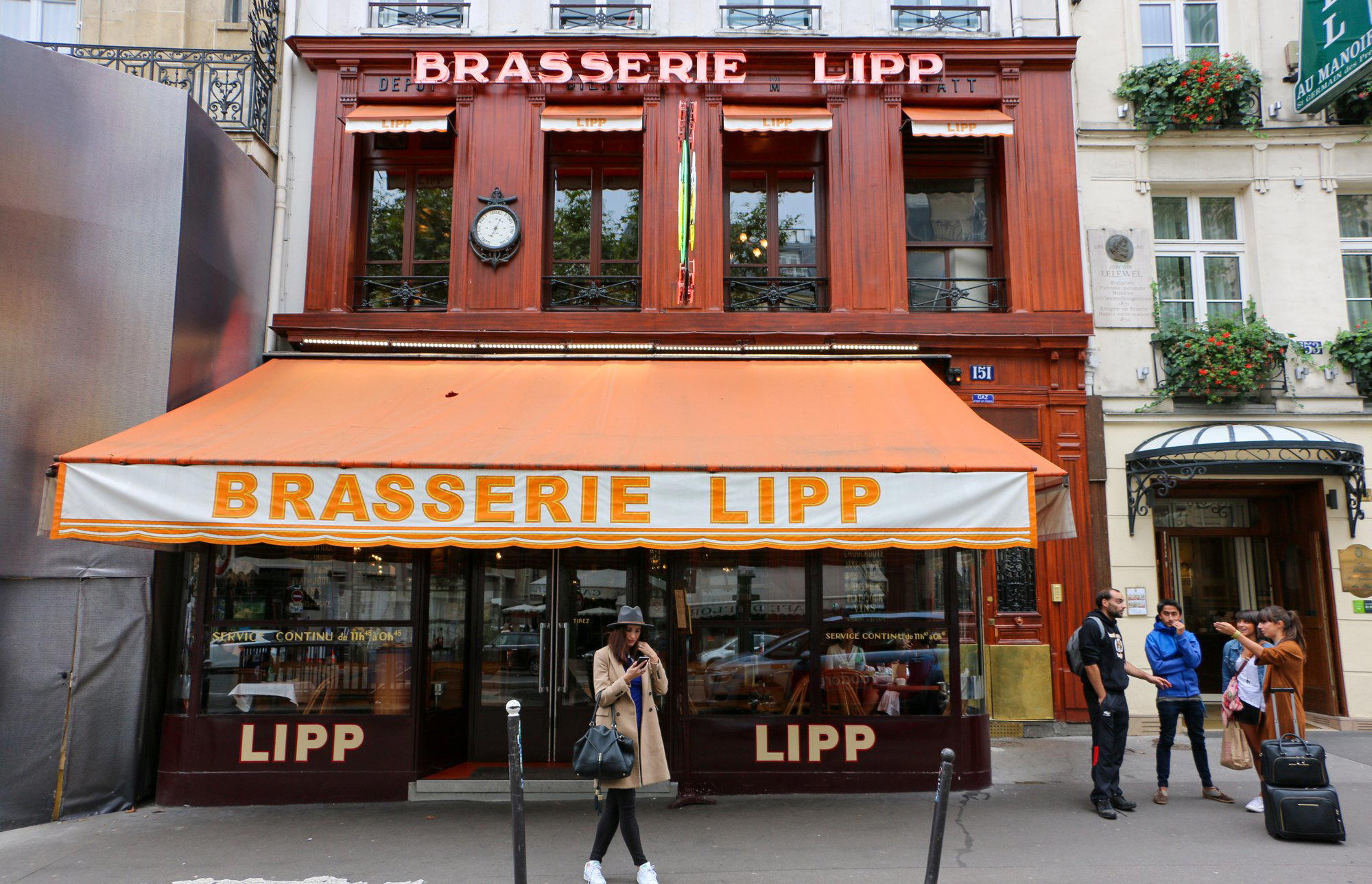
The Weight of a Room That Has Seen Everything
There is a particular quality to walking into Brasserie Lipp on a Tuesday evening that has nothing to do with what is on the plate. The brass fixtures, the painted ceramic tiles, the banquettes worn to exactly the right degree of resistance, none of it was designed to feel historic. It simply is. The room at 151 Boulevard Saint-Germain has absorbed more than a century of Left Bank life, and it shows in the way the staff move and the way the tables are packed together without apology. That hierarchy is not incidental. It is the product.
Saint-Germain-des-Prés has changed considerably around Lipp. The publishing houses that once filled the quartier have largely moved or contracted. The cafés de Flore and de Deux Magots run on heritage and tourist traffic. Lipp occupies a different position: it is still, demonstrably, a working brasserie used by people who live and operate in the city, not merely people who wish to absorb some of its past. That distinction matters when assessing what the room actually is versus what it is remembered to be.
What Keeps the Regulars Coming Back
The logic of Lipp's loyal clientele is worth taking seriously, because it explains the place more accurately than any historical account. Politicians from the nearby Sénat have long treated the upstairs and main-floor tables as an informal extension of professional life. Journalists, editors, and figures from French public life have used the brasserie not as a destination but as a node, somewhere to be seen, to negotiate, to eat at a reasonable speed without ceremony. The restaurant's social function has always been as important as its culinary one, and the two are not in competition.
What the regulars order tends to cluster around the Alsatian backbone that has defined the menu since the brasserie's 1880 founding: choucroute garnie, herring fillets, cervelas rémoulade, and the kind of beer list that reflects the house's Strasbourg origins. These are not dishes that reward innovation. They reward execution and familiarity. A regular at Lipp is not looking for a menu they haven't seen before. They are looking for the menu they know, delivered correctly, in a room they trust. That is a specific hospitality contract, and Lipp has honoured it across generations when many of its contemporaries have pivoted or closed.
The so-called plat du jour structure and the rhythm of service, brisk, professional, without the performative warmth of contemporary hospitality, are themselves part of the draw. Regulars tend to value competence over cordiality. The staff at Lipp are experienced in a way that is increasingly rare: they read the room, they know who needs to be left alone, and they do not explain the menu to people who have been ordering from it for fifteen years.
Lipp in Its Competitive Context
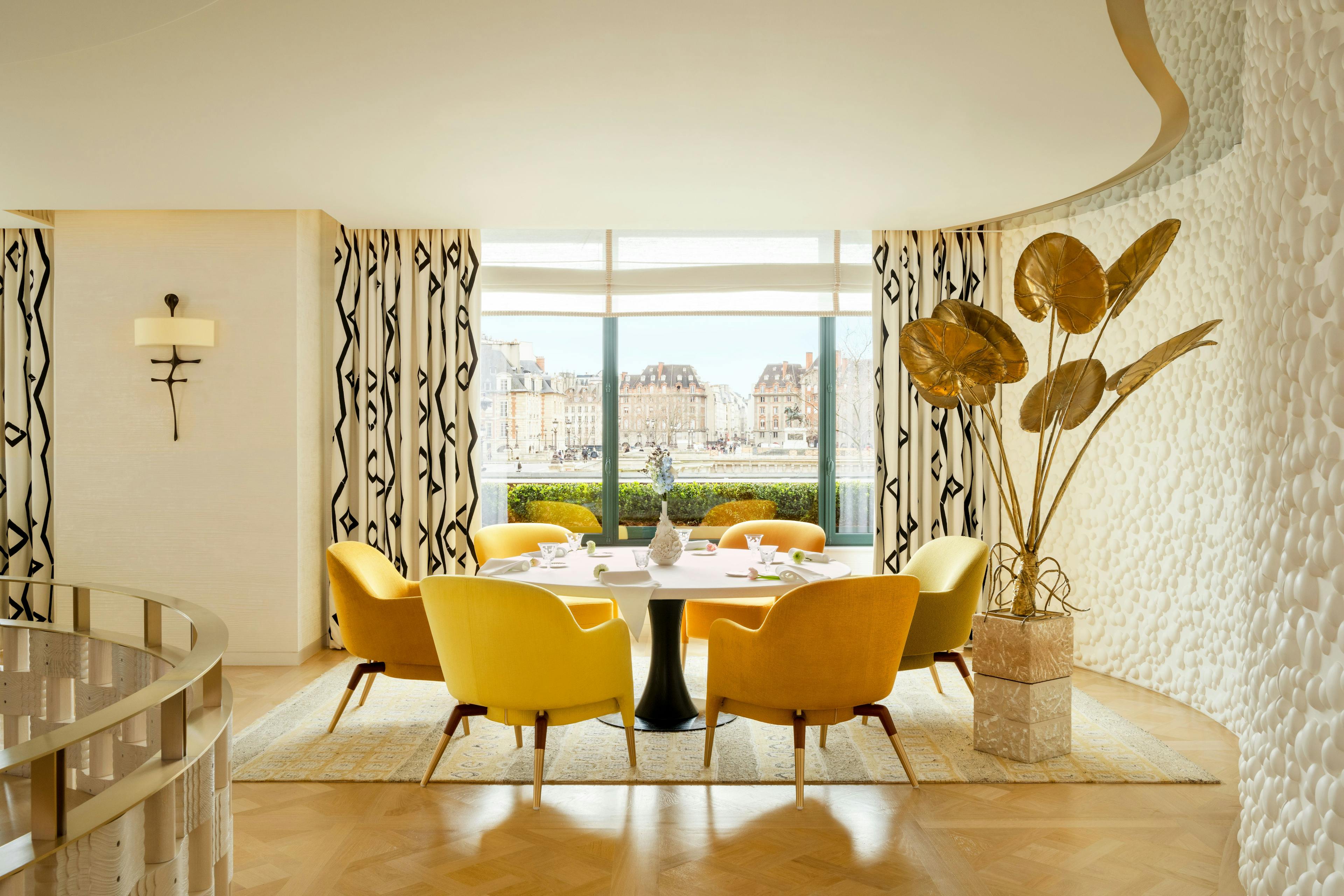
Placing Lipp against Paris's contemporary dining tier requires a deliberate shift in frame. It does not belong in the same conversation as Alléno Paris au Pavillon Ledoyen, Arpège, or Le Cinq at the Four Seasons George V, places where the proposition is culinary ambition at the highest price point. Nor does it sit comfortably beside Kei or L'Ambroisie, where the focus is on precision and distinction in the plate. Lipp competes on different terms: continuity, social legibility, and the particular credibility that comes from operating on the same address for over 140 years without fundamentally reconceiving itself.
Among France's celebrated addresses with deep historical roots, Lipp belongs to a cohort that includes institutions like Auberge de l'Ill in Illhaeusern and Paul Bocuse's Auberge du Pont de Collonges, establishments where longevity and cultural weight are part of the value proposition, not merely its backstory. The comparison is not culinary so much as it is about what French dining institutions carry and how they carry it.
Internationally, the model of the grande brasserie as a social institution rather than a purely gastronomic one has a few counterparts. Le Bernardin in New York operates at the other end of the prestige spectrum, where culinary reputation is the primary draw, but both share a culture of professionalism and a clientele that values predictability. Atomix, also in New York, represents the opposite pole entirely: the avant-garde tasting counter that Lipp's regulars would have little patience for.
The Alsatian Thread
The Alsatian identity of Lipp is not incidental. The brasserie was founded by Léonard Lipp from Strasbourg, and the menu's orientation toward eastern French cuisine, choucroute, smoked meats, strong beer, placed it in a distinct category from the Parisian bistros and brasseries that surrounded it. That regional specificity has been maintained as a point of identity rather than nostalgia. Restaurants in Strasbourg like Au Crocodile offer a different angle on Alsatian culinary tradition, one that has evolved through Michelin recognition and contemporary technique. Lipp's relationship to that tradition is more archival: it preserves a version of Alsatian brasserie cooking as it was transplanted to Paris in the late nineteenth century, and it does not apologise for the stasis.
That position has become increasingly rare as French regional cuisine undergoes reinvention at addresses like Bras in Laguiole, Flocons de Sel in Megève, and Mirazur in Menton, where chefs treat regional identity as a starting point for invention. Lipp treats it as the destination. Neither approach is inherently superior; they serve different purposes and different diners.
Planning Your Visit
| Venue | Price Tier | Format | Walk-in Viability |
|---|---|---|---|
| Lipp | Mid-range brasserie | À la carte, full service | Possible; regulars prioritised |
| Alléno Paris au Pavillon Ledoyen | €€€€ | Tasting menu / à la carte | Not recommended; advance booking required |
| L'Ambroisie | €€€€ | À la carte classic | Difficult; weeks-ahead booking advised |
| Le Cinq | €€€€ | Tasting menu / à la carte | Low; hotel guests have priority |
| Kei | €€€€ | Set menus | Not recommended; reservation essential |
A Quick Peer Check
Comparable venues nearby, for context on price, style, and recognition.
| Venue | Cuisine | Price | Notes |
|---|---|---|---|
| LippThis venue — the venue you are viewing | Traditional Alsatian Brasserie | $$$ | Not listed |
| Sébastien Gaudard | Classic French Patisserie & Café | $$$ | 9th Arrondissement |
| Maison 28 | Modern French Bistro | $$$ | 1er arrondissement |
| Un jour à Peyrassol | Provençal Truffle Bistro | $$$ | Vivienne |
| L'INAPERÇU | Modern French Bistronomy | $$$ | Le Marais |
| Le Huitième Arrt | French Brasserie with Corsican Accents | $$$ | Quartier de l'Europe |
Continue exploring
More in Paris
Restaurants in Paris
Browse all →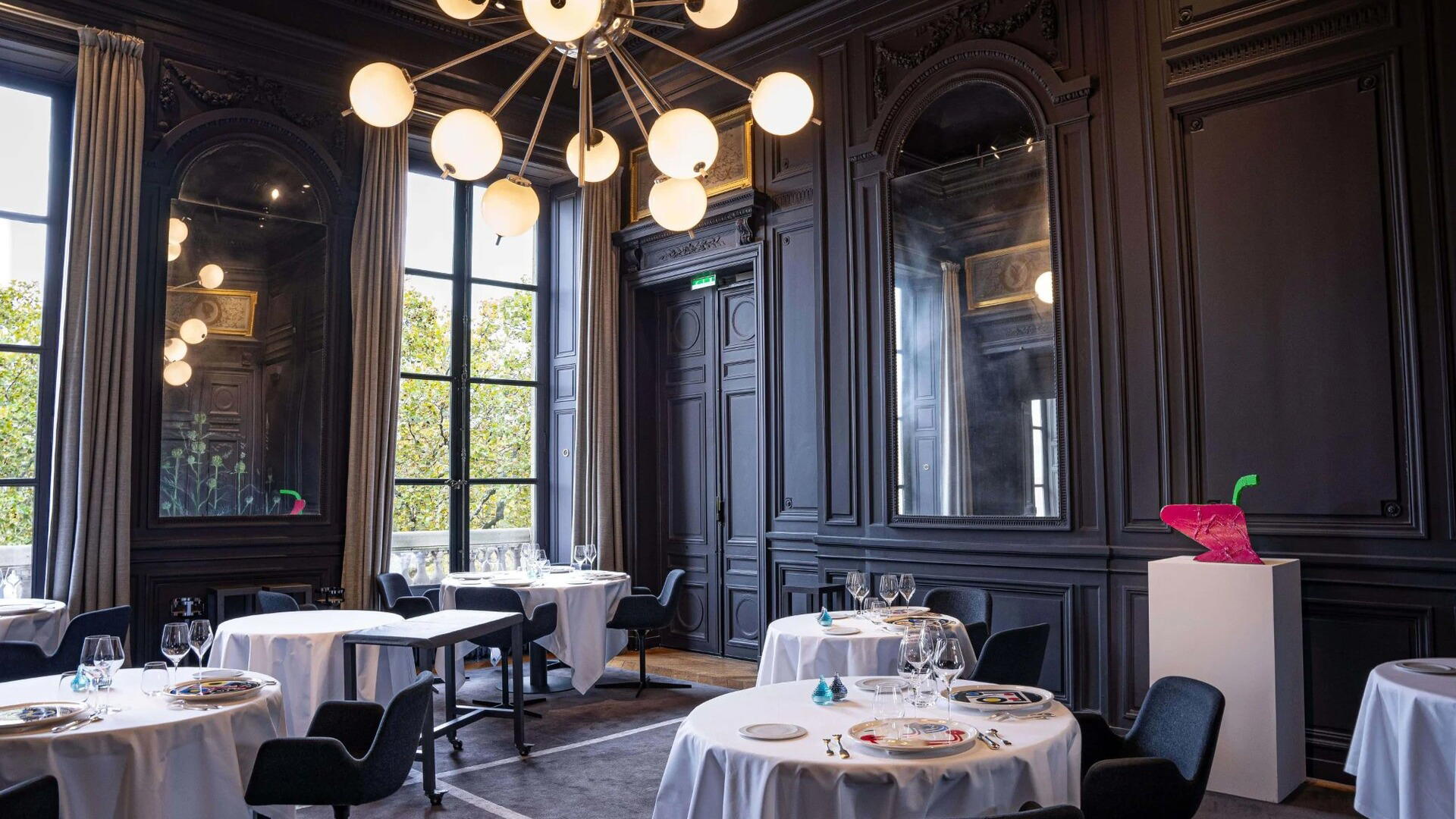
Bars in Paris
Browse all →
Hotels in Paris
Browse all →



At a Glance
- Classic
- Well Known
- Elegant
- Special Occasion
- Business Dinner
- Historic Building
- Extensive Wine List
- Street Scene
Current opening hours
- Monday
- 12 PM–1 AM
- Tuesday
- 12 PM–1 AM
- Wednesday
- 12 PM–1 AM
- Thursday
- 12 PM–1 AM
- Friday
- 12 PM–1 AM
- Saturday
- 12 PM–1 AM
- Sunday
- 12 PM–1 AM
Hours can change for holidays and private events. Last verified .
Lively atmosphere with polished wood and mirrored interiors evoking timeless Parisian elegance.