Our verdict
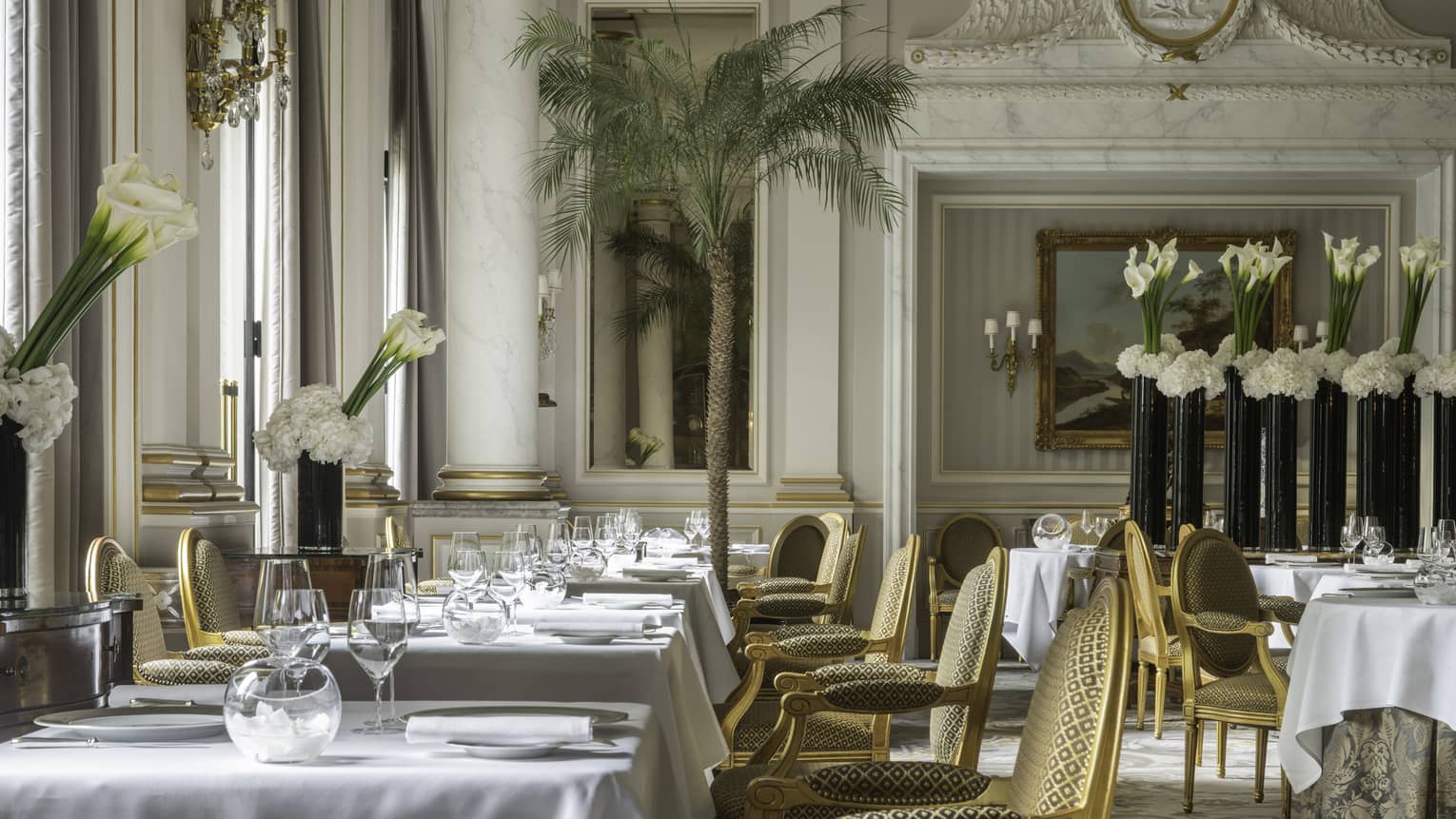
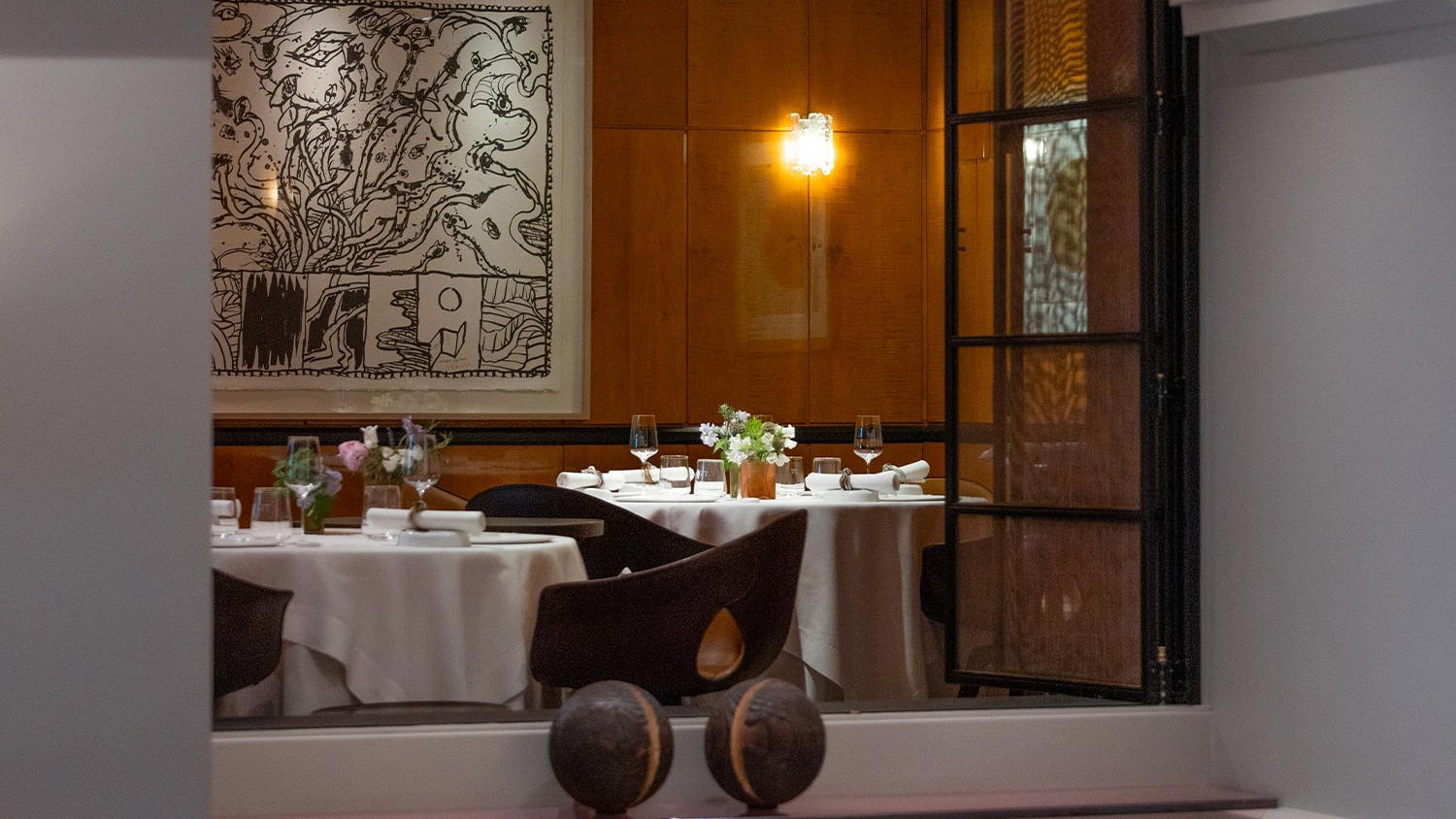
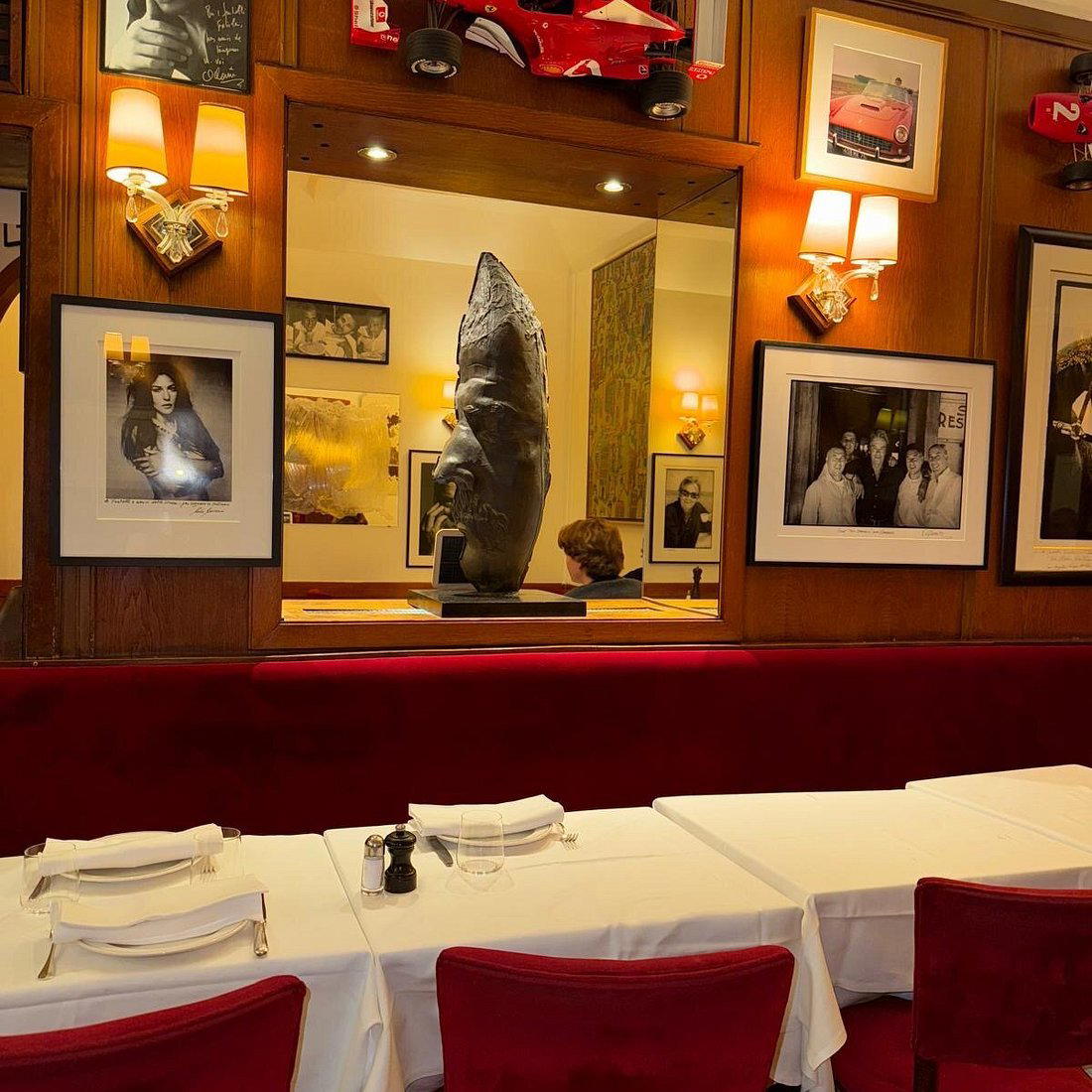
Le Stresa has occupied the same address on Rue Chambiges, steps from Avenue George V in Paris's 8th arrondissement, long enough to accumulate the kind of loyalty that Michelin stars alone cannot manufacture. The restaurant draws a clientele of regulars who return for the consistency of a room that has never needed to reinvent itself. For visitors, it represents a particular strain of Parisian dining that the city's more theatrical tables have largely left behind.

Pearl is the En Primeur Club membership app, where members save venues, book tables and use the concierge.
The menu
What to order
- Linguine with Truffle
- Pennette Belmondo
- Linguine Pasta Delon
- Artichoke Carpaccio
The Room That Doesn't Need to Impress You
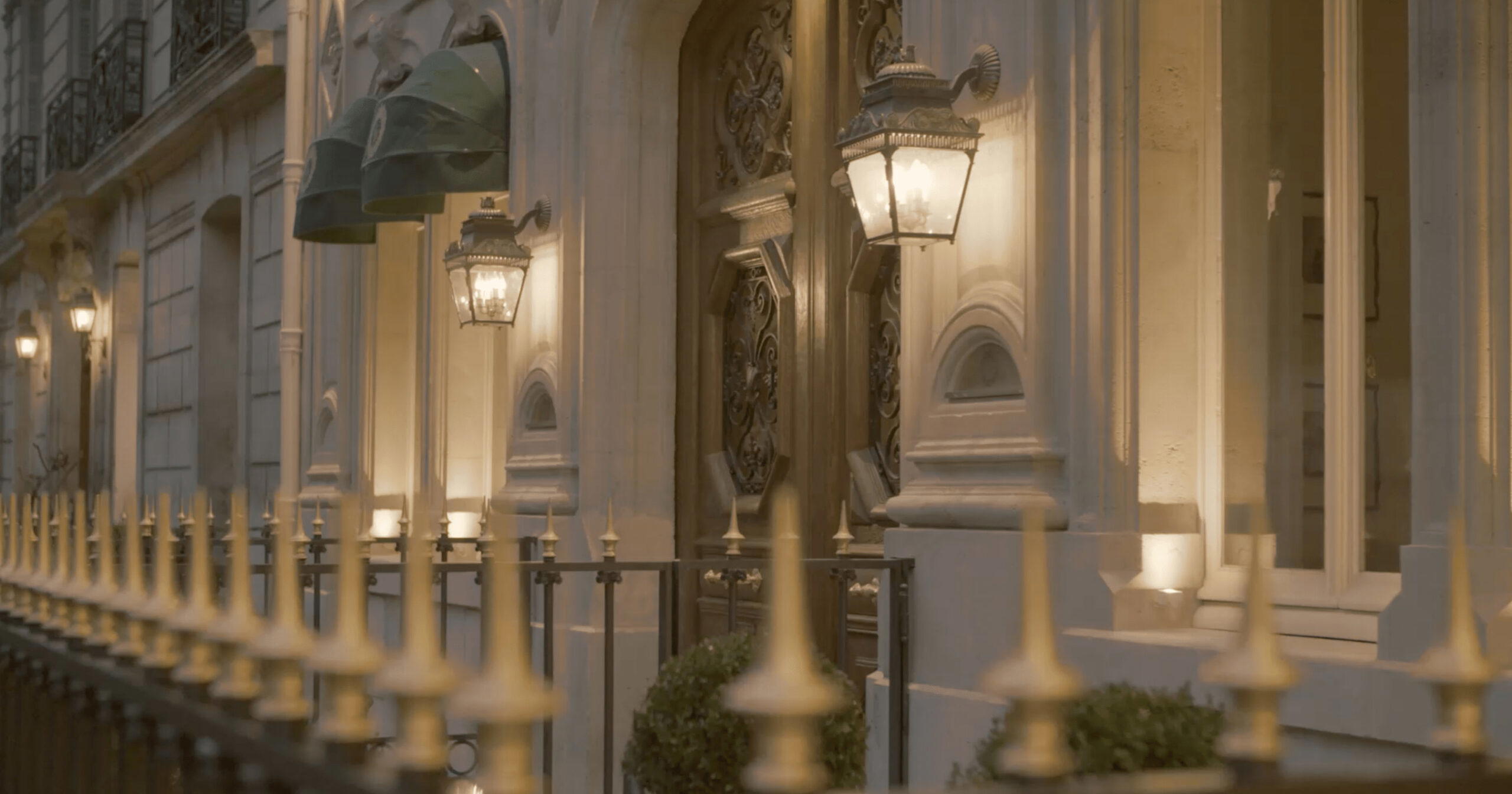
There is a category of Parisian restaurant that operates almost invisibly to the wider dining world, sustained entirely by people who already know where it is. Le Stresa, at 7 Rue Chambiges in the 8th arrondissement, belongs to that category. The street itself sits within a few minutes of Avenue George V and the Champs-Élysées corridor, a neighbourhood defined by hotel dining rooms with grand ambitions and prix-fixe menus built for occasion. Le Stresa has historically occupied a different register: the kind of room where the maître d' knows which table you prefer, and where the menu changes with the season rather than with the trends.
In a district where restaurants like Le Cinq at the Four Seasons Hôtel George V operate at the upper reaches of formal French dining, and where Alléno Paris au Pavillon Ledoyen has pushed the creative ceiling further still, the quieter neighbourhood tables fill a different function. They are the restaurants that locals actually use, week after week, without the framing of a special occasion.
What Keeps the Regulars Returning
The regulars at this type of 8th arrondissement address are not chasing novelty. The pull is consistency: a kitchen that produces the same dish to the same standard on a Tuesday lunch as on a Friday evening, and a room that holds its character without renovation cycles designed to generate press. This is a dining model that Paris has always supported in theory but increasingly struggles to sustain in practice, as property costs and labour pressures push smaller independent rooms toward either closure or reinvention.
What the regulars access that a first-time visitor does not is the unwritten menu: the dishes that don't appear on the printed card but arrive for those who ask, or for those the kitchen already knows. This is the intelligence that accumulates over years of visits and cannot be replicated by a single reservation. It is also what separates this kind of table from the more performative end of Parisian dining, where the experience is largely fixed regardless of who is sitting down.
The contrast is instructive when you consider what the 8th arrondissement's most decorated rooms offer. Kei, which holds three Michelin stars and applies Japanese technique to French classical structure, and L'Ambroisie on Place des Vosges, which operates at the pinnacle of classic French cuisine, both deliver tightly controlled experiences where the kitchen's vision takes precedence. The neighbourhood table runs on a different logic: the diner's history with the room matters as much as the kitchen's ambitions.
Le Stresa in the Context of Classic French Dining
Understanding Le Stresa requires understanding what classic Parisian restaurant culture looks like outside of the Michelin orbit. France's most discussed restaurants in the current decade tend to sit at either the technically ambitious end, represented by tables like Arpège with its produce-driven philosophy, or the destination end, where restaurants outside Paris such as Mirazur in Menton, Troisgros in Ouches, and Flocons de Sel in Megève draw visitors specifically for the cooking. The neighbourhood bistrot and traditional brasserie occupy a different position in French dining culture: institutions sustained by proximity and loyalty rather than by pilgrimage.
The French restaurant tradition has a long history of tables that functioned as extensions of their regulars' social lives, from the old bouchons of Lyon to the provincial auberges that still anchor towns like Illhaeusern, where Auberge de l'Ill has held its identity across generations, or Fontjoncouse, where Auberge du Vieux Puits functions as a destination in itself. The Parisian version of this model is compressed into a city block, and the regulars are drawn from the surrounding streets rather than from across the country.
In global terms, the comparison lands closest to what Le Bernardin in New York represents at its category ceiling, or what Paul Bocuse's Auberge du Pont de Collonges has meant as an institution rather than simply as a restaurant. The comparison is not about equivalence of ambition; it is about the role that consistency and longevity play in a restaurant's identity, separately from the critical apparatus that surrounds it.
Planning a Visit
Le Stresa sits at 7 Rue Chambiges in the 8th arrondissement, within walking distance of the Alma-Marceau and George V metro stations. The surrounding neighbourhood runs toward business and hotel dining, which means the room at this address has historically attracted a mix of local professionals and visitors staying nearby. Reservations are strongly advisable given the size typical of this class of restaurant, and a same-week booking may be difficult if the room is well-subscribed among its regular clientele. Dress expectations in this part of the 8th tend toward smart casual at minimum, with the room's character generally rewarding those who arrive with some degree of formality.
For broader context on where Le Stresa sits within the Paris dining scene, including the full range of options across arrondissements and price tiers, see our full Paris restaurants guide. Readers interested in French fine dining outside the capital will also find relevant context in our coverage of Bras in Laguiole, Assiette Champenoise in Reims, Au Crocodile in Strasbourg, and AM par Alexandre Mazzia in Marseille.
Frequently asked questions
What part of town is Le Stresa in?
Le Stresa is located at 7 Rue Chambiges, 75008 Paris, France, Paris.
What kind of clientele does Le Stresa Paris attract, and is it suitable for business dining?
Le Stresa's position on Rue Chambiges in Paris's 8th arrondissement places it at the centre of one of the city's most established residential and professional quarters, drawing a regular crowd from the surrounding neighbourhood rather than a transient dining public. That dynamic makes it well-suited to business meals where discretion and a settled room matter more than spectacle. The absence of a high-profile media presence is, for many of its regulars, precisely the draw.
What's the signature dish at Le Stresa?
Specific menu details for Le Stresa are not disclosed through public channels, which is consistent with the restaurant's low-profile character. The kitchen at this 8th arrondissement address is known for classical French cooking where repetition and precision matter more than seasonal reinvention. Regulars return for exactly that reliability, not for a rotating menu of showpieces.
Do I need a reservation for Le Stresa?
Given Le Stresa's address at 7 Rue Chambiges in one of Paris's most affluent residential quartiers, walk-in availability is limited, particularly at lunch when the surrounding neighbourhood draws a consistent local clientele. Booking ahead is the practical approach. The restaurant does not publish an online reservation system, so contact by phone or in person is the route most regulars use.
What makes Le Stresa worth seeking out?
Le Stresa occupies a distinct position in Paris's 8th arrondissement as a room that operates on loyalty rather than visibility. It sits outside the Michelin orbit and the tourist circuit, sustained by a clientele that already knows where it is. That structural insularity is itself the point: the kitchen doesn't need to perform for strangers, which tends to produce a more consistent plate for those who do find their way in.
Is Le Stresa good for vegetarians?
Le Stresa's menu composition is not publicly detailed, and the restaurant operates in a classical French tradition that has historically centred meat, fish, and stock-based cookery. Vegetarians with strict requirements should confirm options directly before visiting. The 8th arrondissement address at 7 Rue Chambiges is most reliably suited to those who eat across the full range of classical French cuisine.
Is Le Stresa good value for money?
Pricing at Le Stresa is not published, which is common for established Paris addresses of this type. As a classic French restaurant in the 8th arrondissement, a neighbourhood that includes some of the city's highest property values and most expensive dining rooms, expect the cost to reflect the location. Whether that represents value depends largely on how much weight you place on consistency, discretion, and a room that has not been recalibrated for outside approval.
Cost and Credentials
Comparable venues nearby, for context on price, style, and recognition.
| Venue | Cuisine | Price | Awards | Notes |
|---|---|---|---|---|
| Le StresaThis venue (the venue you are viewing) | Traditional Italian Trattoria | $50–100 | Not listed | Not listed |
| Casa Luca | Authentic Italian Trattoria | $30–50 | Not listed | Champs-Élysées, Authentic Italian Trattoria |
| Anna | Italian Wine Bar | Not listed | Gambero Rosso 2 Bottiglie | Haut Marais (Paris 3), Italian Wine Bar |
| Ozio | Italian Pizza & Pasta | Not listed | Not listed | 16th Arr. - Passy, Italian Pizza & Pasta |
| Mille Grazie | Regional Italian Pizzeria | $20–30 | Not listed | 15th arrondissement (Pasteur), Regional Italian Pizzeria |
| PICCOLA TOSCANA | Authentic Southern Italian Trattoria | $30–50 | Not listed | 9th Arrondissement (Opéra), Authentic Southern Italian Trattoria |