Michelin Bib Gourmand
Our verdict
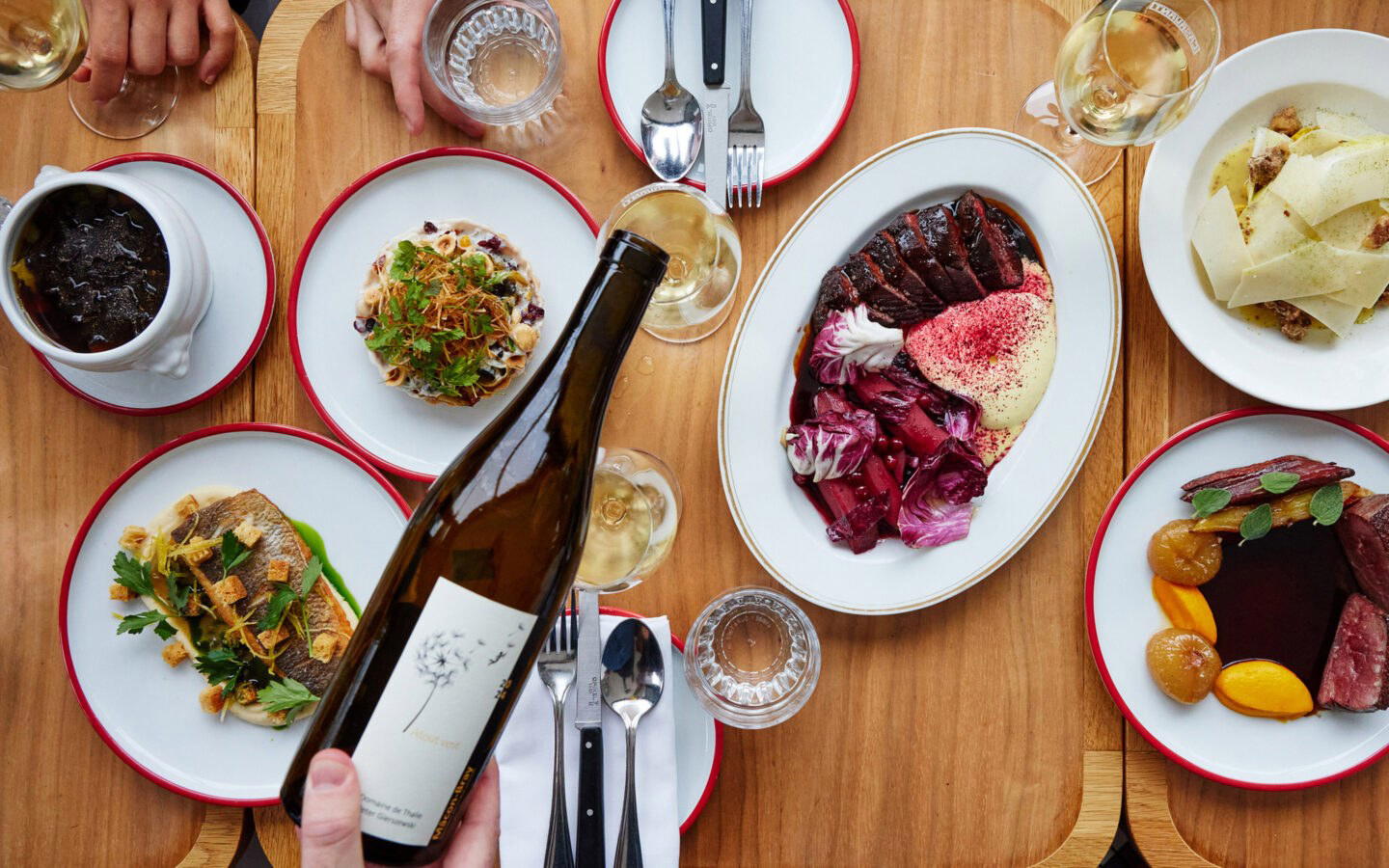
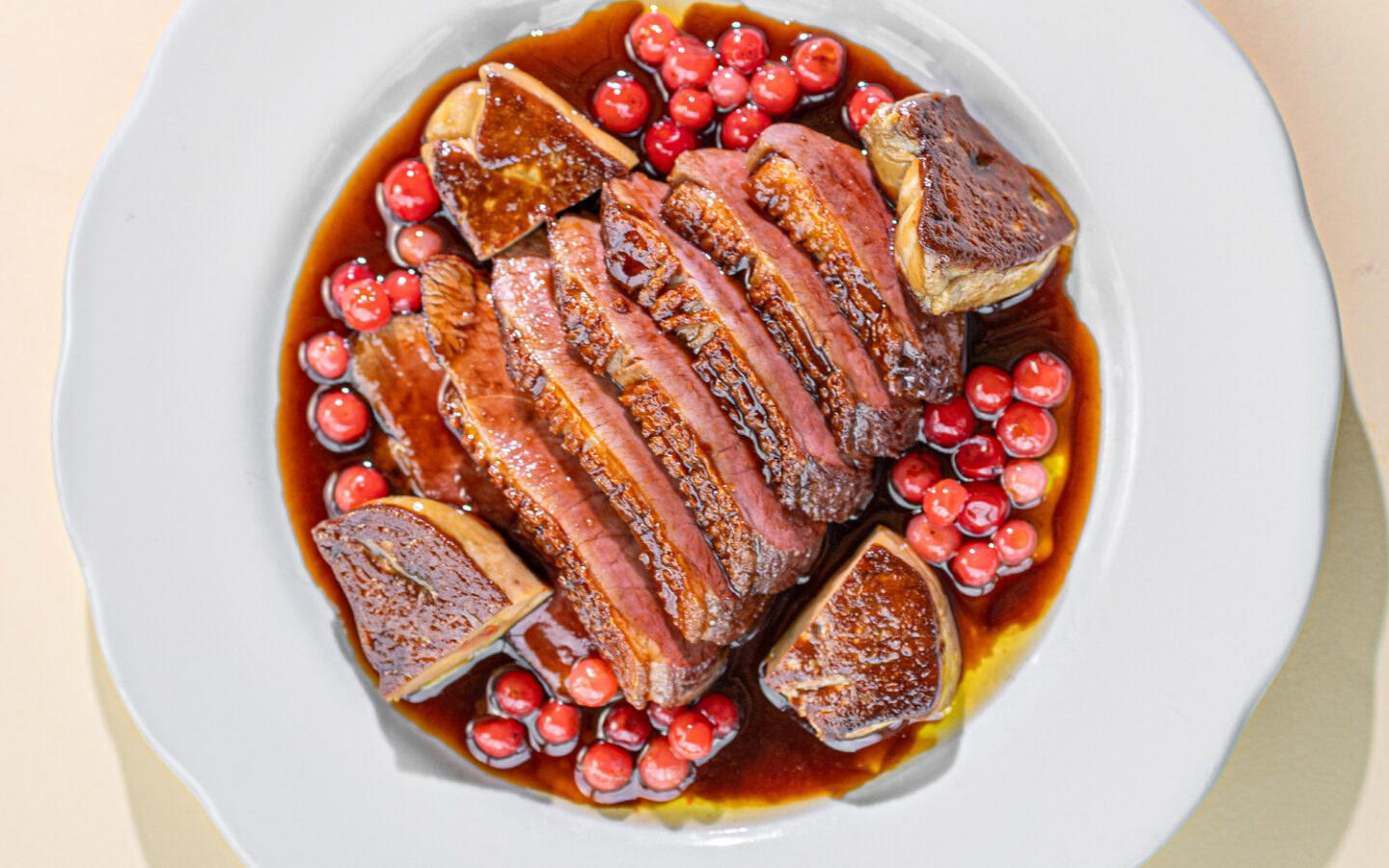
Fewer than a handful of Montreal restaurants operate at Le Petit Alep's intersection of price and pedigree. The Jean-Talon address delivers Syrian-Armenian cooking at the $$ tier, earning a Michelin Bib Gourmand in 2025. For Middle Eastern cooking outside the tasting-menu bracket, the value case is clear.

Pearl is the En Primeur Club membership app, where members save venues, book tables and use the concierge.
The menu
What to order
- Muhammara
- Hummus
- Fattoush
- Kebabs
- Terbialy shrimps
Jean-Talon's Middle Eastern Counter-argument
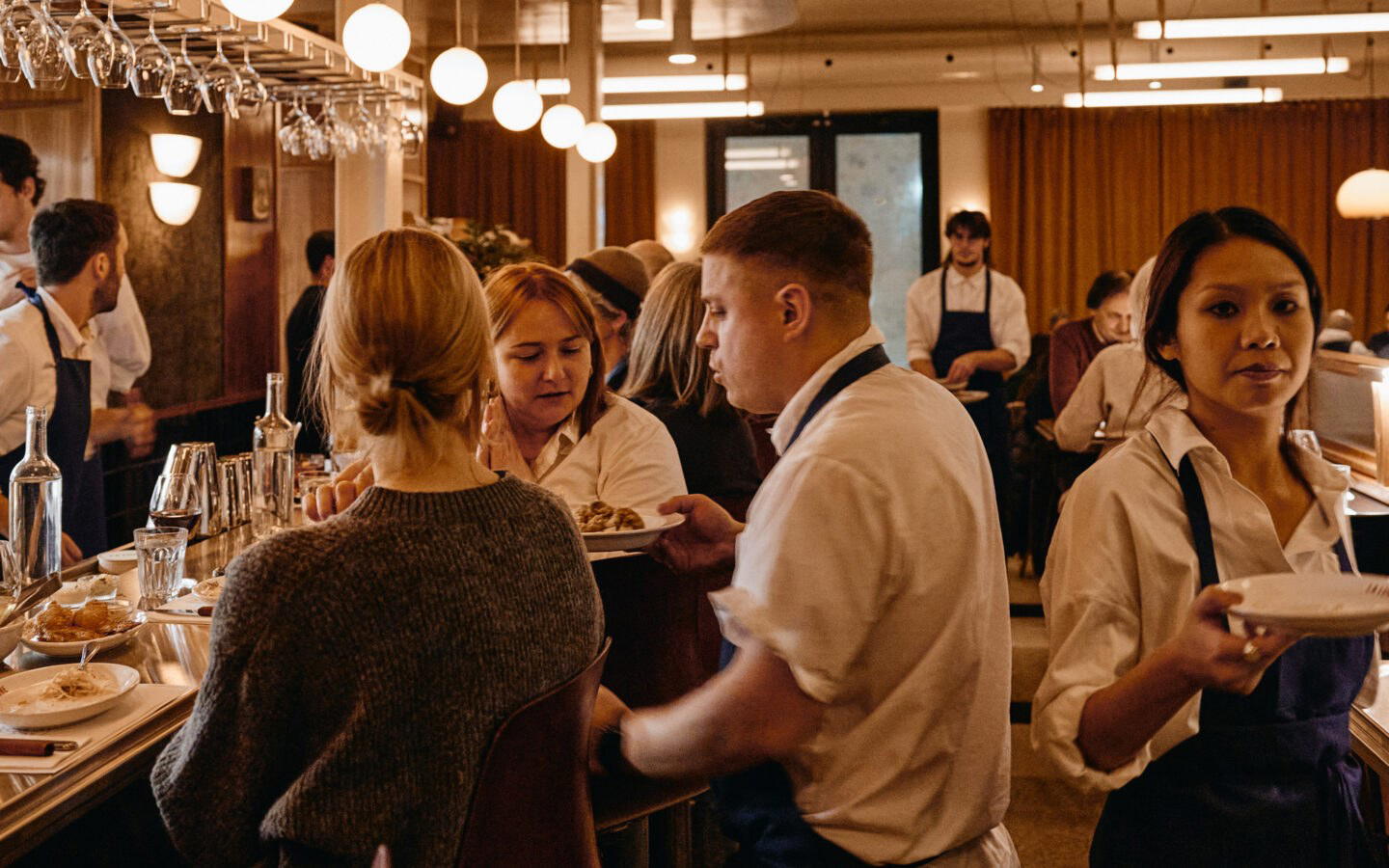
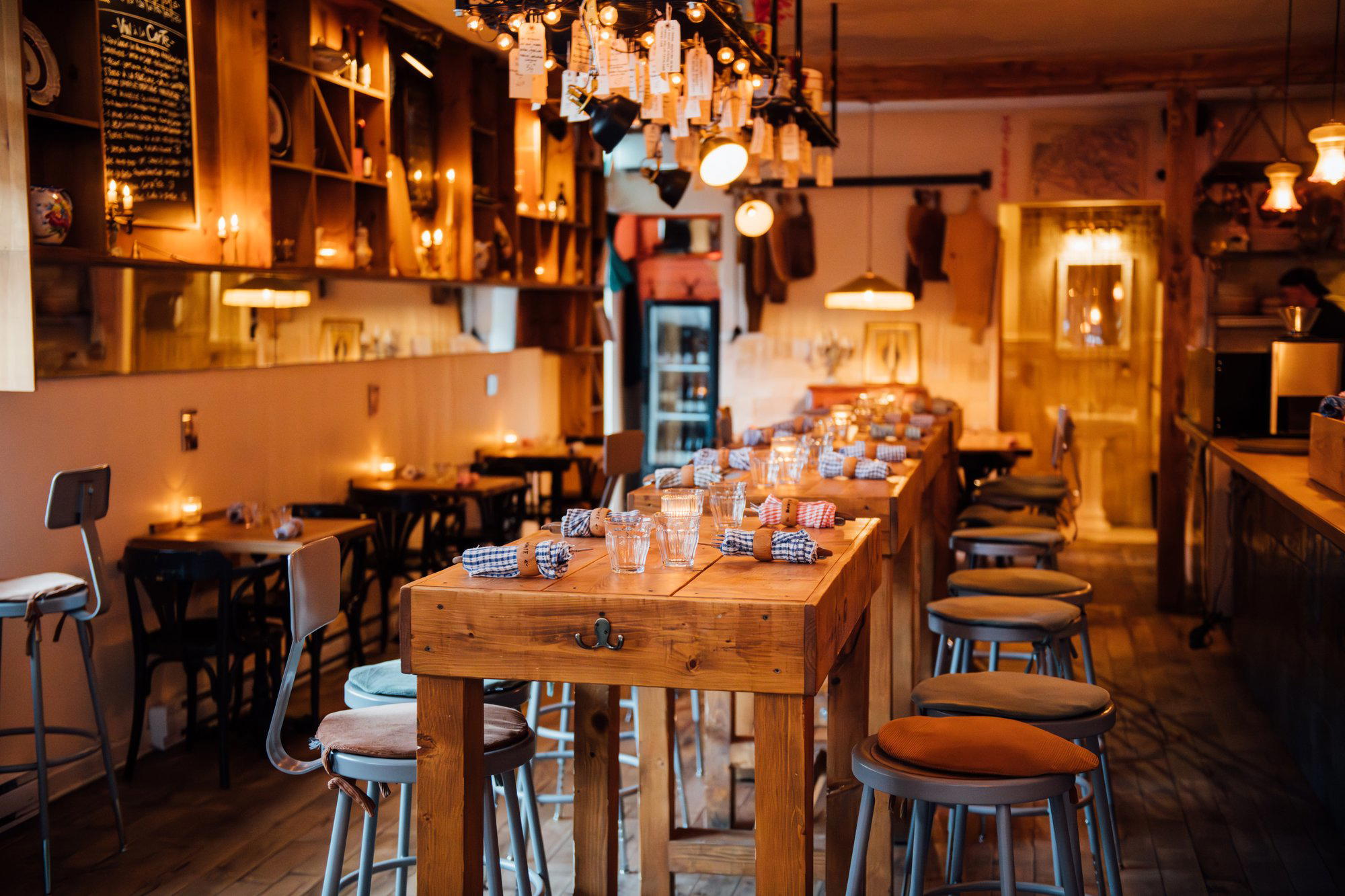
The stretch of Rue Jean-Talon east of Park Avenue operates on different culinary logic than the tasting-menu corridor running through Mile Ex and downtown. Rents are lower, neighbourhoods are denser with immigrant communities, and the restaurants tend to be accountable to regulars who eat there twice a week rather than tourists checking a list once a year. In that context, Le Petit Alep at number 191 fits precisely. The room is compact, the price point sits at $$, and the cooking is Syrian-Armenian, a specific culinary inheritance that shares vocabulary with the broader Levantine tradition but inflects it through the flavour memory of Aleppo, once one of the great food cities of the Arab world before the war scattered its cooks and their recipes across North America and Europe.
Montreal's Middle Eastern dining scene has a clear upper tier in Damas, which operates at a different price register and formal ambition. Le Petit Alep occupies the neighbourhood tier below that, not as a lesser version of the same idea but as a different proposition entirely: accessible everyday cooking anchored in a specific regional tradition, served without ceremony, priced for repetition. The 2025 Michelin Bib Gourmand, awarded for quality at a moderate price, not for tasting-menu theatrics, confirms that the trade-off is working.
The Syrian-Armenian Culinary Frame
Aleppo sits in northern Syria near the Turkish border, and the city's cooking reflects that geography: Armenian communities have lived there for centuries, Ottoman spice routes passed through, and the local kitchen absorbed influences from multiple directions without losing its own character. Aleppo pepper, fruity, moderately hot, with an oil-rich quality that differentiates it from generic chilli flakes, is the city's most exported flavour signal, now common in professional kitchens globally. But the broader Aleppan tradition goes further: kibbeh in multiple formats, muhammara (the roasted red pepper and walnut spread that Aleppo helped put on the map), slow-cooked lamb preparations, and a pastry tradition that draws on both Arab and Armenian techniques.
The editorial angle sometimes applied to this type of cooking is the Persian table framework, and it is worth being precise about where the overlap lies and where it ends. Iranian cooking and Syrian-Armenian cooking share a structural logic: both build around slow cooking, aromatic spice rather than heat-forward spice, and an emphasis on layered preparations where acid, fat, sweetness, and herbaceous notes are held in balance rather than pushed in a single direction. Saffron rice traditions, stew-based mains, the use of dried fruits and nuts in savoury dishes, these appear in both traditions. What differs is the specific spice vocabulary and the bread and meze culture, which in the Levantine tradition is more generous and socially central than in the Iranian context. At Le Petit Alep, the meze format positions the table as a shared space rather than an individual plate exercise, which aligns with how this category of cooking is meant to be experienced.
Where This Fits in Montreal's Dining Picture
Montreal's restaurant scene is often framed through its French heritage and its cluster of high-ambition modern cooking, venues like Jérôme Ferrer - Europea, Mastard, Sabayon, and Alma Montreal represent the city's ambitions in that direction. But the city's actual eating culture has always been shaped as much by its immigrant communities as by its fine dining aspirations, and the Jean-Talon corridor is where that becomes legible. The market at Jean-Talon itself is one of the leading arguments for the neighbourhood's food identity: a year-round covered market with Québec producers at its core, surrounded by restaurants and specialty shops that draw from a wide range of culinary traditions.
In the $$ tier specifically, Le Petit Alep competes differently than the French bistro category represented by L'Express or the deli category anchored by Schwartz's. Those venues operate within established Montreal typologies with deep local expectation built around them. Le Petit Alep operates within a global culinary tradition that is less mapped in the local critical conversation but no less specific in its demands. The Bib Gourmand in 2025 brings it into a broader frame, alongside Michelin-recognised addresses like Tanière³ in Québec City and Alo in Toronto at higher price tiers, and peer-level Bib addresses across the country, which places Montreal's neighbourhood Middle Eastern cooking on an international quality register for the first time in a formal sense.
For a wider view of what that Michelin recognition means for the city's restaurant portfolio in 2025, the full Montreal restaurants guide maps the broader picture. If the trip extends to comparable regional cooking internationally, Bait Maryam in Dubai and Baron in Doha represent the Gulf's approach to the same Levantine tradition at a different price point and scale.
Planning a Visit
The address at 191 Rue Jean-Talon E places the restaurant in the Villeray-Saint-Michel-Parc-Extension borough, a short walk from the Jean-Talon metro station on the Orange Line. The neighbourhood rewards arriving with time to walk: the market is nearby, and the surrounding blocks give a clearer picture of the area's food culture than any single restaurant could. For context on where to stay while eating through this part of the city, the Montreal hotels guide covers the relevant options. The Montreal bars guide and Montreal experiences guide round out the picture for a longer visit, and the Montreal wineries guide covers the province's wine scene for those extending into Québec's wine country. Beyond Montreal, AnnaLena in Vancouver, Narval in Rimouski, The Pine in Creemore, and Restaurant Pearl Morissette in Lincoln represent the range of what serious Canadian cooking looks like outside the major urban centres.
Frequently asked questions
What distinctions does Le Petit Alep have?
Le Petit Alep has received recognition including: Michelin Bib Gourmand (2025).
What does dinner at Le Petit Alep typically cost?
Pricing at Le Petit Alep is listed as $$.
What should I order at Le Petit Alep?
Le Petit Alep earned its 2025 Michelin Bib Gourmand on the strength of Syrian-Armenian cooking rooted in Aleppan tradition, so the menu's through-line is that northern Syrian and Armenian culinary overlap. The Bib Gourmand designation specifically recognises good cooking at a moderate price, placing the kitchen in a category where value and craft run together rather than apart. Given the $$ price range, this is a counter where ordering broadly across the menu is financially reasonable, a practical advantage over Montreal's higher-ambition tasting rooms. For specific dish recommendations on a given visit, checking in with the room on arrival will be more reliable than any fixed list.
How would you describe the cuisine at Le Petit Alep?
Where is Le Petit Alep in Montreal?
Le Petit Alep is located at 191 Rue Jean-Talon E, Montréal, QC H2R 1S8, Montreal.
The Minimal Set
Comparable venues nearby, for context on price, style, and recognition.
| Venue | Cuisine | Price | Awards | Notes |
|---|---|---|---|---|
| Le Petit AlepThis venue (the venue you are viewing) | Syrian and Armenian Mezze | $30–50 | Michelin Bib Gourmand | Not listed |
| Parapluie | French-inspired Bistro | $50–100 | Michelin Bib Gourmand · Canada's 100 Best Restaurants #56 | District de Saint-Édouard, French-inspired Bistro |
| Salle Climatisée | Modern French Bistro | $50–100 | Michelin Plate · Canada's 100 Best Restaurants #43 | District de Saint-Édouard, Modern French Bistro |
| Leméac | Classic French Brasserie | Not listed | Michelin Plate | Outremont, Classic French Brasserie |
| Abu el zulof | Authentic Lebanese & Syrian | Not listed | Not listed | Golden Square Mile, Authentic Lebanese & Syrian |
| Menthe et couscous | Moroccan Mediterranean | $30–50 | Not listed | Quartier Latin, Moroccan Mediterranean |
Recognition history
Dated appearances from independent guides and award organizations, with the underlying list record or original source where available.
Michelin Bib Gourmand
Michelin
Full recognition history (2 entries)
Michelin Bib Gourmand
Michelin