Our verdict
A roadside auberge on the Route de Pauillac in the Médoc village of Arcins, Le Lion d'Or occupies a particular niche in the Bordeaux wine country dining scene: the kind of place where château owners, négociants, and passing travellers share the same dining room. The setting is resolutely provincial, the context anything but — this is one of the more compelling addresses for understanding how the Médoc actually eats.

Pearl is the En Primeur Club membership app — saves, bookings, and concierge access live there. Same editors, same standards.
- Address
- 11 Rte de Pauillac, 33460 Arcins, France
- Phone
- +33556589679
- Hours
- Mon ClosedTue–Sat 12–2 PM, 7:30–9:30 PMSun Closed
- Website
- leliondor-arcins.fr
- Directions
- Get directions
The menu
What to order
- Raviole médocaine
- Tête de veau ravigote
- Canelé du lion d'or
Eating in the Médoc: The Auberge as an Institution
The Route de Pauillac runs like a spine through the Médoc, threading past classified châteaux and flat vine rows before arriving in Arcins, a village small enough that Le Lion d'Or is effectively its dining room. This is the kind of address that France's provincial restaurant tradition does better than almost anywhere else: a room where the geography is the point, where what arrives on the table is a direct argument for the land surrounding it.
Across the great appellations of Bordeaux, the relationship between wine and food has long been more agricultural than theatrical. The grands crus are sold at auction and poured in dining rooms from Alléno Paris au Pavillon Ledoyen to Le Bernardin in New York City, but the Médoc itself eats plainly and well. A roadside auberge on the D2 is not where you come for architectural plating or multi-course progression in the mode of Mirazur in Menton. You come because the sourcing is local, the wine list is serious, and the room has been feeding this specific stretch of Gironde for years.
The Sourcing Argument: Why the Médoc Table Looks Like This
The Médoc's agricultural identity is almost entirely viticultural. The appellation system has organised the land around a single, high-value crop, which means the vegetables, proteins, and dairy that appear on a table like Le Lion d'Or's are pulled from the broader Gironde basin, from the estuary's fishing grounds, and from the livestock-raising country to the east and south. This is not an abstraction: it produces a specific regional grammar on the plate.
Estuary lamb from the salt marshes of Pauillac, the agneau de Pauillac with its AOC designation and its unusually delicate fat profile from grazing on salt-tolerant grasses, is the Médoc's most argued-over ingredient. It has the same appellation logic as the wines alongside it: a specific place producing a specific flavour. Where restaurants in Paris or Lyon might reference it as a prestige import, a table sitting three kilometres from where that lamb grazes operates on entirely different terms. The same logic applies to the estuary's shad, lamprey, and the seasonal seafood that moves up from Arcachon and the Atlantic coast.
This proximity-to-source model is not unique to the Médoc, but it is unusually legible here. The flat, highly mapped terrain of the appellation means you can trace the provenance of almost everything on the table to named land within a short radius. Compare this to the sourcing narrative at, say, Bras in Laguiole or Auberge du Vieux Puits in Fontjoncouse, where the kitchen's sourcing radius is defined by a similarly intimate relationship with an upland or garrigue terrain. The regional auberge tradition in France consistently returns to this model: the land defines the menu, not the other way around.
The Room and the Context
The physical experience of Le Lion d'Or is rooted in the auberge format rather than the gastronomy temple. Provincial France developed a distinct dining typology in the postwar decades: the roadside inn that serves as a social anchor for a working agricultural community while also drawing an outside audience. The great examples of this form, from Auberge de l'Ill in Illhaeusern to Georges Blanc in Vonnas, began as this kind of local institution before accumulating recognition. Le Lion d'Or in Arcins occupies an earlier point on that same continuum: known to the local wine trade, to travelling buyers during en primeur week, and to the broader Bordeaux dining circuit, without having crossed over into the internationally curated tier.
During the en primeur campaign each spring, the traffic through Arcins increases sharply. Négociants and international buyers move between châteaux along the D2, and a well-positioned table on that route becomes useful in a way that has nothing to do with Michelin arithmetic. The dining room at Le Lion d'Or sits at precisely that intersection of function and pleasure that defines the best of the French provincial tradition.
Placing Le Lion d'Or in the Bordeaux Dining Circuit
The Bordeaux region's fine dining conversation is largely concentrated in the city itself, with a separate cluster of gastronomic destinations along the Atlantic coast, represented by addresses like Christopher Coutanceau in La Rochelle. The Médoc's own restaurant offer is deliberately thinner: the appellation's reputation rests on what goes into the bottle, not what goes on the plate, and most visitors treat the wine country as a place to drink rather than a destination in its own right for food.
That creates a genuine gap in the market for a table like this one. While three-star ambition in France increasingly concentrates in urban settings or celebrated rural destinations like Flocons de Sel in Megève or Troisgros - Le Bois sans Feuilles in Ouches, the Médoc has room for a more direct proposition: honest regional cooking, a wine list drawn from the surrounding appellations, and a room that operates as the social glue for a wine-producing community. There are very few French wine regions where you can eat in that specific way, surrounded by the vineyards that produced what you're drinking. It is a different kind of dining argument from the one made at Assiette Champenoise in Reims or AM par Alexandre Mazzia in Marseille, but not a lesser one.
For a broader sense of where Le Lion d'Or sits in the regional picture, see our full Arcins restaurants guide. Those planning a wider Bordeaux and south-west France circuit might also consider how the Médoc table compares to L'Oustau de Baumanière in Les Baux or the coastal sourcing logic at La Marine in Noirmoutier-en-l'île, both of which represent the same tradition of place-driven French cooking with different regional accents.
Planning a Visit
Arcins sits on the D2 between Margaux and Moulis-en-Médoc, roughly 30 kilometres north of Bordeaux. The most practical approach is by car, either directly from Bordeaux or as part of a circuit through the appellation. The en primeur period in early April concentrates demand considerably, and arriving without a prior call during that window is a gamble. Outside the spring campaign, the rhythm is quieter and the room more accessible. Those combining a visit with château appointments should note that the midday service aligns well with a morning of tasting; the Médoc's wine calendar rewards exactly that kind of planning. Confirm hours and booking details directly with the restaurant before visiting.
Frequently asked questions
What's the overall feel of Le Lion d'Or?
Le Lion d'Or operates in the auberge tradition rather than the gastronomy-temple mode that dominates Bordeaux city's fine dining circuit. The address — 11 Route de Pauillac in Arcins — places it physically between Margaux and Moulis-en-Médoc, which sets the tone: this is a working wine-country stopover, shaped by the rhythms of the appellation rather than urban restaurant culture.
Is Le Lion d'Or a good restaurant to visit after touring Médoc châteaux?
Le Lion d'Or in Arcins sits directly on the D2 — the road that connects the major Médoc appellations — which makes it a natural break point on a château circuit rather than a dedicated dining destination requiring its own trip. The auberge format is calibrated to exactly that kind of visit: a mid-route meal between Margaux and the northern communes, without the formality of a city reservation.
What should I order at Le Lion d'Or?
What the Médoc table typically offers at establishments of this format is grounded in the region's agricultural production — lamb from Pauillac, Atlantic seafood moving inland, and dishes calibrated to accompany the classified wines produced within a few kilometres of the dining room.
Where is Le Lion d'Or located?
Le Lion d'Or is located at 11 Rte de Pauillac, 33460 Arcins, France.
What makes Le Lion d'Or worth seeking out?
The case for Le Lion d'Or is primarily one of position: it occupies the auberge role on a stretch of the Médoc that is otherwise organised entirely around viticulture. The Route de Pauillac passes classified châteaux with no comparable dining anchor between Margaux and Moulis-en-Médoc, which gives Le Lion d'Or in Arcins a function that no amount of city restaurant density replicates.
How Le Lion d'Or Arcins compares with similar nearby venues.
| Venue | Cuisine | Price |
|---|---|---|
| Le Lion d'OrThis venue — the venue you are viewing | Traditional French Médoc Bistro | $20–30 |
| Au Marquis de Terme | Modern Cuisine | Not listed |
| Nomade | Creative | Not listed |
| Château Cordeillan-Bages | French | Not listed |
| Café Lavinal | French | Not listed |
Continue exploring
More in Arcins
Restaurants in Arcins
Browse all →
Bars in Arcins
Browse all →
Hotels in Arcins
Browse all →
Details
- Classic
- Cozy
- Rustic
- Special Occasion
- Historic Building
- Extensive Wine List
- Local Sourcing
- A La Carte
Current opening hours
- Monday
- Closed
- Tuesday
- 12–2 PM, 7:30–9:30 PM
- Wednesday
- 12–2 PM, 7:30–9:30 PM
- Thursday
- 12–2 PM, 7:30–9:30 PM
- Friday
- 12–2 PM, 7:30–9:30 PM
- Saturday
- 12–2 PM, 7:30–9:30 PM
- Sunday
- Closed
Hours can change for holidays and private events. Last verified .
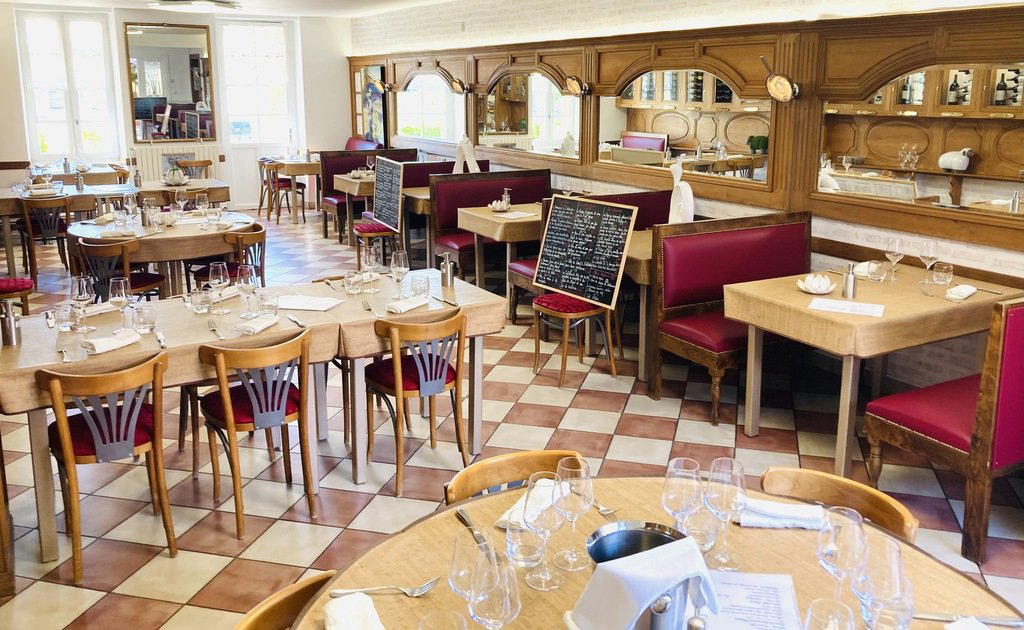
Charming country bistro atmosphere with molded wood paneling, large mirrors, wine cabinets, and well-napped tables creating a convivial and timeless feel.