Le Colonel occupies a quiet address on Avenue de Lowendal in the 15th arrondissement, a district where serious cooking tends to accumulate without the fanfare of the more-touristed Right Bank. The restaurant sits in a tier of Parisian dining where menu architecture and kitchen discipline carry more weight than celebrity décor, making it a reference point for diners who track the city's less-publicized fine dining circuit.
Pearl is the En Primeur Club membership app — saves, bookings, and concierge access live there. Same editors, same standards.
- Address
- 29 Av. de Lowendal, 75015 Paris, France
- Phone
- +33143062306
- Website
- restaurant-lecolonel.fr
- Directions
- Get directions
 Saves & bookings on Pearl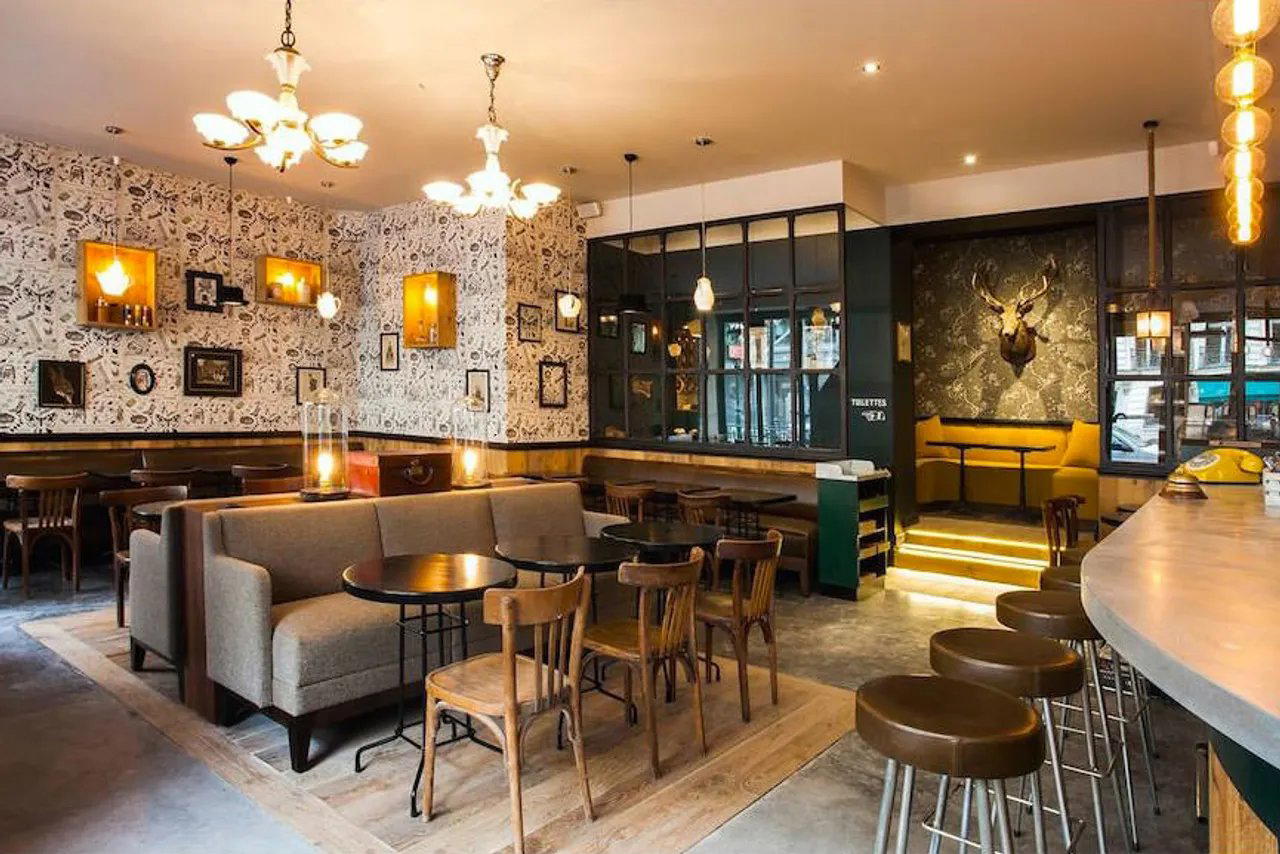
The 15th and What It Signals
Paris's 15th arrondissement has long operated as a counterweight to the gilded restaurant addresses of the 8th and 1st. Where Le Cinq at the Four Seasons George V or Alléno Paris at Pavillon Ledoyen command their authority partly through setting and institution, the 15th rewards a different kind of attention. It is a residential arrondissement, dense with Parisian life rather than tourism infrastructure, and the dining rooms that succeed here tend to do so through kitchen consistency and a loyal local clientele rather than destination spectacle. Avenue de Lowendal, where Le Colonel sits at number 29, runs southeast from the Champ-de-Mars toward the Invalides axis, placing the restaurant in a quieter pocket of an already-understated district.
This geography matters to how a restaurant like Le Colonel positions itself within the broader Paris dining hierarchy. The city's serious fine dining circuit is not confined to the triangle formed by the Palais-Royal, the 8th, and the Marais. A significant portion of disciplined cooking in Paris happens in exactly these kinds of residential pockets, where rents are lower, the room is calmer, and the kitchen can focus on the plate rather than the theater of arrival.
Menu Architecture as Editorial Statement
The way a restaurant structures its menu is rarely accidental at this level of the market. In Paris, where the tasting menu format has both champions and skeptics, the choice of how to present the kitchen's work, à la carte freedom versus curated progression, three courses versus seven, wine pairing integrated or optional, reflects a set of culinary commitments that shape the entire dining experience before a single dish arrives.
French haute cuisine has historically organized itself around a logic of escalation: amuse-bouches giving way to cold starters, then fish, then meat, then cheese, then dessert, each course a deliberate step in a composed sequence. This architecture still defines much of what happens at addresses like Arpège and L'Ambroisie, where the menu's internal logic is as considered as any individual dish. The question for a restaurant operating in a less hypervisible part of the city is whether to align with that tradition or to find a more compressed, accessible format that serves a clientele that may be eating here regularly rather than as a once-a-year occasion.
Across France, this tension between the grand progression and the more focused bistro-inflected format has produced particularly interesting restaurants of the past decade. Flocons de Sel in Megève and Bras in Laguiole both operate within established fine dining structures while allowing the specific terroir of their regions to dictate the menu's internal rhythm. In Paris, the equivalent move is often to let the market and the season do the same work, a tightly seasonal menu that changes frequently enough to keep regulars returning.
Where Le Colonel Sits in the Paris Competitive Set
The relevant peer group for a restaurant at this address in the 15th is not the same as the group that includes Kei or the three-Michelin-star circuit of the Right Bank. The competitive set here is the layer of Parisian dining that operates just below or adjacent to institutional recognition: serious kitchens with strong local reputations, menus that reflect genuine culinary thinking, and rooms that attract the kind of diner who reads the guides but does not require a starred table to feel the evening was worthwhile.
This tier of the market is where the honest assessment of a city's cooking culture happens. The grand addresses, from Paul Bocuse's Auberge du Pont de Collonges to Mirazur in Menton, carry the weight of accumulated recognition and international pilgrim traffic. The restaurants in the middle tier carry only what they cook. For a diligent Paris visitor building an itinerary that extends beyond the obvious references, the 15th's better tables represent some of the more reliable value in the city's fine dining spectrum.
It is worth mapping the restaurant against what the neighborhood itself has produced over the years. The 15th has historically been fertile territory for serious French cooking with less visibility than its results merit, a pattern that applies equally to Assiette Champenoise in Reims or Au Crocodile in Strasbourg, restaurants that built sustained reputations in cities and neighborhoods that required diners to travel deliberately rather than stumble in.
The Broader French Context
French fine dining in 2024 operates under a set of pressures that affect every restaurant in this tier. The post-pandemic normalization of shorter menus and more flexible pricing, combined with the continued dominance of the tasting-menu format at the highest levels, has created an interesting bifurcation. Restaurants that commit fully to the grand format, like Troisgros in Ouches or Auberge de l'Ill in Illhaeusern, can command the full ceremony and price point that comes with it. Restaurants that want to serve their neighborhood as well as destination diners have to find a different balance.
This is the context in which a restaurant on Avenue de Lowendal makes its choices. The French dining public has become more sophisticated about what it expects from a serious neighborhood address: the kitchen should be doing something more than serviceable brasserie work, but the room should not demand the same psychological and financial commitment as an evening at Auberge du Vieux Puits in Fontjoncouse. Getting that calibration right is its own form of culinary precision.
For diners building a Paris itinerary with international reference points, the comparison to the French rooms at Le Bernardin in New York or the composed progression at Atomix is instructive: both demonstrate how a clearly articulated menu architecture can carry an evening's narrative without the need for theatrical setting. The 15th's better restaurants operate on a similar principle, just with a Parisian residential quietness replacing Manhattan's energy.
Know Before You Go
- Address: 29 Avenue de Lowendal, 75015 Paris, France
- Arrondissement: 15th (residential, southwest Paris)
- Nearest landmarks: Champ-de-Mars, Les Invalides
- Booking: Recommended
- Price range: About $25 per person
- Hours: Mon-Sun 11:30 AM-10:30 PM
City Peers
Comparable venues nearby, for context on price, style, and recognition.
| Venue | Cuisine | Price | Notes |
|---|---|---|---|
| Le ColonelThis venue — the venue you are viewing | Neapolitan Pizza & Italian Brasserie | $$ | Not listed |
| La Manifattura | Authentic Neapolitan Pizza | $$ | Montparnasse |
| Come a Casa | Authentic Italian Homestyle | $$ | 11th Arr. - Popincourt |
| Fellini | Authentic Italian Trattoria | $$ | Les Halles |
| Ober Mamma | Authentic Neapolitan Trattoria | $$ | Oberkampf |
| Romantica Caffè | Authentic Italian with tableside pasta flambé | $$ | 16th Arr. - Passy |
Continue exploring
More in Paris
Restaurants in Paris
Browse all →
Bars in Paris
Browse all →
Hotels in Paris
Browse all →



At a Glance
- Classic
- Cozy
- Casual Hangout
- Group Dining
- Family
- Business Dinner
- Terrace
- Standalone
- Beer Program
Current opening hours
- Monday
- 11:30 AM–10:30 PM
- Tuesday
- 11:30 AM–10:30 PM
- Wednesday
- 11:30 AM–10:30 PM
- Thursday
- 11:30 AM–10:30 PM
- Friday
- 11:30 AM–10:30 PM
- Saturday
- 11:30 AM–10:30 PM
- Sunday
- 11:30 AM–10:30 PM
Hours can change for holidays and private events. Last verified .
Warm and inviting with Art Deco posters, vintage objects, and period tiles creating an old-fashioned yet charming atmosphere.