Le Binôme
Le Binôme sits in the heart of Vimoutiers, a market town in the Pays d'Auge whose agricultural calendar has shaped Norman cooking for centuries. The address places it squarely inside one of France's most productive dairy and apple-growing corridors, where ingredient sourcing is less a philosophy than a geographic fact. For anyone tracing serious regional French cooking beyond the restaurant capitals, Vimoutiers is a logical stop.
Pearl is the En Primeur Club membership app — saves, bookings, and concierge access live there. Same editors, same standards.
- Address
- 3 Rue du Quatorze Juin, 61120 Vimoutiers, France
- Phone
- +33233129344
- Directions
- Get directions
 Saves & bookings on Pearl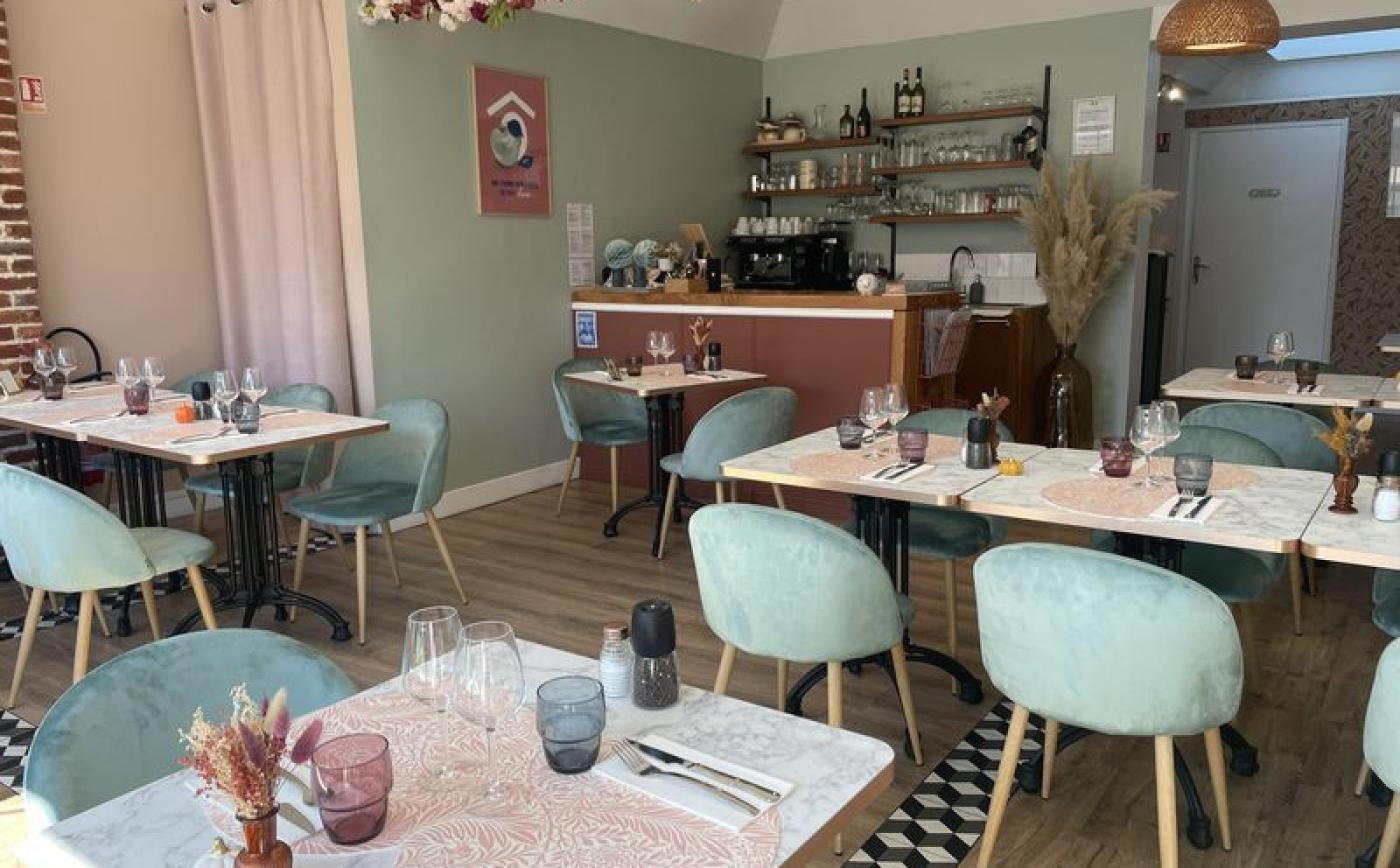
A Norman Market Town and What It Puts on the Table
Vimoutiers sits at the southern edge of the Pays d'Auge, the corridor of bocage and river valleys that supplies a disproportionate share of France's most recognisable agricultural products. Within a short radius of the town, the appellation zones for Camembert de Normandie, Calvados Pays d'Auge, and Pommeau de Normandie all converge. In a region where the gap between farm and kitchen can be measured in kilometres rather than supply-chain links, what a cook chooses to put on the plate is partly decided before a menu is written. Le Binôme, at 3 Rue du Quatorze Juin, operates inside that context.
The building sits on a quiet street near the town centre, in the kind of Norman streetscape where the architecture is functional and undemonstrative, render and slate, modest storefronts, a market square within walking distance. Approaching on foot from the centre, there is none of the theatrical staging that accompanies destination restaurants in the larger cities. The signal here is the address itself: a small restaurant in a working agricultural town tends to live or die by what its region produces, not by imported produce dressed with creative technique.
The Pays d'Auge as a Sourcing Territory
France organises its gastronomic reputation around Paris and a cluster of highly decorated provincial addresses, from the multi-starred rooms of Alléno Paris au Pavillon Ledoyen in Paris and Mirazur in Menton to the long-established country houses like Auberge de l'Ill in Illhaeusern and Bras in Laguiole. Between those poles sits a quieter category: the town restaurant that draws on a specific, highly productive terroir without the infrastructure or the ambition of destination dining. Normandy is particularly well suited to this format. Its dairy herds produce cream and butter that are foundational to the French kitchen; its orchards supply cider, Calvados, and Pommeau; its coast, reachable within an hour from Vimoutiers, adds shellfish and fish to the inland larder. A restaurant working honestly within that geography has access to ingredients that kitchens in Paris spend considerably more effort and money to procure.
The Camembert connection is especially visible among the. The town of Camembert itself is less than ten kilometres from Vimoutiers, and the area's dairy culture runs through the region's food in ways that go well beyond a cheese course. Cream sauces, butter-enriched stocks, and fermented dairy preparations are structural elements of Norman cooking, not garnishes. Restaurants in this part of the Orne department are working with those materials at short provenance distances, which tends to show in the texture and flavour of finished dishes in ways that are difficult to replicate at scale.
How Small-Town Norman Restaurants Differ from the Destination Circuit
The decorated restaurants of provincial France, places like Flocons de Sel in Megève, Troisgros - Le Bois sans Feuilles in Ouches, or Georges Blanc in Vonnas, operate within a different economic and logistical register. They are built around multi-course tasting formats, wine lists of significant depth, and room counts that justify the overhead. The town restaurant in a market centre like Vimoutiers sits closer to a different French tradition: the auberge or the table d'hôte, where the value proposition is regional specificity and honest execution rather than ambition and spectacle. That is not a lesser ambition; it is a different one, and France's food culture has historically been as serious about the latter as the former.
For comparison, the sourcing rigour that defines celebrated addresses like Christopher Coutanceau in La Rochelle or La Marine in Noirmoutier-en-l'île, both of which built reputations on coastal terroir, is the same underlying discipline applied to a maritime context. In Normandy's interior, the equivalent logic points toward the dairy farm, the orchard, and the river rather than the harbour. The leading meals in this part of France tend to reflect that logic clearly.
Planning a Visit to Vimoutiers
Vimoutiers is accessible from Caen in roughly an hour by road, and from Paris via the A13 motorway to Lisieux, then south through the Pays d'Auge, a drive of approximately two and a half hours. The surrounding area warrants time beyond a single meal: the Calvados distilleries of the Pays d'Auge AOC zone, the Camembert museum in Vimoutiers itself, and the apple orchards that define the autumn agricultural calendar all sit within easy reach.
For context on how the wider French fine dining scene is structured, addresses like Assiette Champenoise in Reims, Au Crocodile in Strasbourg, Auberge du Vieux Puits in Fontjoncouse, L'Oustau de Baumanière in Les Baux, AM par Alexandre Mazzia in Marseille, and Paul Bocuse - L'Auberge du Pont de Collonges in Collonges-au-Mont-d'Or each anchor their respective regions with different formats and different relationships to local produce. Le Binôme operates on a smaller scale and in a less trafficked territory, which is part of what makes it worth tracking for readers who follow French regional cooking seriously. Internationally, the sourcing-first approach that defines this kind of Norman address has parallels in committed city restaurants like Le Bernardin in New York City and Atomix in New York City, though the scale and format differ substantially.
Comparable Venues
Comparable venues nearby, for context on price, style, and recognition.
| Venue | Cuisine | Price | Notes |
|---|---|---|---|
| Le BinômeThis venue — the venue you are viewing | Modern French Bistro | $$ | Not listed |
| Horace | Modern Normandy French Bistro | $$ | Vaugueux |
| Le Bretagne | Traditional French Terroir Bistro | $$ | Centre-ville |
| Bistrot Marcele | French Bistro Classics | $$ | Trouville-sur-Mer |
| L'épi'Curieux | Modern French Bistronomy | $$ | Cité Plantagenêt |
| Moments | Seasonal French Bistro | $$ | historic center |
Continue exploring
More in Vimoutiers
Restaurants in Vimoutiers
Browse all →
Bars in Vimoutiers
Browse all →
Hotels in Vimoutiers
Browse all →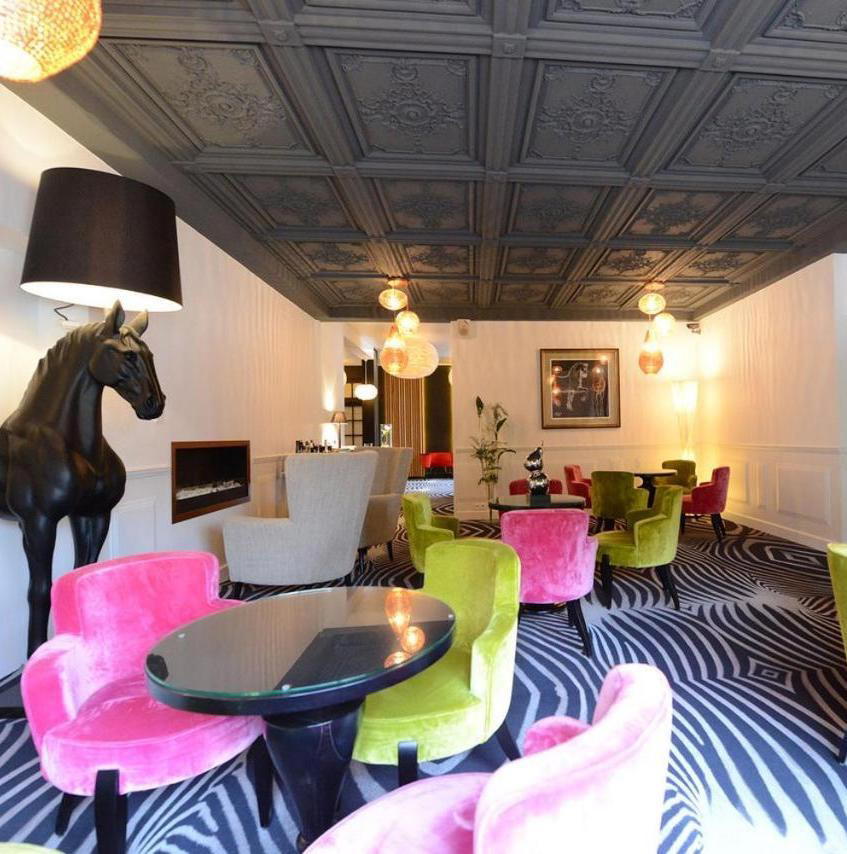
At a Glance
- Cozy
- Rustic
- Family
- Casual Hangout
- Local Sourcing
Current opening hours
- Monday
- Closed
- Tuesday
- Closed
- Wednesday
- 12–2 PM, 7–9 PM
- Thursday
- 12–2 PM, 7–9 PM
- Friday
- 12–2 PM, 7–9 PM
- Saturday
- 12–2 PM, 7–9 PM
- Sunday
- Closed
Hours can change for holidays and private events. Last verified .
Colourful and warm atmosphere.