Our verdict
L'Auberge Campagnarde sits in the village of Evosges in the Ain département, where the Bugey hills shape both the landscape and what ends up on the plate. This is provincial French dining at a deliberate remove from urban restaurant culture, with an address that rewards those who seek out the source rather than the spectacle. For context on the broader Evosges dining scene, see our full Evosges restaurants guide.

Pearl is the En Primeur Club membership app — saves, bookings, and concierge access live there. Same editors, same standards.
- Address
- 4 Place J.M. Jacquemet, 01230 Évosges, France
- Phone
- +33474385555
- Website
- auberge-campagnarde.com
- Directions
- Get directions
Where the Bugey Hills Set the Table
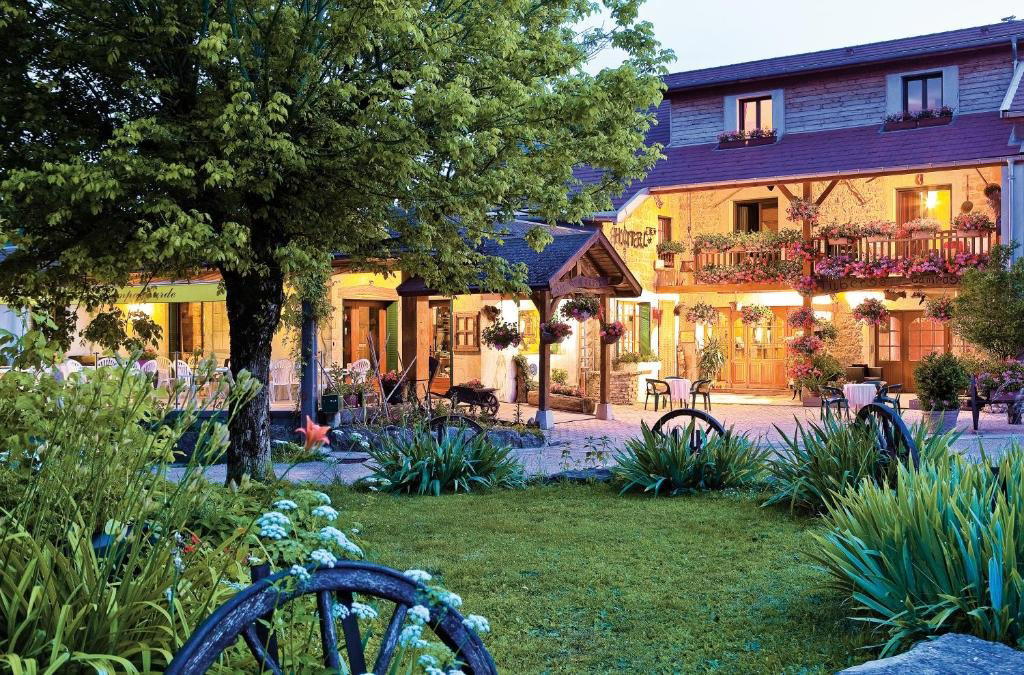
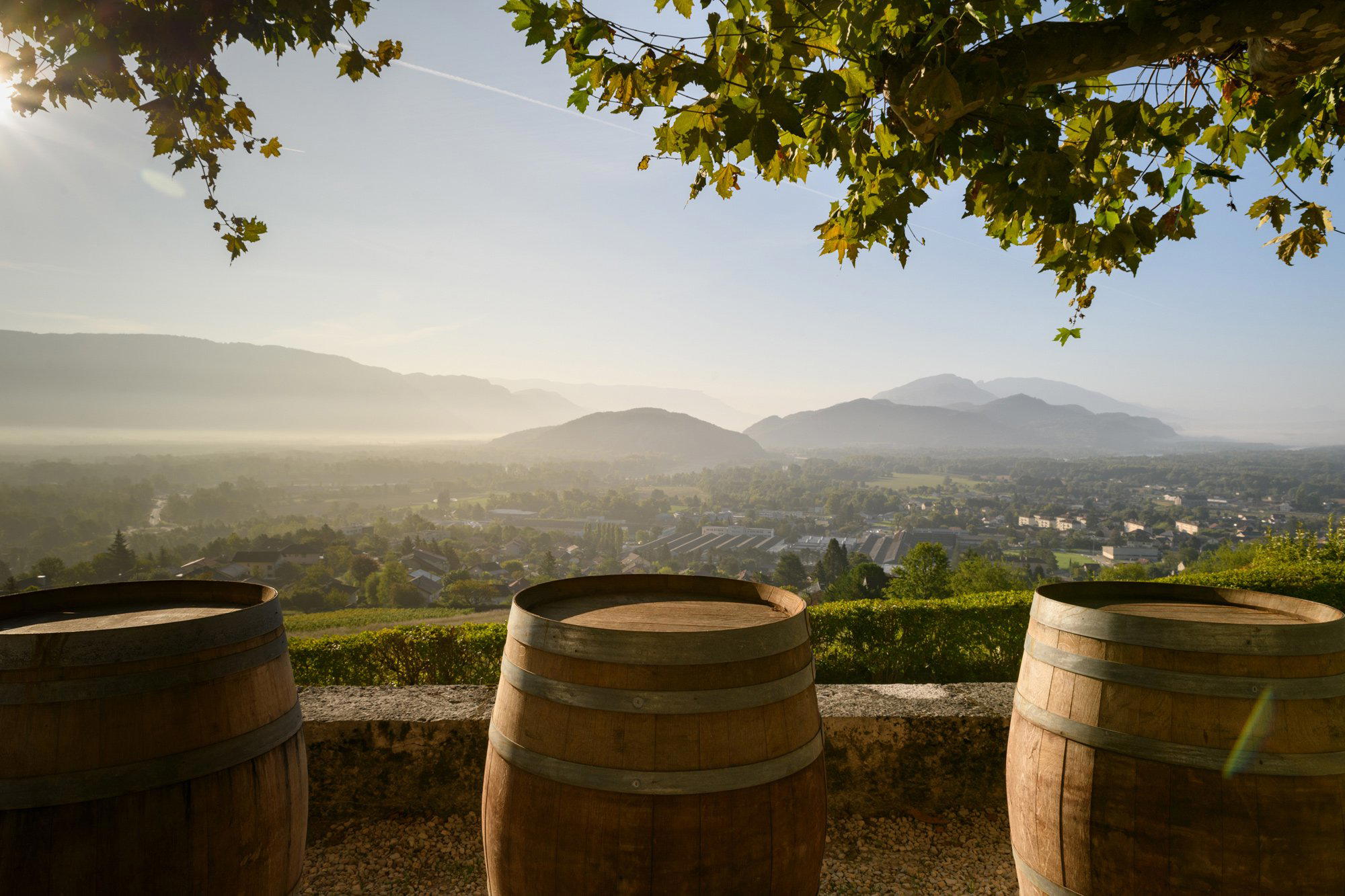
Approach Évosges from any direction and the drive itself makes the argument. The village sits at altitude in the Ain département, tucked into the Bugey massif between the Rhône plain and the Jura foothills, and the road up through forest and pasture is not incidental scenery — it is a preview of the supply chain. The farms, the game-rich woodland, the micro-climates that push particular herbs and fungi, all of it is visible before you reach the square. L'Auberge Campagnarde occupies a position at 4 Place J.M. Jacquemet that is, in the most literal sense, embedded in that environment. The building reads as a village auberge in the traditional French mould: a ground-floor dining room with the proportions of a house rather than a restaurant, and an atmosphere shaped more by the village calendar than by any designed hospitality concept.
This matters because the auberge format has largely disappeared from French provincial life at the level where it once operated. The pressures of food cost, staffing, and changing rural demographics have pushed many genuine country inns either toward casual bistro minimalism or toward the kind of self-conscious rusticity that performs rural identity for urban visitors. Évosges is too small and too far from the tourist circuits for performance. What survives here is the thing itself.
Ingredient Sourcing as the Central Logic
The Bugey is not a region that appears frequently in French gastronomy guides, which is partly why its produce has remained underexplored relative to its quality. The Ain département sits at a convergence of alpine, Jurassian, and Rhône Valley influences that creates an unusually diverse agricultural and foraging profile. Poultry from the neighbouring Bresse appellation, one of the most tightly regulated and consequential chicken designations in France, is a matter of geography rather than supply-chain sophistication here: Bresse is effectively next door. Freshwater fish from the Ain river system, game from the Bugey forest, and seasonal fungi from the surrounding woodland represent a larder that larger urban restaurants source at significant cost and logistical effort. At an address like L'Auberge Campagnarde, proximity to that larder is structural.
This is the ingredient-sourcing logic that distinguishes the leading provincial French tables from their urban equivalents. Places like Bras in Laguiole built their entire identity on the relationship between kitchen and the Aubrac plateau immediately outside the door. Auberge du Vieux Puits in Fontjoncouse and Georges Blanc in Vonnas — Vonnas also in the Ain, worth noting, have each made the argument that French regional cooking achieves its highest expression when the distance between source and plate is minimised. The Bugey auberge tradition operates on the same premise, without the Michelin scaffolding that surrounds those better-known addresses.
For contrast, consider what proximity to source costs in urban contexts. At Alléno Paris au Pavillon Ledoyen, or at Mirazur in Menton, the sourcing story is real but requires infrastructure, relationships, and cost structures that feed directly into the price point. The Évosges model inverts that: the sourcing advantage is built into the postcode.
The Auberge in the French Provincial Tradition
The word auberge carries specific weight in French culinary history. It describes a category of establishment that preceded the modern restaurant concept, where the inn provided food and shelter as a single, undifferentiated offer. The leading examples of the surviving tradition, places like Auberge de l'Ill in Illhaeusern, have retained the name while operating at a level of formal refinement that the original category never anticipated. Others, further from the gastronomic spotlight, have kept closer to the original format: a single dining room, a menu that reflects availability rather than culinary ambition, and a relationship with the surrounding community that gives the place its reason for existing.
L'Auberge Campagnarde falls into the latter register. Évosges has a population measured in the hundreds. The restaurant's address on the village square places it in the social centre of a community where the auberge functions as a local institution as much as a destination for outside visitors. This dual identity, serving both the immediate community and the occasional visitor prepared to drive into the Bugey hills, defines the cooking logic and the atmosphere in ways that no amount of positioning can manufacture.
The broader French provincial dining tradition has produced some of the country's most consequential cooking precisely through this rootedness. Troisgros in Ouches, Paul Bocuse's Auberge du Pont de Collonges, and the Rhône-Alpes dining tradition more broadly were shaped by chefs working in deeply specific regional contexts rather than cosmopolitan ones. The Ain and the Bugey sit within that same gravitational field.
Who Makes the Drive
Évosges is not on the way to anywhere that draws tourist traffic at scale. Reaching the village requires a deliberate choice, which means the visitor profile skews toward those already oriented to regional French food culture: people who understand what the Bugey wine appellation represents, who treat the route through the Ain as the point rather than an obstacle, and who arrive with expectations calibrated to the format rather than to a starred urban dining experience.
This is a different category of French restaurant travel from booking a table at Flocons de Sel in Megève or L'Oustau de Baumanière in Les Baux, where the surrounding destination provides its own infrastructure. Arriving in Évosges, you are in the restaurant's world entirely. The Bugey itself, quiet, forested, and largely bypassed by mainstream French tourism, is the context. It is worth reading our full Evosges restaurants guide before planning the trip, particularly if you are combining the visit with wider Ain or Bugey exploration.
For those accustomed to the formal choreography of restaurants like Assiette Champenoise in Reims, Au Crocodile in Strasbourg, or Christopher Coutanceau in La Rochelle, an Évosges auberge operates on a different register entirely. The point of comparison is not the starred provincial table but the French country inn as a form, with all the informality, seasonality, and community embeddedness that implies. Those expecting the precision of AM par Alexandre Mazzia in Marseille or the technical ambition visible at La Marine in Noirmoutier will need to recalibrate. Those who arrive already knowing what an auberge campagnarde is for will find Évosges makes the case plainly.
Planning Your Visit
Given Évosges's altitude and its position in the Bugey, seasonal timing matters. Spring and autumn align with the strongest foraging and game seasons in the surrounding woodland, and the drive through the massif is most rewarding outside the flat light of midsummer. Contact arrangements and hours are best confirmed directly, as small village establishments in the Ain typically operate on schedules tied to local demand rather than standardised service patterns. The address at 4 Place J.M. Jacquemet is the village square itself, so orientation is direct once you reach Évosges. Arriving without a reservation at a small auberge in this part of France is a reasonable gamble outside peak local holiday periods, but it remains a gamble.
Frequently asked questions
Is L'Auberge Campagnarde okay with children?
The auberge format in rural French villages has historically operated as a community dining room open to all ages, and Évosges — a village with a population in the hundreds — follows that pattern by default. There is no documented dress code or adults-only policy at this address on Place J.M. Jacquemet. Families making the deliberate drive into the Bugey hills are the rule here, not the exception.
What should I expect atmosphere-wise at L'Auberge Campagnarde?
Évosges sits at altitude in the Ain département with a population in the hundreds, so the room reflects the village rather than any hospitality design brief. Expect a setting shaped by local regulars and destination visitors who have made the climb into the Bugey hills by choice. The pace and tone are those of the French provincial tradition: unhurried, rooted in the immediate landscape, and with none of the performative formality of city dining.
How far is L'Auberge Campagnarde from Lyon and Geneva, and is it worth the drive?
Évosges sits in the Bugey massif of the Ain département, roughly equidistant between Lyon and Geneva — both are reachable in under two hours by car. The village at 4 Place J.M. Jacquemet is not on any transit route, so arriving means you have made a deliberate decision to come. That selectivity defines the visitor mix: people who have researched the Bugey specifically, not those passing through on the way to somewhere else.
What's the signature dish at L'Auberge Campagnarde?
The Bugey location in the Ain département is the strongest clue: the region's kitchen logic typically runs through game, foraged ingredients, and freshwater fish from nearby streams, with Bugey wines as the natural pairing. Spring and autumn are the seasons when that produce calendar is at its most active, which makes those the periods when the table is likely at its most representative.
At-a-Glance Comparison
| Venue | Cuisine | Price | Awards | Notes |
|---|---|---|---|---|
| L'Auberge CampagnardeThis venue — the venue you are viewing | Traditional French Terroir Bistro | $30–50 | Not listed | Not listed |
| Alléno Paris au Pavillon Ledoyen | Modern French Fine Dining | $150–200 | 3 Michelin Stars · World's 50 Best #79 | Creative |
| Kei | Modern French with Japanese Influences | $300–500 | 3 Michelin Stars · World's 50 Best #93 | Contemporary French, Modern Cuisine |
| L'Ambroisie | Classic French Haute Cuisine | $300–500 | 2 Michelin Stars · World's 50 Best #23 | French, Classic Cuisine |
| Le Cinq - Four Seasons Hôtel George V | Modern French Fine Dining | $300–500 | 3 Michelin Stars · World's 50 Best #24 | French, Modern Cuisine |
| Mirazur | Modern French Fine Dining | $300–500 | 3 Michelin Stars · World's 50 Best #1 | Modern French, Creative |
Continue exploring
More in Evosges
Restaurants in Evosges
Browse all →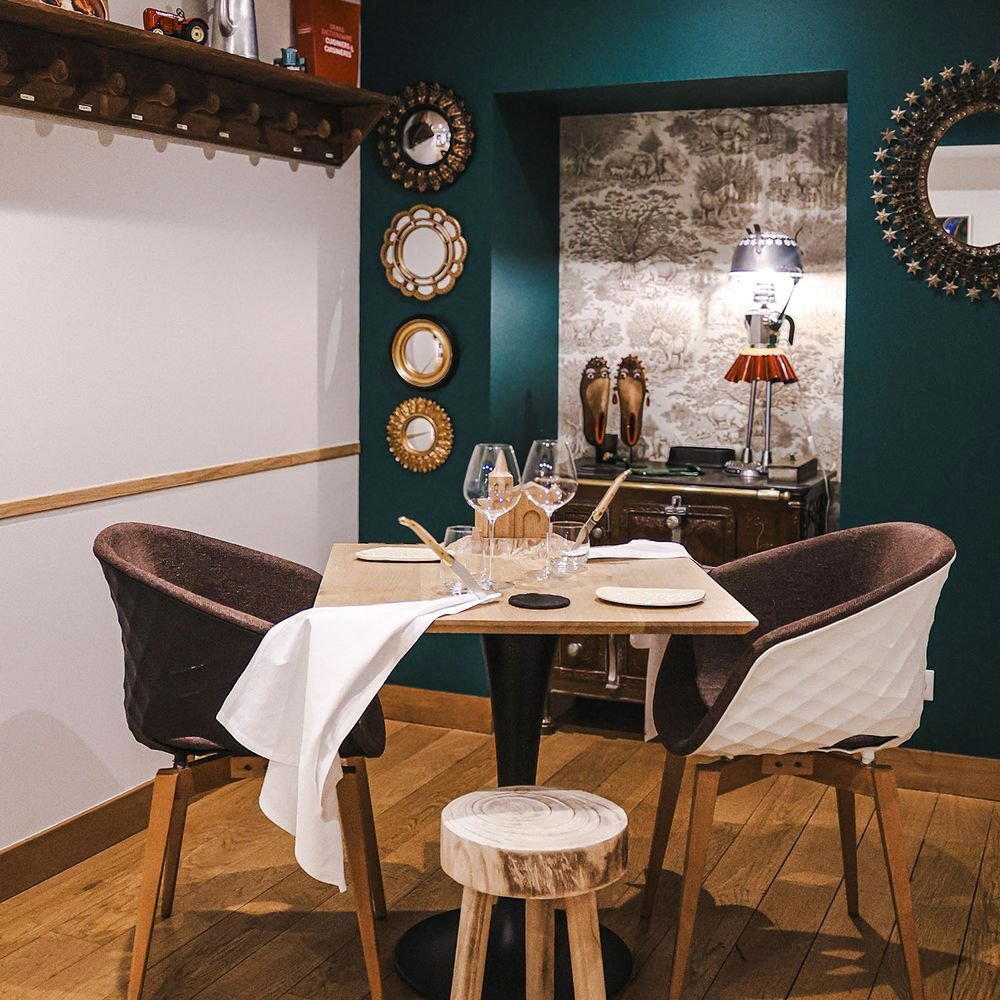
Bars in Evosges
Browse all →
Hotels in Evosges
Browse all →

Details
- Rustic
- Cozy
- Scenic
- Family
- Celebration
- Group Dining
- Terrace
- Garden
- Local Sourcing
- Garden
- A La Carte
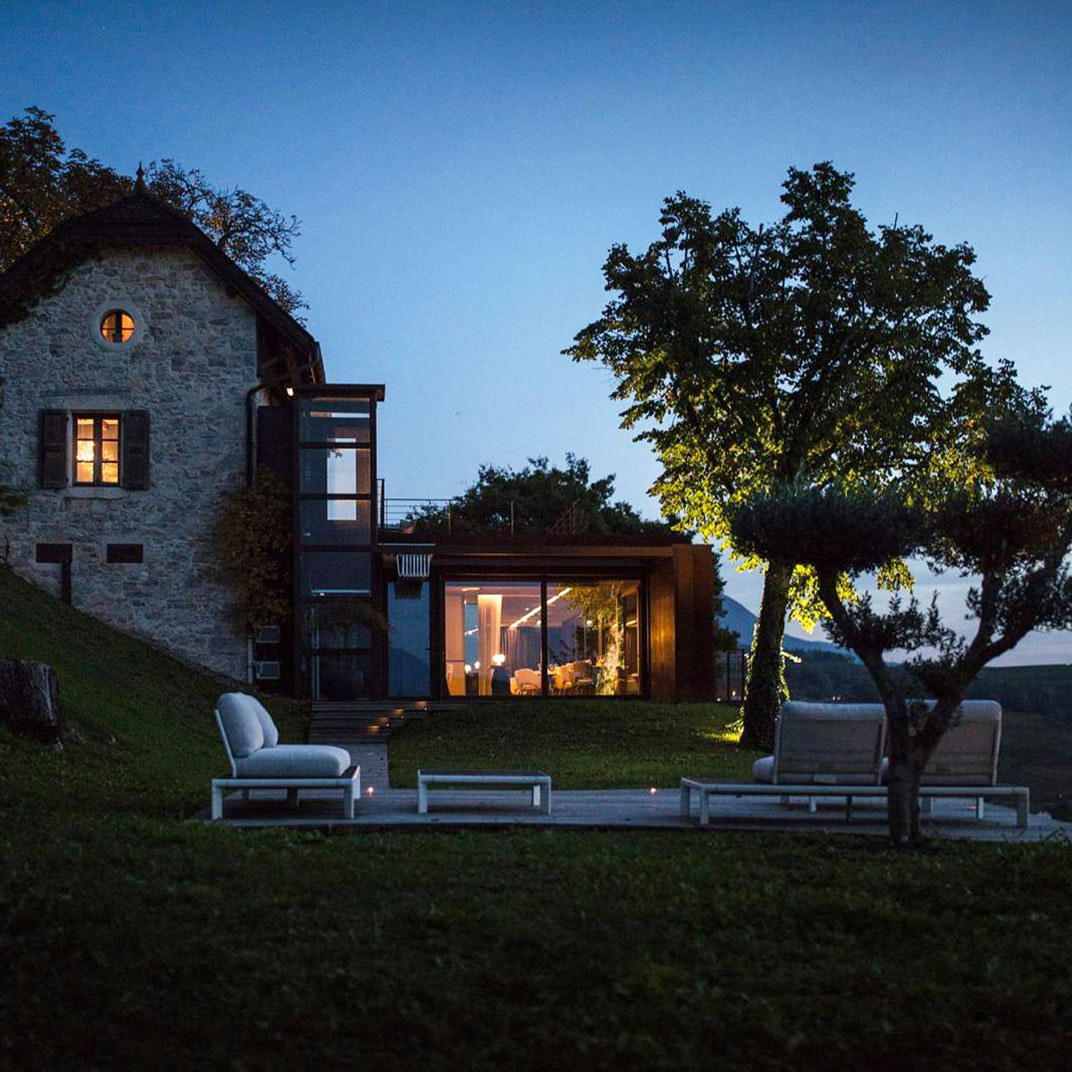
Cosy dining room with rustic charm and warm atmosphere, or terrace overlooking bucolic gardens and passing cows.