
Michelin Selected
A Michelin Selected maison de maître on Ambronay's Grande Rue, La Maison d'Ambronay sits steps from one of Burgundy's gateway abbeys and occupies a tier of French provincial hospitality where architectural character and quietude matter more than resort amenities. It suits travellers routing between Lyon and the Jura who want a considered stop rather than a chain overnight.

Pearl is the En Primeur Club membership app, where members save venues, book tables and use the concierge.
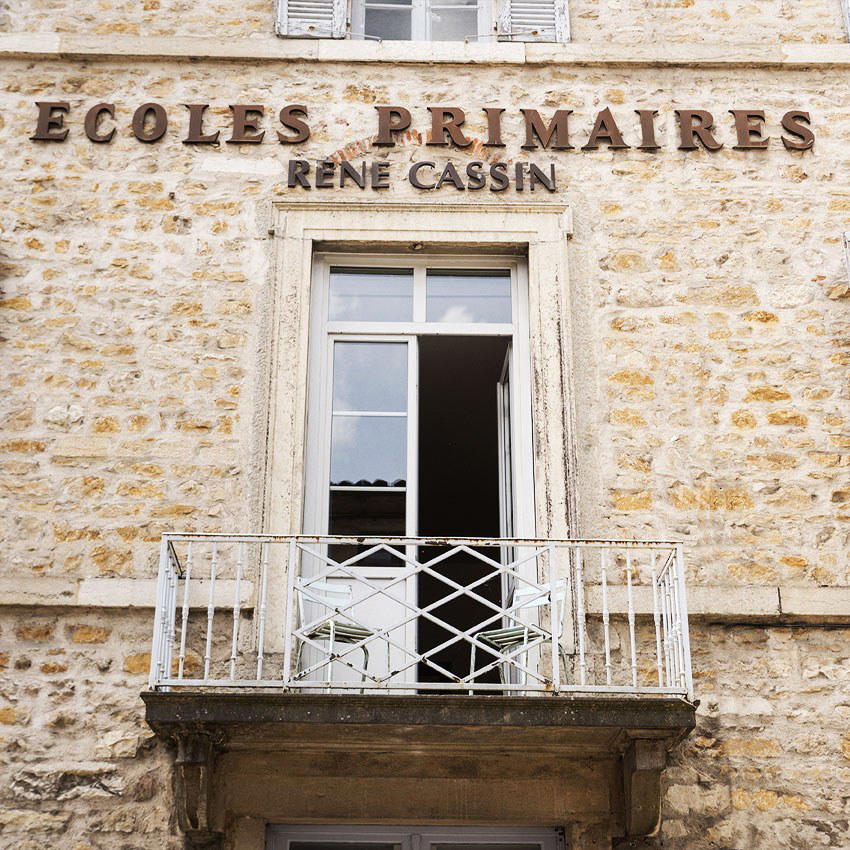
Stone, Silence, and the Weight of the Ain Valley
There is a particular register of French provincial hospitality that neither the grand palace hotels of Paris nor the sprawling Provençal resorts have ever quite managed to replicate: the maison de maître in a small market town, where the architecture does the talking and the surrounding landscape provides the programme. La Maison d'Ambronay, at 46 Grande Rue in the village of Ambronay, belongs to that category. Ambronay itself sits in the Ain département, roughly 35 kilometres northeast of Lyon, in a corridor of countryside where the Rhône plain begins to lift toward the foothills of the Jura. The setting is not dramatic in any Alpine sense, but it has the composed, unhurried character of a region that has been continuously inhabited and farmed for over a millennium.
Approaching along the Grande Rue, the built fabric of the village is anchored by the Abbaye d'Ambronay, a Benedictine foundation dating to the ninth century whose cloister and church remain among the better-preserved examples of medieval ecclesiastical architecture in the Rhône-Alpes corridor. The abbey is also the home of the Centre Culturel de Rencontre d'Ambronay, which runs an annual early music festival of European standing each autumn, drawing specialist audiences from across France and beyond. La Maison d'Ambronay is positioned directly within this village fabric, and guests arriving on foot from the abbey would cover only a short distance along the same street. That proximity is not incidental: it shapes the kind of traveller the property draws and the pace at which a stay here tends to unfold.
Michelin Selected and What That Distinction Implies
La Maison d'Ambronay holds a Michelin Selected designation in the 2025 Michelin Hotels guide, placing it in a tier that the Guide Michelin uses to recognise properties with a clear sense of character and quality without requiring the full infrastructure of a starred dining or grand hotel operation. Within France, Michelin Selected properties in small towns tend to share a profile: independently operated, architecturally coherent, and valued for what they are rather than what amenities they accumulate. The distinction is a useful navigational signal for travellers who have learned to read past star counts toward the more specific language of editorial curation. In a village of Ambronay's scale, a Michelin Selected property carries more weight as a local reference point than the same designation might in Lyon or Paris, where the competitive field is far denser.
For comparison, the Michelin hotel programme in France spans properties from Le Bristol Paris and Hôtel de Paris Monte-Carlo at the very best of the palace tier down through regionally significant manor houses and carefully run chambres d'hôtes. La Maison d'Ambronay sits firmly in the latter category: its value is relational and contextual, not comparative to Hotel Du Cap-Eden-Roc or Royal Champagne Hotel & Spa. It belongs to a different decision entirely.
The Architecture of a French Provincial Stay
The maison de maître as a building type is defined by its bourgeois solidity: symmetrical facades, tall windows with shutters, stone construction intended to signal permanence rather than extravagance. These properties were built by local professionals, notaries, and merchants across provincial France in the eighteenth and nineteenth centuries, and the best-preserved examples carry a spatial logic that modern hotel construction rarely replicates. Rooms tend to be genuinely large, ceilings high, and the relationship between interior and street or garden direct rather than mediated by lobby infrastructure. When properties of this type are well maintained and thoughtfully operated, the architecture itself functions as the primary amenity.
This is the context in which La Maison d'Ambronay should be understood. The address on the Grande Rue places it within the historic centre of the village, within the grain of a settlement whose layout has changed little over centuries. For travellers whose preference runs toward Château du Grand-Lucé or La Bastide de Gordes in terms of architectural seriousness, the instinct to seek out a property of this type in a small Ain village makes complete sense, even if the scale and resources are quite different. The draw is the same: a building with genuine history and a location that requires engagement with its surroundings.
Positioning Within the French Regional Hotel Scene
France's regional hotel offering has developed a pronounced split over the past decade. One trajectory leads toward destination spa and resort properties with full culinary programmes, exemplified by Les Sources de Caudalie outside Bordeaux or Villa La Coste in the Luberon. The other trajectory stays closer to the older French tradition of the well-run small hotel with strong local identity and no resort pretensions. Properties like Domaine Les Crayères in Reims or La Ferme Saint-Siméon in Honfleur operate at a higher price and profile than La Maison d'Ambronay, but they share the foundational premise that place and building should do more work than marketing. La Maison d'Ambronay represents that tradition at a more accessible and less publicised scale.
The Ain département itself remains undervisited relative to its neighbours. Most travellers passing through the region are heading for Lyon, the Alps, or the Jura, and Ambronay sits on the route without being on the map for most itineraries. That positioning means the village operates at a rhythm that larger tourism flows have not yet disrupted, which is either a limitation or an attraction depending on what a traveller is seeking. See our full Ambronay guide for more on what the village and surrounding area offer across dining and hospitality.
Planning a Stay
Ambronay is accessible by TGV to Ambérieu-en-Bugey, the nearest rail station, approximately five kilometres from the village centre. From Lyon Part-Dieu, the journey takes under 30 minutes on direct regional services, making La Maison d'Ambronay a realistic option for travellers based in Lyon who want a night outside the city, as well as for those routing between Lyon and Geneva or Bourg-en-Bresse. Driving from Lyon takes roughly 40 minutes via the A42. The annual Ambronay early music festival runs each September and October, and availability in the village during that period tightens considerably; travellers with a specific interest in that programme should plan accommodation well in advance. For those without a festival date in mind, the spring and early autumn months offer the most comfortable conditions for exploring the abbey, the surrounding countryside, and the agricultural villages of the Ain plain.
Comparable Venues
Comparable venues nearby, for context on price, style, and recognition.
| Venue | Cuisine | Price | Awards | Notes |
|---|---|---|---|---|
| La Maison d'AmbronayThis venue (the venue you are viewing) | Renovated historic schoolhouse with contemporary charm | $100–200 | Michelin Selected | Not listed |
| Scarlett | Contemporary boutique in repurposed industrial space | $100–200 | Michelin Selected | Belleville / 20th Arr. |
| RockyPop Chamonix - Les Houches | Playful, offbeat mountain lodge breaking traditional hotel codes with pop culture vibes. | $1–100 | Michelin Selected | Les Houches |
| Anova | Contemporary mountain chalet with ski-in/ski-out access | $100–200 | Michelin Selected | Montgenèvre |
| Villa Mirasol | Historic Belle Époque family home transformed into boutique hotel | $100–200 | Michelin Selected | Trois Rivières |
| Le Pic Blanc | Modern chalet-style ski resort hotel | Not listed | Michelin Selected | Les Bergers |
Recognition history
Dated appearances from independent guides and award organizations, with the underlying list record or original source where available.
Michelin Selected
Michelin
Continue exploring
More in Ambronay
Hotels in Ambronay
All hotels in Ambronay →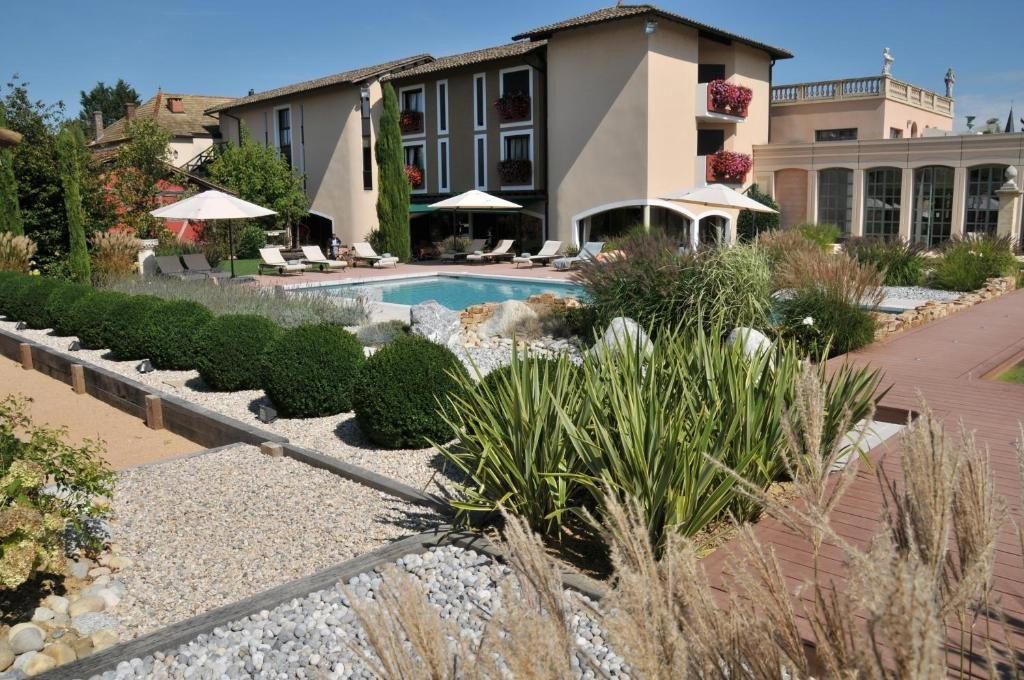
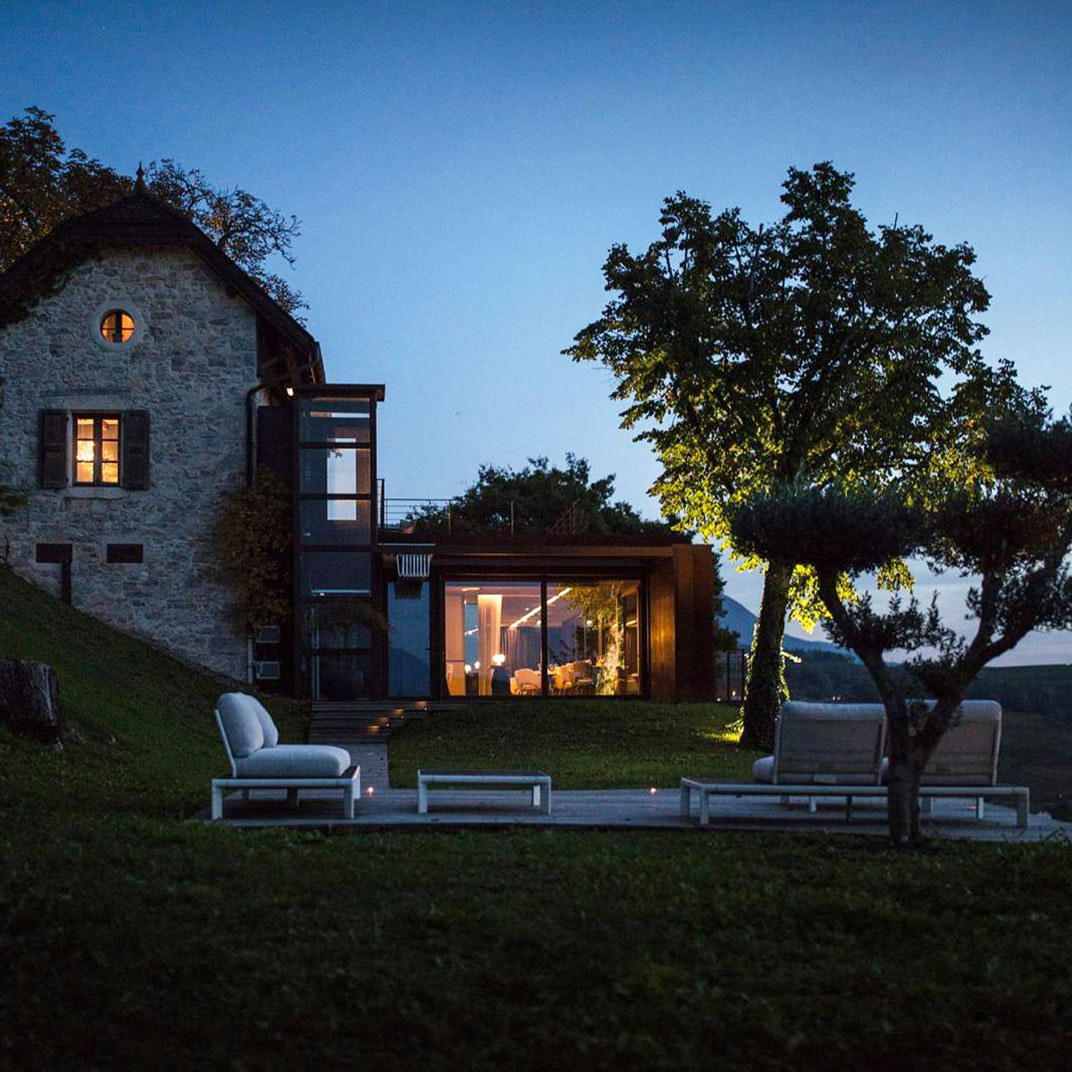
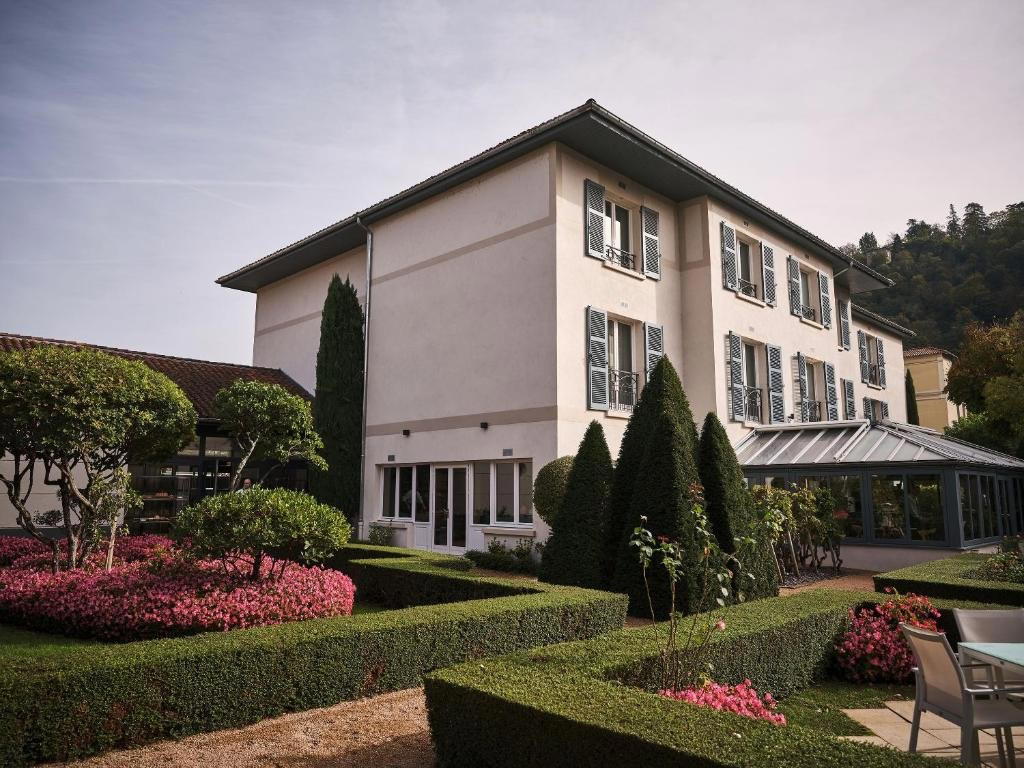
Bars in Ambronay
Browse all →
Restaurants in Ambronay
All restaurants in Ambronay →
Wineries in Ambronay
Browse all →

Details
- Modern
- Quiet
- Cozy
- Elegant
- Romantic Getaway
- Weekend Escape
- Terrace
- Historic Building
- Wi Fi
Quiet and stylized schoolhouse atmosphere with striking contemporary bedrooms featuring playful nostalgic touches.