Tim Ho Wan East Village

Tim Ho Wan's East Village outpost brings Hong Kong's most recognised dim sum format to one of New York's most food-literate neighbourhoods. The original Hong Kong locations built their reputation on precise, high-volume Cantonese technique at accessible prices, and the 4th Avenue address operates within that same framework. For New Yorkers who track the city's Chinese dining scene with any seriousness, it functions as a useful data point in a borough still defining its dim sum hierarchy.
Pearl is the En Primeur Club membership app — saves, bookings, and concierge access live there. Same editors, same standards.
- Address
- 85 4th Ave, New York, NY 10003
- Phone
- +1 212 228 2800
- Website
- timhowanusa.com
- Directions
- Get directions
 Saves & bookings on Pearl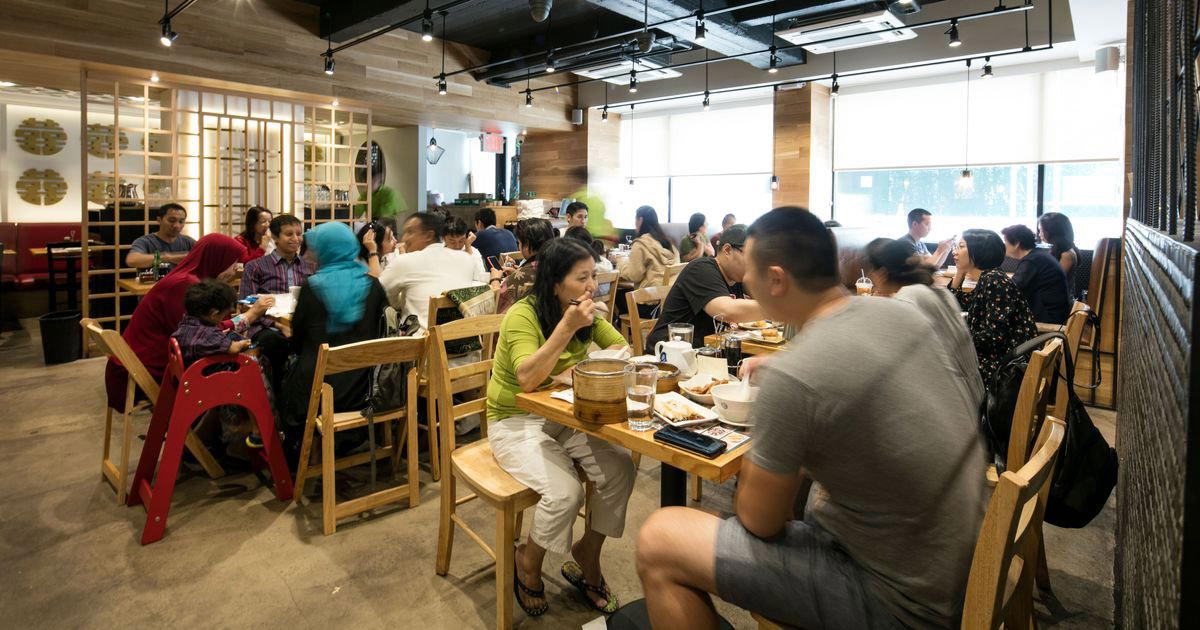
Hong Kong's Dim Sum Export, Measured Against New York's Expectations
Tim Ho Wan East Village is a Hong Kong Style Dim Sum restaurant at 85 4th Ave in New York, with casual dress and a walk-in-friendly policy. That origin story matters here not as biography but as context: the brand's expansion into international markets, including its East Village address at 85 4th Avenue, carries a set of expectations shaped by that founding reputation. The question New York asks of any international import is whether the original technical standard travels. With dim sum, which depends heavily on kitchen rhythm, steamer timing, and the institutional knowledge baked into a large brigade, the answer is rarely simple.
East Village is a useful landing zone for this kind of operation. The neighbourhood has enough daily foot traffic and dining density to sustain the volume a dim sum kitchen requires, and its residents are experienced enough to have strong opinions about what they're eating. That pressure is a feature, not a problem: it keeps the kitchen accountable in a way that tourist-heavy corridors do not.
Dim Sum as a Team Sport
In Cantonese tradition, a dim sum kitchen is among the more collaborative environments in professional cooking. Unlike tasting-menu formats, where a single chef's vision threads through every course, dim sum production distributes labour across specialists: dough workers, steamer operators, roasting teams, and the floor staff who manage timing across a room that may be turning tables continuously. The collaborative structure maps almost perfectly onto what makes dim sum kitchens function or fail. No single cook owns the baked pork bun; it passes through multiple hands before it reaches the table.
At Tim Ho Wan's East Village location, that collaborative structure is inherited from a playbook developed over fifteen years of international expansion. The format is codified rather than improvised, which has both advantages and limits. Codification means consistency; it also means the ceiling is set by the playbook rather than by the ambition of the local team. For a comparison point, consider what separates a precision-driven, brigade-heavy kitchen like Le Bernardin from a format restaurant operating on proven templates: the former allows its team to push technical limits, while the latter asks the team to execute within them. Tim Ho Wan's model sits firmly in the latter category, and its value proposition is consistency, not discovery.
Where It Sits in the New York Dim Sum Conversation
New York's Cantonese dining scene is centred in Flushing and Sunset Park, where full-scale yum cha houses operate at scale with carts, live tanks, and dining rooms that seat hundreds. The East Village location represents a different format: smaller, sit-down, order-by-sheet, positioned closer to a casual restaurant than a traditional tea house. That distinction is worth stating clearly, because the two experiences are not interchangeable. A visitor expecting the organised chaos of a Flushing dim sum hall will find something quieter and more controlled on 4th Avenue.
Within the East Village and lower Manhattan corridor, Tim Ho Wan occupies a specific tier. It is not in the conversation with New York's high-end Cantonese restaurants, nor does it try to be. The comparable set is accessible, quality-consistent Cantonese in a comfortable sit-down environment. For anyone tracking the full range of what New York's restaurant scene offers, from a Masa-level omakase at the upper extreme to neighbourhood staples at the other, Tim Ho Wan East Village occupies a deliberately mid-register position. That register has real value: not every meal needs to be an event, and reliable Cantonese technique at accessible prices is genuinely useful in a city where the premium tier, including Per Se, Atomix, and Eleven Madison Park, demands significant commitment.
The baked BBQ pork buns (baked, not steamed) are what most visitors cite first, consistent with what the brand has built its reputation around across all its locations. The shell's pastry layer, with its slight sweetness and structural contrast against the filling, is the technical signature. Whether the East Village kitchen executes that signature at the level of the Hong Kong original is the question most serious diners will have, and the honest answer is that kitchen-to-kitchen variance in franchise and chain formats is real and worth factoring in.
The Broader Pattern: Asian Fast-Casual Moving Into Manhattan's Food Neighbourhoods
Tim Ho Wan's East Village presence is part of a broader pattern visible across Manhattan and Brooklyn over the past decade: Asian dining formats that originated at lower price points in immigrant communities are moving into mixed-demographic neighbourhoods at slightly adjusted price points and with more polished fit-outs. This is not a story distinctive to Chinese food, but dim sum carries particular complexity because the format is so dependent on volume and speed. A dim sum kitchen producing at full capacity during a Saturday morning rush is a different organism from the same kitchen on a quiet Tuesday dinner service. Visitors who time their visit to peak service hours are more likely to experience the kitchen performing close to its designed capacity.
For those building a broader map of where to eat in New York, For points of comparison outside the city, the kind of team-driven, format-disciplined kitchen that Tim Ho Wan represents appears in different registers at places like Smyth in Chicago or Frasca Food & Wine in Boulder, where brigade coherence is also central to the dining proposition, even if the cuisine is entirely different.
Compared to independent operations that translate culinary tradition through a single chef's training (as you might find at something like Blue Hill at Stone Barns for its farm-to-table philosophy), Tim Ho Wan's model is centrally standardised. Neither model is inherently superior; they answer different questions.
Know Before You Go
- Address: 85 4th Avenue, New York, NY 10003
- Neighbourhood: East Village, Manhattan
- Format: Sit-down dim sum, order-by-sheet service
- Price tier: Accessible; mid-register for Manhattan dining
- Reservations: Walk-ins are welcome
- Timing note: Peak hours are the busiest times
- Getting there: Multiple subway lines serve the Union Square and Astor Place stations nearby
Cost and Credentials
Comparable venues nearby, for context on price, style, and recognition.
| Venue | Cuisine | Price | Notes |
|---|---|---|---|
| Tim Ho Wan East VillageThis venue — the venue you are viewing | East Village, Hong Kong Style Dim Sum | $$ | Not listed |
| Evergreen On 38 | Not listed | $$ | Midtown-Times Square, Shanghainese & Szechuan with Dim Sum |
| Wonderful Asian Restaurant | Not listed | $$ | Bedford-Stuyvesant (West), Chinese Takeout |
| Hainan Chicken House | Not listed | $$ | Sunset Park (East)-Borough Park (West), Malaysian Hainanese Chicken Rice |
| Jabä | Not listed | $$ | Upper East Side-Lenox Hill-Roosevelt Island, Modern Taiwanese |
| Chun Vegetarian | Not listed | $$ | Bedford-Stuyvesant (West), Chinese Vegetarian |
Recognition history
Dated appearances from independent guides and award organizations, with the underlying list record or original source where available.
Opinionated About Dining Casual in North America Recommended
Opinionated About Dining
Continue exploring
More in New York City
Restaurants in New York City
Browse all →
Bars in New York City
Browse all →
Hotels in New York City
Browse all →




At a Glance
- Casual
- Trendy
- Casual Hangout
- Brunch
- Open Kitchen
- Sake Program
Current opening hours
- Monday
- 11:30 AM–8 PM
- Tuesday
- 11:30 AM–8 PM
- Wednesday
- 11:30 AM–8:30 PM
- Thursday
- 11:30 AM–8:30 PM
- Friday
- 11:30 AM–9 PM
- Saturday
- 11 AM–9 PM
- Sunday
- 11 AM–8 PM
Hours can change for holidays and private events. Last verified .
Casual and unpretentious atmosphere resembling a fast-food spot with cozy seating and a focus on authentic dim sum.