Lai Rai

Michelin Bib Gourmand
Our verdict
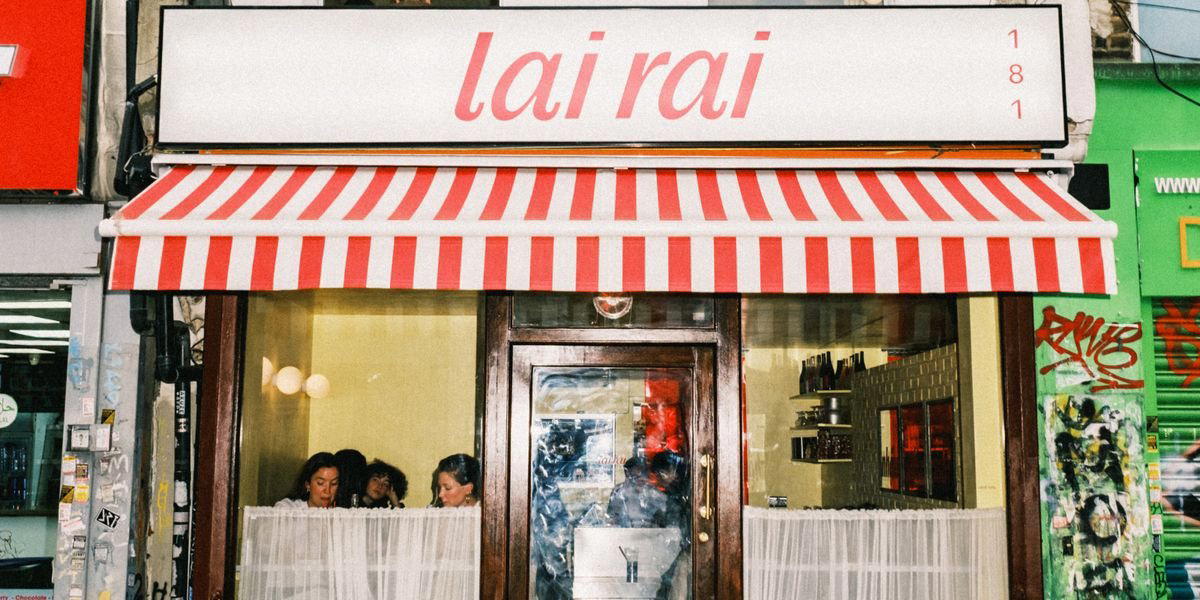
On Peckham's Rye Lane, Lai Rai operates at a remove from the high-spend dining circuits of central London, turning out Vietnamese cooking that regulars return to with quiet conviction. The format shifts from bánh mì and coffee through the day to a more considered evening menu, with the prawn lollies drawing repeat orders at almost every table. Affordable, consistent, and with a team that reads as genuinely invested in the room.

Pearl is the En Primeur Club membership app, where members save venues, book tables and use the concierge.
The menu
What to order
- Prawn lollies
- Braised pork belly
- Betel leaf beef
- Crispy chicken leg
Rye Lane and the Vietnamese Diaspora Kitchen
Peckham's food culture has been shaped less by investment cycles than by the communities that settled along Rye Lane over decades. The stretch between Peckham Rye and Queens Road Peckham has long carried the density and informality of a working neighbourhood market corridor, and the restaurants that thrive here tend to reflect that energy: counter-led, ingredient-focused, and priced for regulars rather than occasion diners. Vietnamese cooking fits that register well. The cuisine rewards discipline and repetition, and the kitchens that produce it consistently tend to be small, with tight menus and a clear sense of what they are trying to do.
Lai Rai sits inside that tradition at 181 Rye Lane. It occupies a compact space on one of south London's busiest street-level dining corridors, and it has built the kind of following that doesn't depend on press cycles. The people who eat here do so repeatedly, and their loyalty is grounded in something more durable than novelty: the food delivers on its terms every time.
A Day-to-Night Format with Clear Intent
The structure of Lai Rai's day speaks to how Vietnamese hospitality actually works in practice. The daytime offer centres on bánh mì and coffee, which positions the kitchen squarely within the tradition of the Vietnamese street sandwich and its role as an affordable, high-quality daily staple. The bánh mì is not an adaptation; it is a format with its own internal logic, requiring well-fermented bread, precise assembly, and balance between fat, acid, and herb. Kitchens that understand this don't need to augment it.
By evening, the menu broadens. This shift from snack-and-coffee to a more considered multi-dish format is common in better Vietnamese restaurants in cities with established diaspora communities, and it allows the kitchen to demonstrate range without abandoning the directness that defines the cuisine. The evening programme at Lai Rai brings the same emphasis on bold, clean flavour across a wider set of dishes.
The prawn lollies have become the most consistently referenced item across the venue's reputation. Their repeat-order rate at the table is notable: most sources describing the experience note that however many are ordered, more are wanted. That kind of dish is a trust signal in itself. A kitchen confident in one exceptional small plate has usually earned that confidence through repetition and adjustment, not luck.
What Regulars Are Actually Ordering
The editorial record on Lai Rai is consistent enough to draw some conclusions about the rhythm of a meal here. Start with the prawn lollies. This is not a cautious recommendation; it is what the room's repeat visitors do, and the dish appears to function as the centrepiece of the opening phase regardless of what follows. The rest of the evening menu rewards exploration, with the kitchen described as moving through bold flavours with genuine technical control, a combination that is less common than the description suggests. Bold flavour without skill reads as noise; the distinction at Lai Rai is that the execution is precise.
Daytime visit is a different proposition entirely. Coffee and bánh mì on Rye Lane on a weekday morning places a visitor inside the actual working texture of Peckham rather than its curated version, and that is worth understanding as its own category of experience. The two occasions, daytime and evening, draw different crowds and produce different moods, but both are anchored by the same kitchen logic.
Peckham in the Context of London's Wider Dining Map
London's restaurant culture at the formal end of the market is well-documented. Operations like CORE by Clare Smyth, The Ledbury, Sketch, The Lecture Room and Library, Restaurant Gordon Ramsay, and Dinner by Heston Blumenthal occupy the ££££ bracket with sustained award recognition. That tier is a different universe from Rye Lane, and the comparison is not one of hierarchy but of category. The question a visitor to London is always navigating is which category matches the occasion.
Lai Rai operates in a tier where price and quality are decoupled from formal signalling. There are no Michelin stars in the equation, no tasting menus, no extended wine lists. What there is instead is a kitchen producing Vietnamese food at a level that earns genuine loyalty in one of south London's most food-literate neighbourhoods. For wider context on where this fits within London's full dining range, our full London restaurants guide maps the city's options across price points and cuisine types.
Internationally, the Vietnamese category has attracted serious attention at the upper end. Atomix in New York City demonstrates what Korean fine dining looks like when executed at the highest level; the equivalent formal Vietnamese category is still developing in most Western cities. In London, the more convincing Vietnamese restaurants tend to operate in exactly the register Lai Rai occupies: small, affordable, technically capable, and built around a returning clientele rather than a tourist circuit.
For those planning a broader London trip, our London hotels guide, bars guide, experiences guide, and wineries guide cover the wider picture. Outside the capital, the UK's formal dining circuit runs from The Fat Duck in Bray and Le Manoir aux Quat' Saisons in Great Milton to L'Enclume in Cartmel, Moor Hall in Aughton, Gidleigh Park in Chagford, and Hand and Flowers in Marlow, none of which occupy remotely the same category as a Rye Lane Vietnamese kitchen. That breadth is part of what makes London and its surrounding dining culture worth mapping properly.
Planning a Visit
Lai Rai is at 181 Rye Lane, SE15 4TP, a short walk from Peckham Rye or Queens Road Peckham stations. The room is small, the format is casual, and the team is described consistently as warm and attentive rather than procedural. Daytime visits suit coffee and bánh mì; evenings open up the full menu, with the prawn lollies the non-negotiable starting point.
Frequently asked questions
Is Lai Rai Michelin-listed?
Lai Rai has received recognition including: Tiny and tucked-away on Peckham’s bustling Rye Lane, Lai Rai is a hidden gem of a restaurant. Friendly, affordable and with knockout Vietnamese cooking, it’s the kind of place you leave with a spring in your step. The food is packed with bo….
What's the address for Lai Rai?
Lai Rai is located at 181 Rye Ln, London SE15 4TP, United Kingdom, London.
What's the best thing to order at Lai Rai?
Start with the prawn lollies. They have the most consistent reputation of any item on the menu, and the editorial consensus is that no matter how many you order, you will want more. The kitchen moves from bánh mì and coffee during the day to a more elaborate evening menu, so the ordering strategy shifts depending on when you arrive.
How hard is it to get a table at Lai Rai?
Lai Rai is a small room on a busy stretch of Rye Lane in one of south London's most food-active neighbourhoods, which means demand regularly outpaces capacity. No formal online booking system is documented so arriving early or being prepared to wait is the practical approach, particularly in the evening.
At a Glance
Comparable venues nearby, for context on price, style, and recognition.
| Venue | Cuisine | Price | Awards | Notes |
|---|---|---|---|---|
| Lai RaiThis venue (the venue you are viewing) | Modern Vietnamese Street Food | $30–50 | Michelin Bib Gourmand | Not listed |
| Tre Viet | Authentic Vietnamese | $20–30 | Not listed | Hackney Central, Authentic Vietnamese |
| Pho Chiswick | Vietnamese Street Food | $10–20 | Not listed | Turnham Green, Vietnamese Street Food |
| Hatched | Modern British | Not listed | Michelin Plate | Battersea, Dining |
| ssam ssam | Authentic Korean BBQ | $20–30 | Michelin Plate | Wimbledon, Authentic Korean BBQ |
| Babur | Modern Indian Fine Dining | $30–50 | The Good Food Guide GFG Good | Honor Oak, Modern Indian Fine Dining |
Recognition history
Dated appearances from independent guides and award organizations, with the underlying list record or original source where available.
Michelin Bib Gourmand
Michelin
Full recognition history (2 entries)
Michelin Plate
Michelin
Continue exploring
More in London
Restaurants in London
All restaurants in London →
Bars in London
All bars in London →
Hotels in London
All hotels in London →




Details
- Trendy
- Modern
- Cozy
- Casual Hangout
- Date Night
- Open Kitchen
- Craft Cocktails
- Small Plates
- A La Carte
- Vegan Options
- Vegetarian Friendly
Current opening hours
- Monday
- Closed
- Tuesday
- 6–10 PM
- Wednesday
- 12–3 PM, 6–10 PM
- Thursday
- 12–3 PM, 6–10 PM
- Friday
- 12–3 PM, 6–10:30 PM
- Saturday
- 12–10:30 PM
- Sunday
- 12–9 PM
Hours can change for holidays and private events. Hours as of .
Lively neon lighting in buttery yellow and ruby red tones with retro-futuristic decor, glossy tiles, mirrors, and a busy, chaotic energy.