L'Abysse Monte-Carlo




Two Michelin stars and an 85-point La Liste ranking place L'Abysse Monte-Carlo among the Principality's most decorated addresses. Housed in the Hôtel Hermitage, the restaurant frames Japanese cuisine through a Franco-European lens, with a beverage programme that positions sake alongside a cellar of serious depth. For a city that runs on spectacle, it is a notably disciplined room.
Pearl is the En Primeur Club membership app — saves, bookings, and concierge access live there. Same editors, same standards.
- Address
- Hôtel Hermitage Monte-Carlo, 1 Sq. Beaumarchais, 98000 Monaco
- Phone
- +377 98 06 94 94
- Website
- montecarlosbm.com
- Directions
- Get directions
 Saves & bookings on Pearl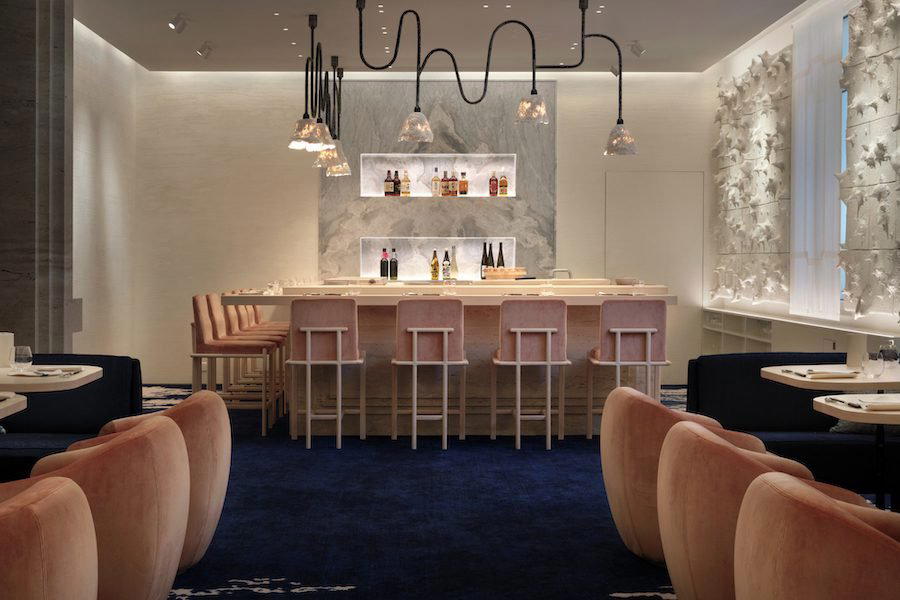
Japanese Fine Dining at the Pinnacle of Monaco's Michelin Tier
Monaco's restaurant scene operates at a pressure uncommon even by the standards of France's most competitive cities. Within a few hundred metres of the Hôtel Hermitage, you will find Alain Ducasse's Louis XV carrying three Michelin stars, Blue Bay Marcel Ravin and Les Ambassadeurs by Christophe Cussac each holding two. In that context, the two Michelin stars L'Abysse Monte-Carlo holds in the 2025 guide position it squarely in the upper bracket of what this city produces. What makes that standing notable is not just the score, but the format: in a Principality whose fine-dining identity has historically been French and Mediterranean, L'Abysse is a Japanese counter.
The Room: Depth Below the Belle Époque Surface
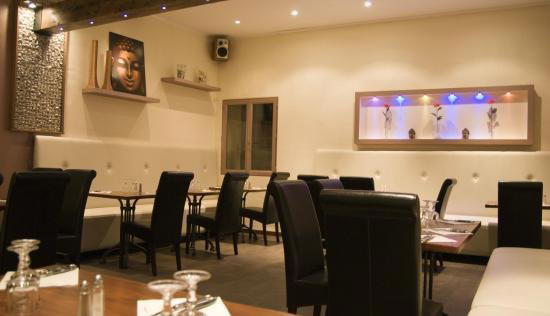
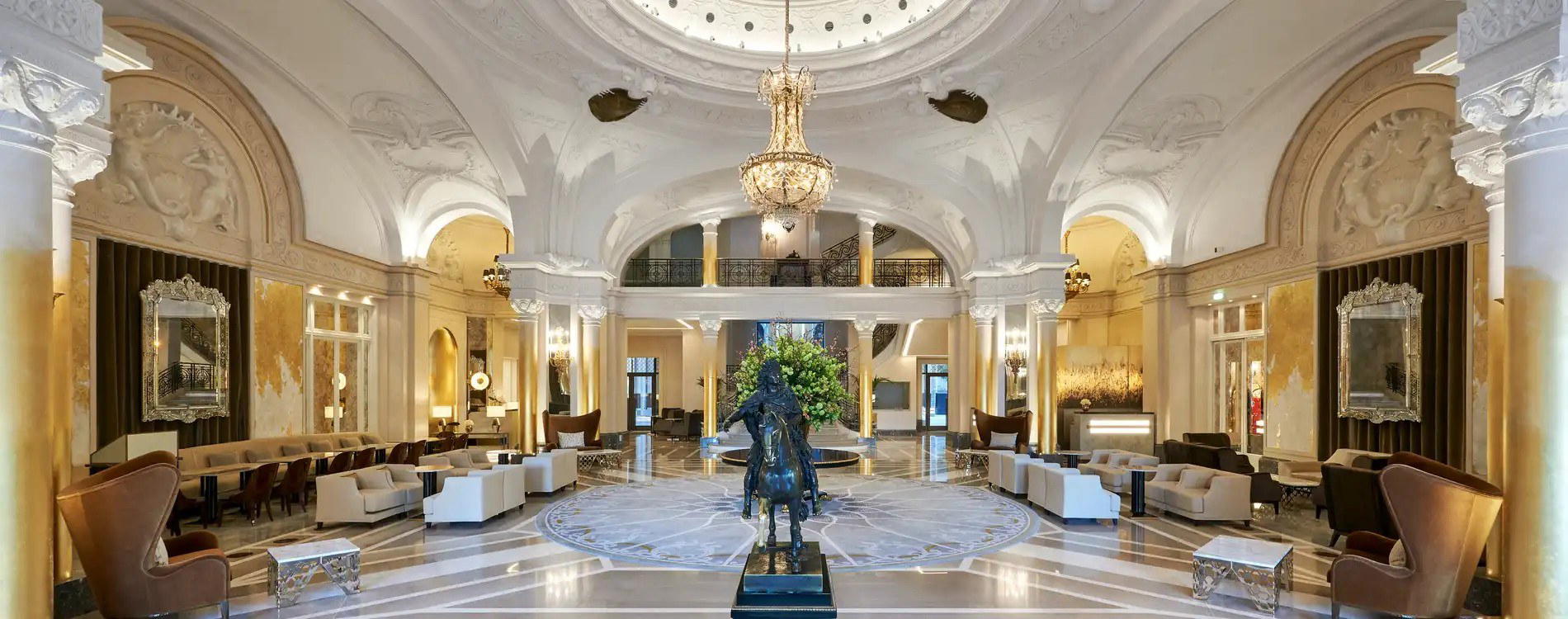
The Hôtel Hermitage is one of Monaco's belle époque landmarks, and entering through its lobby sets expectations calibrated toward a particular kind of grandeur. L'Abysse operates against that backdrop as a deliberate counterpoint. Japanese fine dining in Europe has increasingly moved toward environments that prioritise material restraint, warm timber, ceramic tableware, lighting controlled tightly around the counter, and L'Abysse follows that progression. The name itself (abysse, the French for abyss or deep ocean) signals something deliberately below the surface: a room designed for focus rather than exhibition. That architectural logic maps directly onto how the cuisine works. In Japan, particularly serious kaiseki and omakase counters use the room to concentrate attention on the food, and the leading European interpretations of the format understand that the physical environment is part of the argument being made about the cuisine.
The Beverage Programme: Where Sake Meets the Cellar
The editorial angle that most clearly distinguishes L'Abysse from Monaco's other two-starred addresses is how its beverage programme is constructed. French fine dining in the Principality, including at Elsa and the broader Société des Bains de Mer portfolio, is built around wine cellars weighted toward Burgundy, Champagne, and the Rhône. L'Abysse operates within a Japanese culinary framework that opens the programme to a different set of decisions.
Sake pairing at the level of two-Michelin-star Japanese dining in Europe is still not a standardised practice. In Tokyo, high-tier kaiseki restaurants such as Azabu Kadowaki and Kagurazaka Ishikawa have refined over decades how junmai daiginjo and aged koshu sake integrate with courses built around dashi, fermented ingredients, and raw fish. At Isshisoden Nakamura in Kyoto and Kashiwaya in Osaka, sake selection is treated with the same rigour applied to wine: vintage, brewery lineage, and rice polishing ratio all factor into pairing logic. That methodology is arriving in European outposts of Japanese fine dining, and a Monaco address with the resources of the Hermitage behind it is well positioned to pursue it seriously.
The structural question for any Japanese fine-dining room operating in Europe is whether the beverage programme commits to Japanese formats or defaults to French wine with Japanese food as a concession to the local audience. Particularly compelling rooms refuse the compromise: they build a sake list with the same depth and provenance-consciousness applied to Burgundy, then offer guests the choice. At that standard, sake's natural affinity for umami-forward courses, whether raw seafood preparations, aged proteins, or fermented condiments, becomes the argument rather than the novelty. Shochu, though less commonly featured at this tier outside Japan, adds another pairing register particularly suited to stronger, earthier components of a kaiseki-influenced progression. For the guest who arrives expecting a standard European fine-dining wine pairing, the programme at L'Abysse is an education in a different kind of cellar logic.
Yoshi, Monaco's other serious Japanese address, operates within a different format and price architecture. In Tokyo, counter-format Japanese restaurants like Myojaku, Ginza Fukuju, and Gion Matayoshi in Kyoto treat beverage pairing as inseparable from the meal's rhythm, with sake service timed to specific course transitions. The ambition at L'Abysse is to bring that sensibility to a room where the cellar budget and the guest's willingness to spend are both considerably higher than at a neighbourhood Japanese counter.
Yannick Alléno and the French-Japanese Axis
European fine dining's engagement with Japanese culinary technique has been one of the more consequential developments of the past two decades. The influence runs in both directions: Japanese chefs trained in French kitchens bringing rigour and seasonality back to Tokyo, and French chefs absorbing fermentation logic, knife work, and restraint into previously butter-heavy cuisines. Yannick Alléno's name on L'Abysse places it within this broader movement rather than outside it. Alléno's other Monaco address, Pavyllon, holds one Michelin star operating in a modern French register. L'Abysse operates in a distinct culinary lane, and its two-star standing suggests the Japanese format is, in critical terms, the stronger execution. That kind of internal hierarchy within a chef's portfolio is not unusual at this level, it reflects where the creative focus lands, and the awards record at L'Abysse supports reading it as the more demanding room of the two.
The French-Japanese axis that L'Abysse represents is also evident at starred addresses elsewhere on the Côte d'Azur. Hostellerie Jerome in La Turbie, a short drive from Monaco, operates in a different culinary tradition entirely, but the proximity illustrates how densely the broader region concentrates serious cooking across multiple formats within a small geographic radius. L'Abysse's decision to commit fully to Japanese cuisine rather than offering a French-Japanese hybrid menu is a positioning choice that its Michelin standing validates.
Planning Your Visit
L'Abysse Monte-Carlo sits inside the Hôtel Hermitage at 1 Square Beaumarchais, a building that places it among Monaco's most established hotel addresses. The €€€€ price designation aligns it with the Principality's top tier, with an estimated spend of about $300 per person.5 across 50 reviews reflects a modest but credible data set. Advance booking is essential.
What do regulars order at L'Abysse Monte-Carlo?
Specific dish recommendations would be speculation. What the awards record and format suggest is that the cuisine follows a progression-based structure, courses ordered by the kitchen rather than selected à la carte, with seafood and aged proteins likely forming the spine of the menu, as they do in comparable two-starred Japanese rooms across Europe and Japan. The beverage pairing is the component most worth committing to in advance: at this tier, the sake and wine selections are integrated into the meal's architecture, and arriving without a pairing reduces the experience to its food component alone. Regulars at equivalent addresses in Tokyo and Kyoto consistently cite the moment a well-chosen junmai pairs with a cold seafood course as among the clearest arguments for Japanese fine dining's beverage logic. That case is available at L'Abysse if the pairing programme is engaged rather than bypassed.
At-a-Glance Comparison
Comparable venues nearby, for context on price, style, and recognition.
| Venue | Cuisine | Price | Awards | Notes |
|---|---|---|---|---|
| L'Abysse Monte-CarloThis venue — the venue you are viewing | Modern Japanese Omakase | $$$$ | Michelin 2 Star | Not listed |
| Blue Bay Marcel Ravin | Caribbean-Mediterranean Fusion Fine Dining | $$$$ | Michelin 2 Star | Monte-Carlo |
| Les Ambassadeurs by Christophe Cussac | Modern Mediterranean Fine Dining | $$$$ | Michelin 2 Star | Monte Carlo |
| Le Grill | Modern French Mediterranean Grill | $$$$ | Michelin 1 Star | Place du Casino |
| Pavyllon, un restaurant de Yannick Alléno, Monte-Carlo | Cuisine Moderne Française Méditerranéenne | $$$$ | Michelin 1 Star | Monte-Carlo |
| La Table d'Antonio Salvatore au Rampoldi | New Monegasque Fine Dining | $$$$ | Michelin 1 Star | Monte-Carlo |
Recognition history
Dated appearances from independent guides and award organizations, with the underlying list record or original source where available.
Falstaff Restaurant - 95 Falstaff Points
Falstaff
La Liste Top Restaurants
La Liste
Michelin 2 Stars
Michelin
Gault & Millau Prestige Restaurant
Gault & Millau
Michelin 2 Stars
Michelin
Continue exploring
More in Monte Carlo
More from Chef Yannick Alléno
Browse all →
Restaurants in Monte Carlo
Browse all →
Bars in Monte Carlo
Browse all →
Hotels in Monte Carlo
Browse all →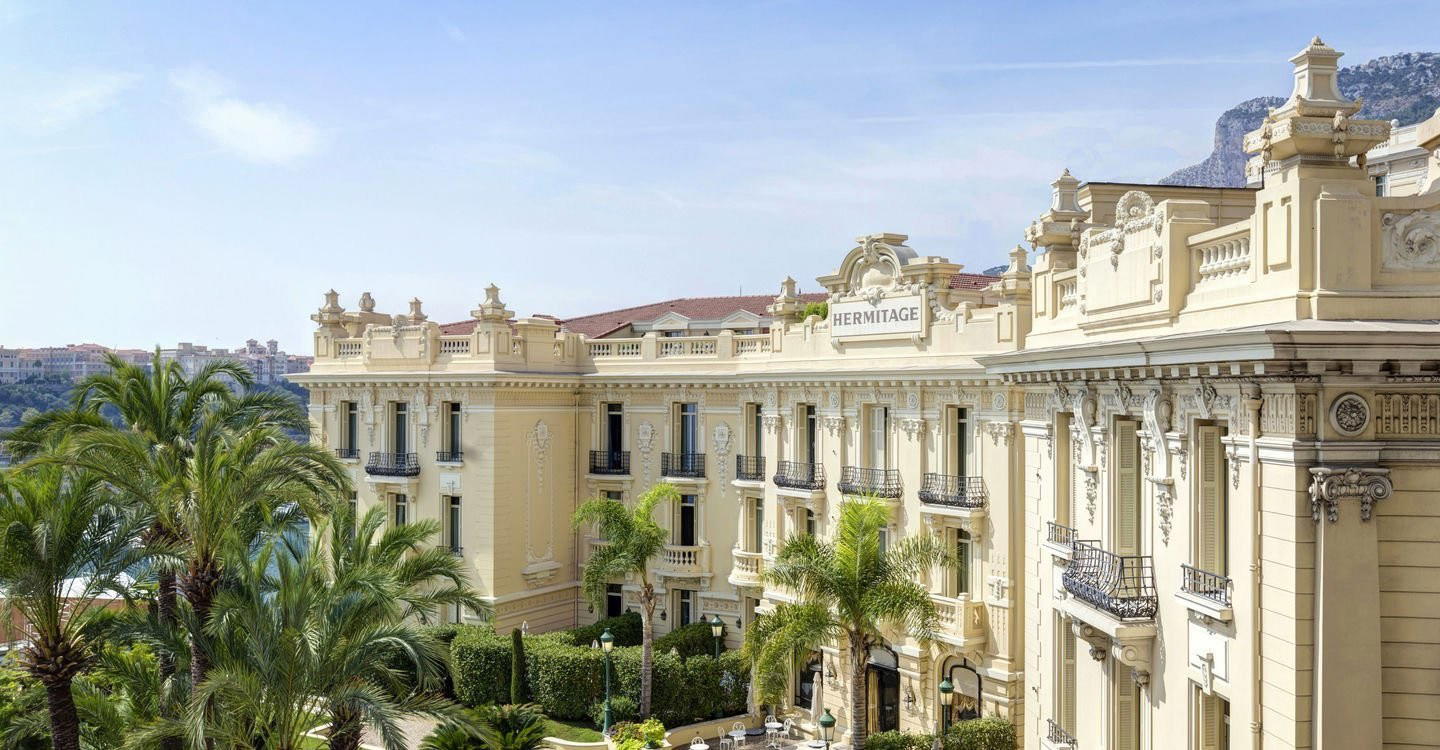

At a Glance
- Elegant
- Sophisticated
- Intimate
- Modern
- Date Night
- Special Occasion
- Celebration
- Business Dinner
- Chefs Counter
- Open Kitchen
- Hotel Restaurant
- Design Destination
- Sake Program
- Sommelier Led
- Local Sourcing
- Sustainable Seafood
Current opening hours
- Monday
- Closed
- Tuesday
- 7–10 PM
- Wednesday
- 7–10 PM
- Thursday
- 7–10 PM
- Friday
- 7–10 PM
- Saturday
- 7–10 PM
- Sunday
- Closed
Hours can change for holidays and private events. Last verified .
Serene and zen with soft lighting and tasteful decor; the restaurant features a dramatic design reflecting the elegance of the Hermitage hotel, creating a sophisticated yet calming dining atmosphere.