Laap Kao Cham Chaa
Laap Kao Cham Chaa sits in Chiang Mai's Wat Ket neighbourhood, occupying a corner of the city's Northern Thai dining tradition where the emphasis falls on fermented, herb-driven flavour built from highland ingredients.
- Address
- R224+2GX, Tambon Wat Ket, Mueang Chiang Mai District, Chiang Mai 50000, Thailand
- Website
- austinbushphotography.com
- Directions
- Get directions
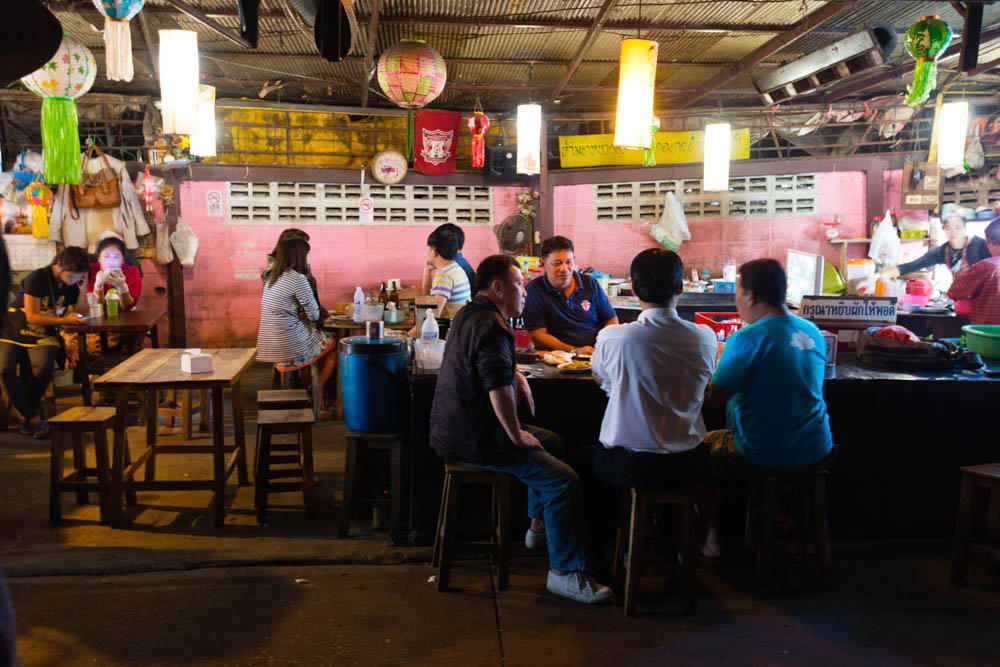
Northern Thai Cooking and the Weight of Regional Identity
Chiang Mai's food culture occupies a distinct lane within Thailand's dining map. The city's cuisine is not a softened version of Central Thai cooking transported north; it developed separately, shaped by Lanna kingdom traditions, mountain-grown aromatics, and a fermentation logic that runs through dishes from naem to tua nao. Where Bangkok plates tend toward brightness and balance, Northern Thai food pursues a more complex register: bitter herbs, fermented pastes, dried chilies, and animal fats used with confidence. Laap Kao Cham Chaa, located in the Wat Ket sub-district along the east bank of the Ping River, sits inside that tradition.
The name itself is instructive. Laap in the Northern Thai context differs materially from the Isan laab most visitors encounter in Bangkok restaurants. Northern laap, sometimes spelled larb, is a spiced minced-meat preparation that incorporates mak kwaen (a Sichuan-adjacent spice native to northern Thailand), dried blood, and a raft of herbs that give it a more pungent, almost medicinal depth. It is emphatically not a salad. In cities like Chiang Rai and Chiang Mai, versions of this dish carry ceremonial weight; it appears at merit-making meals and communal gatherings before it appears on tourist menus. A restaurant whose name foregrounds laap is signalling something about where it stands in that tradition.
The Wat Ket Setting and What the Neighbourhood Tells You
Wat Ket is one of Chiang Mai's older residential quarters, east of the Old City and separated from the tourist-dense areas around Nimman Road by the Ping River. The neighbourhood's character is low-rise, lived-in, and comparatively unhurried. Teak shophouses and old Chinese merchant architecture line its streets. Diners who cross the river for a meal here are generally not doing so for the atmosphere of discovery; they are going because something specific is being cooked that is not available closer to the guesthouses and night markets. Laap Kao Cham Chaa's address in Tambon Wat Ket places it in exactly this kind of local-facing pocket.
This geographical positioning is part of a broader pattern in Chiang Mai's food scene. The restaurants attracting serious regional attention have increasingly migrated away from Old City tourist infrastructure and toward neighbourhood settings where lease costs are lower, clientele is local-weighted, and the pressure to translate the food for outsiders is reduced. Comparable Northern Thai addresses in the city follow similar logic. Aunt Aoy Kitchen and Baan Landai both operate on that principle, drawing their authority from regional specificity rather than from location convenience.
Reading Laap Kao Cham Chaa Against the Northern Thai comparable set
Chiang Mai's mid-tier Northern Thai restaurants occupy a competitive band that is denser and more quality-consistent than visitors often expect. At the street-food end, you have bowl-format operations like the noodle shops in the Muang district. At the upper end, places leaning into a full Lanna tasting format push into a different price bracket. The restaurant, based on its neighbourhood profile and the cultural specificity its name implies, sits in the middle register.
That middle register is where Chiang Mai's dining identity is most legible. The comparison is not with Sorn in Bangkok, which pursues Southern Thai cuisine through a fine-dining frame and holds two Michelin stars, or PRU in Phuket, which applies farm-to-table methodology to Thai produce. The relevant comparable set for the restaurant is closer to Baan Landai on Phra Pok Klao Road or Busarin Cuisine: Chiang Mai operations where the kitchen is built around inherited regional technique rather than imported framework.
Thailand's regional dining scene has become better mapped over the past decade, partly because Michelin expanded its Thailand guide beyond Bangkok to include Chiang Mai from 2018 onward. That expansion drew attention to the city's food culture. The restaurant, given its sparse online profile and neighbourhood location, reads as the latter.
What to Eat, and What to Expect
Given the restaurant's name and regional context, the reasonable expectation is a menu anchored in Northern Thai staples. Northern laap in its full form is the centrepiece: minced pork, chicken, or offal prepared with dried spices, tua nao paste, and a fragrant oil infused with herbs specific to the north. Alongside it, expect the standard accompaniments of the Lanna table: sticky rice served in a small basket, nam prik ong (a tomato-based chili relish with pork), stir-fried seasonal vegetables, and gaeng hang lay, the slow-braised pork curry that arrived in the north via Burmese trading routes and has since become one of the region's signature preparations.
Vegetarian options may be limited. Northern Thai cooking, in its traditional form, relies heavily on lard, pork-based pastes, and fermented animal proteins. Purely vegetarian preparation at a traditional Northern Thai address requires specific kitchen accommodation. Aeeen offers a dedicated vegetarian program in Chiang Mai for those where that is the primary consideration.
Planning a Visit
The restaurant's address places it in Wat Ket, a short tuk-tuk or ride-share trip from the Old City's eastern gates or the Night Bazaar area. The restaurant is walk-in friendly. Arriving early for lunch or at the start of dinner service is the practical approach for any Northern Thai address of this neighbourhood type, as popular dishes sell out rather than being held to order.
For Thai regional cooking elsewhere in the country, AKKEE in Pak Kret and Ayutthayarom in Phra Nakhon Si Ayutthaya represent the depth of regional specificity available outside Bangkok and Chiang Mai. For Italian in Chiang Mai if you need a departure from the Thai canon, Aquila is the reference address.
Pricing, Compared
Comparable venues nearby, for context on price, style, and recognition.
| Venue | Cuisine | Price | Notes |
|---|---|---|---|
| Laap Kao Cham ChaaThis venue — the venue you are viewing | Not listed | $ | Not listed |
| Lim Lao Ngow Fishball | Not listed | $ | Chiang Mai Old City, Traditional Thai Fishball Noodles |
| Khao Soi Mae Manee | Not listed | $ | Mueang Chiang Mai, Northern Thai Khao Soi |
| Khao Soi Lamduan Fa Ham | Not listed | $ | Mueang Chiang Mai, Northern Thai Khao Soi |
| นกแล ก๋วยเตี๋ยวต้มยำสุโขทัย | Chang Klan, Sukhothai Tom Yum Noodles | $ | Not listed |
| ศิริชัย ข้าวมันไก่ตอน | Not listed | $ | near Suan Dok Gate Monument, Hainanese Chicken Rice & Khao Soi |
Continue exploring
More in Chiang Mai
Restaurants in Chiang Mai
Browse all →
Bars in Chiang Mai
Browse all →

At a Glance
- Rustic
- Lively
- Casual Hangout
- Open Kitchen
- Street Scene
Casual roadside atmosphere with plastic chairs under a rain tree shade, offering an unpretentious local street food experience.