Khao Soi Lamduan Fa Ham
Khao Soi Lamduan Fa Ham in Chiang Mai's Wat Ket neighbourhood is one of the city's most referenced addresses for Northern Thai khao soi, drawing both locals and visitors who track down the real article. The bowl here represents the Fa Ham tradition: coconut-braised curry broth, egg noodles, and slow-cooked protein served in a no-frills setting where the food does all the talking. For anyone building a serious picture of Chiang Mai's street-food canon, this is a necessary stop.
Pearl is the En Primeur Club membership app — saves, bookings, and concierge access live there. Same editors, same standards.
- Address
- 352 22 ถนน เจริญราษฎร์ Tambon Wat Ket, Mueang Chiang Mai District, Chiang Mai 50000, Thailand
- Phone
- +66 93 135 7930
- Website
- facebook.com
- Directions
- Get directions
 Saves & bookings on Pearl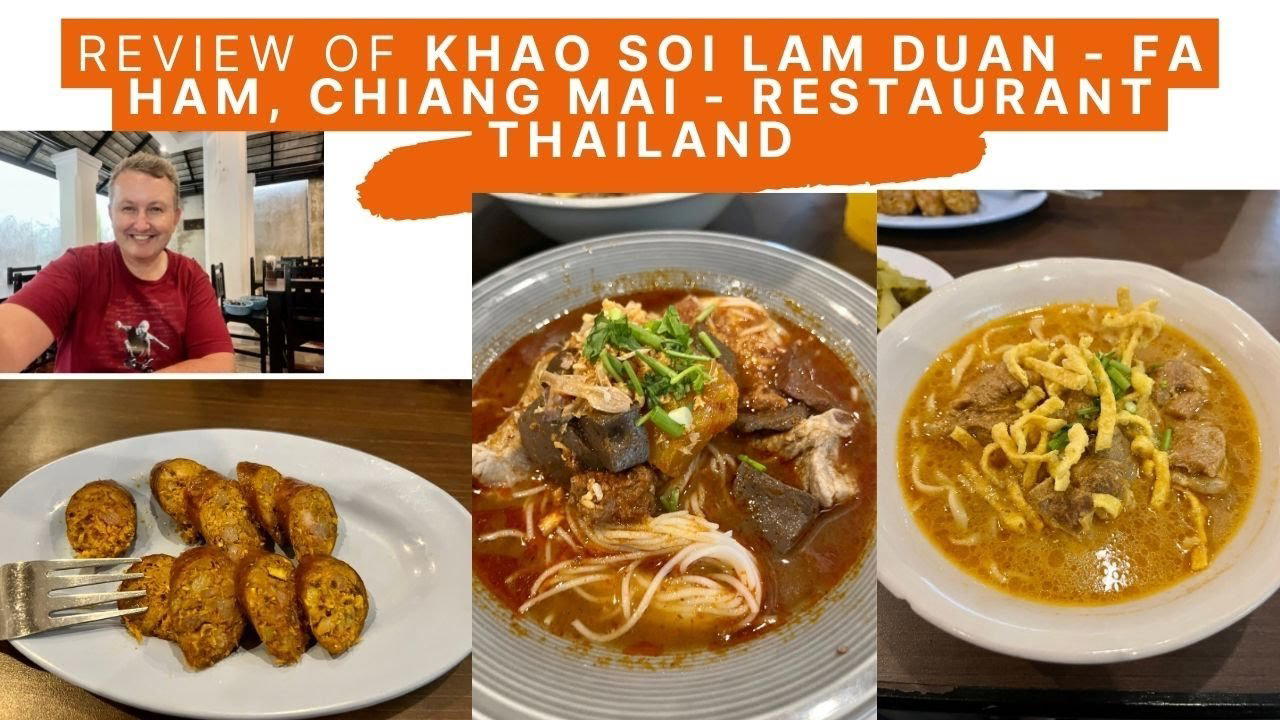
Where Chiang Mai's Khao Soi Tradition Takes Its Purest Form
Khao Soi Lamduan Fa Ham is a Northern Thai khao soi restaurant in Chiang Mai's Wat Ket district. Approach the Wat Ket district on the east bank of the Ping River and you are already moving away from the tourist geometry of the Old City. The streets here are wider, quieter, and more residential, and the food stalls that punctuate them tend to serve the people who actually live nearby rather than visitors working through a list. Khao Soi Lamduan Fa Ham sits on Charoen Rat Road in precisely that context: a canteen-style space that reads as a neighbourhood fixture rather than a destination engineered for discovery. Plastic stools, laminate tables, and the low-level clatter of a lunch service in full operation are the atmosphere. That setting is not incidental. It is the clearest signal that the bowl arriving at your table has not been reformatted for a different audience.
The Dish and Its Northern Roots
Khao soi is the defining preparation of Northern Thai cuisine, and understanding it means understanding where it comes from. The dish traces its lineage to Yunnanese Muslim trading routes that ran through what is now Chiang Rai and Chiang Mai, which explains why the broth carries coconut milk alongside curry paste rather than the cleaner, fish-sauce-forward soups of the Central Plains. The result is a layered bowl: a deep, slightly sweet, spiced broth over egg noodles with a tangle of crispy fried noodles on top, usually finished with pickled mustard greens, shallots, and lime. It is a preparation where the sourcing of paste ingredients, the quality of the coconut milk, and the handling of the protein determine everything. A bowl made with shortcuts at any of those stages collapses quickly into something generic.
Chiang Mai has dozens of khao soi operations across every price point and format, from hotel restaurants serving cleaned-up versions to market stalls turning out bowls for thirty baht. The Fa Ham area, named for the sub-district on the Ping's east bank, has historically concentrated particularly-discussed khao soi addresses in the city. In Chiang Mai's food conversation, places in this corridor are cited alongside the better-known spots on Charoen Prathet Road, and the comparison is instructive: Fa Ham tends to serve a more local crowd, which has kept preparation close to the form that locals actually eat.
Ingredient Logic: Why Sourcing Defines the Bowl
The quality of a khao soi bowl is almost entirely a function of its inputs. The curry paste, ground fresh from dried chilies, galangal, lemongrass, turmeric, and shrimp paste, cannot be substituted with a commercial product and produce the same result. The coconut milk needs fat content high enough to allow the paste to fry properly at the start of cooking, which is what gives the broth its colour and depth. The egg noodles, ideally made fresh or sourced from a local producer, behave differently from factory-dried versions under heat and in broth. In operations that have been cooking the same dish for decades, these sourcing relationships tend to be fixed: the same paste supplier, the same noodle maker, the same approach to the braised protein. That consistency is a form of quality control that no menu redesign can replicate.
This ingredient logic separates Chiang Mai's most-discussed khao soi addresses from the broader field. It also explains why long-running spots in the Fa Ham corridor are treated as reference points rather than nostalgia exercises. They are not doing something old-fashioned. They are doing something that requires precision and consistent sourcing, and they have been doing it long enough that the process is deeply embedded. The difference is price point and presentation, not the underlying logic.
Chiang Mai's Khao Soi Field: Where Lamduan Fa Ham Sits
Within Chiang Mai's khao soi scene, addresses tend to cluster into three rough categories: the well-signposted tourist-facing spots that appear on every aggregator list, the mid-range operations that serve a mixed local and visitor crowd, and the neighbourhood fixtures with minimal online presence that locals return to by habit. Lamduan Fa Ham sits in the third category, which is both its appeal and the reason it requires a slightly more deliberate effort to find. It operates on the logic of consistent regulars, not first-time visitors, which means the preparation is calibrated to people who would notice if something changed rather than people who have no baseline for comparison.
Comparable operations in Chiang Mai that occupy adjacent territory include Khao Soi Mae Manee, another noodle-focused address with local-first credentials, and spots like Aunt Aoy Kitchen and Baan Landai, which represent the broader Northern Thai cooking tradition at accessible price points. For a different register of Chiang Mai dining that still engages seriously with local ingredients, Aeeen and Aquila offer contrasting entry points. The khao soi street-food tier represented by Lamduan Fa Ham has no direct equivalent in fine-dining; the closest analogy in ingredient discipline, if not format, would be hyper-local operations like AKKEE in Pak Kret or Ayutthayarom in Phra Nakhon Si Ayutthaya, where the bowl or plate is the entire argument and the setting is secondary.
Planning Your Visit
Khao Soi Lamduan Fa Ham is located at 352/22 Charoen Rat Road in the Wat Ket sub-district, on the east bank of the Ping River, roughly a ten-minute tuk-tuk or rideshare ride from the Old City moat. The Wat Ket neighbourhood is a reasonable area to combine with a morning walk along the riverside or a visit to the nearby Wat Ket temple complex, making it a practical half-day itinerary anchor. As with most serious khao soi operations in Chiang Mai, the lunch window is where the bowl is at its leading: broth has had time to develop from the morning's cooking, and the operation is in full rhythm. Arriving after two in the afternoon at any of the city's leading khao soi spots risks finding the kitchen winding down or the leading protein portions already gone. No booking is required or possible; this is a walk-in operation. Dress casually. The setting demands nothing else.
Comparison Snapshot
Comparable venues nearby, for context on price, style, and recognition.
| Venue | Cuisine | Price | Notes |
|---|---|---|---|
| Khao Soi Lamduan Fa HamThis venue — the venue you are viewing | Northern Thai Khao Soi | $ | Not listed |
| Guay Jab Nam Khon | Thai Guay Jab Noodle Soup | $ | Si Phum |
| ก๋วยจั๊บน้ำข้น สามกษัตริย์ | Thai Thick Rice Noodle Soup (Kuay Jab Nam Khon) | $ | สามกษัตริย์ |
| Kiat Ocha (เกียรติโอชา) | Hainanese Chicken Rice & Satay | $ | Old City |
| Kaw Kha Moo Chang Phuek | Thai Braised Pork Leg Rice | $ | Chang Phueak |
| ศิริชัย ข้าวมันไก่ตอน | Hainanese Chicken Rice & Khao Soi | $ | near Suan Dok Gate Monument |
Continue exploring
More in Chiang Mai
Restaurants in Chiang Mai
Browse all →
Bars in Chiang Mai
Browse all →

At a Glance
- Rustic
- Casual Hangout
- Standalone
Current opening hours
- Monday
- 8:30 AM–3:30 PM
- Tuesday
- 8:30 AM–3:30 PM
- Wednesday
- 8:30 AM–3:30 PM
- Thursday
- 8:30 AM–3:30 PM
- Friday
- 8:30 AM–3:30 PM
- Saturday
- 8:30 AM–3:30 PM
- Sunday
- 8:30 AM–3:30 PM
Hours can change for holidays and private events. Last verified .
Casual street food atmosphere with simple, no-frills setup focused on flavorful noodle soups.