On a narrow lane in Rovinj's old town, La Vela occupies the kind of address where the stone walls do most of the talking. The restaurant sits within the compact dining scene that defines this Istrian port, where Adriatic seafood, local olive oil, and Malvazija wine shape the menu logic. It belongs to a tier of mid-range to premium options that reward visitors who plan ahead rather than wander in.
Pearl is the En Primeur Club membership app — saves, bookings, and concierge access live there. Same editors, same standards.
- Address
- Ul. Giuseppea Mazzinia 1, 52210, Rovinj, Croatia
- Phone
- +38552841616
- Website
- erovinj.info
- Directions
- Get directions
 Saves & bookings on Pearl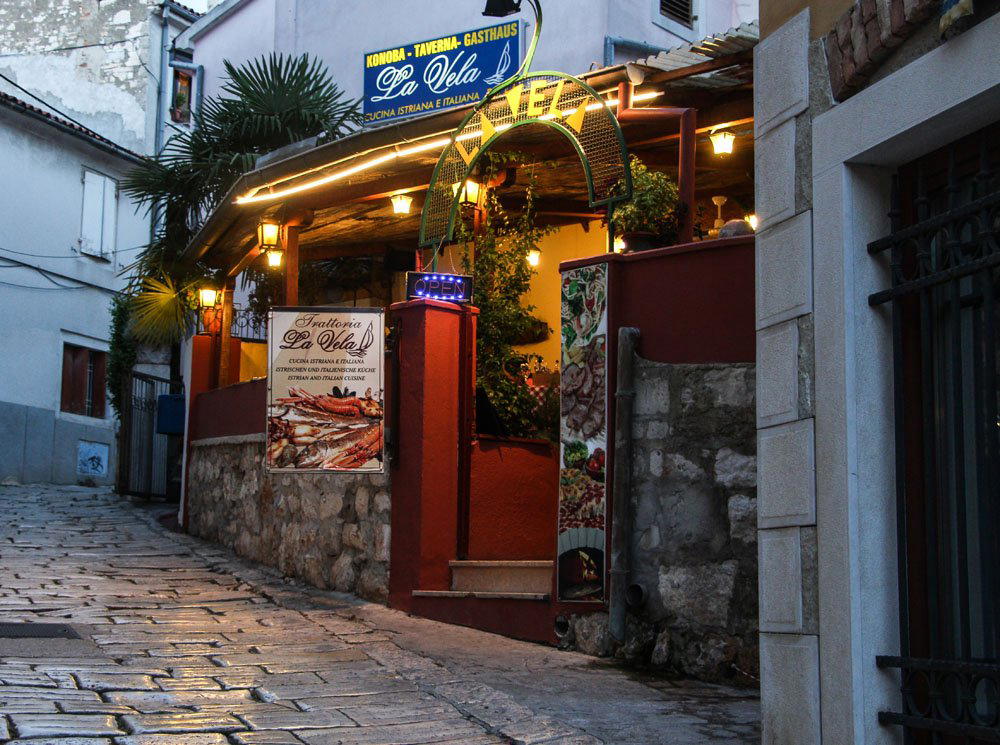
Stone Lanes and Sea Air: Rovinj's Dining Character
Rovinj's old town was built on an island, then connected to the mainland by landfill in the eighteenth century. That geography still governs the dining experience today. The streets that wind up toward the Church of Saint Euphemia are narrow enough that restaurants spill chairs into passages barely wide enough for two people to pass. La Vela sits at Ul. Giuseppea Mazzinia 1 in Rovinj, a lane where the smell of the Adriatic arrives before you do and the ambient noise is stone and sea rather than traffic. In a town where nearly every facade is the same warm orange-pink render, the distinction between restaurants comes down to what happens inside and what arrives on the table.
Rovinj operates in a clearly stratified dining market. At the upper end, venues like Agli Amici Rovinj and Cap Aureo occupy the €€€€ tier with tasting menus that draw on Istrian producers and, in some cases, Italian fine-dining lineage. Monte and its experimental offshoot Cave Lab by Monte push into creative territory that competes with the broader Croatian fine-dining conversation. La Vela sits in the middle register of this hierarchy, a position that carries its own logic in a town where visitors increasingly arrive with specific culinary expectations shaped by Istria's reputation for truffles, cured meats, and Malvazija Istarska.
What the Menu Structure Reveals
In Istrian restaurants of La Vela's type, the menu architecture tends to follow a logic rooted in the Adriatic larder: raw and marinated starters built around whatever the morning boats delivered, a middle section of pasta or risotto that absorbs the region's truffle and shellfish traditions, and a main course tier divided between catch of the day and secondary proteins. This structure is not accidental. It reflects the way Istrian coastal kitchens have historically operated, supply-led, seasonal, with the pasta course functioning as a bridge between the sea and the land. A restaurant that respects this grammar tends to resist the pressure to internationalize the menu for tourist traffic, which in Rovinj during peak summer months is considerable.
The presence of wine from Istria's interior, Teran from the red-clay terra rossa soils, Malvazija from the coastal white-wine belt, on any serious local list is a further signal of menu intent. These are not high-profile export varieties; they require a kitchen and a floor staff that can explain them. Venues that include them are self-selecting toward a guest who wants to engage with the region rather than default to international labels. La Vela operates within that broader Istrian dining tradition.
For wider context on Croatia's premium restaurant tier, the pattern repeats in other cities: Pelegrini in Sibenik and Restaurant 360 in Dubrovnik represent what coastal Croatian fine dining looks like at award level, while Nebo by Deni Srdoč in Rijeka shows how the northern Adriatic is developing its own creative dining identity. Rovinj's scene, the restaurant included, sits within that larger Croatian coastal story.
Atmosphere and Physical Setting
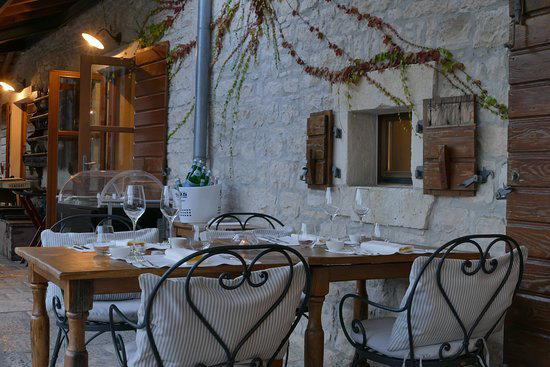
Old-town Rovinj restaurants that occupy historic stone buildings share a particular atmospheric grammar: low ceilings or open-sky terraces depending on whether the property has outdoor space, walls thick enough to hold the day's heat into the evening, and a proximity to the waterfront that makes the transition between aperitivo and dinner feel seamless. The Mazzinia address places the restaurant in the heart of this zone, close enough to the Adriatic to benefit from the cooling late-afternoon breeze that arrives off the water as the summer heat breaks. The physical environment does significant work before any dish arrives.
This atmospheric baseline is common to the competitive set. What differentiates mid-tier Rovinj restaurants in practice is pace and proportion: how long the kitchen takes between courses, whether the seafood is cooked to order or held, and whether the serving staff can field questions about provenance with specificity rather than generality. These are the signals that separate a reliable summer restaurant from one worth seeking out in May or October, when the town thins. Dream is another address that functions within the same neighbourhood logic.
Planning Your Visit
Rovinj in July and August compresses available tables at any well-reviewed address. The town's tourist population increases several times over during peak summer, and the old-town restaurants, operating in buildings that cannot expand beyond their historic footprint, absorb that pressure by turning tables faster or cutting off walk-in availability by mid-afternoon. For the restaurant specifically, booking in advance is the sensible approach for anyone visiting between June and September. Shoulder months, May, early June, September, October, offer both easier access and the produce-driven argument for visiting: Istrian truffles begin appearing in autumn, the tourist pressure drops, and the kitchens tend to slow down to a pace that allows for more attentive cooking.
The address at Ul. Giuseppea Mazzinia 1 places the restaurant within walking distance of the harbour and the main pedestrian approaches to the old town. Rovinj's historic centre is car-free, so arrival on foot from the harbour promenade is the standard approach. For comparable premium dining across the Croatian islands and coast, LD Restaurant in Korčula, Boskinac in Novalja, and Alfred Keller in Mali Lošinj map the wider Adriatic dining geography worth considering on a longer Croatian itinerary. For inland Croatia, Dubravkin Put in Zagreb, Krug in Split, and Korak in Jastrebarsko extend the picture. Our full Rovinj restaurants guide covers the complete tier structure of the town's dining options.
For reference beyond the Croatian context, the technical precision of European coastal dining, the kind practiced at Le Bernardin in New York City or the tasting-menu discipline of Atomix, provides a useful frame for understanding what Istria's more ambitious kitchens are measuring themselves against. The restaurant operates several registers below that tier, but the culinary tradition it draws from, Adriatic seafood, Istrian agricultural produce, regional wine, is the same one that has attracted serious food attention to this part of the northern Mediterranean coast. Similarly, BioMania Bistro Bol in Bol shows how island restaurants across the Adriatic are finding their own editorial voice within the Croatian dining story.
Accolades, Compared
Comparable venues nearby, for context on price, style, and recognition.
| Venue | Cuisine | Price | Notes |
|---|---|---|---|
| La VelaThis venue — the venue you are viewing | Mediterranean Seafood & Pizza | $$ | Not listed |
| Mali Raj | Mediterranean Seafood | $$ | old town |
| Konoba Jure | Traditional Croatian Seafood | $$ | Cademia |
| Laurel & Berry Restaurant | Istrian-Mediterranean Fusion | $$$ | Rovinj |
| Orca | Traditional Istrian Mediterranean | $$$ | Gripole |
| Fish House Rovinj | Modern Mediterranean Fish Street Food | $$ | Old Town Rovinj |
Continue exploring
More in Rovinj
Restaurants in Rovinj
Browse all →
Bars in Rovinj
Browse all →
Hotels in Rovinj
Browse all →

At a Glance
- Cozy
- Rustic
- Casual Hangout
- Family
- Standalone
- Extensive Wine List
- Local Sourcing
Current opening hours
- Monday
- 11 AM–10 PM
- Tuesday
- 11 AM–10 PM
- Wednesday
- 11 AM–10 PM
- Thursday
- 11 AM–10 PM
- Friday
- 11 AM–10 PM
- Saturday
- 11 AM–10 PM
- Sunday
- Closed
Hours can change for holidays and private events. Last verified .
Cozy intimate eatery tucked in a side street with family garden atmosphere.