On a quiet lane in Rovinj's old town, Orca draws a loyal local following that says more about its consistency than any award could. Positioned within a city where creative and contemporary Croatian cooking has pushed dining standards upward over the past decade, it sits in the mid-to-upper tier of a genuinely competitive scene, worth understanding before you visit.
Pearl is the En Primeur Club membership app — saves, bookings, and concierge access live there. Same editors, same standards.
- Address
- Gripole ul., 52210, Rovinj, Croatia
- Phone
- +38552816851
- Website
- orca-rovinj.com
- Directions
- Get directions
 Saves & bookings on Pearl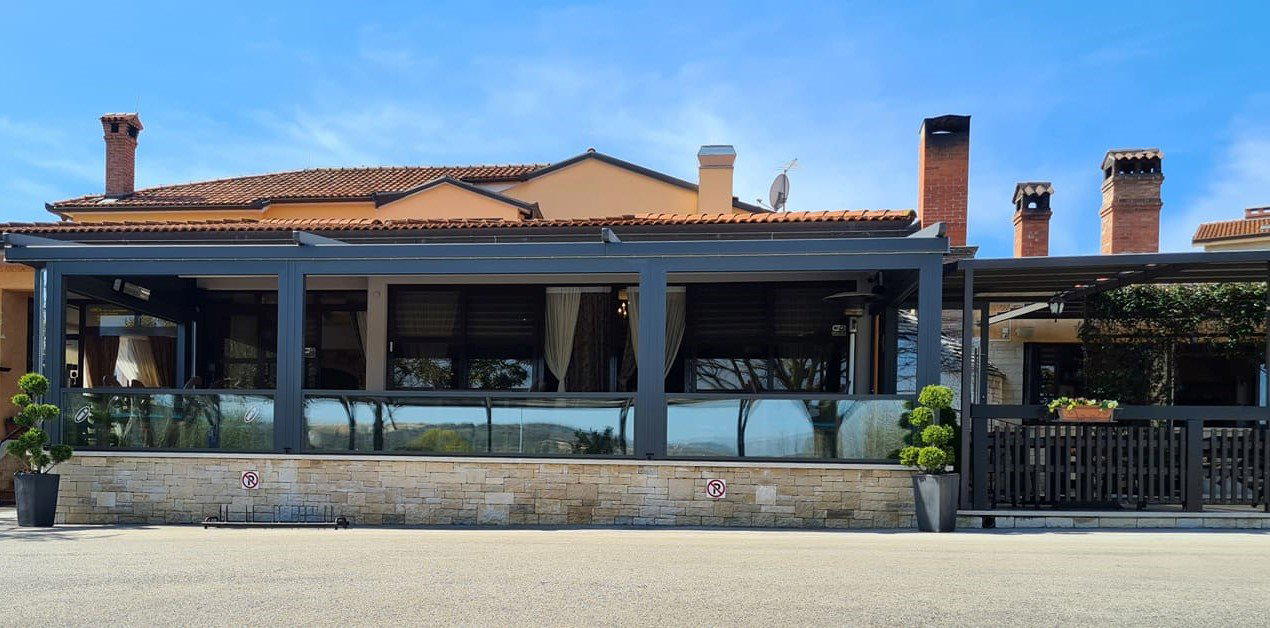
A Street That Doesn't Announce Itself
Gripole Street doesn't appear on most visitor itineraries of Rovinj. It runs quietly through the old town's stone interior, away from the harbour promenade where tourist-facing restaurants cluster and menus appear in six languages. The restaurants that survive on streets like this one do so on repeat custom, the couple who arrive without a reservation because they were here three weeks ago, the local professional who treats a corner table as a standing appointment. Orca occupies that kind of address, and its position in this particular pocket of Rovinj tells you more about what to expect than any category label would.
Rovinj's dining scene has sharpened considerably over the past ten to fifteen years. Monte established a creative benchmark at the summit of the market, and its experimental offshoot Cave Lab by Monte pushed further into territory that few Adriatic coastal restaurants had explored. Agli Amici Rovinj and Cap Aureo both operate at the €€€€ tier, with creative menus that position Rovinj alongside the more discussed dining cities of the Croatian coast. Against that backdrop, a restaurant that endures on a side street does so by delivering something the destination-driven places don't: a reason to return that has nothing to do with novelty.
What the Regulars Know
The regulars' relationship with a restaurant like this tends to involve an unwritten menu, the things you learn to ask for, the timing that gets you the right table, the dishes that never make it onto a printed card but appear for people the kitchen recognises. Without verified insider data specific to Orca, it would be irresponsible to manufacture those specifics here. What is reliable is the structural logic: restaurants that survive in residential or semi-residential old-town pockets of Croatian coastal cities do so because their local clientele has ratified them across seasons, not just in the summer surge of July and August when visitor numbers inflate review counts and forgive inconsistency.
That seasonal dynamic matters more in Rovinj than in larger Croatian cities. Krug in Split and Restaurant 360 in Dubrovnik operate in cities with year-round urban populations large enough to sustain quality through the shoulder months. Rovinj contracts sharply after September. A restaurant that holds its standing through October and into the quieter months earns a different kind of credibility than one that peaks in high season and coasts on reputation. The address on Gripole Street suggests a kitchen oriented toward that longer game.
The Istrian Pantry and What It Means for the Plate
Istria's ingredient base is among the more discussed in Central European food writing, and with reason. The peninsula produces truffles, olive oil, and wine at a quality level that has attracted international attention, Istrian extra-virgin olive oils have placed at the summit of international competitions, and Motovun Forest truffles are exported to kitchens across Europe. A restaurant operating within this supply geography has access to raw materials that kitchens in less agriculturally specific regions would source with difficulty.
The Adriatic adds a parallel track: Istrian waters produce scampi, sea bass, dentex, and seasonal shellfish that reach coastal restaurants faster than they reach anywhere else in the supply chain. The Croatian approach to seafood cooking has traditionally been simpler than the elaborated preparations that characterise, say, a tasting menu at Le Bernardin in New York, the emphasis tends toward quality of sourcing and directness of preparation rather than technical transformation. That philosophy holds across the price spectrum in Istria, from the destination restaurants to the places that feed local families on a Thursday evening.
Restaurants at the upper end of Croatia's creative dining scene, Pelegrini in Sibenik, Nebo by Deni Srdoč in Rijeka, LD Restaurant in Korčula, have worked these same Adriatic ingredients into more architecturally composed formats. Orca's position in Rovinj's old town places it in a different tier of that conversation, but the underlying ingredient quality available to any kitchen here remains genuinely competitive with what far more prominent restaurants work with elsewhere in the country.
Rovinj's Wider Dining Geography
Understanding where Orca sits requires understanding how Rovinj's restaurant ecology is arranged. Stronger examples from the market is well-documented. Below that tier, the city has a middle layer of restaurants that serves both informed visitors and the Croatian professional class that treats Rovinj as a regular weekend destination from Zagreb and Rijeka. Dream operates in this space, as does the local end of the hotel dining circuit. Orca's Gripole Street address places it slightly off that visitor circuit, which is precisely the characteristic that gives it its appeal to the return visitor who has already done the obvious rounds.
For a broader view of where Orca fits among the city's options, the full Rovinj restaurants guide maps the scene by tier and style. Travellers moving through Istria or the broader Croatian coast with serious interest in the dining scene should also consider Boskinac in Novalja, Alfred Keller in Mali Lošinj, and Dubravkin Put in Zagreb, each offering a different register of Croatian cooking worth understanding in relation to the Istrian coastal style. Those interested in fermentation-forward and produce-led approaches elsewhere in the region might look at Korak in Jastrebarsko or BioMania Bistro Bol in Bol for contrast. And for a sense of what tasting-menu ambition looks like at the international level, Atomix in New York provides a useful reference point for how culinary precision translates across different cultural contexts.
Planning Your Visit
Gripole Street is walkable from the main harbour in under ten minutes, running through the refined old-town core. The practical advice for visiting is to go in shoulder season, May through June or September through October, when crowd pressure eases. Arriving on foot remains one reliable approach for a first visit. That unmediated arrival is one practical approach: you show up, you see what's available, and the kitchen does the rest.
Cuisine Lens
Comparable venues nearby, for context on price, style, and recognition.
| Venue | Cuisine | Price | Notes |
|---|---|---|---|
| OrcaThis venue — the venue you are viewing | Traditional Istrian Mediterranean | $$$ | Not listed |
| Dream | Istrian Fusion Mediterranean | $$$ | old town |
| Male Madlene | Istrian Tapas & Fine Finger Food | $$$ | Santa Croce |
| La Vela | Mediterranean Seafood & Pizza | $$ | Old Town |
| EL-NIRO,Seafood Restaurant | Croatian Seafood | $$ | Rovinj Old Town |
| Konoba Jure | Traditional Croatian Seafood | $$ | Cademia |
Continue exploring
More in Rovinj
Restaurants in Rovinj
Browse all →
Bars in Rovinj
Browse all →
Hotels in Rovinj
Browse all →

At a Glance
- Lively
- Cozy
- Rustic
- Family
- Group Dining
- Casual Hangout
- Open Kitchen
- Local Sourcing
Current opening hours
- Monday
- 11 AM–11 PM
- Tuesday
- Closed
- Wednesday
- 11 AM–11 PM
- Thursday
- 11 AM–11 PM
- Friday
- 11 AM–11 PM
- Saturday
- 11 AM–11 PM
- Sunday
- 11 AM–11 PM
Hours can change for holidays and private events. Last verified .
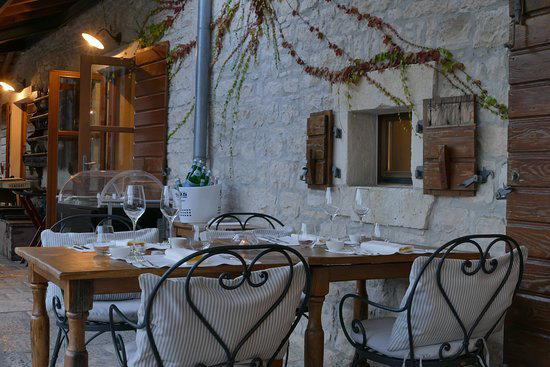
Casual and fun atmosphere centered around a big open fire fireplace in a spacious dining room.