Our verdict
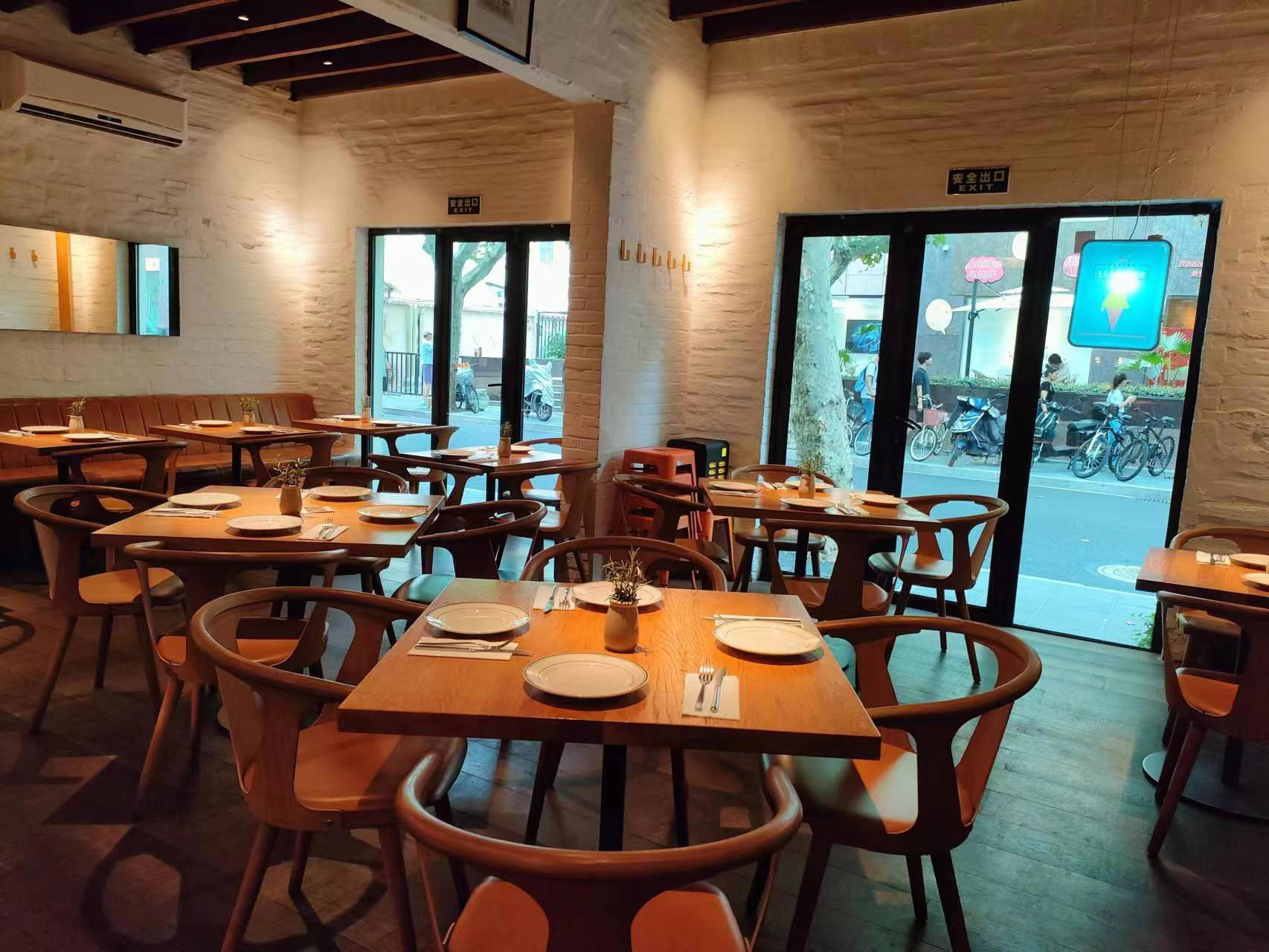
In a city where Chinese regional cooking sets the benchmark, La Strada makes a case for Italian cuisine as a serious dining option in Changzhou. The restaurant occupies a distinct niche in a market where European alternatives remain sparse, offering a kitchen focused on Italian traditions alongside Changzhou's broader dining scene.

Pearl is the En Primeur Club membership app, where members save venues, book tables and use the concierge.
The menu
What to order
- Handmade pasta
Italian Cooking in an Unlikely Setting
Changzhou does not have the international restaurant density of Shanghai or Beijing. The city's dining culture tilts heavily toward Jiangnan tradition, where braised pork, freshwater fish, and delicate seasonal produce define what a serious meal looks like. European restaurants here operate with less margin for error than their counterparts in treaty-port cities: there is no cosmopolitan cushion of expat demand or culinary tourism to prop up a weak kitchen. When Italian cooking works in this context, it tends to work because the kitchen has made deliberate choices about which regional tradition to anchor itself to, rather than defaulting to a pan-Italian menu that tries to cover everything from Palermo to Venice.
Italy's regional kitchen is one of the most internally differentiated in Europe. The question of whether a restaurant identifies with Roman simplicity, Tuscan restraint, the dairy-heavy richness of Emilia-Romagna, Milanese risotto culture, or the tomato-anchored directness of Neapolitan cooking shapes almost every decision from pasta format to sauce weight. Restaurants that treat these as interchangeable categories tend to produce food that belongs nowhere in particular. Those that commit to a regional grammar, even loosely, give the diner a clearer frame for what they are eating and why.
Where La Strada Sits in Changzhou's Dining Mix
Changzhou's premium dining options cluster around a small set of recognisable formats. Chinese regional cooking anchors the serious end of the market, with addresses like Astral Lake Chinese Restaurant, which draws on Jiangnan and Shunde specialties, holding the higher-prestige positions. European alternatives occupy a narrower lane. French-inflected options exist, including L'avenue Lobby Lounge and Croissanterie on the pastry and afternoon tea side. Global formats appear at Mélange Bistro. Italian, however, is a sparser category, which gives La Strada a structural advantage that has nothing to do with quality and everything to do with supply.
That structural position also sets the competitive logic. In a city like Shanghai, an Italian restaurant competes against dozens of credentialed peers, some with international recognition comparable to 8 1/2 Otto e Mezzo Bombana in Hong Kong, which holds three Michelin stars and operates as a benchmark for Italian fine dining across Greater China. In Changzhou, the reference points are different. The question is less about how La Strada compares to the regional leaders of Italian cuisine in Asia and more about whether it gives Changzhou diners a coherent and considered Italian option. The city's broader international dining context, covered in our full Changzhou restaurants guide, makes clear that European alternatives remain a secondary tier by volume, even as quality has improved across the board.
The Regional Question Italian Restaurants Always Have to Answer
Italian cooking in China sits in an interesting position across the country. In Kyoto, cenci demonstrates what happens when Italian technique is filtered through a Japanese seasonal sensibility, producing a format that uses Italian grammar to say something distinctly local. That kind of dialogue between tradition and context is rare, and it tends to happen only where a kitchen has made a firm commitment to one set of principles. The alternative, a menu that assembles Italian signifiers without a regional spine, produces something that reads as Italian in the broadest sense without actually tasting like any specific part of Italy.
The Emilia-Romagna tradition, to take one example, is built around egg-based fresh pasta, slow-cooked ragù, aged Parmigiano-Reggiano, and prosciutto from Parma. A restaurant working in that tradition is making a claim about richness, time, and material quality. The Neapolitan tradition, by contrast, is built around a more assertive use of tomato, buffalo mozzarella, and dough as the primary vehicle. Roman cooking leans on cured pork fat, pecorino, and pasta shapes like cacio e pepe and carbonara that depend entirely on ratio and technique rather than ingredient complexity. Each tradition has its own internal logic. Diners who understand these distinctions eat at Italian restaurants differently: they arrive with a framework rather than a general expectation.
Eating Italian in China's Secondary Cities
The broader context for Italian dining in China's non-first-tier cities is worth considering. Shanghai and Beijing have established Italian restaurant cultures deep enough to support regional specialists. Outside those cities, Italian restaurants tend to work with broader menus to cover a wider range of diner expectations, and import logistics make genuine regional specificity harder to achieve at a consistent level. Ingredients like San Marzano tomatoes, 00 flour from specific mills, aged balsamico from Modena, and properly cured guanciale are available in China but require supply relationships that a smaller market does not always support.
This is the challenge that differentiates Italian restaurants in Changzhou from those in larger cities rather than a question of kitchen skill alone. Other regional dining scenes across the Yangtze Delta operate under similar pressures: kitchens in Hangzhou, Suzhou, and Nanjing that serve European cuisines alongside Chinese options face comparable ingredient sourcing constraints, even as venues like Ru Yuan in Hangzhou, Dingshan·Jiangyan in Suzhou, and Dai Yuet Heen in Nanjing push quality standards for their own cuisines in the region.
Planning a Visit
Visitors to Changzhou who want to compare the city's dining range should look at La Strada alongside the Chinese-focused options that dominate the local premium tier. A considered approach is to treat European dining in Changzhou as a complement to, rather than a substitute for, the Jiangnan-rooted cooking that the city does with more native depth. Songyun represents that Chinese anchor well.
Frequently asked questions
How does La Strada compare to Italian restaurants in nearby Shanghai or Nanjing?
Changzhou sits roughly equidistant between Shanghai and Nanjing, both of which have deeper Italian restaurant ecosystems with more competitive sourcing and a larger pool of Italian-trained chefs. La Strada operates in a city where Italian cuisine is a niche format rather than an established dining category, which means it competes primarily against Changzhou's own limited European restaurant set rather than against the Yangtze Delta's Italian dining leaders.
What's the best thing to order at La Strada Italian Restaurant?
La Strada serves Italian cuisine in Changzhou, a city where the restaurant supply for European cooking is thin. In that context, pasta dishes tend to be the most reliable indicator of kitchen capability at Italian venues operating outside China's first-tier cities, as they require consistent technique without the supply-chain depth that fresh seafood or specific regional cuts demand. Confirm the current menu directly with the venue before visiting.
Can I walk in to La Strada Italian Restaurant?
Changzhou's European restaurant segment does not carry the reservation pressure of equivalent venues in Shanghai or Beijing, so walk-in access is generally more realistic. That said, corporate dining midweek can concentrate demand at the city's small pool of international restaurants. Calling ahead is advisable if you are visiting on a weekday evening.
What do critics highlight about La Strada Italian Restaurant?
The restaurant operates in a city where Italian cooking is not the dominant dining mode, which means it sits outside the review circuits that cover Shanghai or Beijing's Italian scene.
Is eating at La Strada Italian Restaurant worth the cost?
European restaurants in Changzhou generally price below their Shanghai counterparts because the local market supports a different ceiling, which can make the value proposition stronger relative to comparable cooking in a first-tier city. Verify current pricing directly with the restaurant.
When is the best time to go to La Strada Italian Restaurant?
Midweek evenings in Changzhou tend to draw corporate dining to the city's European restaurants, making weekend lunch or early-week dinner a quieter window. Changzhou's business calendar, rather than tourist seasonality, is the main variable shaping demand at a venue of this type.
Fast Comparison
Comparable venues nearby, for context on price, style, and recognition.
| Venue | Cuisine | Awards | Notes |
|---|---|---|---|
| La Strada Italian RestaurantThis venue (the venue you are viewing) | Authentic Italian Street Café | Not listed | Not listed |
| YuXiuFang | Elegant Chinese Fine Dining | Black Pearl 1 Diamond | Zhonglou District |
| Croissanterie | French Croissant Bakery with Jiangnan Fusion | Not listed | Hi-Tech District |
| L’avenue Lobby Lounge | Lobby Lounge | Not listed | Xinbei District |
| Astral Lake Chinese Restaurant | Changzhou-Shunde Chinese | Not listed | Xinbei District |
| Songyun | Contemporary Chinese Fine Dining | Black Pearl 1 Diamond | Tianning District |
Continue exploring
More in Changzhou
Details
- Elegant
- Romantic
- Date Night
- Business Dinner
- Hotel Restaurant
- A La Carte
Elegant urban escape blending tradition and tranquility with romance of a European street café.